Table of Contents >> Show >> Hide
- Why “Possessed Pet” Photos Are So Funny
- What Makes a Pet Look “Possessed” in a Photo?
- The Fine Line Between Funny and “Maybe Put the Phone Down”
- How to Capture the Perfect “Possessed” Pet Photo Safely
- What Makes the Best Submission to a Prompt Like This?
- Why Pet Owners Secretly Love These Pictures
- Extended Experiences: What These “Possessed Pet” Moments Feel Like in Real Life
- Conclusion
Every pet owner has at least one photo that deserves its own dramatic soundtrack. You know the one. Your dog is mid-sneeze and somehow resembles a Victorian ghost who just discovered taxes. Your cat is sprinting through the hallway at 5:12 a.m. with pupils the size of dinner plates, looking like it just received a confidential message from the underworld. Your bunny is frozen in a dark corner with glowing eyes and the expression of a tiny landlord collecting rent.
That, dear internet, is exactly why prompts like “Hey Pandas, Post An Image Of Your Pet Looking Possessed” work so well. They mix humor, chaos, and the universal truth that pets are adorable even when they look like they were summoned by candlelight. In fact, those strange photos usually come from perfectly normal pet behavior: motion blur, reflective eyes, zoomies, sleep twitches, awkward angles, and those split-second facial expressions that make a lovable animal look like a paranormal intern.
This article dives into why these photos are so entertaining, what may actually be happening in them, how to capture them safely, and why the internet cannot resist a pet that looks one eyebrow twitch away from starring in a low-budget horror film. Spoiler alert: your pet is probably not possessed. They are just unbelievably committed to the bit.
Why “Possessed Pet” Photos Are So Funny
The joke works because it plays with contrast. Pets are usually symbols of comfort, softness, and emotional support. Then one badly timed photo turns Mr. Snuggle Muffin into a creature that appears to know ancient secrets. That visual contradiction is comedy gold. It is the same reason people love derpy pet pictures, dramatic action shots, and images where a dog looks like a cryptid caught on a trail camera.
There is also something deeply relatable about it. Pet owners know their animals as affectionate goofballs. So when a harmless house cat suddenly looks like a furry tax auditor from another realm, the gap between reality and appearance becomes hilarious. The camera catches one weird millisecond, and suddenly your sweet companion looks like they pay their bills in moonlight.
Online communities love this kind of content because it is low-stakes, highly visual, and easy to join. You do not need a professional setup. You just need one gloriously cursed frame. The best submissions usually feel authentic, as if the owner was innocently trying to take a cute photo and accidentally documented an event that should have been reported to local authorities.
What Makes a Pet Look “Possessed” in a Photo?
1. The infamous glowing eyes effect
One of the biggest reasons pets look spooky in photos is eye shine. Many animals have a reflective structure behind the retina that helps them see better in low light. In a flash photo or dim room, that reflection can create green, blue, yellow, or eerie bright-eye effects that scream, “I have returned.” In real life, it is just biology doing what biology does best: being useful and slightly alarming in bad lighting.
That is why a normal dog sitting politely on the couch can look like a supernatural witness in your camera roll. The same effect can make cats, dogs, and other pets appear much more dramatic than they are. Add darkness, direct flash, and a slightly crooked head, and suddenly your pet looks like it just whispered, “Do not open the basement door.”
2. Motion blur turns everyone into a goblin
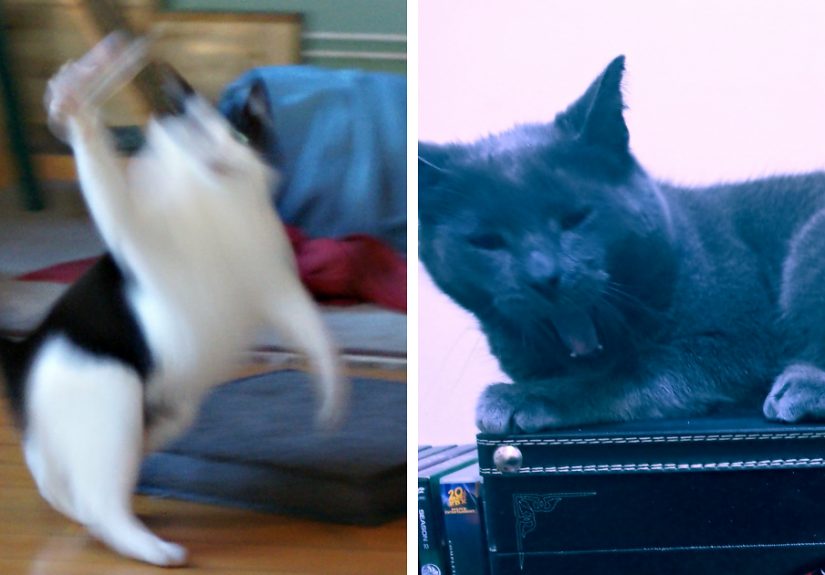
Pets rarely hold still when they are doing their funniest nonsense. They twist, leap, shake, launch, bounce, and ricochet off furniture with the confidence of stunt performers who have never once consulted a safety coordinator. When a camera catches only part of that movement, the result can be a blurry jawline, floating ears, stretched limbs, or a face that looks like a watercolor painted during an earthquake.
Motion blur is especially powerful when it catches a pet mid-zoom, mid-yawn, mid-head-shake, or mid-pounce. These are the exact moments that make owners laugh so hard they nearly drop the phone. A running cat can become a haunted noodle. A shaking dog can develop six temporary eyebrows. A parrot flapping at the wrong moment can look like a tiny feathered prophecy.
3. Zoomies are chaos with paws
Many “possessed” photos are just zoomies in progress. Dogs and cats sometimes explode into sudden bursts of high-speed movement that look unhinged but are often completely normal. A pet might sprint, spin, leap, skitter, and stop like it just remembered an appointment in another dimension. This behavior is funny because it looks so over-the-top, but it is often just a release of energy, excitement, or instinct.
Cats are especially talented at transforming ordinary hallways into action movie sets. Because they tend to be most active around dawn and dusk, a cat’s dramatic early-morning sprint can feel spiritually targeted at sleepy humans. Dogs, meanwhile, bring their own flair with circles, play bows, sudden dashes, and expressions that say, “I do not know what is happening either, but I am fully committed.”
4. Sleep twitches can look strangely cinematic
A pet snoozing peacefully can become unexpectedly spooky the second a paw jerks, whiskers twitch, or eyes move under closed lids. Many owners have seen a sleeping dog suddenly kick, paddle, or do tiny “running” motions, as if chasing something in a dream. Cats can twitch, murmur, or flick their tails in sleep too. Catch that in a badly lit room and the photo can look like a still from a documentary called The Apartment Is Not Safe.
In reality, sleep movement is often just part of a normal rest cycle. The photo, however, tells a very different story. It says your beagle is communing with the void when really he is probably dreaming about snacks.
5. Body language can look intense when taken out of context
Wide pupils, raised fur, stiff posture, “whale eye,” or flattened ears can make a pet look scary in a single image. But context matters. Some of these signals can point to excitement, fear, stress, intense interest, or playful over-arousal. In other words, the camera may capture an emotional snapshot without the larger scene that explains it.
A dog showing a play bow can look like it is preparing for combat when it is really inviting someone to play. A cat with dilated pupils might be getting ready to chase a toy, not open a portal. This is why the best “possessed pet” posts are funny and thoughtful: they celebrate the bizarre frame while still respecting what the animal may actually be feeling.
The Fine Line Between Funny and “Maybe Put the Phone Down”
There is a difference between a pet looking hilariously cursed and a pet looking uncomfortable. Funny pet content should never come at the expense of the animal’s well-being. If your dog or cat seems stressed, cornered, exhausted, or frightened, the camera should stop being the main character.
Good rule of thumb: if your pet is loose, playful, curious, or simply being their weird little self, the moment is probably fair game. If your pet is cowering, panting hard from stress, hiding, showing repeated signs of fear, or giving you the unmistakable expression of “I dislike everything about this,” it is time to switch from photographer to responsible human.
Also, if you notice something unusual that is not just a funny one-off, pay attention. An odd reflection in only one eye, a sudden behavior change, or repeated frantic behavior could be worth mentioning to a veterinarian. Humor is great. Responsible pet care is better. The internet can survive without one more ghost goblin corgi photo if your pet needs a break.
How to Capture the Perfect “Possessed” Pet Photo Safely
Use natural light whenever you can
Natural light makes pets look better, feels less intrusive, and reduces that dramatic eye-glow effect. Window light, open shade, and golden-hour outdoor light are all excellent choices. If your goal is “funny weird” rather than “accidentally demonic,” brighter light gives you more detail and fewer camera surprises.
Shoot at your pet’s level
Eye-level shots are more engaging and usually more flattering. They also capture expression better. The closer you are to your pet’s world, the easier it is to catch the tiny details that make a photo memorable: a crooked ear, a suspicious side-eye, a chaos-ready paw, or the exact expression of a creature who just knocked over a plant and feels zero remorse.
Let your pet stay in a familiar place
The best photos usually happen when pets feel comfortable. That means photographing them where they already like to relax, play, loaf, or dramatically supervise your life choices. Familiar environments help animals stay at ease, and relaxed pets give you more authentic expressions. Translation: fewer forced poses, more honest weirdness.
Keep sessions short and fun
Treats, toys, praise, and patience are your friends. Long photo sessions can turn even a cooperative pet into a furry union representative demanding better working conditions. Quick bursts work better. Take a few shots, let your pet move around, then try again. The goal is to capture personality, not produce a magazine cover under hostile conditions.
Do not manufacture fear for content
This should be obvious, but the internet occasionally needs a reminder. Do not startle your pet, trap them in costumes they hate, shine harsh lights at them, or provoke reactions just to get a “possessed” picture. The funniest pet images usually happen naturally anyway. Your pet already contains multitudes, including goblin mode, no staging required.
What Makes the Best Submission to a Prompt Like This?
The strongest “Hey Pandas” style submissions usually include one or more of the following: perfect timing, accidental drama, and a pet whose expression seems wildly out of proportion to the situation. Maybe your cat looks betrayed because you changed the bedsheets. Maybe your dog looks like a haunted opera singer because you caught a yawn at the wrong moment. Maybe your hamster appears to be planning financial collapse from inside a cardboard tube.
A great caption helps too. The best ones do not over-explain. They simply lean into the absurdity. Think: “He heard the treat bag open in another zip code.” Or: “She has seen things in the laundry room.” Or the classic owner defense: “He is actually very sweet.” The more ordinary the real situation, the funnier the cursed image becomes.
The magic is not perfection. In fact, technically imperfect photos often win. A little blur, weird lighting, and accidental comedy are part of the charm. Nobody is grading your aperture settings when your dachshund looks like a spaghetti demon with strong opinions.
Why Pet Owners Secretly Love These Pictures
Because they are honest. Cute posed portraits are lovely, but weird photos often reveal more personality. They show the over-caffeinated raccoon energy of a young cat. They show the overjoyed, floppy-faced enthusiasm of a dog who has never had a single serious thought. They show the unfiltered reality of sharing space with animals who are beautiful, emotional, ridiculous, and occasionally shaped like a blur.
These photos also become memories with extra texture. Years later, you may not remember the perfectly centered portrait as vividly as the image of your senior cat looking like a furious wizard because she got static cling from a blanket. The strange photos stick because they capture life as it actually felt: messy, funny, affectionate, and impossible to script.
Extended Experiences: What These “Possessed Pet” Moments Feel Like in Real Life
Here is the part every pet owner understands deep in their soul: the photo is funny, but the experience is even better. A “possessed” pet moment is rarely just one image. It is usually an entire tiny household saga.
It starts innocently. You are drinking coffee. The room is quiet. Your dog is asleep in a sunbeam looking like a Renaissance painting about loyalty. Then a delivery truck rolls past, one leaf moves suspiciously outside, and your peaceful angel transforms into a blur of limbs, bark, and moral outrage. You grab your phone. Too late for the cute shot, just in time for the frame where your dog appears to be a sentient dust storm with teeth.
Cats bring a different style of chaos. Their “possessed” energy often arrives with eerie silence first. You look up from your laptop and realize your cat is on top of the bookshelf somehow, staring at nothing. Or worse, staring directly at something you cannot see. Then comes the midnight stampede: one thunderous lap around the apartment, a dramatic leap off furniture, a skid across the hallway, and an expression that says, “I am speed, and also your landlord now.” If you manage to snap a picture, you do not capture elegance. You capture a long, blurry noodle with glowing eyes and the energy of a caffeine-fueled poltergeist.
Small pets deserve their flowers here too. Rabbits can go from adorable loaf to high-velocity fluff missile with no warning. Guinea pigs can stare into the middle distance like they know who really built the pyramids. Even birds can produce elite nightmare fuel in the right frame, especially if you catch them mid-flap, mid-squawk, or halfway through judging your entire bloodline from the curtain rod.
And then there are the family reactions, which may be the funniest part. One person always says, “Delete that, he looks evil.” Another says, “No, that is the best photo we have ever taken.” The pet, meanwhile, has already returned to normal and is licking a paw, chewing a toy, or asking for dinner as if nothing happened. They offer no explanation. They are above explanation.
These moments become household legends. “Remember when Daisy looked like a Victorian orphan who cursed the mirror?” “Remember when Moose shook off after a bath and turned into a blurry sea monster?” “Remember when Pickles got zoomies after using the litter box and looked like a furry comet?” Nobody forgets those stories because they are not really about a weird face. They are about living with animals whose personalities are bigger, funnier, and stranger than any human planning session could invent.
That is why prompts like this resonate so much online. People are not just sharing a spooky-looking pet photo. They are sharing a tiny piece of daily life with an animal they adore. The humor lands because the affection is obvious. Underneath the chaos, every caption is basically saying the same thing: “Look at this ridiculous creature. I love them so much.”
And honestly, that is the true spirit of the trend. Not horror. Not perfection. Just love, timing, and one gloriously cursed frame that makes everyone laugh harder than they expected. Your pet does not need to be polished, poised, or photogenic. They just need to be themselves for one slightly unhinged second. The rest is internet history.
Conclusion
“Hey Pandas, Post An Image Of Your Pet Looking Possessed” is funny because it takes everyday pet behavior and turns it into cinematic nonsense. A flash reflection becomes a supernatural stare. A zoomie becomes an exorcism audition. A nap twitch becomes evidence for a very dramatic group chat. But behind the humor is something wholesome: people love sharing the weird little moments that make their animals unforgettable.
So yes, post the photo where your cat looks like a haunted breadstick. Share the one where your dog’s face melted mid-shake into abstract art. Celebrate the accidental horror-movie still featuring your rabbit, parrot, or guinea pig. Just keep it kind, keep it safe, and remember that the funniest pets are usually just being pets.
In other words, your companion is not possessed. They are simply photogenic in a way the camera has not yet learned to survive.