Table of Contents >> Show >> Hide
- When Is the Best Time to Potty Train a Boy?
- Step 1: Prepare the Potty Training Setup
- Step 2: Teach the Language of Potty Training
- Step 3: Start With Sitting Down First
- Step 4: Create a Simple Potty Routine
- Step 5: Use Praise, Not Pressure
- Step 6: Handle Accidents Calmly
- Step 7: Teach Pooping on the Potty
- Step 8: Move From Diapers to Underwear
- Step 9: Potty Training Outside the House
- Step 10: Know When to Pause or Ask for Help
- Common Potty Training Mistakes Parents Make
- Real-Life Experience: What Potty Training a Boy Often Looks Like
- Conclusion
- SEO Tags
Potty training a boy can feel like a tiny household revolution. One day you are buying diapers in bulk like you run a small daycare, and the next day you are cheering because someone successfully peed in a plastic frog-shaped potty. Parenting is glamorous like that.
The good news is that learning how to potty train a boy does not require magic, bribery worthy of a bank heist, or a bathroom decorated like a theme park. What it does require is readiness, patience, consistency, and a plan that works with your child’s personality instead of trying to wrestle it into submission.
This step-by-step guide explains when to start potty training, how to set up the bathroom, why boys usually do best sitting down first, how to handle accidents, and what to do when your toddler suddenly decides the potty is his sworn enemy. Whether you are preparing for day one or cleaning up accident number twelve before lunch, take a breath. Potty training is a skill, not a character testfor you or your child.
When Is the Best Time to Potty Train a Boy?
Most children begin showing signs of toilet training readiness somewhere between ages 2 and 3, but the calendar is less important than your child’s behavior. Some boys are ready earlier, while others need more time. Starting too early can make potty training take longer and create stress for everyone involved. In other words, your toddler’s bladder does not care that preschool starts in August.
Instead of focusing only on age, look for readiness signs. Your son may be ready to start potty training if he can stay dry for longer periods, communicate when he has peed or pooped, follow simple instructions, walk to the bathroom, pull pants up and down with some help, and show curiosity about the toilet. Interest matters. If he follows you into the bathroom like a tiny detective, that curiosity can become a useful teaching moment.
Signs Your Boy Is Ready for Potty Training
Common signs of potty training readiness include waking up dry from naps, hiding to poop, asking for a diaper change, disliking wet or dirty diapers, showing interest in underwear, copying adults or older siblings, and using words or gestures for pee and poop. He does not need to check every box perfectly, but he should show enough readiness to participate.
Also consider timing for the whole family. Avoid starting during major changes such as moving, a new sibling, a new daycare, illness, travel, or big sleep disruptions. Potty training works best when life is boring in the best possible way.
Step 1: Prepare the Potty Training Setup
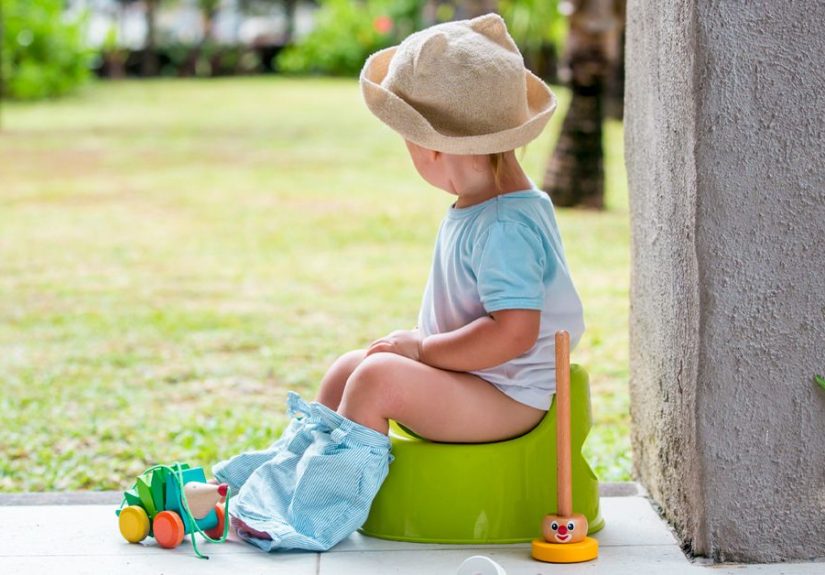
Before the first official potty training day, make the bathroom toddler-friendly. A child-size potty chair is often less intimidating than a full-size toilet because your child’s feet can rest firmly on the floor. If you use a regular toilet, add a secure potty seat and a sturdy step stool. Dangling feet can make pooping harder because children need support to relax their pelvic muscles.
Let your son help choose a potty, step stool, or underwear if possible. Giving him small choices builds ownership. You might say, “Do you want the blue underwear or the dinosaur underwear?” This is much more effective than asking, “Would you like to begin your toileting education today, sir?” because toddlers are not applying to graduate school.
Potty Training Supplies That Actually Help
You do not need every gadget on the internet. Start with a potty chair or toilet insert, a step stool, easy-off pants, wipes, hand soap, several pairs of underwear, and a simple reward system if your child responds well to praise or stickers. Books about using the potty can also help normalize the process.
Skip complicated gear that turns the bathroom into a toy store. The goal is to make toileting clear, calm, and repeatable. Too many distractions can turn potty time into “sit and perform a concert with bath toys,” which is entertaining but not always productive.
Step 2: Teach the Language of Potty Training
Use simple, consistent words for pee, poop, potty, toilet, wet, dry, and clean. Choose language your family is comfortable saying in public, because eventually your child may announce it at full volume in a grocery store. That is not a failure. That is toddler public relations.
Avoid words that create shame, such as “dirty,” “gross,” or “bad.” Pee and poop are normal body functions. A child who feels embarrassed may start hiding accidents or resisting the potty. Keep the tone matter-of-fact: “Your underwear is wet. Pee goes in the potty. Let’s clean up and try again next time.”
Step 3: Start With Sitting Down First
One of the best potty training tips for boys is to teach sitting before standing. Boys often need to learn both peeing and pooping on the toilet, and sitting makes the early stage simpler. If a boy learns to pee standing first, he may resist sitting later for bowel movements. Sitting also reduces the need to aim, which protects your bathroom floor from becoming a science experiment.
Once your son is comfortable using the potty for both pee and poop, you can introduce standing if he shows interest. A trusted male role model can demonstrate, or you can use a small flushable target. Keep it playful but not wild. The toilet is not a carnival game, no matter what your toddler believes.
Step 4: Create a Simple Potty Routine
Routine helps toddlers understand what to expect. Begin by inviting your son to sit on the potty at predictable times: after waking up, after meals, before bath, before leaving the house, and before bedtime. Keep sits shortusually a few minutes is enough. If nothing happens, that is fine. Say, “Nice try,” and move on.
Do not force long sitting sessions. A child trapped on the potty for too long may associate the bathroom with pressure or boredom. The goal is to build body awareness, not negotiate a hostage situation with a toddler wearing socks and no pants.
A Sample First-Day Potty Training Schedule
On a first training day at home, you might offer the potty when your child wakes up, after breakfast, mid-morning, before lunch, after nap, before outdoor play, before dinner, and before bed. Watch for signals such as wiggling, squatting, holding the diaper area, suddenly going quiet, or running behind furniture. Many toddlers have a “poop corner.” You know the one.
When you notice signs, calmly say, “It looks like your body needs to go. Let’s sit on the potty.” This teaches him to connect body signals with action.
Step 5: Use Praise, Not Pressure
Positive reinforcement works better than pressure. Praise effort, not just results. Say, “You sat on the potty when your body felt ready,” or “You pulled your pants down by yourself.” Specific praise helps your child understand what he did well.
Some families use sticker charts, small rewards, high-fives, or a silly potty dance. Rewards can help, but keep them small and consistent. Avoid turning every pee into a major awards ceremony, unless you truly want to maintain Broadway-level enthusiasm multiple times a day.
What Not to Do During Potty Training
Do not shame, punish, threaten, or compare your child with siblings or classmates. Avoid saying things like, “Big boys don’t have accidents.” Big boys do have accidents. So do adults, but we politely do not discuss those during dinner.
Also avoid power struggles. If your child refuses to sit, pause and try again later. Potty training is one area where toddlers quickly discover they control the equipment. The calmer you stay, the less interesting resistance becomes.
Step 6: Handle Accidents Calmly
Accidents are not just possible; they are part of the process. Your son is learning to recognize signals, stop playing, get to the bathroom, manage clothing, sit correctly, release pee or poop, wipe, flush, and wash hands. That is a lot of steps for a small person who may still think socks belong on his hands.
When an accident happens, stay neutral. Say, “Pee goes in the potty. Let’s clean up.” Have your child help in an age-appropriate way, such as putting wet clothes in a laundry basket or choosing dry underwear. This is not punishment. It is teaching responsibility.
If accidents increase dramatically, look for patterns. Is he too busy playing? Is he afraid of the bathroom? Is he constipated? Is the potty too far away? Is daycare using a different routine? Adjust the plan rather than assuming he is being difficult.
Step 7: Teach Pooping on the Potty
Poop training can take longer than pee training. Some boys are comfortable peeing in the potty but ask for a diaper to poop. This is common. Bowel movements require more relaxation, and some children worry that pooping in the toilet feels strange.
Help by keeping stools soft, offering fiber-rich foods, encouraging fluids, and using a footstool so his knees are slightly raised. Many children naturally need to poop after meals, so a short potty sit after breakfast or dinner can help. If your child has painful stools, constipation, frequent withholding, or blood in stool, contact a pediatrician before pushing potty training forward.
How to Help a Boy Who Is Afraid to Poop
Start small. Let him sit clothed on the potty. Then try sitting with a diaper on. Later, you can loosen the diaper or place it in the potty chair if your pediatrician agrees this is appropriate for your situation. Read books, use calm language, and avoid rushing. The more pressure a child feels around poop, the more likely he is to hold it, which can lead to constipation and more fear.
Step 8: Move From Diapers to Underwear
Once your son is using the potty regularly, you can switch to underwear during the day. Some parents choose a gradual approach with training pants; others pick a focused weekend at home. There is no single best potty training method for every child. The best method is the one your family can follow calmly and consistently.
Dress your child in easy clothing. Elastic-waist pants are your friend. Overalls, belts, complicated buttons, and superhero costumes may be adorable, but they are not ideal when a toddler gives you a four-second warning.
Nighttime dryness is different from daytime potty training. Many children need more time before they stay dry overnight. Continue using nighttime diapers or pull-ups if needed, and avoid making your child feel bad for sleeping through bladder signals.
Step 9: Potty Training Outside the House
Once your boy has some success at home, practice using bathrooms in other places. Public toilets can be loud, large, and intimidating. Automatic flushers are especially suspicious to toddlers. Carry sticky notes to cover sensors if the surprise flush scares your child.
Before leaving home, offer a potty trip. Bring extra underwear, pants, wipes, and a plastic bag for wet clothes. Keep a travel potty in the car if that helps your family. When you arrive somewhere new, show your child where the bathroom is before he needs it. This turns the bathroom from a mysterious emergency destination into a normal part of the outing.
Step 10: Know When to Pause or Ask for Help
Sometimes the best potty training move is to pause. If your child cries, resists every attempt, holds pee or poop, becomes constipated, or has nonstop accidents after a strong start, take a break for a few weeks. A pause is not failure. It is a reset.
Talk with your pediatrician if your child has pain while peeing, frequent constipation, extreme fear, no progress after months of consistent effort, sudden accidents after being trained, or signs of a urinary tract infection. Medical issues, stress, and developmental differences can affect toilet training, and professional guidance can make the process easier.
Common Potty Training Mistakes Parents Make
Starting Before Your Child Is Ready
Starting too soon can stretch the process and create frustration. Readiness is more important than age. Your child should be able to notice body signals, communicate needs, and participate in the routine.
Asking Too Many Questions
If you ask, “Do you need to go potty?” many toddlers will say no, even while actively peeing. Try a calm statement instead: “It’s potty time before we go outside.”
Making Accidents Too Emotional
Big reactions can make accidents stressful or, for some children, oddly entertaining. Stay calm, clean up, and move forward.
Ignoring Constipation
Constipation can derail potty training quickly. Painful poops may cause withholding, and withholding makes the problem worse. Keep bowel habits comfortable and ask your pediatrician for help when needed.
Real-Life Experience: What Potty Training a Boy Often Looks Like
In real family life, potty training a boy rarely looks like a perfect three-day success story. More often, it looks like a hopeful parent, a suspicious toddler, a tiny potty chair in the middle of the hallway, and someone asking, “Is that water?” with genuine fear.
One useful experience many parents share is that the first few days are more about observation than perfection. You learn your child’s rhythm. Maybe he pees 20 minutes after drinking milk. Maybe he hides behind the couch before pooping. Maybe he says “no potty” with great confidence and then immediately proves himself wrong. These patterns are not failures; they are clues.
Another common experience is that boys often need movement breaks. Some toddlers do not want to stop playing long enough to sit. A practical trick is to build potty time into transitions. Instead of interrupting play randomly, try “Potty, then snack,” “Potty, then backyard,” or “Potty, then bedtime story.” The potty becomes part of the sequence, not an annoying surprise.
Many families also discover that sitting first makes life easier. Teaching a boy to pee sitting down may feel counterintuitive to some parents, but it simplifies the beginning. There is no aiming lesson, no splash zone, and no debate about why poop also requires sitting. Once the basics are solid, standing can come later. By then, your child understands the goal: pee and poop go in the toilet, not wherever gravity happens to send them.
Rewards can help, but the best reward is often attention. Some boys love stickers. Others prefer a high-five, a stamp, a silly song, or calling Grandma with breaking news. Keep rewards cheerful but low-pressure. If a child starts squeezing out two drops of pee every six minutes for another sticker, congratulations: you have met a toddler contract negotiator.
Accidents are where parents often need the most emotional discipline. It is frustrating to clean the rug again. It is very frustrating when the accident happens two minutes after a potty sit. But toddlers are still learning timing and control. A calm response teaches more than a lecture. Try saying, “Your body started peeing before you got to the potty. Next time we’ll go sooner.” Then clean up and keep the day moving.
Public bathrooms may become their own chapter. Some boys are perfectly trained at home but panic when faced with a loud hand dryer or automatic toilet. Bring familiar wipes, offer to hold him securely, cover automatic sensors, and let him simply visit the bathroom without pressure at first. Confidence grows through repetition.
Finally, many parents learn that regression is normal. A child may do well for two weeks and then have accidents during a growth spurt, vacation, illness, new daycare routine, or family change. Go back to basics: easy clothes, regular potty times, calm reminders, and praise for trying. Potty training is not a straight line. It is more like a toddler drawing of a straight linewobbly, creative, and somehow on the wall.
Conclusion
Learning how to potty train a boy is less about finding the perfect method and more about matching the process to your child’s readiness. Start when he shows signs he can participate, make the bathroom comfortable, teach simple language, begin with sitting, create predictable routines, and respond to accidents with calm confidence.
Some boys train quickly. Others take weeks or months. Some master pee first and need extra help with poop. Some love the potty chair; others treat it like suspicious furniture. All of this can be normal. Your job is to guide, encourage, and keep the process positive. His job is to learn a brand-new body skill one small success at a time.
And when he finally runs to the potty on his own, remember to celebrate. Not forever, of course. But for that moment, yesthrow the tiny parade.