Table of Contents >> Show >> Hide
- Why RFK Jr.’s Measles Vaccine Statement Matters
- What Is Measles, and Why Is It So Contagious?
- How Effective Is the MMR Vaccine?
- The 2025 Measles Outbreak: A Warning Sign
- Why Low Vaccination Rates Create Outbreak Risk
- RFK Jr., Public Trust, and the Challenge of Mixed Messages
- What About Vitamin A and Other Measles Treatments?
- What Parents Should Know About MMR Safety
- How to Check Whether You Are Protected
- What Schools and Communities Can Learn
- Experience-Based Reflections: What This Story Feels Like on the Ground
- Conclusion
When Robert F. Kennedy Jr. said the MMR vaccine is the “most effective way” to prevent the spread of measles, the statement landed with more force than a typical public-health reminder. Kennedy has long been associated with vaccine skepticism, so his direct endorsement of the measles vaccine during a major outbreak became a headline for both political and medical reasons. But beneath the noise, the central public-health message was simple: measles spreads fast, complications can be serious, and vaccination remains the best protection.
That may sound like a sentence your pediatrician has been saying since flip phones were cool. Still, in 2025 and 2026, the United States saw why old advice can suddenly feel urgent again. Measles, once declared eliminated in the U.S. in 2000, returned in large outbreaks tied mainly to communities with low vaccination coverage. The lesson was not subtle. Measles does not need a red carpet invitation. Give it a room full of unprotected people, and it behaves like it owns the lease.
Why RFK Jr.’s Measles Vaccine Statement Matters
RFK Jr.’s comment mattered because it came during a period of public confusion. On one side were health agencies emphasizing the measles, mumps, and rubella vaccine as the strongest prevention tool. On the other were mixed messages online about vitamins, alternative treatments, “natural immunity,” and vaccine safety. When a public figure known for questioning vaccines says the MMR vaccine is the most effective way to stop measles spread, people notice.
The statement also arrived after severe consequences from the West Texas outbreak, including hospitalizations and child deaths among unvaccinated patients. In public health, timing matters. A clear message before an outbreak can prevent illness. A clear message during an outbreak can still save time, reduce confusion, and help families make decisions before exposure happens.
For readers trying to understand the issue without falling into a rabbit hole of arguments, the practical takeaway is this: Kennedy’s statement aligned with what mainstream medical authorities have consistently said. The MMR vaccine is not a trendy new product, a political badge, or a mysterious lab riddle. It is a long-used vaccine designed to prevent three viral infections, including measles, and it has been central to keeping measles rare in the United States for decades.
What Is Measles, and Why Is It So Contagious?
Measles is a viral illness that spreads through the air when an infected person coughs, sneezes, or even breathes in shared indoor spaces. It is famous among infectious-disease experts for being extremely contagious. If one infected person enters a room with unprotected people, most of those susceptible people can become infected. That is not drama. That is measles doing what measles does best, unfortunately.
Symptoms usually begin with fever, cough, runny nose, and red or watery eyes. A rash typically follows. Many people recover, but measles is not just “a rash and a few rough days.” It can lead to ear infections, diarrhea, pneumonia, brain inflammation, hospitalization, and death. Children under 5, adults over 20, pregnant people, and people with weakened immune systems face higher risk of severe complications.
Another reason measles worries health officials is that it can linger in the air for up to two hours after an infected person leaves an area. In other words, measles does not need to shake your hand. It can simply leave behind a viral calling card in a waiting room, classroom, airport gate, or church hall. That is why one case can quickly become an outbreak when vaccination rates are low.
How Effective Is the MMR Vaccine?
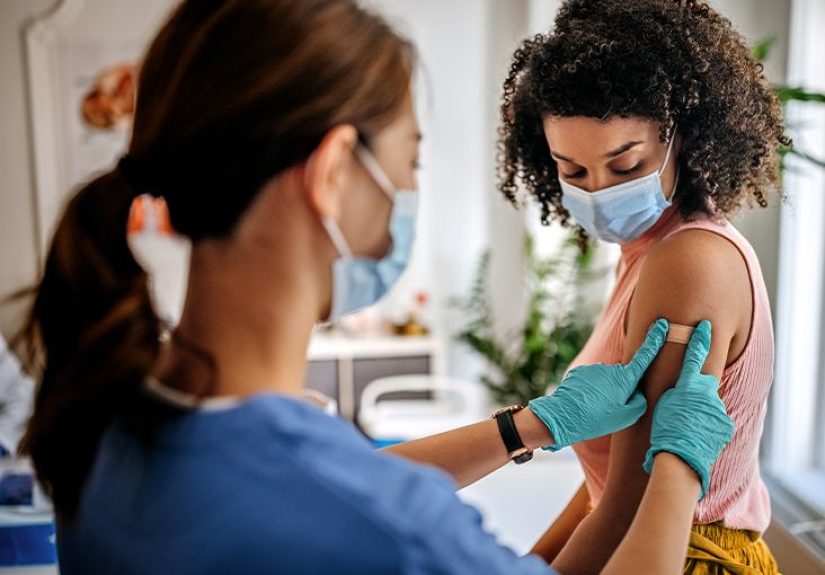
The MMR vaccine protects against measles, mumps, and rubella. According to public-health guidance, one dose is about 93% effective at preventing measles, while two doses are about 97% effective. That makes the vaccine one of the strongest tools available for preventing infection and limiting outbreaks.
The routine recommendation for children is two doses: the first at 12 through 15 months and the second at 4 through 6 years. Some children may receive the MMRV vaccine instead, which also protects against chickenpox. Adults who are unsure about their vaccination status, international travelers, college students, healthcare workers, and people in outbreak areas may need to check records or speak with a clinician about whether they are protected.
No vaccine is perfect, because biology does not read marketing brochures. But the MMR vaccine performs exceptionally well. Breakthrough cases can occur, especially during intense exposure, but vaccinated people are far less likely to become infected and less likely to fuel large chains of transmission. High vaccination coverage also protects people who cannot receive the vaccine for medical reasons, including some infants and immunocompromised individuals.
The 2025 Measles Outbreak: A Warning Sign
The 2025 measles outbreaks reminded the country that elimination does not mean extinction. The United States eliminated continuous domestic measles transmission in 2000, but imported cases can still happen when travelers bring the virus from areas where measles is circulating. If imported measles reaches a community with low vaccination coverage, it can spread rapidly.
In early 2025, a major multistate outbreak affected Texas, New Mexico, Oklahoma, and surrounding areas. West Texas became a central focus, with many cases connected to under-vaccinated communities. Health officials reported hundreds of cases, dozens of hospitalizations, and fatalities among unvaccinated people. The outbreak grew large enough to become one of the most serious U.S. measles events in decades.
CDC data later showed that 2025 brought a major national increase in measles cases and outbreaks compared with the previous year. The numbers were not just statistics for a government dashboard. They represented missed school days, overwhelmed families, emergency room visits, public-health investigations, quarantine guidance, and communities trying to catch up after the virus had already arrived.
Why Low Vaccination Rates Create Outbreak Risk
Measles is so contagious that communities generally need very high vaccination coverage to prevent sustained spread. Public-health experts often describe this as community protection or herd immunity. When enough people are immune, measles has trouble finding new hosts. When vaccination rates drop, the virus gets a map, a megaphone, and a running start.
This is especially important in schools, churches, close-knit neighborhoods, and community events where people interact frequently. A single case can expose many others before anyone realizes measles is present. Because early symptoms resemble common respiratory infections, a child may be contagious before the rash appears and before a diagnosis is confirmed.
That is why public-health responses often include isolation, contact tracing, checking vaccination records, alerting schools or healthcare facilities, and offering post-exposure vaccination or immune globulin in certain cases. These steps are useful, but they are much harder than preventing the outbreak in the first place. Prevention is the seatbelt. Outbreak control is trying to install the seatbelt after the car has already hit a pothole.
RFK Jr., Public Trust, and the Challenge of Mixed Messages
The reaction to RFK Jr.’s measles vaccine statement also revealed something bigger than one outbreak: public trust is fragile. When people hear conflicting messages from political leaders, influencers, physicians, relatives, podcasts, and social media clips, they may delay decisions. With measles, delay can be costly.
Some critics argued that Kennedy’s broader vaccine messaging remained confusing, even after his statement supporting MMR vaccination for measles prevention. Others viewed the statement as an important acknowledgment of what medical experts have said for years. Either way, the episode showed that clear communication matters. A sentence like “the MMR vaccine is the most effective way to prevent measles spread” should not need a decoder ring.
Public-health communication works best when it is direct, specific, and practical. Families do not need a shouting match. They need to know who is at risk, how measles spreads, when to vaccinate, what symptoms to watch for, and when to call a healthcare provider. The more complicated the conversation becomes, the easier it is for misinformation to sneak in wearing a lab coat it bought online.
What About Vitamin A and Other Measles Treatments?
During outbreaks, some discussions turn toward vitamin A, cod liver oil, steroids, antibiotics, or other treatments. This is where careful wording matters. Vitamin A can be used in medical care for certain measles patients, especially where deficiency is a concern, but it does not replace vaccination. Antibiotics do not cure measles because measles is caused by a virus, not bacteria. Steroids and other medications should only be used under medical supervision when clinically appropriate.
The most reliable approach is prevention through vaccination, followed by prompt medical guidance if symptoms appear or exposure occurs. Supportive care may include hydration, fever management, rest, and monitoring for complications. People should not attempt to self-treat measles based on social media advice, especially for children. A viral outbreak is not the ideal moment to crowdsource medical decisions from someone whose profile picture is a cartoon frog holding a smoothie.
If someone has been exposed to measles and is not immune, timing matters. MMR vaccination within 72 hours of exposure may provide some protection or reduce illness severity. Immune globulin may be recommended within six days for certain high-risk people who cannot receive the vaccine. These decisions should be made with a healthcare professional or local health department.
What Parents Should Know About MMR Safety
Parents naturally ask questions about vaccines. That is not a problem; it is part of making informed decisions. The key is using reliable information. The MMR vaccine has been widely studied and used for decades. Common side effects can include a sore arm, mild fever, or mild rash. Serious reactions are rare.
One persistent myth claims that MMR causes autism. Large scientific reviews have not supported that claim. The original claim that helped fuel the myth has been discredited, yet it continues to appear online because misinformation has the survival skills of a cockroach in a power outage. It keeps crawling back unless people know what they are looking at.
For most families, the real risk comparison is not “vaccine versus nothing.” It is “vaccine protection versus measles infection.” Measles can cause severe complications, and outbreaks disrupt entire communities. Vaccination lowers individual risk and helps protect infants, medically vulnerable people, and others who depend on community immunity.
How to Check Whether You Are Protected
People born after 1957 who are unsure about their measles immunity can start by looking for vaccination records. Parents may check pediatric records, school forms, state immunization registries, or healthcare portals. Adults may need to contact previous doctors, colleges, employers, or military records if relevant.
If records are missing, a healthcare provider can advise whether vaccination or a blood test for immunity makes sense. In many cases, receiving another MMR dose is acceptable for people who do not have evidence of immunity, but individual medical history matters. Pregnant people and people with certain immune-system conditions should speak with a clinician before vaccination because MMR is a live attenuated vaccine.
Travelers should be especially careful. Measles remains common in many parts of the world, and international travel can bring cases into the United States. Before travel, families should confirm that children and adults are up to date. Nobody wants their vacation souvenir to be a public-health investigation.
What Schools and Communities Can Learn
Schools and community organizations play a major role in measles prevention. Strong recordkeeping, clear communication with parents, and coordination with local health departments can reduce confusion when exposure occurs. Schools should also make vaccine information easy to find before there is an emergency.
Community leaders can help by sharing accurate information in plain language. In some areas, people may trust local physicians, pastors, school nurses, or longtime community members more than national officials. Public-health messages work better when delivered by people who understand local concerns and speak without condescension.
The goal is not to shame families. Shame rarely changes minds; it usually locks the door. The goal is to explain risk clearly, answer questions honestly, and make vaccination accessible. That includes convenient clinic hours, mobile vaccine events, language support, transportation help, and respectful conversations.
Experience-Based Reflections: What This Story Feels Like on the Ground
Imagine being a parent during a measles outbreak. At first, the news feels distant. A county somewhere else. A school you do not recognize. A headline you scroll past while pretending your coffee is still hot. Then a message arrives from school: possible exposure. Suddenly, vaccination records are not an abstract debate. They are a folder you are tearing through while your child asks why you look like you just saw a spider wearing shoes.
That is the real-life side of the RFK Jr. measles vaccine story. Public statements matter because they filter down into kitchens, clinics, classrooms, and group chats. When a trusted leader speaks clearly, a parent may schedule the appointment they had been postponing. When messages are vague, another parent may wait, search online, and fall into a swamp of half-truths. In measles outbreaks, waiting can create openings for the virus.
Healthcare workers experience the issue differently. For them, measles is not a political topic. It is an infection-control challenge. A suspected case can mean masks, isolation rooms, exposure lists, phone calls, chart reviews, and follow-up with patients who sat in the same waiting area. One measles case can turn an ordinary clinic day into a logistical escape room, except nobody wins a prize and everyone is tired.
School nurses also carry a heavy load. They may be asked to help identify students without complete records, communicate with anxious parents, and coordinate with public-health officials. Their work is often invisible until something goes wrong. Yet in an outbreak, their attention to detail can prevent wider spread.
For communities with vaccine hesitancy, the experience can be emotionally complicated. Some families may distrust government agencies because of past experiences, cultural concerns, religious beliefs, or misinformation they have heard repeatedly. Dismissing those concerns with a smug “just trust science” may feel satisfying for about five seconds, but it rarely builds trust. Better communication begins with listening, then carefully explaining what is known, what is not, and why the MMR vaccine is recommended.
The most powerful stories are often not dramatic. A parent checks a record and realizes a child missed the second dose. A grandparent asks whether they need proof of immunity before traveling. A teenager learns that measles is not just an old-timey disease from a history worksheet. A local clinic extends hours and dozens of families show up. These small decisions do not trend online, but they are exactly how outbreaks are contained.
RFK Jr.’s statement became news because of who said it. But the better story is what people do with the information afterward. If it pushes more families to verify vaccination, ask a real clinician, ignore miracle-cure posts, and take measles seriously, then the statement has practical value. Public health is not built only by national announcements. It is built when ordinary people make boring, responsible decisions that prevent very un-boring emergencies.
Conclusion
RFK Jr.’s statement that the MMR vaccine is the most effective way to prevent measles spread put a spotlight on a truth public-health experts have repeated for decades. Measles is highly contagious, potentially serious, and preventable. The MMR vaccine offers strong protection, especially after two doses, and high community vaccination rates help protect people who cannot be vaccinated.
The 2025 outbreaks showed how quickly measles can return when immunity gaps grow. They also showed the importance of clear communication. Whether the message comes from a doctor, school nurse, health department, or national official, the core guidance should remain steady: check your vaccination status, follow medical advice after exposure, and do not rely on unproven treatments to prevent a preventable disease.
In a world where misinformation travels faster than a toddler with a marker near a white couch, clarity is public-health fuel. The MMR vaccine remains the best tool for preventing measles spread, and that message is worth repeating until outbreaks become rare again.