Table of Contents >> Show >> Hide
- Who Is Mat Ellis, and Why Does His SaaS Scaling Advice Matter?
- The Core Theme of SaaStr Podcast #109: Growth Changes Everything
- Scaling SaaS Teams: Why Hiring More People Is Not the Same as Building a Company
- When Should a SaaS Startup Hire a COO?
- Balancing Sustainability and Growth in SaaS Hyper-Growth
- Culture Maintenance During Startup Hyper-Growth
- What SaaS Founders Can Learn from Cloudability’s FinOps Context
- Practical Framework: How to Scale a SaaS Team Without Losing Your Mind
- Why SaaStr Podcast #109 Still Feels Relevant
- Additional Experiences and Lessons Related to Scaling SaaS Teams with Startup Hyper-Growth
- Conclusion
- SEO Tags
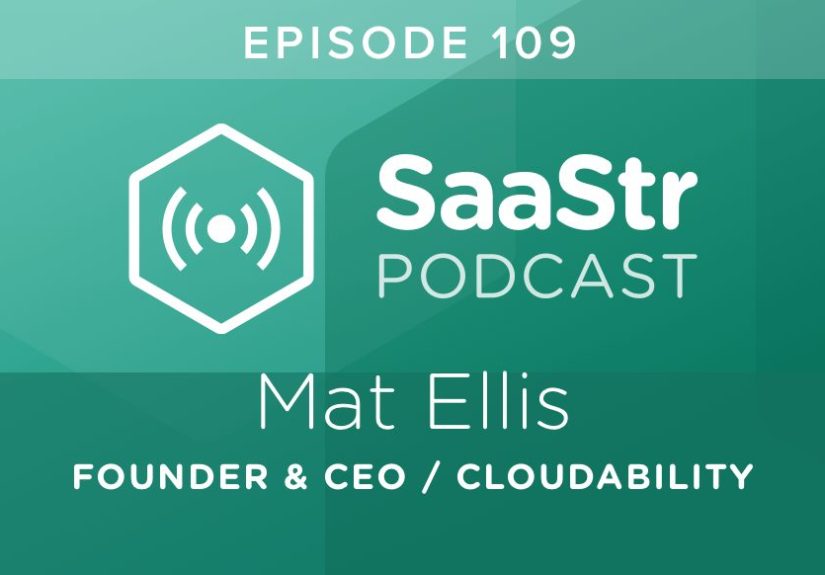
Hyper-growth sounds glamorous until you remember that someone still has to run payroll, onboard new hires, answer customer emails, forecast revenue, protect culture, manage cloud costs, and figure out why the sales team has three different definitions of “qualified lead.” SaaS growth is exciting, yes, but it is also a full-contact operational sport. That is exactly why SaaStr Podcast #109 featuring Mat Ellis, Founder and CEO of Cloudability, remains relevant for SaaS founders, operators, and startup leaders trying to scale without turning their company into a very expensive group chat.
In the episode, Ellis discusses the realities of scaling SaaS teams during startup hyper-growth, including when to hire a COO, how company stages change leadership needs, how to balance growth with sustainability, and why culture cannot be preserved by motivational posters alone. His perspective matters because Cloudability was not just another software startup chasing a buzzword. Founded in Portland in 2011, Cloudability helped shape the cloud cost management and FinOps category by giving companies better visibility into cloud spending across platforms such as AWS, Microsoft Azure, and Google Cloud.
The big lesson from this SaaStr conversation is simple but not easy: when a SaaS company grows fast, every system that worked yesterday becomes suspicious today. Hiring, communication, finance, product prioritization, customer success, and executive decision-making all need to mature. Hyper-growth rewards speed, but it punishes chaos. The founders who win are not the ones who merely hire faster. They are the ones who build teams, processes, and values that can survive acceleration.
Who Is Mat Ellis, and Why Does His SaaS Scaling Advice Matter?
Mat Ellis is best known as the founder and former CEO of Cloudability, a cloud financial management company that helped businesses understand, optimize, and govern cloud costs. Before Cloudability, Ellis held executive and technology roles at several startups and major companies, including Goldman Sachs, Pepsi-Cola, and Frito-Lay. That mix of enterprise technology experience and startup operating experience gave him a practical view of what breaks when a young company begins moving from scrappy survival to structured scale.
Cloudability’s story is especially useful because the company sat at the intersection of two powerful trends: the rise of SaaS and the explosion of cloud infrastructure. As companies moved more workloads into the cloud, engineering teams gained speed and flexibility, but finance teams often received a monthly bill that looked like it had been assembled by a caffeinated raccoon. Cloudability addressed that problem by helping engineering, finance, and business teams collaborate around cloud spending.
That matters because SaaS hyper-growth is not only about selling more subscriptions. It is about building an operating system for the company itself. When revenue rises quickly, headcount grows, customers become more demanding, infrastructure gets more complex, and leadership must shift from heroic individual effort to repeatable organizational performance.
The Core Theme of SaaStr Podcast #109: Growth Changes Everything
One of the most valuable ideas in the episode is that a startup does not remain the same company as it grows. A team of 10, a team of 50, and a team of 200 may share the same logo, but they are not managed the same way. The rituals, communication habits, and decision-making styles that feel natural in the early days often become bottlenecks later.
In the earliest stage, everyone knows everything because everyone is sitting close enough to hear the same customer complaint. Decisions happen quickly, job descriptions are flexible, and the product roadmap may live inside the founder’s head, which is convenient until the founder forgets where they parked it. But as the company expands, informal coordination stops working. Teams need clearer ownership, stronger managers, documented processes, and better cross-functional communication.
This is one of the hardest emotional transitions for founders. Early startup culture often celebrates improvisation. Hyper-growth demands repeatability. The goal is not to turn the company into a slow-moving bureaucracy wearing a branded hoodie. The goal is to create enough structure so great people can move faster without stepping on each other’s keyboards.
Scaling SaaS Teams: Why Hiring More People Is Not the Same as Building a Company
During hyper-growth, hiring becomes one of the company’s most visible activities. New employees appear every week. Slack channels multiply. Calendars become combat zones. The office, or remote workspace, starts to feel like a small airport with better snacks. But hiring alone does not solve scaling problems. In fact, hiring without structure can multiply confusion.
A SaaS company must know what kind of talent it needs at each stage. Early employees are often generalists who thrive in ambiguity. They can sell, support, troubleshoot, write copy, fix a demo, and calm down a customer before lunch. As the business matures, specialists become more important. The company needs leaders in sales operations, customer success, product management, finance, people operations, security, and data analytics.
Hire for the Next Stage, Not the Last Emergency
A common mistake in startup hyper-growth is hiring only to fix the latest fire. A customer onboarding process breaks, so the company hires customer success managers. Sales forecasting becomes messy, so it hires revenue operations. Engineering velocity slows, so it hires more developers. These hires may be necessary, but reactive hiring can create a patchwork organization.
Instead, SaaS leaders should design the organization around the next stage of growth. That means asking practical questions: What will break when annual recurring revenue doubles? Which decisions still depend too heavily on the founder? Which teams need managers before they become overwhelmed? Which customer segments require more specialized support? Which metrics should determine whether a role is truly needed?
Build Management Before the Team Outgrows It
Many startups delay management because they fear “big company thinking.” That fear is understandable. Nobody wants to replace speed with approval chains, committees, and meetings about future meetings. But management is not the enemy of startup culture. Bad management is. Good management creates clarity, removes obstacles, coaches people, and turns company goals into daily execution.
For a SaaS team in hyper-growth, frontline managers are crucial. They translate strategy into priorities. They protect teams from randomization. They give feedback before problems become resignation letters. Without capable managers, founders become the default escalation point for everything, which is how CEOs end up approving software subscriptions at midnight while pretending this is “being close to the business.”
When Should a SaaS Startup Hire a COO?
One of the central questions in SaaStr Podcast #109 is when a founder should hire a COO. The answer is not “when the CEO is tired,” although that is usually when the thought first appears. A COO should not be hired as a vague adult-in-the-room figure. The role needs a clear purpose.
In a scaling SaaS company, a COO often becomes valuable when the CEO can no longer personally manage all major operating functions without slowing the business down. This usually happens after the company has found product-market fit, built a repeatable go-to-market motion, and started facing complexity across sales, customer success, product, finance, and people operations.
The right COO can help turn ambition into operating cadence. They may oversee revenue operations, customer success, internal systems, business planning, or cross-functional execution. In some companies, the COO runs day-to-day operations so the CEO can focus on vision, fundraising, key customers, recruiting executives, and long-term strategy. In others, the COO becomes a strategic partner who helps the leadership team make better decisions faster.
What to Look for in a First COO
A first COO in a SaaS startup should be more than an impressive resume with enterprise logos. The best fit is usually someone who understands ambiguity but can create structure, someone who respects startup speed but knows how to build durable systems. They should be strong enough to challenge the CEO, humble enough to serve the company mission, and practical enough to know that a dashboard is not a strategy.
Key qualities include operational discipline, cross-functional credibility, talent judgment, communication skill, financial literacy, and emotional maturity. The COO must work well with sales, product, engineering, finance, and customer success. They must also understand the difference between useful process and process theater. Useful process helps people make decisions. Process theater gives everyone a new spreadsheet and a tiny headache.
Balancing Sustainability and Growth in SaaS Hyper-Growth
The phrase “grow at all costs” has lost much of its shine. Modern SaaS companies are under pressure to grow efficiently, retain customers, manage burn, and prove that expansion is supported by real unit economics. Ellis’s discussion of sustainability versus growth fits perfectly into this broader SaaS reality.
Growth matters. SaaS companies need momentum, market share, customer adoption, and revenue expansion. But growth that depends on uncontrolled spending, weak retention, or heroics from exhausted employees is fragile. Sustainable growth requires a business model that improves as it scales.
For SaaS operators, this means paying close attention to metrics such as annual recurring revenue, net revenue retention, customer acquisition cost, gross margin, churn, payback period, expansion revenue, and the Rule of 40. These metrics do not replace judgment, but they do keep leadership honest. A company can feel busy while quietly becoming inefficient. Metrics are the smoke alarm before the kitchen is fully on fire.
Customer Success Is Not a Department; It Is a Growth Engine
In SaaS, the sale is only the beginning of the relationship. A customer who signs a contract but never reaches value is not a success story; it is churn wearing a temporary disguise. That is why scaling SaaS teams must invest early in customer onboarding, adoption, support, education, and expansion.
Strong customer success teams help customers achieve measurable outcomes. They reduce churn, identify expansion opportunities, and bring product feedback back to the business. In hyper-growth, customer success also protects the brand. When sales accelerates faster than onboarding capacity, customers feel the gap. The result can be disappointment, support overload, and negative word of mouth.
The Cloudability example is especially relevant here. Cloud cost management requires customers to change behavior across engineering, finance, and business teams. That kind of product does not succeed through software alone. It requires education, trust, reporting, accountability, and ongoing engagement. In other words, the customer success motion must match the complexity of the customer problem.
Culture Maintenance During Startup Hyper-Growth
Culture is easy to describe when a company is small. It is how people treat each other, make decisions, handle customers, and respond when something breaks. But when a SaaS startup grows quickly, culture becomes harder to preserve because new employees did not experience the early stories. They were not there when the first big customer signed, when the product broke at the worst possible moment, or when the founders assembled office furniture with the confidence of people who had definitely not read the instructions.
To scale culture, leaders must make it explicit. Values should be connected to behaviors. Hiring interviews should test for those behaviors. Performance reviews should reinforce them. Managers should model them. Company rituals should repeat them. Culture cannot live only in a slide deck presented during onboarding and then abandoned like a gym membership in February.
Keep the Mission Clear
Hyper-growth creates noise. Teams move fast, priorities shift, and new layers form. A clear mission helps people decide what matters when they cannot ask the founder directly. For Cloudability, the mission connected to helping companies make better decisions about cloud spending. That kind of mission gives teams a shared language: business value, visibility, accountability, and efficiency.
A strong mission also helps hiring. Candidates who understand the mission can decide whether they are energized by it. Employees who believe in the mission can tolerate the inevitable discomfort of growth because they know what the discomfort is for.
Protect Communication Quality
As SaaS companies scale, communication does not automatically improve. It usually gets worse unless leaders design it intentionally. More people means more assumptions, more meetings, more tools, and more chances for someone to say, “I thought product owned that.”
Effective scaling requires communication systems: leadership meetings with decisions, not just updates; company all-hands that explain context; written planning documents; clear ownership; and operating rhythms that connect strategy to execution. The goal is not to communicate everything to everyone. The goal is to make sure the right people have the right context at the right time.
What SaaS Founders Can Learn from Cloudability’s FinOps Context
Cloudability’s category adds another layer to the conversation. FinOps is built on the idea that cloud financial management is a shared responsibility between engineering, finance, and business teams. That idea mirrors a larger truth about SaaS scaling: the best companies break down silos before silos become expensive.
In a fast-growing SaaS company, engineering cannot operate separately from finance. Sales cannot promise features without product alignment. Marketing cannot generate demand without understanding customer success. Finance cannot forecast accurately without reliable sales and retention data. The company must become more connected as it gets bigger, not less.
This is why cross-functional leadership is so important. Hyper-growth exposes every weak handoff. If marketing celebrates leads that sales does not want, growth slows. If sales closes customers that product cannot serve, churn rises. If engineering builds without customer insight, roadmap quality suffers. If finance sees cloud spending only after the bill arrives, margins take a surprise vacation.
Practical Framework: How to Scale a SaaS Team Without Losing Your Mind
Founders and operators can turn the lessons from SaaStr Podcast #109 into a practical scaling framework. The framework begins with clarity, then adds leadership, systems, metrics, and culture.
1. Define the Stage You Are Actually In
Do not copy the operating model of a public SaaS company if your startup is still proving repeatability. A 20-person company needs different systems than a 300-person company. Start by identifying your current stage: searching for product-market fit, building repeatable sales, scaling go-to-market, expanding enterprise accounts, or preparing for international growth. Each stage has different hiring needs and risks.
2. Identify the Bottleneck
Every scaling company has a bottleneck. It might be founder decision-making, sales capacity, onboarding, product reliability, management depth, lead quality, implementation speed, or cash discipline. Hiring should target the bottleneck, not simply add headcount because the board deck looks more impressive with a steeper employee chart.
3. Create a Leadership Operating Rhythm
Weekly executive meetings, monthly business reviews, quarterly planning, and clear reporting dashboards can sound boring, but they are the skeleton of scale. Without them, leaders rely on vibes. Vibes are great for choosing a playlist, less great for managing revenue targets.
4. Make Culture Operational
Culture should show up in hiring scorecards, onboarding, promotions, customer interactions, decision frameworks, and leadership behavior. If a value does not influence decisions, it is decoration. In hyper-growth, decoration gets ignored.
5. Watch Efficiency as Closely as Growth
Growth is exciting, but efficiency determines durability. Track acquisition cost, payback period, retention, gross margin, burn multiple, and expansion revenue. A SaaS company that grows fast while improving efficiency earns more strategic options. A company that grows fast while burning recklessly may simply be sprinting toward a funding problem.
Why SaaStr Podcast #109 Still Feels Relevant
Although SaaStr Podcast #109 was released years ago, its themes remain timely because the fundamentals of SaaS scaling have not changed. Tools have improved. AI has entered the operating stack. Remote work has changed hiring markets. Cloud infrastructure has become more complex. But founders still face the same core challenge: how to transform a small, passionate startup into a high-performing company without crushing the qualities that made it special.
Mat Ellis’s perspective is valuable because he speaks from the operator’s seat. Scaling is not a theory when customers are waiting, investors are watching, employees need clarity, and cloud bills keep arriving with the emotional subtlety of a marching band. The episode reminds founders that leadership must evolve as the company evolves.
Additional Experiences and Lessons Related to Scaling SaaS Teams with Startup Hyper-Growth
One of the most common experiences in SaaS hyper-growth is the moment when the founding team realizes that effort is no longer enough. In the early days, effort solves many problems. A founder jumps on sales calls, answers support tickets, reviews product copy, interviews candidates, and somehow remembers to eat a granola bar at 4 p.m. But once growth accelerates, the company needs leverage. Leverage comes from managers, systems, documentation, automation, and trust.
A practical example is sales onboarding. In a small SaaS startup, new sales hires may learn by shadowing the founder. That works for one or two people. It fails when the company hires ten account executives in a quarter. Without a structured onboarding program, each rep invents a slightly different pitch. Forecasting becomes inconsistent, discovery calls vary in quality, and customers receive mixed expectations. The fix is not more founder involvement. The fix is a repeatable sales playbook, call reviews, qualification criteria, product training, and clear handoffs to customer success.
Another experience involves product prioritization. Hyper-growth brings louder customers, bigger prospects, and more feature requests. Suddenly, every deal seems to require “just one small thing,” and that small thing somehow needs six engineers, a redesigned permission model, and a minor miracle. Strong SaaS companies create a product decision framework that weighs revenue opportunity, customer impact, strategic fit, technical debt, and long-term scalability. Without that discipline, the roadmap becomes a buffet where the biggest customer gets the largest plate.
People operations also changes dramatically. Early employees often tolerate ambiguity because they helped create it. Newer employees need clearer expectations. They want to know how decisions are made, how performance is measured, how promotions work, and what success looks like in their role. This does not mean the company has become less entrepreneurial. It means the company is growing up. Clear people systems reduce confusion and help employees do their best work without needing psychic powers.
Customer success provides another useful lesson. In hyper-growth, it is tempting to celebrate new bookings while ignoring the post-sale experience. But SaaS revenue quality depends on retention and expansion. If customers do not adopt the product, renewal conversations become awkward. A scaling SaaS company should invest in implementation, health scoring, usage analytics, executive business reviews, and customer education before churn becomes a board-level emergency. Customer success should not be the cleanup crew for overpromising. It should be a strategic partner in growth.
Finally, founders must learn to change their own jobs. The CEO of a 15-person startup and the CEO of a 150-person SaaS company are not doing the same work. At first, the founder may be the chief product thinker, top salesperson, recruiter, fundraiser, and cultural center. Later, the CEO must become a builder of leaders. That means letting go of decisions, hiring people better than themselves in key functions, and creating alignment through communication rather than constant personal involvement.
The emotional side of this transition is real. Founders may feel that delegation creates distance from the company. In reality, thoughtful delegation creates capacity. It allows the CEO to focus on the work only they can do: setting vision, attracting senior talent, building investor confidence, strengthening strategic partnerships, and protecting the company’s values. The best founders do not scale by becoming less involved. They scale by becoming involved in higher-leverage ways.
Conclusion
SaaStr Podcast #109 with Mat Ellis is more than a conversation about Cloudability. It is a practical reminder that SaaS hyper-growth requires leadership maturity. Startups do not scale simply because demand is strong or funding is available. They scale because teams learn how to hire well, communicate clearly, protect culture, serve customers, manage resources, and build operating systems that support speed without chaos.
Mat Ellis’s Cloudability journey highlights a central truth for SaaS founders: growth creates complexity, and complexity must be managed intentionally. A company that grows quickly without structure may look successful from the outside while quietly creating internal drag. But a company that combines ambition with discipline can turn hyper-growth into long-term advantage.
The takeaway is not to slow down. The takeaway is to scale smarter. Hire for the next stage. Bring in operational leadership when the business needs it. Treat culture as a system, not a slogan. Use metrics to balance speed with sustainability. And remember that in SaaS, the best companies do not just grow revenue. They grow capability.
Note: This article is an original, web-ready synthesis based on publicly available information about SaaStr Podcast #109, Mat Ellis, Cloudability, FinOps, and widely accepted SaaS scaling practices.