Table of Contents >> Show >> Hide
- The Revolutionary Era Had More Than Powdered Wigs and Tea Drama
- Who Was the Public Universal Friend?
- The 1776 Illness That Became a New Beginning
- Why the Public Universal Friend Attracted Followers
- The Public Universal Friend and Anti-Slavery Beliefs
- From Preaching Roads to a New York Settlement
- Why You Probably Didn’t Learn This Story in School
- The Public Universal Friend and Early American Gender History
- Lessons From the Public Universal Friend’s Story
- Experience-Based Reflections: What This Story Feels Like Today
- Conclusion
- SEO Tags
Note: This article is written for web publication and synthesizes reputable historical research about the Public Universal Friend, Revolutionary America, Quaker religious culture, and early American gender nonconformity without inserting source links.
The Revolutionary Era Had More Than Powdered Wigs and Tea Drama
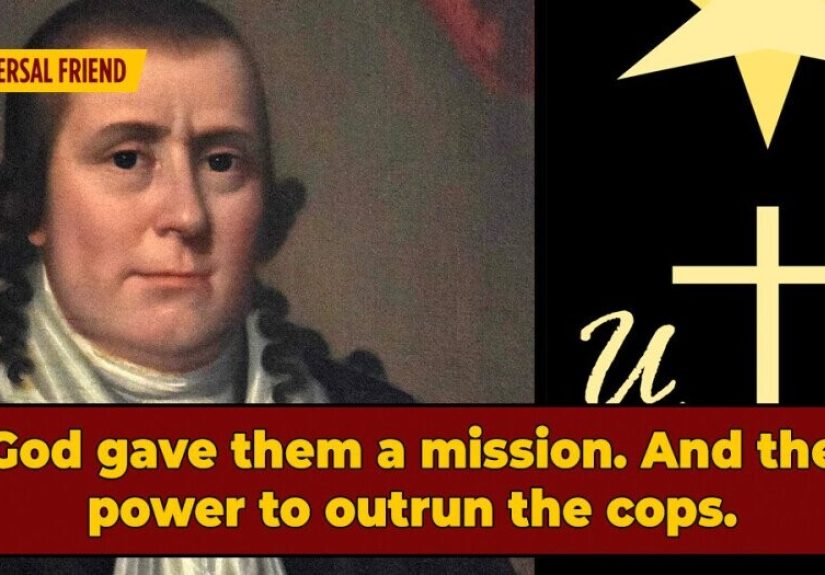
When most people think of 1776, the mental slideshow usually includes the Declaration of Independence, dramatic speeches, candlelit rooms, and a surprising number of men who looked like they lost a fight with a bag of flour. But tucked behind the familiar story of America’s founding is another remarkable figure: the Public Universal Friend, a preacher who emerged from a near-fatal illness in Rhode Island and announced a new spiritual identity that did not fit neatly into the categories of male or female.
Born in 1752 in Cumberland, Rhode Island, the person later known as the Public Universal Friend was assigned female at birth and given the name Jemima Wilkinson. Raised in a Quaker family, the future preacher grew up in a world shaped by religious discipline, community scrutiny, and the restless spiritual energy that had been building since the Great Awakening. Then, in 1776, while revolution was tearing the colonies away from Britain, a severe fever changed everything.
According to the Friend’s own religious account, Jemima Wilkinson died during that illness, and the body was reanimated by a divine spirit sent to preach repentance and salvation. From that point forward, the Friend refused the birth name, rejected ordinary gender expectations, and became known as the Public Universal Friend. That alone should have earned a full chapter in every U.S. history textbook. Instead, many students get five paragraphs on tariffs and zero paragraphs on the genderless prophet who built a religious movement during the American Revolution. History, apparently, has always had a weird filing system.
Who Was the Public Universal Friend?
The Public Universal Friend was an itinerant preacher, religious founder, and one of the most unusual public figures of Revolutionary-era America. The Friend preached across Rhode Island, Massachusetts, Connecticut, Pennsylvania, and eventually New York, attracting followers who became known as the Society of Universal Friends. The message was not entirely new: repent, live righteously, reject sin, prepare for divine judgment, and seek salvation. But the messenger was impossible for the public to ignore.
The Friend’s identity unsettled ordinary eighteenth-century assumptions. In a world where clothing, names, work, worship, and legal rights were deeply tied to gender, the Friend stepped outside the expected script. The Friend dressed in a distinctive style that mixed elements associated with men’s and women’s clothing, including dark robes, a cravat, and a broad-brimmed hat. The Friend also avoided the bonnet expected of women in many communities. The outfit was not a fashion experiment in the modern influencer sense. It was a theological statement worn in public, which is much harder to ignore than a footnote.
The Friend also resisted gendered language. Followers often referred to the Friend by title rather than by pronouns. That choice mattered. Names and pronouns were not minor details in this story; they were part of the Friend’s claim that the old identity had passed away and a new divine mission had begun. Whether modern readers understand the Friend through the lens of nonbinary history, religious mysticism, or radical self-definition, the historical record makes one thing clear: the Friend did not want to be understood as an ordinary woman preacher.
The 1776 Illness That Became a New Beginning
The Friend’s transformation began during a fever in October 1776. Some accounts connect the illness to a contagious outbreak often called “Columbus fever,” likely typhus or a similar epidemic sickness. The timing was almost too symbolic. The colonies were in rebellion. The old political order was cracking. Families were divided by loyalties. Quakers, with their pacifist commitments, were under pressure in a world suddenly obsessed with muskets, militias, and patriotic noise. Then a young Quaker from Rhode Island rose from a sickbed and declared that the person once known as Jemima Wilkinson had died.
To skeptics, this sounded like religious theater. To followers, it was a miracle. To historians, it is a window into how the American Revolution created space not only for political experimentation but also for spiritual and social boundary-testing. The Friend’s story reminds us that “revolution” did not only happen in congresses and battlefields. It also happened in kitchens, meetinghouses, sickrooms, and crowded public gatherings where ordinary people asked what kind of world they were living in and who had the authority to speak for God.
A Message That Was Familiar and Radical at the Same Time
The Public Universal Friend’s sermons drew heavily from Christian ideas already familiar to Quakers and other revival-minded Protestants. The Friend preached repentance, humility, moral discipline, free will, and the possibility of salvation. The Friend also opposed slavery, promoted spiritual equality, and encouraged sexual abstinence. These teachings overlapped with Quaker values, especially the belief that every person possessed an inner light and could respond directly to divine truth.
Yet the Friend’s ministry was radical because it combined familiar religious language with an unfamiliar public identity. The Friend did not simply say, “Here is another sermon.” The Friend’s very body, clothing, name, and social presence became part of the sermon. In a society that liked its categories tidy, the Friend was a walking theological question mark. And as anyone who has ever asked a question in a room full of people pretending to understand the assignment knows, question marks can be dangerous.
Why the Public Universal Friend Attracted Followers
The Society of Universal Friends did not form because people were bored and needed a weekend hobby. The Friend’s followers were drawn by religious urgency, personal charisma, and a sense that the world was changing fast. The American Revolution had scrambled older forms of authority. Churches, governments, families, and local communities were all renegotiating power. In that climate, a preacher claiming direct divine authority could sound either terrifying or thrilling, depending on where you stood in the crowd.
The Friend’s audiences included the curious, the devout, the suspicious, and the scandal-loving. Some came to hear a message of salvation. Others came to see the preacher who did not conform to gender expectations. In modern terms, the Friend had “viral” appeal, except the eighteenth-century version required walking through mud to a meetinghouse instead of tapping a screen while eating cereal.
The Role of Women in the Movement
One of the most fascinating parts of the Society of Universal Friends was the prominence of women. Several unmarried women held important roles within the community, sometimes managing property, organizing households, and participating in religious life in ways that challenged ordinary gender hierarchy. This did not mean the Society was a modern equality paradise with better lighting and group therapy. It was still an eighteenth-century religious movement. But compared with many surrounding communities, it gave certain women unusual visibility and authority.
The Friend’s ministry also attracted people who were already dissatisfied with established churches. Some followers came from Quaker backgrounds; others were influenced by the revival culture of the New-Light Baptists and broader evangelical movements. The result was a community that blended Quaker discipline, apocalyptic expectation, frontier ambition, and a strong loyalty to the Friend’s spiritual authority.
The Public Universal Friend and Anti-Slavery Beliefs
The Friend’s opposition to slavery is another reason this story deserves more attention. The Society of Universal Friends included Black members, and some followers who had enslaved people were persuaded to free them. This anti-slavery position aligned with important currents in Quaker reform, especially in Rhode Island and other parts of the Northeast where Quakers increasingly condemned slavery during the late eighteenth century.
Of course, early America was full of contradictions so large they practically needed their own zip codes. The same nation that declared “all men are created equal” also protected slavery. The same revolutionary generation that talked endlessly about liberty often denied that liberty to women, Black Americans, Native peoples, and anyone who did not fit the approved social blueprint. The Public Universal Friend’s movement did not solve those contradictions, but it exposed some of them. By preaching spiritual equality and opposing slavery, the Friend stood in uncomfortable contrast to a society that loved freedom in theory and rationed it in practice.
From Preaching Roads to a New York Settlement
By the late 1780s and early 1790s, the Society of Universal Friends moved toward a more ambitious goal: building a community in western New York. The settlement near what is now Penn Yan and the town of Jerusalem was meant to offer the Universal Friends a place where they could live according to their religious ideals. In the backcountry of the new United States, they hoped to create a safe and disciplined spiritual community away from hostile crowds and gossip-hungry neighbors.
That plan sounded beautiful. Then land disputes arrived, because nothing says “early American utopia” like a property title problem. The Universal Friends faced conflicts over land ownership, legal claims, resurveyed boundaries, and disagreements within the movement. The settlement survived, but it never became the peaceful kingdom its supporters imagined. The community’s troubles show how difficult it was to build alternative societies in a new nation where land speculation, legal uncertainty, and personal ambition could turn even holy dreams into paperwork nightmares.
The Friend’s Home and Final Years
The Friend eventually lived in an impressive home in Jerusalem, New York, often called the Friend’s Home. The house became a physical symbol of the movement’s presence in the Finger Lakes region. The Friend continued to receive visitors and preach into later life, though health declined in the years before death. In 1819, the Friend “left time,” as followers sometimes described it. The phrase reflected their belief that the original person had already died in 1776 and that the divine mission had now ended.
After the Friend’s death, the Society of Universal Friends gradually weakened. Charismatic religious movements often struggle after the founder is gone, especially when legal conflicts, internal disagreements, and public suspicion already exist. By the middle of the nineteenth century, the movement had largely disappeared. But the story did not vanish. It lingered in local memory, hostile biographies, historical archives, museum collections, and, eventually, modern scholarship.
Why You Probably Didn’t Learn This Story in School
So why is the Public Universal Friend not a household name? Part of the answer is that U.S. history education tends to simplify the Revolutionary era into a clean political narrative: colonies rebel, founders argue, documents get signed, battles happen, a nation appears. That storyline leaves little room for religious outsiders, gender-nonconforming figures, frontier communities, or people who complicate the neat picture of early America.
Another reason is that earlier historians often treated the Friend with suspicion or mockery. Some nineteenth-century accounts focused on rumors, scandal, and accusations of fraud. The Friend’s refusal to conform to gender norms made hostile writers even more eager to dismiss the movement as strange or unstable. For a long time, the easiest way for mainstream history to deal with people who did not fit conventional categories was to shove them into the attic of “oddities” and hope no one asked follow-up questions.
Modern historians have taken a more careful approach. Instead of asking only whether the Friend was “real” or “fraudulent,” scholars now ask what the Friend’s life reveals about religion, gender, authority, and identity in Revolutionary America. That shift matters. It allows the Friend to be understood not as a historical gimmick, but as a serious figure who challenged the boundaries of an emerging nation.
The Public Universal Friend and Early American Gender History
It would be too simple to slap a twenty-first-century label onto an eighteenth-century life and call the job done. The Public Universal Friend lived in a different religious, legal, and social world from ours. The Friend described identity through the language of divine transformation, not through modern medical or political terminology. Still, the Friend’s rejection of the birth name, refusal of ordinary gender classification, and insistence on a new public identity make this story deeply relevant to the history of gender nonconformity in America.
The Friend’s life proves that people have challenged gender norms for far longer than many modern debates admit. The past was not a place where everyone obediently fit into two tidy boxes while wearing historically accurate buckles. Human identity has always been more complicated, and early America was no exception. The Public Universal Friend forces us to see that complexity.
A Founder Without a Monument on Every Corner
The Friend did not found a nation, but the Friend did found a religious society. That achievement deserves attention. The Society of Universal Friends was one of the earliest religious movements in the United States led by a person assigned female at birth, and it developed during the same era that produced the country’s founding documents. While politicians debated rights and representation, the Friend created a community that tested spiritual authority, gender expectations, anti-slavery conviction, and frontier settlement.
In other words, the Public Universal Friend belongs in the broader story of American founding. Not because the Friend wrote the Constitution or showed up at Yorktown with dramatic background music, but because the Friend reveals what the Revolution made possible and what it failed to resolve. The new republic promised freedom, but people still argued over who could claim it, define it, preach it, and live it.
Lessons From the Public Universal Friend’s Story
The first lesson is that American history is much stranger, richer, and more human than the textbook highlight reel. The Revolution was not only about elite men debating liberty. It was also about religious seekers, enslaved people demanding freedom, women claiming authority, Indigenous nations navigating danger, and communities experimenting with new ways of living.
The second lesson is that identity and belief have always shaped public life. The Friend’s gender nonconformity was not a private detail tucked politely behind the curtains. It was central to how people understood the Friend’s mission. Supporters saw holiness. Critics saw danger. Either way, they could not ignore it.
The third lesson is that movements built around charismatic leaders can inspire genuine devotion while also creating conflict. The Society of Universal Friends offered spiritual hope and social possibility, but it also faced internal disputes, public hostility, and practical problems. That mix of idealism and messiness is not a flaw in the historical story. It is the historical story.
Experience-Based Reflections: What This Story Feels Like Today
Reading about the Public Universal Friend today can feel like opening a hidden drawer in the national memory. You think you know the room: Washington, Jefferson, Adams, Franklin, the Revolution, the Declaration, the familiar portraits staring sternly from museum walls as if someone just told them brunch was canceled. Then suddenly, there is the Friend: a preacher in dark robes, refusing a birth name, rejecting gendered expectations, gathering followers, challenging slavery, and building a religious movement on the edge of the new republic.
One experience this story creates is surprise. Not mild surprise, like finding an extra fry at the bottom of the bag, but real historical surprise. Many readers assume conversations about gender identity are entirely modern. The Friend’s life complicates that assumption. The language was different, the theology was different, and the social world was wildly different, but the basic fact remains: an eighteenth-century American publicly lived outside ordinary gender categories and built a community that recognized that identity.
Another experience is discomfort, especially if you grew up with a polished version of early American history. The Public Universal Friend does not fit comfortably into patriotic mythology or simple culture-war talking points. The Friend was religiously conservative in some ways and socially radical in others. The Friend preached repentance and abstinence, but also disrupted gender expectations. The Friend drew from Quaker tradition, yet broke with Quaker authority. The Friend challenged slavery, yet lived in a nation still deeply invested in racial inequality. That complexity is exactly why the story is valuable. Real people are rarely neat enough to fit on a bumper sticker.
There is also a sense of recognition. Many people know what it feels like to be misnamed, misunderstood, or reduced to a version of themselves that others find easier to manage. The Friend’s refusal to answer to the old name can be read as a powerful act of self-definition, even if the Friend explained that act through divine calling rather than modern identity language. The emotional truth still lands: the name people use for you can become a battleground over who gets to define your life.
The story also encourages better historical curiosity. Instead of asking, “Why didn’t school teach me this?” and stopping there, the better question is, “What else got left out, and why?” The answer is not always a conspiracy. Sometimes it is curriculum limits. Sometimes it is discomfort. Sometimes it is old bias repeated until it looks like tradition. And sometimes it is simply that history has too many fascinating people and not enough classroom hours. Still, the omissions matter because they shape what a society believes is normal, important, and possible.
For writers, teachers, students, and everyday history nerds, the Public Universal Friend offers a reminder that the past is not dead paperwork. It is full of people arguing over bodies, names, faith, power, land, freedom, and belonging. In other words, it is full of the same big questions we keep arguing about today, just with more candle wax and worse dental care.
The most meaningful experience of studying the Friend may be humility. The Friend’s life asks modern readers to resist easy conclusions. Was the Public Universal Friend a prophet, a religious innovator, a gender-nonconforming pioneer, a charismatic leader, a controversial figure, or all of the above? The best answer may be: yes, but carefully. Historical people deserve to be understood in their own context, not flattened into whatever shape makes us most comfortable.
That is why the Public Universal Friend belongs in the story of 1776. Not as a quirky side note, but as proof that the American founding was never simple. The Revolution opened doors, but not everyone was invited through them equally. The Friend walked through anyway, preaching a message that made people listen, argue, follow, mock, and remember. More than two centuries later, that strange, bold, complicated voice still echoes from the margins of the founding era, asking whether we are finally ready to learn the history we skipped.
Conclusion
The Public Universal Friend is one of the most fascinating figures in early American history because the story refuses to sit still. It is about religion, but not only religion. It is about gender, but not only gender. It is about the American Revolution, but not the version that fits neatly between a flag illustration and a quiz question. The Friend’s life reveals a young nation full of spiritual experimentation, social anxiety, bold self-definition, and unresolved contradictions.
In 1776, while the colonies declared independence, the Public Universal Friend declared a different kind of transformation. The Friend’s ministry challenged assumptions about who could preach, who could lead, who could claim divine authority, and who had the right to define identity. That is not a minor footnote. That is the kind of history that makes the founding era feel alive again.
If school taught you that early America was only powdered wigs, patriotic speeches, and men signing parchment, the Public Universal Friend is here to politely, dramatically, and historically ruin that oversimplification. And honestly, history is better for it.