Table of Contents >> Show >> Hide
- Why the Internet Still Talks About Vine Like It Was “The One”
- What Byte Actually Launched: A Minimalist App With a Maximalist Goal
- From “V2” to Byte: The Launch That Played the Nostalgia Card… Carefully
- Can a Six-Second App Compete With TikTok?
- Byte’s Big Differentiator: Paying Creators Early
- Early Traction (and Early Headaches): Downloads, Buzz, and Spam
- The Byte Playbook: How to Go Viral When You Only Get Six Seconds
- What Happened After the Launch: The Reality of the Short-Video Battlefield
- The Bigger Lesson: Viral Video Is a Moving Target
- Conclusion: Was Byte the Next Vineor a Nostalgic Niche With Smart Ideas?
- Experiences From the Byte Era: What It Felt Like When Vine’s “Successor” Arrived
- SEO Tags
Six seconds doesn’t sound like much time. It’s barely enough to sneeze politely, apologize, and then pretend you didn’t just
sneeze. But on the internet, six seconds can be a whole cinematic universesetup, plot twist, emotional devastation, and a loop
that makes you watch it three more times “for research.”
That’s the magic Byte tried to bottle when it launched as the spiritual successor to Vine: a short-form video app built around
looping, six-second clipssmall enough to be snackable, sharp enough to be shareable, and chaotic enough to become culture.
The mission was bold: step into a viral video world now dominated by TikTok and prove there’s still room for the original kind
of short-form comedytight, weird, and relentlessly rewatchable.
Why the Internet Still Talks About Vine Like It Was “The One”
Vine didn’t just popularize short video. It popularized constraint. The six-second limit turned creators into comedic
engineers. There was no time for filler, no time for long captions explaining the joke, and no time for an unnecessary
slow-motion walk toward the camera with “wait for it” energy.
When Vine went away, it left behind a very specific kind of creative muscle memory: jokes that hit fast, loops that landed
perfectly, and audio snippets that became inside jokes for millions of people who have never met and may never touch grass.
The world moved on to longer clips and more polished editing tools, but a lot of people still missed that original Vine feeling:
“I can’t believe this exists, and also I need to watch it again.”
What Byte Actually Launched: A Minimalist App With a Maximalist Goal
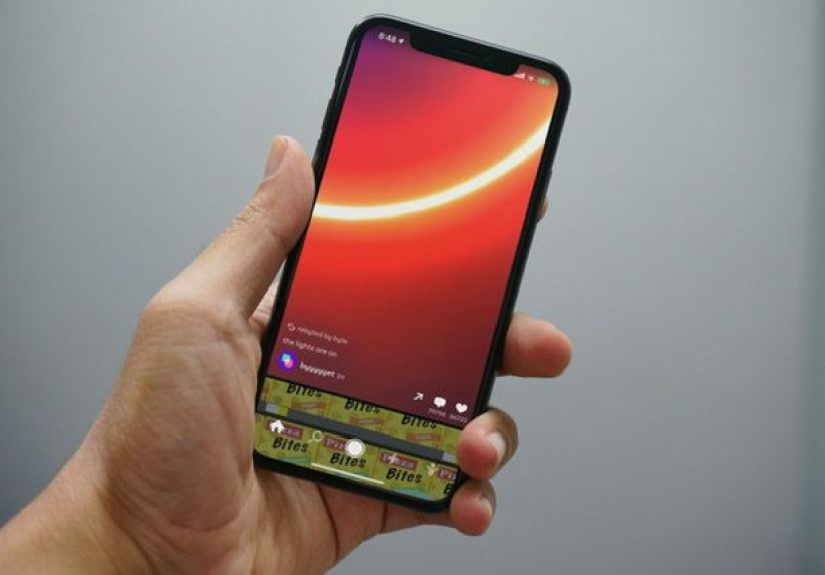
Byte launched with a simple promise: create or upload a six-second video, post it, and let the loop do the heavy lifting.
On purpose, Byte didn’t try to look like a Swiss Army knife of effects on day one. It leaned into basicsfeed, Explore,
notifications, profilesso the content, not the confetti cannons, could be the star.
The six-second loop isn’t a gimmickit’s a storytelling tool
A loop changes how a video feels. If your ending matches your beginning, viewers barely notice the replayand suddenly your
“one view” becomes five views. Byte’s core bet was that loop-first design encourages tighter jokes, satisfying visual cycles,
and rewatch-driven virality.
What Byte didn’t have (and why that mattered)
Byte arrived in a world where TikTok had already trained users to expect a lot: deep music libraries, remix culture,
AR filters, transitions, and a discovery engine that seems to know your sense of humor better than your friends do.
Byte’s simpler toolkit made it feel refreshingly uncluttered to someand underpowered to others.
From “V2” to Byte: The Launch That Played the Nostalgia Card… Carefully
Byte’s origin story matters because it explains why people cared. It wasn’t a random startup trying to clone a trend. The
project was led by Dom Hofmann, a Vine co-founder, and it carried the unspoken promise: We remember what made Vine special.
The launch also had a quiet confidence to it. Byte didn’t roll out with a long countdown and a stadium tour of hype.
It showed up, hit the app stores, and let the internet do what it does best: test it, meme it, praise it, roast it, and
accidentally promote it for free.
There was also an important branding footnote: “Byte” is not “ByteDance.” That confusion was inevitable, but Byte’s whole
identity depended on being “the Vine vibe,” not “TikTok’s cousin with a similar name.”
Can a Six-Second App Compete With TikTok?
Competing with TikTok is like opening a corner coffee shop across the street from a theme park that also sells coffee and
fireworks and somehow knows your birthday. TikTok wins on scale, tools, and distribution. Byte’s advantage had to come from
something TikTok couldn’t easily copy without changing its personality: extreme constraint and loop culture.
Where Byte could win
- Comedy density: Six seconds forces punchlines to arrive on time, like a rare train that respects you.
- Loop satisfaction: A perfect loop feels like a magic trick. Viewers rewatch to spot the “how.”
- Nostalgia + novelty: It’s familiar, but the community can evolve beyond the original Vine era.
Where Byte had a steep uphill climb
- Discovery: Viral apps live or die by recommendation and distribution. A smaller network is a smaller megaphone.
- Feature expectations: Many users now expect robust editing and sound tools by default.
- Creator economics: Talent goes where it can build an audience and pay rent.
In other words: Byte’s format was strong, but viral video is an ecosystem. The format is the seed; the platform systems are
the soil, sunlight, and water. Six seconds alone won’t grow a forest.
Byte’s Big Differentiator: Paying Creators Early
If Vine had one long-running critique, it was that it didn’t build enough durable monetization for creators before the world
moved on. Byte tried to learn from that history quickly, making creator payout plans a headline feature instead of a
“we’ll figure it out eventually” footnote.
The Partner Program concept (aka: “Please don’t leave once you go viral”)
Byte outlined a Partner Program designed to pay creators based on viewership. Early plans included a limited initial pool
and a structured payout cadenceessentially a pilot to prove the platform was serious about creator earnings.
One widely discussed early plan: a $250,000 pool spread across an initial payout period, starting with a limited number of
creators. Byte also talked about putting ad revenue back into the program early on, and it experimented with less intrusive
ad placementmore “sponsored section” than “surprise commercial in your face.”
For creators, that message was simple: “We want you to build hereand we know vibes don’t pay bills.”
Whether Byte could sustain that long-term was a different question, but as a launch strategy it was smart: if you can’t
beat the biggest platform on tools, you try to beat it on trust.
Early Traction (and Early Headaches): Downloads, Buzz, and Spam
Byte didn’t launch into silence. In its early days, it pulled in significant downloads quickly, with the U.S. as a major
driver of installs. That early interest was fueled by nostalgia, curiosity, and the internet’s love of a comeback story.
But every platform that grows fast learns the same lesson: if you build a stage, someone will show up to sell something on it.
Byte faced early content and spam concernsbecause the moment a platform gains attention, bad actors treat it like a new
shopping mall food court and start handing out questionable flyers.
This is where “taking on viral video” becomes more than product design. A viral platform is also a moderation platform,
a safety platform, and a community governance platform. The harder you chase growth, the more you have to invest in keeping
the party from turning into a mess.
The Byte Playbook: How to Go Viral When You Only Get Six Seconds
The best way to understand Byte’s appeal is to think like a creator. Six seconds isn’t a limitation if you treat it like a
creative prompt. Here are practical, loop-friendly approaches that tend to work on ultra-short platforms.
1) Build the loop first, then write the joke
Instead of “clip with an ending,” think “circle.” A satisfying loop often does one of these:
- Ends exactly where it starts (visual symmetry).
- Ends with a reaction that makes you replay to catch the setup.
- Ends mid-motion so the restart feels seamless.
Example: A creator tosses a hat upward; the last frame is the hat falling toward the camera; the first frame is the hat
rising again. Viewers watch twice without realizing they’re watching twice. That’s loop alchemy.
2) Use “micro-structure”: setup → twist → payoff
Six seconds forces structure. A clean pattern:
1–2 seconds setup, 2 seconds twist, 2 seconds payoff.
It’s comedy haikutight, intentional, and surprisingly hard to do well.
3) Let audio do half the work
Short-form video loves recognizable sounds. Even without an endless library, creators can build recurring audio motifs:
a signature phrase, a repeated beat, or a sound effect that becomes “your thing.” Viewers remember sounds faster than usernames.
4) Make “rebytes” and shares part of the joke
Viral content often grows through reinterpretation. A strong short clip can be reposted, remixed elsewhere, quoted, or used
as a reaction template. The more your concept is adaptable, the more likely it becomes a meme format rather than a one-off post.
5) Don’t chase trendsmanufacture a repeatable format
Trends are rented; formats are owned. The creators who grow fastest on short platforms often build a repeatable series:
“Six-Second Science,” “Tiny Cooking Fails,” “One-Liner Therapy,” “Dramatic Readings of Boring Text.” A series trains the audience
to come back for the next episode, even if each “episode” is the length of a microwave beep.
What Happened After the Launch: The Reality of the Short-Video Battlefield
In the years after Byte’s debut, the short-video space only became more crowded. TikTok continued to expand, while major
platforms built their own short-video products and baked them into apps with massive existing user bases.
Byte eventually changed hands and headed toward a rebrand, with public talk focusing heavily on creator monetization tools
like tipping and recurring payments. That shift underlined a truth about “Vine successor” apps: nostalgia can get people
to download, but sustainable creator economics and distribution keep them posting.
The Bigger Lesson: Viral Video Is a Moving Target
Byte’s launch was a reminder that viral video isn’t just “short clips.” It’s an arms race of:
recommendation systems, creator incentives, moderation, product features, and cultural timing.
And the cultural timing part matters more than people admit. The fact that the internet still gets excited about a Vine-like
comebackeven years latershows how powerful that original format was. The “six-second loop” isn’t just a feature; it’s a
piece of internet language. Platforms come and go, but the grammar sticks.
Conclusion: Was Byte the Next Vineor a Nostalgic Niche With Smart Ideas?
Byte launched with a clear identity: six-second looping videos, a clean interface, and an early emphasis on paying creators.
It wasn’t trying to out-TikTok TikTok on day one. It was trying to offer a different flavor of viraltighter, loopier, and
funnier by necessity.
The bigger takeaway for creators and marketers is this: constraints can still beat complexityif the platform supports
discovery and rewards the people doing the creating. Byte showed that the Vine formula still works. The question has always been
whether a modern “Vine successor” can pair that formula with the distribution and economics required to survive in the
current creator economy.
Experiences From the Byte Era: What It Felt Like When Vine’s “Successor” Arrived
A platform launch isn’t just a headlineit’s a feeling. Especially when the product is built around nostalgia, because nostalgia
makes people show up with expectations, memories, and a suspicious readiness to yell, “THIS ISN’T HOW IT USED TO BE!” even if it’s
literally the same six seconds.
For many former Vine creators, Byte felt like walking into an old comedy club that kept the same tiny stage. The mic stand is in
the right place. The lighting is still weird. And the audience still laughs hardest when you don’t over-explain. Creators who had
learned the “Vine brain” workflowshoot, trim, loop, repeatcould get back into rhythm quickly. The constraint didn’t feel limiting;
it felt like home. They weren’t trying to build mini-movies. They were building micro-moments that hit like a punchline and replayed
like a chorus.
Newer creators had a different experience. Many of them entered short-form video through TikTok’s toolkit: effects, transitions,
templates, duet/remix culture, and massive sound libraries. To those users, Byte’s simplicity could feel like showing up to a cooking
competition and realizing your station has one knife and a stubborn onion. Some loved the challenge“Finally, a place where the idea
matters more than the sparkle.” Others bounced because they wanted the platform to do more of the heavy lifting.
Then there were the “lurkers,” the people who don’t post but absolutely influence what wins. Their experience often came down to
whether Byte’s feed served them the kind of humor they wanted quickly. When it did, it was addicting in a very specific way: the loop
mechanic makes “just one more” feel effortless. You don’t decide to rewatch; the app makes rewatching the default. People described the
best Bytes the way they described great Vines: “I can’t explain why it’s funny, but I’m crying.”
Brands and marketers watched with cautious curiosity. Byte’s early talk of creator monetization signaled a platform trying to do what
Vine struggled with: reward creators inside the ecosystem instead of forcing them to monetize elsewhere. For marketers, that hinted at a
healthier creator pipelineone where talent might stick around long enough to build consistent communities. And the idea of ads appearing
in less disruptive ways (like sponsored sections rather than interrupting every swipe) sounded appealing to anyone who has ever rage-quit
a video because an ad arrived like a jump scare.
Of course, the “real platform experience” also included the unglamorous parts: moderation challenges, spam, and the growing pains that
show up the moment attention spikes. Creators who tried Byte early often talked about a tradeoff: the community felt smaller and more
experimental, which was fun, but it also meant discovery could be inconsistent. When your audience isn’t guaranteed, posting can feel
like performing a perfect six-second joke in an empty roomtechnically impressive, emotionally questionable.
The most honest takeaway from these experiences is that Byte wasn’t just competing with TikTok. It was competing with a new baseline of
what users believe a short-video app should provide. Byte’s constraint created a distinctive creative vibe, but the modern creator economy
demands more than vibes. It demands reach, safety, and moneypreferably in that order, but realistically all at once. Even so, for a
certain type of creator, Byte’s six-second world proved something important: the Vine-style loop is still one of the internet’s best
storytelling engines. The engine still runs. The challenge is building the highway.