Table of Contents >> Show >> Hide
- What Are Myofascial Release Tools?
- How to Choose the Best Myofascial Release Tool
- The 14 Best Myofascial Release Tools of 2022
- 1. Amazon Basics High-Density Foam Roller – Best Budget Foam Roller
- 2. TriggerPoint GRID Foam Roller – Best Multi-Density Foam Roller
- 3. Therabody Wave Roller – Best Vibrating Foam Roller
- 4. IDSON Muscle Roller Stick – Best Muscle Rolling Stick
- 5. MobilityWOD Supernova – Best Massage Ball
- 6. Theragun PRO – Best Premium Massage Gun
- 7. Hyperice Hypervolt – Best Value Massage Gun With Smart Features
- 8. Flyby F1Pro Deep Tissue Massage Gun – Best Affordable Massage Gun
- 9. Theragun Mini – Best Mini Massage Gun
- 10. LiBa Back and Neck Massage Cane – Best Massage Cane
- 11. Chirp Wheel+ – Best Massage Wheel for Back Tension
- 12. MFLEX Trigger Point Massager Tool – Best Bodyweight-Based Massage Tool
- 13. Normatec Pulse 2.0 Leg Recovery System – Best Compression Boots
- 14. ProsourceFit Acupressure Mat and Pillow Set – Best Acupressure Mat
- Foam Roller vs. Massage Gun vs. Massage Ball: Which One Should You Buy?
- How to Use Myofascial Release Tools Safely
- Real-World Experiences With Myofascial Release Tools
- Conclusion
- SEO Tags
Muscle recovery used to mean two things: stretching for 11 seconds after a workout and pretending soreness was “character building.” Thankfully, the fitness world has become a little kinder to our calves, quads, shoulders, and desk-chair-stiff backs. Enter myofascial release tools: foam rollers, massage sticks, massage guns, trigger point balls, compression boots, acupressure mats, and other clever devices designed to help you work through tight spots without booking a professional massage every Tuesday.
Myofascial release focuses on fascia, the connective tissue that surrounds and supports muscles. When muscles feel tight, tender, or restricted, self-myofascial release tools may help apply pressure, encourage relaxation, improve range of motion, and make recovery feel less like walking down stairs after leg day. These tools are not magic wands, although a massage gun buzzing against a tight quad after a squat workout can feel suspiciously close.
This guide breaks down the 14 best myofascial release tools of 2022, including rollers, sticks, guns, balls, wheels, canes, and more. The goal is simple: help you choose the right recovery tool for your body, budget, lifestyle, and tolerance for “good pain.” As always, if you have a serious injury, chronic pain condition, vascular issue, recent surgery, or unexplained symptoms, talk with a healthcare professional before pressing, rolling, vibrating, or poking your way into recovery.
What Are Myofascial Release Tools?
Myofascial release tools are self-massage devices that let you apply pressure to sore or tight areas. Some tools cover large muscle groups, such as the back, glutes, quads, hamstrings, and calves. Others target small trigger points around the shoulders, feet, hips, and neck. The best tool depends on the area you want to treat and how much pressure you can comfortably handle.
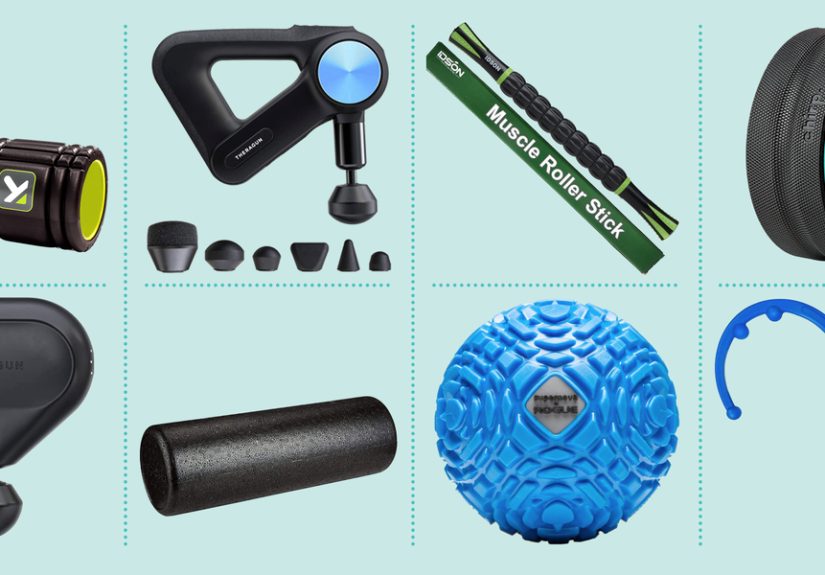
Foam rollers are excellent for broad pressure and beginner-friendly recovery. Massage balls are tiny but mighty, ideal for stubborn knots. Massage sticks provide better pressure control because your handsnot your full body weightdo the work. Massage guns add percussion, making them popular for athletes and busy people who want fast, targeted relief. Compression boots and acupressure mats are more specialized, but they can be useful for serious exercisers or anyone who wants a recovery routine that looks slightly futuristic.
How to Choose the Best Myofascial Release Tool
Match the Tool to the Muscle Group
For large areas like the thighs, glutes, calves, and back, start with a foam roller. For small or hard-to-reach spots, use a massage ball, massage cane, or compact trigger point tool. For travel, a mini massage gun or rolling stick is easier to pack than a full-size roller, unless you enjoy explaining to airport security why your suitcase contains a giant cylinder.
Start Softer Than You Think
Beginners often buy the hardest roller available, then immediately regret all their life choices. A softer or medium-density tool is usually better for learning pressure control. Dense, textured, vibrating, or deep-tissue tools can be great, but they are best introduced gradually.
Know the Difference Between Discomfort and Pain
A little tenderness is normal when working through tight tissue. Sharp pain, numbness, tingling, bruising, dizziness, or symptoms that worsen are signs to stop. Do not roll directly over joints, bones, fresh injuries, varicose veins, or swollen areas. Myofascial release should help your body relax, not start a dramatic argument with it.
The 14 Best Myofascial Release Tools of 2022
1. Amazon Basics High-Density Foam Roller – Best Budget Foam Roller
The Amazon Basics High-Density Foam Roller is a classic entry point for self-myofascial release. It is simple, affordable, lightweight, and available in multiple lengths. That makes it useful for beginners who want to try foam rolling without investing in a premium recovery gadget.
Use it for large muscle groups like calves, hamstrings, quads, glutes, lats, and upper back. Because it relies on body weight, pressure is easy to modify: put less weight on the roller for gentler work or shift more weight onto the muscle for deeper pressure. It is not fancy, but sometimes the best recovery tool is the one you actually use instead of the one sitting in a closet with dead batteries.
2. TriggerPoint GRID Foam Roller – Best Multi-Density Foam Roller
The TriggerPoint GRID Foam Roller is one of the most recognizable recovery tools for a reason. Its hollow core keeps it firm and durable, while the textured outer surface offers different zones of pressure. The grid pattern can help users target tight bands and knots more precisely than a completely smooth roller.
This is a strong choice for athletes, runners, gym-goers, and anyone who wants a roller that feels more advanced but not wildly aggressive. It works well on quads, calves, glutes, upper back, and lats. The compact size also makes it easier to store than a full-length roller.
3. Therabody Wave Roller – Best Vibrating Foam Roller
The Therabody Wave Roller combines traditional foam rolling with vibration. The idea is simple: rolling provides broad pressure, while vibration adds stimulation that may make the experience feel smoother and more tolerable. For people who dislike the “ouch, why am I doing this?” feeling of dense foam rolling, vibration can make recovery feel more like a spa treatment and less like a punishment invented by hamstrings.
This roller is best for users who already know they enjoy foam rolling and want an upgraded experience. It is especially useful for larger areas such as the legs, glutes, back, and hips. Beginners should start on the lowest vibration setting and keep sessions short.
4. IDSON Muscle Roller Stick – Best Muscle Rolling Stick
The IDSON Muscle Roller Stick is portable, affordable, and easy to control. Unlike foam rollers, which use body weight, a rolling stick lets your hands decide the pressure. That makes it a helpful option for people who find floor-based rolling uncomfortable or inconvenient.
It works well for calves, quads, hamstrings, shins, forearms, and even the soles of the feet. Runners often like rolling sticks because they can use them before or after workouts without getting down on the floor. Keep the movement slow and controlled, rolling along the muscle rather than attacking it like you are trying to tenderize dinner.
5. MobilityWOD Supernova – Best Massage Ball
The MobilityWOD Supernova is a firm massage ball built for focused trigger point work. Massage balls are excellent for smaller areas that foam rollers often miss, including the shoulders, glutes, hips, upper back, feet, and chest. The Supernova’s textured surface adds grip and helps it stay in place against the floor or wall.
This is not the gentlest tool on the list, so beginners may want to start with a tennis ball or softer massage ball first. For experienced users, however, a firm ball can be incredibly useful for targeting deep knots. Try placing it between your back and a wall for shoulder tension, or under the foot for arch tightness.
6. Theragun PRO – Best Premium Massage Gun
The Theragun PRO is a premium percussion massage gun designed for serious recovery routines. It offers strong power, multiple attachments, adjustable positions, and an ergonomic handle that makes it easier to reach awkward areas. This tool is best for athletes, frequent exercisers, trainers, and people who want a professional-feeling device at home.
Massage guns are great for targeted muscle work, but they should be used carefully. Avoid bones, joints, the front of the neck, bruised tissue, and injured areas. Use light pressure first. The gun should glide over the muscle, not dig into it like it is searching for buried treasure.
7. Hyperice Hypervolt – Best Value Massage Gun With Smart Features
The Hyperice Hypervolt earned popularity because it balances power, comfort, and usability. It typically feels more handheld and straightforward than some premium competitors, making it a strong pick for everyday users who want a reliable massage gun without feeling like they bought gym equipment from a spaceship.
Multiple attachments and speed settings allow users to customize the experience for different muscle groups. A softer head may work well for tender areas, while a firmer attachment can target dense muscles like glutes and quads. For general recovery, short sessions of one to two minutes per muscle group are usually plenty.
8. Flyby F1Pro Deep Tissue Massage Gun – Best Affordable Massage Gun
The Flyby F1Pro is a budget-friendly massage gun for people who want percussion therapy without a premium price tag. It usually includes several attachments and speed settings, giving beginners enough variety to experiment with different areas and pressure levels.
This is a practical option for casual exercisers, weekend warriors, and anyone who wants a simple recovery tool for sore legs, shoulders, or back muscles. It may not have the refined feel or durability of a high-end device, but for basic use, it offers solid value.
9. Theragun Mini – Best Mini Massage Gun
The Theragun Mini is compact, portable, and surprisingly capable for its size. It is ideal for travel, gym bags, office drawers, and people who want quick recovery sessions without hauling around a full-size massage gun.
Mini massage guns work best for accessible muscle groups such as calves, quads, forearms, traps, and glutes. The smaller design may not be as easy to angle around the back as a full-size model, but it is convenient enough to use consistently. And in recovery, consistency beats owning a giant tool that only comes out when you remember it exists.
10. LiBa Back and Neck Massage Cane – Best Massage Cane
The LiBa Back and Neck Massage Cane is designed for hard-to-reach trigger points. Its curved shape lets you hook the tool over your shoulder, around your back, or along your neck and apply pressure with knobs placed at different points.
This tool is especially useful for upper back tension, shoulder knots, neck-adjacent tightness, and glute trigger points. It requires no charging, no floor space, and no complicated setup. The key is gentle pressure. Pulling harder does not always mean better results; sometimes it just means you will annoy a muscle that was already having a bad day.
11. Chirp Wheel+ – Best Massage Wheel for Back Tension
The Chirp Wheel+ is a padded massage wheel designed to fit along the muscles beside the spine. Unlike a standard foam roller, its narrow shape targets the back while leaving space for the spine itself. Many users like it for thoracic mobility, posture-related tightness, and that stiff upper-back feeling that arrives after too many hours at a laptop.
Start with the largest, gentlest wheel if you are new to this type of tool. Move slowly, breathe, and avoid forcing your back into extension. The goal is relief, not auditioning for a circus bridge pose.
12. MFLEX Trigger Point Massager Tool – Best Bodyweight-Based Massage Tool
The MFLEX Trigger Point Massager Tool uses body weight and interchangeable heads to target tight areas while placed on the floor or against a wall. It is a clever option for people who want deep pressure without relying on batteries or handheld force.
This type of tool can work well for shoulders, hips, glutes, upper back, and feet. Because it can create intense pressure, start slowly and use a wall before moving to the floor. Wall pressure is easier to control and less likely to make you question your entire recovery strategy.
13. Normatec Pulse 2.0 Leg Recovery System – Best Compression Boots
The Normatec Pulse 2.0 Leg Recovery System is a premium tool aimed at serious athletes and highly active users. Instead of rolling or percussion, compression boots use air pressure to squeeze and release the legs in sequences. Many athletes use compression systems after hard training, races, long rides, or heavy lower-body workouts.
This is not the most practical choice for casual users because it is expensive and takes up more space than a roller or massage stick. But for endurance athletes, competitive lifters, and people who train frequently, compression boots can turn recovery time into a sit-down ritual. Put them on, hydrate, and enjoy looking like you are preparing to launch into orbit.
14. ProsourceFit Acupressure Mat and Pillow Set – Best Acupressure Mat
The ProsourceFit Acupressure Mat and Pillow Set is a low-tech but intense recovery tool. It uses many small plastic points to apply pressure across the back, neck, or feet. Some people find acupressure mats relaxing; others spend the first minute wondering why they voluntarily lay down on tiny spikes. Both reactions are normal.
Use the mat over a shirt at first if the sensation feels too sharp. Short sessions are best for beginners. While it is not a foam roller or massage gun, it can be a useful addition for people who like passive recovery while reading, breathing, or pretending they are meditating instead of checking notifications.
Foam Roller vs. Massage Gun vs. Massage Ball: Which One Should You Buy?
If you are buying your first myofascial release tool, start with a foam roller. It is affordable, versatile, and effective for large muscle groups. If you already have a roller and want more precision, add a massage ball. If you want fast, targeted relief and have a bigger budget, consider a massage gun.
A foam roller is best for general mobility and full-body maintenance. A massage gun is best for targeted convenience. A massage ball is best for stubborn knots. A rolling stick is best for controlled pressure on legs and arms. Compression boots are best for serious athletes with serious recovery needs and, preferably, a serious corner of the room to store them.
How to Use Myofascial Release Tools Safely
Use slow, controlled pressure. Spend about 30 to 60 seconds on a tight area, then move on. More is not always better. Overdoing self-massage can irritate tissue and leave you more sore than when you started.
Avoid rolling directly over joints, bones, the front of the neck, the lower spine, bruises, open wounds, inflamed areas, or suspected injuries. If you feel numbness, sharp pain, tingling, or unusual weakness, stop immediately. When in doubt, ask a physical therapist, athletic trainer, or healthcare provider for guidance.
Real-World Experiences With Myofascial Release Tools
The first thing many people learn about myofascial release is that the “best” tool is not always the fanciest one. A premium massage gun may look impressive, but a simple foam roller can become the daily workhorse. For example, after a long day at a desk, rolling the upper back on a medium-density foam roller can feel like someone finally opened a stuck window in your spine. It may not solve posture overnight, but it can remind tight muscles that movement still exists.
Runners often develop a special relationship with massage sticks and balls. A rolling stick across the calves after a hill workout is not exactly a luxury spa moment, but it gives excellent pressure control. You can ease up around tender areas and increase pressure where the muscle feels dense. A massage ball under the foot is another small miracle. Place it under the arch, roll slowly, pause on tender spots, and suddenly your feet may forgive you for yesterday’s “easy” five miles that somehow became eight.
Gym-goers tend to appreciate the combination approach. A foam roller works well before training to loosen up broad areas like quads and glutes. After a workout, a massage gun can target specific tight spots around the shoulders, traps, or hamstrings. The trick is not to treat recovery like a contest. You do not win extra points for grimacing through unnecessary pain. In fact, the best sessions usually feel productive, not brutal.
People who travel frequently often prefer compact tools. A mini massage gun, small massage ball, or short rolling stick can fit in a carry-on and rescue stiff hips after a flight. Hotel-room recovery does not need to be glamorous. Sometimes it is just you, a carpet, a massage ball, and the quiet hope that housekeeping does not knock during your calf routine.
For older adults or beginners, ease of use matters more than intensity. A soft roller, acupressure mat over clothing, or massage cane used gently against a wall can provide a manageable starting point. The goal is to build awareness: where is the tightness, how much pressure feels helpful, and how does the body respond afterward?
One practical experience-based tip is to keep your recovery tools visible. A foam roller hidden under the bed becomes a dust collector. A massage ball near your desk gets used during phone calls. A rolling stick near the couch becomes part of your evening routine. Recovery habits become easier when the tools are within reach and the process feels simple.
Another lesson: hydration, sleep, and movement still matter. Myofascial release tools are helpful, but they cannot out-roll poor recovery habits forever. Pair them with regular stretching, strength work, walking, adequate protein, and enough sleep. Think of these tools as helpful assistants, not tiny plastic superheroes.
Ultimately, myofascial release is personal. Some people love the deep pressure of a textured roller. Others prefer the buzzing relief of a massage gun. Some swear by lacrosse balls; others consider them medieval devices with better branding. The best tool is the one that fits your body, your routine, and your tolerance for pressure. Start gentle, stay consistent, and let your muscles send thank-you notes in the form of better movement.
Conclusion
The best myofascial release tools of 2022 cover every recovery style, from simple foam rollers to high-powered massage guns and athlete-level compression boots. If you want an affordable starting point, choose a high-density or multi-density foam roller. If you need precision, try a massage ball, cane, or trigger point tool. If convenience matters most, a massage gun or rolling stick may become your favorite recovery partner.
Myofascial release tools can support mobility, reduce everyday muscle tightness, and make recovery more intentional. They are not a replacement for medical care, smart programming, or rest, but they can be a valuable part of a balanced fitness routine. Use them slowly, listen to your body, and remember: the goal is to feel better, not to prove your IT band has a villain origin story.
Note: This article is for general wellness and informational purposes only. It is not medical advice. People with injuries, chronic pain, circulation problems, nerve symptoms, recent surgery, or medical conditions should consult a qualified healthcare professional before using myofascial release tools.