Table of Contents >> Show >> Hide
- Before You Treat It: Is It Actually Infected?
- Easy Way #1: Clean the Outside Gently With Sterile Saline
- Easy Way #2: Calm the Inside of Your Mouth and Cut Down Irritation
- Easy Way #3: Know When Home Care Is Not Enough
- Common Mistakes That Make an Infected Lip Piercing Worse
- What Recovery Usually Feels Like
- Experiences People Commonly Report With an Infected Lip Piercing
- Example 1: “I thought it was infected, but I was basically attacking it.”
- Example 2: “The inside of my mouth was the real problem.”
- Example 3: “It hurt every time I talked or ate.”
- Example 4: “I waited too long to get help.”
- Example 5: “It improved once I stopped doing dumb stuff.”
- Example 6: “I thought the yellow crust meant infection for sure.”
- Example 7: “Once it started affecting swallowing, I knew it wasn’t minor.”
- Final Thoughts
A lip piercing can look cool, feel bold, and give your mirror a little extra attitude. But when it starts throbbing, swelling, crusting, or acting like it has declared war on your face, the vibe changes fast. An infected lip piercing is not something to ignore, especially because the mouth is full of bacteria and the lip is constantly moving when you eat, talk, laugh, yawn, or dramatically gasp at your own reflection.
The good news is that many mild lip piercing problems improve with gentle care, better hygiene, and less irritation. The less-fun news is that some infections need medical treatment, especially if symptoms are spreading or getting worse. The trick is knowing when you are dealing with normal healing, when you are dealing with irritation, and when you are dealing with a real lip piercing infection.
This guide breaks it all down in plain English. You will learn three easy ways to treat an infected lip piercing, what mistakes make it worse, when to call a doctor or dentist, and what real-life recovery often feels like. No fluff, no scare tactics, and no “just put random kitchen ingredients on your face and hope for the best” nonsense.
Before You Treat It: Is It Actually Infected?
Not every angry-looking piercing is infected. A new lip piercing can be swollen, tender, and a little crusty during the first few days. Some light bleeding, bruising, and a whitish or pale yellow crust can also happen early on. That is annoying, but it can still fall into the “normal healing” bucket.
An infection usually looks and feels more intense. Common warning signs include:
- Increasing redness or deep discoloration around the piercing
- Noticeable warmth or heat at the site
- Throbbing pain or tenderness that is getting worse instead of better
- Swelling that keeps building
- Yellow, green, thick, or foul-smelling discharge
- Red streaks spreading away from the piercing
- Fever, chills, swollen lymph nodes, or feeling sick
- Trouble chewing, speaking, swallowing, or moving your lip normally
If your lip jewelry is rubbing your teeth, catching when you talk, or getting bumped every five minutes, you may be dealing with irritation instead of infection. Irritation can still cause redness, swelling, and soreness, so the line is not always perfectly obvious. That is why gentle care matters either way.
Easy Way #1: Clean the Outside Gently With Sterile Saline
The first and most reliable move is also the least glamorous: clean the outside of the piercing the boring, consistent, grown-up way. That means washing your hands first, then using sterile saline on the outer part of the lip piercing. Not perfume-y mystery spray. Not straight hydrogen peroxide. Not rubbing alcohol. Not enough tea tree oil to fumigate a room. Just sterile saline.
How to do it
Start by washing your hands thoroughly. Then rinse the outside of the piercing with warm water, or let warm water run over it in the shower. After that, use sterile saline on the outside of the piercing about twice a day. If there is crust or dried discharge, soften it first and gently remove it with clean gauze. Be patient. This is not a pressure-washing project.
Why this works
Saline helps flush away debris without hitting the tissue with harsh chemicals. A healing or infected piercing is already irritated. Strong products can dry it out, burn it, or delay healing. Over-cleaning can be just as unhelpful as not cleaning enough. Think “steady and gentle,” not “aggressive and heroic.”
What not to use
- Hydrogen peroxide
- Alcohol-based cleansers
- Harsh soaps, iodine, or strong antiseptics unless a clinician specifically tells you to use them
- Thick ointments that trap moisture and grime against the piercing
- Homemade super-salty mixtures that dry the tissue out
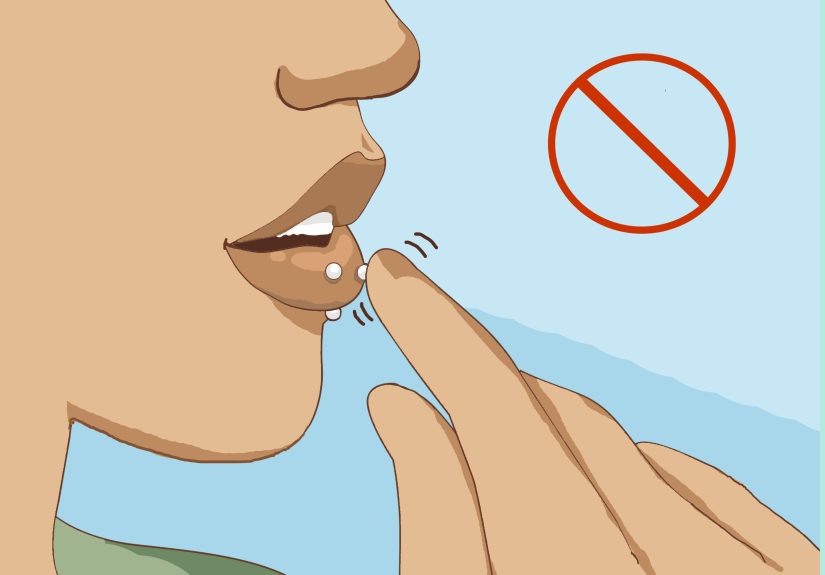
Also, do not twist, rotate, or constantly fiddle with the jewelry. That old advice hangs around like a bad ex, but it is not helpful. Excess movement irritates the piercing channel and can keep the area inflamed.
Easy Way #2: Calm the Inside of Your Mouth and Cut Down Irritation
A lip piercing is tricky because part of the problem may be outside the lip, but part of the healing battle is happening inside your mouth. If the outside is infected and the inside is constantly being coated in plaque, food bits, smoke, or spicy ramen regret, the piercing has a harder time settling down.
Use an alcohol-free mouth rinse
Rinse your mouth with an alcohol-free mouthwash after meals and before bed. This helps keep the inside portion cleaner without blasting the area with ingredients that sting and dry everything out. You can also rinse with plain water after eating, drinking, or smoking to wash away residue.
Upgrade your oral hygiene
Use a new soft-bristled toothbrush and brush carefully around the jewelry. Floss daily. Gently clean plaque off the visible jewelry. Plaque buildup turns lip jewelry into a tiny bacterial hangout spot, which is not exactly the ambiance you are going for.
Eat like your lip is irritated, because it is
While the piercing is sore or swollen, stick with foods that are easier on the area. Many people do better when they temporarily avoid:
- Very hot foods and drinks
- Spicy foods
- Highly acidic foods and beverages
- Crunchy foods that scrape the area
- Straws, which can increase pressure and irritation
Cold drinks and soft foods can feel better. Small ice pieces allowed to melt in the mouth may also help reduce swelling. Just do not chew ice like you are trying to win a dental disaster contest.
Cut out the stuff that keeps it angry
If you want your lip piercing infection to calm down, stop giving it new reasons to be dramatic. That means avoiding:
- Smoking or vaping, which can slow healing
- Alcohol if the area is still bleeding or swollen
- Playing with the jewelry using your teeth or tongue
- Excessive talking if movement is making swelling worse
- Wet kissing or oral sexual contact during healing
- Sharing cups, utensils, or anything else that spreads germs
One more big tip: sleep with your head a little elevated if swelling is bothering you. It sounds almost too simple, but it can help reduce overnight puffiness.
Easy Way #3: Know When Home Care Is Not Enough
Here is the line that matters most: mild irritation may improve with careful aftercare, but a true infection can become serious if it spreads. Because lip piercings sit so close to the mouth and airway, worsening symptoms deserve real attention.
Get medical help quickly if you have:
- Fever, chills, or shaking
- Red streaks moving away from the piercing
- Pus that is thick, green, yellow, or foul-smelling
- Rapidly increasing swelling
- Trouble swallowing, chewing, speaking, or breathing
- Numbness, tingling, or unusual skin color near the piercing
- Bleeding that does not settle down
- Symptoms that are worsening instead of improving
If you have been doing proper aftercare and the area is not improving after several days, or it is clearly worse after five to seven days, check in with a clinician. You may need prescription treatment. Some oral piercing infections are treated with antibiotics, and a clinician may decide whether the jewelry should stay in, be changed, or be removed in a controlled way.
Do not rip the jewelry out on your own just because the piercing looks bad. That can make drainage harder, trap infection, or cause the hole to close around irritated tissue. If removal is needed, a medical professional or qualified piercer should guide that decision.
Common Mistakes That Make an Infected Lip Piercing Worse
Sometimes the infection is not the only problem. Sometimes the aftercare routine is also starring in the chaos. Here are the classic mistakes:
1. Cleaning it too much
Yes, you can absolutely overdo it. If you are spraying, scrubbing, rinsing, and poking the area all day, the tissue may stay irritated. Clean it consistently, not obsessively.
2. Using harsh products
Alcohol, peroxide, strong antiseptics, and random DIY remedies can inflame already damaged skin. Harsh does not mean effective. Sometimes it just means painful.
3. Touching it constantly
Hands bring bacteria. Fidgeting also causes friction. Your piercing is not a stress ball.
4. Ignoring jewelry fit
If the jewelry is too tight, it can dig into the tissue. If it is too long, it may knock against teeth and gums. Once swelling has gone down, many people need a shorter post fitted by a professional piercer to reduce ongoing irritation.
5. Pretending severe symptoms are “probably fine”
This is where bravado stops being cute. Fever, spreading redness, and trouble swallowing are not things to shrug off.
What Recovery Usually Feels Like
When a mild lip piercing problem is improving, the changes are usually pretty noticeable. The site feels less hot, less tight, and less angry. Swelling begins to go down. The discharge becomes lighter or disappears. Eating stops feeling like a weird sport. Talking becomes less irritating. The lip no longer feels like it has its own heartbeat.
Healing is rarely perfectly smooth. One day can look better, the next can look slightly puffier, especially if you ate something spicy, slept on your face, or kept bumping the jewelry. That does not always mean the infection is getting worse. What matters is the overall trend. If the trend is improving, keep up the gentle routine. If the trend is clearly worsening, escalate to a healthcare professional.
Experiences People Commonly Report With an Infected Lip Piercing
The following examples are composite scenarios based on common issues people describe when a lip piercing becomes irritated or infected. They are not a substitute for medical advice, but they can help you recognize patterns.
Example 1: “I thought it was infected, but I was basically attacking it.”
A lot of people notice redness and swelling, panic, and then start cleaning the piercing six times a day with whatever they can find. In many cases, the lip gets worse not because the original problem was severe, but because the tissue is now irritated by over-cleaning. Once they switch to washing hands first, using sterile saline on the outside twice a day, and leaving the jewelry alone, the piercing starts to calm down.
Example 2: “The inside of my mouth was the real problem.”
Another common experience is focusing only on the outside of the lip while ignoring the inside. People sometimes keep drinking sugary drinks, forget to rinse after meals, or use a mouthwash loaded with alcohol. The result is a piercing that feels raw, swollen, and grimy. Once they start using an alcohol-free mouth rinse, a soft toothbrush, and water after eating, the soreness often drops noticeably.
Example 3: “It hurt every time I talked or ate.”
This happens a lot with jewelry that is too long or when swelling makes the fit awkward. The stud or post catches on teeth, rubs the gumline, or pulls on the piercing every time the mouth moves. In those cases, the person may think the infection is unstoppable, when the real issue is constant mechanical irritation. After the swelling settles and a professional piercer downsizes the jewelry, healing becomes much easier.
Example 4: “I waited too long to get help.”
Some people keep telling themselves it is just normal swelling, even when the area feels hot, the discharge gets thicker, and the pain ramps up day by day. Others ignore warning signs like swollen glands, bad odor, or trouble chewing. Once they finally see a doctor or dentist, they realize the infection needed more than home care. The lesson is simple: there is no trophy for waiting until your lip feels like a disaster movie.
Example 5: “It improved once I stopped doing dumb stuff.”
Sometimes recovery comes down to cutting out the habits that keep poking the bear. People often report improvement after they stop smoking for a bit, stop touching the jewelry, stop using straws, stop eating aggressively crunchy or spicy foods, and stop absentmindedly clicking the jewelry against their teeth. The lip gets a chance to rest, and the body finally catches up.
Example 6: “I thought the yellow crust meant infection for sure.”
This one causes a lot of unnecessary panic. Early in healing, a pale or whitish-yellow crust can be normal. What tends to worry clinicians more is discharge that is thick, dark yellow or green, foul-smelling, and paired with increasing pain, heat, and swelling. People often feel relieved once they learn that not every crust equals catastrophe. Context matters.
Example 7: “Once it started affecting swallowing, I knew it wasn’t minor.”
When swelling spreads or the mouth starts to feel tight, everyday functions become the clue. If chewing, speaking, or swallowing gets harder, that is not just cosmetic irritation. Oral and lip piercings sit in an area where swelling matters, so people who develop these symptoms often need prompt medical care. Getting help early is usually much easier than trying to fix a bigger problem later.
Final Thoughts
If you are trying to treat an infected lip piercing, the basic strategy is simple: clean the outside gently with sterile saline, keep the inside of your mouth as clean and calm as possible, and get medical help fast if symptoms are severe, spreading, or not improving. The best treatment plan is not fancy. It is consistent, low-drama, and based on good hygiene instead of internet chaos.
Your lip piercing does not need a miracle. It needs patience, cleaner habits, and fewer bad decisions in the name of “aftercare.” That is a very treatable combo.