Table of Contents >> Show >> Hide
- Who Is Jeffrey De Keyser?
- Why These 30 Pictures Stand Out
- What These 30 Pictures Reveal About Modern Life
- Memorable Kinds of Scenes Across the 30 Pictures
- Why “The Absurd Human Condition” Is the Perfect Phrase
- The Lasting Appeal of Jeffrey De Keyser’s Street Photography
- 500 More Words on the Experience of Seeing the Absurd in Everyday Life
- Conclusion
- SEO Tags
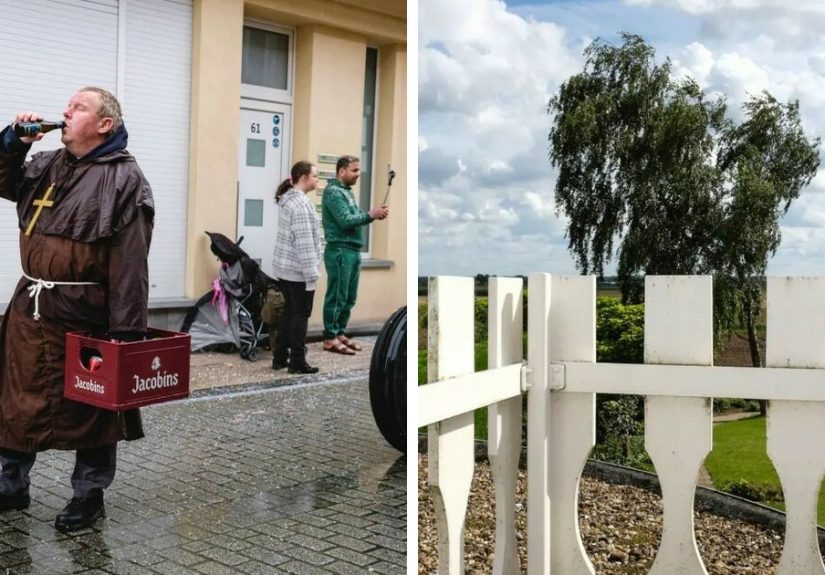
Some photographers chase drama. Others wait for perfect sunsets, expensive lenses, or a model who looks like they were assembled by angels in a very organized workshop. Belgian street photographer Jeffrey De Keyser goes in a different direction. He walks into ordinary public spaces and notices the tiny ruptures in normal life: a reflection that turns a storefront into a dream, a commuter who accidentally blends into a giant word on a wall, a shadow that steals the scene, or a lonely figure whose posture says more than an entire novel’s worth of inner monologue.
That is what makes these 30 pictures so fascinating. They do not rely on spectacle. They rely on attention. De Keyser has built a visual language around what he calls the absurd human condition, and once you understand what he is seeing, you start to realize that cities are basically one giant theater production directed by coincidence. The props are everyday objects. The actors are unsuspecting strangers. The script is chaos. And somehow, it all works.
In an age when images often scream for attention, De Keyser’s work is more interesting because it does not. It invites you closer. These photographs ask you to pause, look again, and catch the joke, the loneliness, the tension, or the beauty hiding in plain sight. That balance of humor, empathy, and surreal street photography is exactly why this body of work sticks in the mind.
Who Is Jeffrey De Keyser?
Jeffrey De Keyser is a Belgian photographer born in 1984 in Kortrijk and now based in Ghent. He also works as a social science teacher in Brussels, which feels strangely perfect once you see his pictures. His photography is deeply interested in society, behavior, and the weird little performances people stage without meaning to. He began taking street photography seriously in 2014, and the genre clearly gave him the ideal playground: public life, unpredictable movement, visual accidents, and just enough disorder to make everything interesting.
His work is strongly influenced by surrealism, but not the kind that requires melting clocks or a man with a lobster phone. De Keyser’s surrealism is subtler and more urban. It lives in juxtapositions, reflections, gestures, patterns, and timing. His images often feel as if reality bent slightly to the left for half a second and he happened to be there when it did.
That is also why his photos feel both smart and accessible. You do not need a graduate seminar in art theory to enjoy them. You just need eyes, curiosity, and a willingness to admit that human beings can be incredibly funny without ever trying to be.
Why These 30 Pictures Stand Out
He Finds Surrealism in Everyday Life
Many photographers look for rare events. De Keyser looks for ordinary scenes that suddenly become strange. That approach gives his gallery a special kind of charge. A simple bench, ferry window, mannequin, balloon, shadow, or sign can become the center of a surreal mini-drama. He proves that the uncanny does not always arrive with thunder. Sometimes it arrives wearing a winter coat and waiting for the train.
His Humor Is Observant, Not Mean
That matters. A lot. Funny street photography can go wrong when it mocks people instead of observing them. De Keyser’s images usually feel playful rather than cruel. He is laughing with the world, not throwing tomatoes at it. The best of these photos produce a reaction that is less “ha ha” and more “wait… what am I looking at?” That second look is where the image opens up.
He Understands Timing Like a Comedian and a Poet
Street photography lives or dies by timing, and De Keyser has the kind of patience that turns random public movement into composition. He knows when to wait for a figure to enter a patch of light, when a reflection is doing half the storytelling, and when a visual alignment is so weirdly perfect that it would sound fake if you described it out loud. His images often feel effortless, but they are clearly built on observation, instinct, and the willingness to fail many times before one frame finally clicks.
Color, Shape, and Geometry Do Heavy Lifting
Even when the subject is absurd, the structure is disciplined. That is one reason these pictures feel memorable instead of gimmicky. Lines, blocks of color, windows, walls, benches, railings, and shadows are not just backgrounds. They shape the emotional logic of the image. The humor lands because the composition is tight. The strangeness works because the frame is controlled. In lesser hands, these scenes would just be odd. In De Keyser’s hands, they become visual arguments.
What These 30 Pictures Reveal About Modern Life
1. Cities Are Accidental Stages
Urban life is full of unplanned theater. A passerby walks into the right shaft of light. A reflection merges with a face. A sign appears to finish someone’s thought. These photos remind us that the city is constantly generating little visual stories. Most of us are simply too busy to notice them.
2. Solitude Can Exist in Public
One of the recurring moods in De Keyser’s work is quiet isolation. Even in crowded places, people look sealed inside their own inner weather systems. A person on a bench, a rider on a ferry, a figure cut off by architecture, someone lost in shadow while the rest of the world keeps moving: these images understand a deeply modern feeling. You can be surrounded by people and still feel like the only person in the frame.
3. Objects Are Never Just Objects
Street photography gets more interesting when the environment starts acting like a co-star. In these pictures, a discarded toilet becomes a piece of absurd sculpture. A storefront mannequin becomes a philosophical jump scare. Seat handles turn into a visual punchline. Letters on a wall become emotional scenery. De Keyser understands that objects carry meaning long before anyone explains them.
4. Humor and Existential Dread Can Be Neighbors
Yes, that sounds dramatic. But it is also true. The phrase “absurd human condition” works because these images are not just quirky. They tap into something bigger. We improvise our identities in public. We move through systems we did not design. We look for meaning in random arrangements of bodies, symbols, and spaces. Sometimes the result is moving. Sometimes it is hilarious. Often, it is both at once.
Memorable Kinds of Scenes Across the 30 Pictures
Rather than functioning like a simple roundup of funny street moments, these 30 photos build a broader portrait of how strange everyday life can be. Here are some of the visual patterns that make the series so effective:
- Shadow play: silhouettes and hard light turn normal pedestrians into graphic symbols. A routine walk suddenly looks like a scene from a dream or a noir film that accidentally wandered into daylight.
- Perfect alignments: De Keyser loves that split-second moment when a person, object, and background line up so neatly it feels staged. It is not staged, of course, which makes it even better.
- Public solitude: a lone figure against a huge wall, an introspective passenger, or someone resting beneath oversized lettering creates that delicious contrast between private emotion and public space.
- Reflections and windows: glass doubles reality, scrambles identity, and adds psychological texture. A face becomes architecture. A mannequin becomes half-human, half-city.
- Absurd objects in ordinary places: an unexpected item sitting in a familiar environment can shift the whole meaning of a frame. Suddenly the street feels like a gallery and the gallery feels like a prank.
- Color echoes: clothes, walls, bags, signage, and painted surfaces talk to one another. These echoes help transform chance into design and turn busy environments into coherent compositions.
- Deadpan humor: some of the funniest images are funny precisely because nobody in them seems aware of the joke. The camera catches the universe telling itself a straight-faced one-liner.
- Body language: posture, distance, hand placement, and gaze often tell the emotional story faster than faces do. That gives the work a quietly psychological edge.
- Architecture as emotion: walls, railings, corners, and empty space do not simply frame people. They isolate them, trap them, protect them, or make them look tiny against the built world.
- The ordinary made mythic: the biggest strength of the series is that no single image needs a dramatic event. Daily life is enough. With the right timing, a commute can feel epic and a random sidewalk encounter can feel like a parable.
Why “The Absurd Human Condition” Is the Perfect Phrase
The phrase sounds grand, but De Keyser earns it. His work suggests that modern life is full of contradictions we have all quietly accepted. We want control, but we live inside randomness. We want to appear composed, but public life constantly exposes our awkwardness. We search for meaning, yet much of daily existence is improvised under fluorescent lighting.
That idea has philosophical weight, especially when linked to existential thought, but De Keyser never turns his work into homework. He translates big ideas into visual moments. Instead of lecturing the viewer, he lets the picture do the thinking. That is one reason the series feels fresh. It has intellectual ambition without becoming stiff. It is thoughtful, but it still knows how to wink.
And maybe that is the real achievement here. These images do not deny that life is messy, lonely, confusing, or ridiculous. They simply show that absurdity can also be visually rich, emotionally honest, and occasionally very funny. In a media culture that often swings between shallow entertainment and heavy-handed seriousness, De Keyser manages a rarer trick: he makes you reflect while also making you smile.
The Lasting Appeal of Jeffrey De Keyser’s Street Photography
What makes people keep sharing galleries like this one? It is not just novelty. It is recognition. Viewers see pieces of themselves in these scenes. Not literally, unless they were actually standing near a ferry window with an accidentally hilarious reflection, but emotionally. We all know what it is like to feel small in a public place, to notice a bizarre coincidence, to find beauty in a mundane setting, or to realize that human behavior is both touching and deeply weird.
De Keyser’s photography succeeds because it respects that weirdness. He is not trying to iron life flat. He is interested in the folds, the overlaps, the visual stutters, and the moments when the public world briefly reveals its subconscious. Across these 30 pictures, he shows that absurdity is not a side note to human experience. It is one of the main themes. Possibly the main theme. Certainly one of the funnier ones.
If you enjoy Belgian photographer work that blends candid urban moments, surreal street photography, and visual humor with a real sense of empathy, Jeffrey De Keyser is worth watching closely. His images do not just capture what a city looks like. They capture what it feels like to be a person inside it: alert, awkward, observant, uncertain, amused, and occasionally one strange coincidence away from becoming art.
500 More Words on the Experience of Seeing the Absurd in Everyday Life
One of the most relatable things about these 30 pictures is that they do not feel distant from ordinary experience. You do not look at them and think, “Well, that only happens in exotic locations or carefully curated art spaces.” You look at them and think, “I have seen something like that before, but I walked right past it.” That is part of the thrill. De Keyser’s photography reminds viewers that absurdity is not rare. It is routine. It rides the bus. It stands in line. It leans against railings, passes under awkward signage, and gets swallowed by shadows around 5:17 p.m. on a random Tuesday.
There is also a distinctly human pleasure in recognizing visual accidents. Think about the last time you saw a cloud that looked like an animal, a reflection that changed the meaning of a storefront, or two strangers whose outfits accidentally matched a billboard behind them. Those moments are tiny, but they can produce a surprising jolt of delight. For a second, reality feels collaborative, like the world accidentally made a joke and trusted you to get it. De Keyser’s work extends that sensation and preserves it. He catches what most people only half-notice.
That experience can be funny, but it can also be emotional. Public spaces are full of people carrying invisible private stories. Someone waiting quietly on a bench may be bored, grieving, hopeful, exhausted, or simply killing time before lunch. Street photography cannot solve that mystery, but it can honor it. In De Keyser’s images, people are not reduced to props. Even when the composition is witty, the emotional undercurrent remains. That matters because the absurd human condition is not only about comedy. It is also about vulnerability. We are all walking around trying to appear normal while living through deeply peculiar internal worlds.
Another part of the experience is learning to slow down. The best street photography changes the pace at which you look. At first glance, you register a shape, a color, a person, a wall. Then the second glance arrives, and suddenly the frame starts to rearrange itself. A detail in the corner becomes the punchline. A shadow becomes the main character. An object you dismissed becomes the key to the entire image. That delayed recognition is deeply satisfying. It rewards attention, and in a culture built on scrolling, attention is practically a luxury item.
There is something hopeful in that, too. These photos suggest that the world is still capable of surprising us without special effects. You do not need a dramatic event to feel wonder. Sometimes wonder is just excellent timing plus an open mind. Sometimes it is a person standing beneath the right word at the right moment. Sometimes it is a reflection making reality look like it forgot its own rules. And sometimes it is the simple comfort of realizing that life’s weirdness is not a glitch. It is part of the design.
Maybe that is why people connect so strongly with work like this. It gives shape to a feeling many of us already have but rarely name: that daily life is stranger, sadder, funnier, and more visually poetic than we admit. Jeffrey De Keyser does not invent that truth. He notices it. Then he frames it just well enough that the rest of us finally see it, too.
Conclusion
Jeffrey De Keyser’s 30-picture gallery works because it treats street photography as more than casual observation. It becomes a way of thinking about how people move through modern life, how cities generate accidental theater, and how humor can live comfortably beside loneliness, symbolism, and existential unease. His best images are not loud, yet they linger. They reveal how much odd beauty is hiding inside everyday routines and how quickly a familiar street can become surreal when timing, geometry, and human behavior collide.
That is the magic of this series. It does not ask you to escape reality. It asks you to look at reality more carefully. And once you do, you may start noticing that the absurd human condition is not tucked away in grand philosophical debates. It is standing at the corner, reflected in a shop window, waiting for someone like Jeffrey De Keyser to notice.