Table of Contents >> Show >> Hide
- What Makes a Good Treasure Map?
- 1. Make a Classic Hand-Drawn Pirate Treasure Map
- 2. Make an Aged Tea- or Coffee-Stained Treasure Map
- 3. Make a Treasure Map of a Real Place
- 4. Make a Puzzle Treasure Map
- Common Treasure Map Mistakes to Avoid
- Final Thoughts on How to Make a Treasure Map
- Experiences Related to “4 Ways to Make a Treasure Map”
- SEO Tags
Some crafts are cute. Some crafts are useful. And some crafts make people dramatically whisper, “X marks the spot,” while looking suspiciously at the couch cushions. A treasure map belongs in that last category. It is part art project, part storytelling device, part scavenger-hunt engine, and part excuse to stain paper on purpose and call it “atmosphere.”
If you want to make a treasure map that looks good and actually helps someone find hidden loot, you need more than a random squiggle and a giant X. The best treasure maps use recognizable landmarks, simple symbols, clear directions, and enough personality to make the whole thing feel like an adventure instead of a worksheet with pirate branding.
Below, you’ll learn four fun ways to make a treasure map, from a classic hand-drawn pirate version to a real-world backyard map and a puzzle-style design that turns the hunt into a full-blown quest. Whether you’re planning a birthday party, building a classroom activity, entertaining kids on a rainy Saturday, or just living your best suspiciously nautical life, these ideas will help you create a DIY treasure map worth following.
What Makes a Good Treasure Map?
Before jumping into the four methods, it helps to know what separates a memorable treasure map from a piece of paper that looks like it lost a fight with a coffee mug. A strong treasure map usually includes:
- Landmarks: trees, sofas, fences, bridges, doors, rocks, toy chests, or anything easy to recognize.
- A legend or key: simple symbols that explain what icons mean.
- Direction cues: arrows, a compass rose, “north,” or step-by-step clues.
- Scale or rough distance: not engineering-level accuracy, just enough to keep searchers from digging up the mailbox.
- A clear treasure marker: the classic X still does excellent work after all these years.
- Style: wrinkles, torn edges, tea stains, doodles, sea monsters, fake danger zones, and the occasional volcano for emotional support.
Now let’s get to the fun part: making one.
1. Make a Classic Hand-Drawn Pirate Treasure Map
If your goal is pure storybook energy, this is the method to start with. A classic pirate map is less about strict geography and more about creating the feeling of adventure. Think winding trails, mysterious islands, cliffs with dramatic names, and one suspicious skull that definitely means “don’t go there,” which of course makes everyone want to go there immediately.
What You’ll Need
- Plain white paper, kraft paper, or a brown paper bag cut flat
- Pencil and eraser
- Black marker or pen
- Colored pencils or crayons
- Optional ruler for neat borders or grids
How to Do It
Start by choosing the setting for your map. It can be completely imaginary, such as Skull Island or Coconut Canyon, or loosely based on a real place. Sketch the shape of the land first. If you are making an island map, draw the coastline in an uneven, wobbly outline. Perfect geometry is the enemy of pirate credibility.
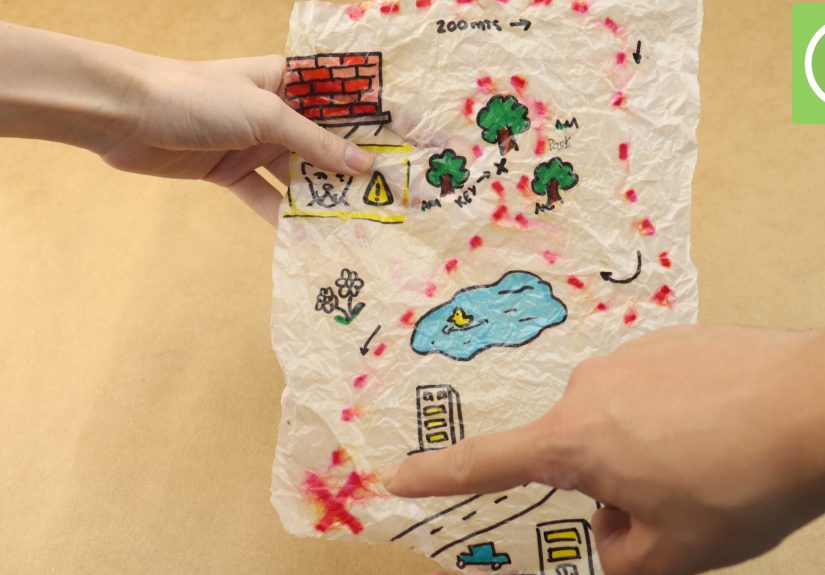
Next, add landmarks. Draw mountains as little triangle ranges, forests as clustered trees, rivers as wavy lines, and danger zones with bones, snakes, cliffs, or a sea monster that looks like it has excellent union benefits. These landmarks make the map easier to read and more entertaining to follow.
Then add a path. This can be a dotted line from the starting point to the treasure, or a route that moves from one clue location to another. Mark the treasure with a bold X. If you want more drama, circle it, shadow it, or write “Here Be Treasure” like you personally discovered punctuation in 1712.
Finish with a title such as The Lost Map of Blackbeard’s Backyard and add a compass rose in one corner. Even a simple north arrow helps the map feel more complete. If you want extra flair, decorate the border with rope-style lines, waves, or tiny ships.
Why This Method Works
This approach is ideal for younger kids, party games, or anyone who wants a treasure map craft that is fast, flexible, and heavy on imagination. It also gives you room to build a story around the map, which makes the treasure hunt more exciting. A map with a legend, a route, and a little fake peril feels instantly more real than one that just says “go left at the chair.”
Best Use Case
Choose this version if you want a fun pirate map for pretend play, classroom storytelling, or a themed birthday activity where the visual style matters as much as the directions.
2. Make an Aged Tea- or Coffee-Stained Treasure Map
If you want your treasure map to look like it survived a shipwreck, three storms, and one very unfortunate encounter with a cannonball, aging the paper is the move. Tea- and coffee-stained paper gives a map that weathered, antique look people love. It is also wildly satisfying because you get to make a mess for artistic reasons.
What You’ll Need
- Thicker white paper or construction paper
- Brewed black tea or strong coffee, cooled slightly
- Tea bags, sponge, or paintbrush
- Tray or shallow container
- Paper towels
- Markers or pens for drawing after drying
How to Do It
Lay the paper in a tray or on a protected surface. Dab or brush tea or coffee onto the paper. You can soak the sheet lightly, press used tea bags across the surface, or flick small droplets for mottled texture. Darker edges usually look more convincing than an evenly colored page, so focus extra stain around the borders.
While the paper is still damp, gently wrinkle it, flatten it, and tear small bits from the edges to create a worn look. Do not go full tornado mode here. You want “ancient and mysterious,” not “the dog got it.” Let the paper dry completely before drawing.
Once dry, create your map on top of the aged surface. Use dark brown, black, or deep red ink for old-world charm. Add landmarks, labels, and your compass rose. If the map is for a real treasure hunt, keep the route readable. Beauty is important, but not as important as making sure Uncle Mike doesn’t spend 40 minutes searching behind the recycling bin.
Pro Tips for Better Results
- Use thicker paper so it does not turn into papier-mâché halfway through the process.
- Test tea or coffee on a scrap first if you care about the shade.
- Let the stain dry fully before using markers to avoid smudging.
- Use pencil first if you are nervous about drawing directly on the finished paper.
Why This Method Works
This is the best way to make a treasure map look old without complicated supplies. It adds visual drama, makes the activity feel more immersive, and turns even a simple map into something that looks giftable, displayable, or at least impressively suspicious.
Best Use Case
Use this method for pirate parties, escape-room style activities, handmade gifts, or any treasure hunt where presentation matters almost as much as the actual treasure.
3. Make a Treasure Map of a Real Place
This is where your DIY treasure map becomes genuinely useful. Instead of inventing Volcano Island, you map your living room, backyard, classroom, park, or campsite. A real-location treasure map is perfect for scavenger hunts because searchers can actually use landmarks to navigate.
What You’ll Need
- Paper
- Pencil
- Markers
- A clipboard or firm surface if you’re sketching outside
- Optional measuring tape for rough distance estimates
How to Do It
Begin by choosing the area you want to map. Walk through the space and decide which landmarks are important. In a backyard, that might be the swing set, shed, tree stump, flower bed, and patio. Indoors, you might use the couch, bookshelf, kitchen table, lamp, and hallway door.
Sketch the basic layout first. Keep the proportions roughly sensible, but don’t stress over architectural perfection. This is a treasure map, not a real-estate floor plan. Add each landmark in a simplified form, then label or symbolize it. A tree can be a tree icon, a table can be a rectangle, and a sandbox can absolutely become “The Desert of Lost Sandals.”
Now add a path or clue sequence. For younger kids, a dotted line route works well. For older kids, create a series of clue stops: start at the porch, go north to the birdbath, turn east toward the big rock, and so on. Add a legend if you are using symbols, and include a compass rose to make directional language more meaningful.
If you want the map to teach map skills, include a simple scale like “1 inch = 5 steps” or note rough distances between landmarks. That small detail makes the map feel more authentic and helps older children connect imaginative play with real spatial thinking.
Example
Let’s say you are hiding a prize in the backyard. Your map might show the back door as the starting point, the grill as “Dragon’s Mouth,” the flower bed as “Jungle Edge,” and the giant tree as “Captain Mango’s Watchtower.” The X goes behind the tree roots. Suddenly the yard is not just a yard. It is an expedition.
Why This Method Works
Real-location maps are easier to follow, great for parties and family games, and surprisingly educational. They encourage observation, basic geography, directional language, and problem-solving. They also make kids feel like their ordinary environment has transformed into something secret and special, which is honestly half the magic.
4. Make a Puzzle Treasure Map
If you want to upgrade from “follow the line to the X” to “solve this if you dare,” a puzzle treasure map is the winner. This version mixes mapmaking with clues, codes, torn pieces, overlays, riddles, or grids. It takes a little more planning, but it delivers maximum drama and keeps older kids and adults engaged longer.
What You’ll Need
- A finished treasure map
- Scissors
- Extra paper for clues
- Pens or markers
- Optional envelope, twine, stickers, or wax seal for presentation
How to Do It
First, create a complete map. Then decide how you want people to unlock its meaning. Here are a few excellent puzzle approaches:
Torn Map Pieces
Cut the map into several pieces and hide or distribute them. Players must assemble the map before they can use it. This is simple, visual, and extremely satisfying.
Clue-Based Route
Instead of drawing one obvious path, label multiple landmarks and attach a riddle to each one. Solving the clue reveals the next stop. The map becomes a guide rather than the whole answer.
Grid Coordinates
Place a light grid over the map and mark locations by coordinates. This works especially well for older kids who like structure, puzzles, or the feeling that they have briefly joined a very dramatic cartography club.
Invisible or Hidden Markers
Use subtle symbols, a color code, or a second clue page that explains what certain icons mean. For example, only palm trees with three coconuts may point to the correct route. Suddenly everyone is inspecting fruit like detectives.
Why This Method Works
A puzzle treasure map adds challenge, replay value, and suspense. It is ideal for birthday parties, classroom stations, family game night, or any event where the hunt itself should be the entertainment. It also lets you adjust difficulty easily. Add more clues for a bigger challenge or simplify the route for younger searchers.
Common Treasure Map Mistakes to Avoid
Even the coolest treasure map can go sideways if it is confusing. Here are a few mistakes worth avoiding:
- Too many decorations, not enough clarity: yes, draw the sea monster, but not on top of the clue path.
- Unclear landmarks: if every tree looks the same, the map becomes guesswork.
- No starting point: people need to know where the adventure begins.
- Tiny writing: mysterious does not have to mean unreadable.
- Overcomplicated directions for young kids: keep the challenge appropriate for the age group.
The best treasure map balances style and function. It should look fun, feel adventurous, and still give searchers a real chance to win.
Final Thoughts on How to Make a Treasure Map
The beauty of a treasure map is that it can be as simple or elaborate as you want. You can sketch a classic pirate island in ten minutes, stain paper with tea for a weathered antique effect, map out your actual yard for a real treasure hunt, or build a puzzle map that turns the whole event into a mini quest. There is no single right way to make a treasure map. The right way is the one that fits your audience, your space, and your level of dramatic pirate commitment.
If you want the fastest option, go with the classic hand-drawn pirate map. If you want the best visual payoff, age the paper with tea or coffee. If you want a map that truly guides people somewhere, use a real place. And if you want the hunt itself to become the game, create a puzzle map with clues, grids, or torn pieces.
In other words, whether your treasure is candy, party favors, classroom prizes, or bragging rights, the map is what makes the journey memorable. The chest may hold the goodies, but the treasure map is where the magic starts.
Experiences Related to “4 Ways to Make a Treasure Map”
One of the most surprising things about making a treasure map is how quickly people stop thinking of it as a craft and start treating it like an artifact. The minute the paper gets wrinkled, the edges turn brown, and a compass rose appears in the corner, the whole mood changes. A child who ignored a worksheet five minutes ago will suddenly hold a stained map with both hands like it came from a locked drawer in a captain’s cabin. Adults are not immune, either. Give a grown person a rolled-up map tied with string, and there is a very real chance they will narrow their eyes and say, “We should split up and search the west side.”
That is what makes treasure maps so effective. They turn ordinary spaces into story spaces. A backyard becomes an island. A couch becomes a mountain ridge. A garden hose becomes a river that must be crossed with bravery and probably sneakers. The map invites people to imagine first and navigate second, and that combination is far more powerful than plain instructions. “Go behind the shed” is a direction. “Cross Crocodile Marsh and continue past the Broken Tower” is an experience.
There is also something deeply satisfying about the physical process of making the map. Brushing tea over paper feels half artistic and half mischievous, like you are vandalizing office supplies with historical intent. Crumpling the page and flattening it again creates texture that instantly reads as old and traveled. Drawing little icons for trees, skulls, caves, or footpaths makes the paper more layered with every mark. Even people who do not think of themselves as artistic usually end up enjoying it because treasure maps do not need polished realism. In fact, a slightly wonky map often looks more charming.
The real payoff comes when someone uses the map. Watching a group of kids debate whether the compass rose means they should turn left at the swing set or circle the flower bed is delightful. Watching adults get weirdly competitive about clue-solving is even better. Treasure maps create participation. People point, compare, speculate, and argue in the most cheerful possible way. A good map gets everyone moving and talking, which is part of why it works so well at parties, in classrooms, and during family weekends at home.
Another memorable part of the experience is how customizable the whole activity is. You can make the treasure silly, educational, elaborate, or low-budget. The prize can be chocolate coins, a note, a toy, a book, or even the next clue in a larger game. The map can teach symbols, directions, and spatial thinking without feeling remotely academic. Or it can simply be an excuse to have an adventure on a Tuesday. That flexibility is a big reason treasure maps stay popular. They are not just crafts. They are invitations to play, explore, and believe for a little while that there is something hidden just beyond the next landmark.