Table of Contents >> Show >> Hide
- Why Gen X Feels So Tired of Modern Life
- 50 Things Gen X Misses About Life Before Everything Got So Complicated
- The Real Reason “Skinny-Dipping” Became the Perfect Symbol
- Modern Convenience Has a Cost
- What Younger Generations Can Learn From Gen X Nostalgia
- Why Gen X Nostalgia Resonates Today
- Extra Experiences: The Feeling Gen X Wants Back
- Conclusion: Gen X Is Not Just ComplainingThey Are Remembering Something Useful
- SEO Tags
Generation X has a very particular superpower: they can remember life before everyone carried a glowing rectangle, but they also know exactly how to reset your Wi-Fi router. Born between the mid-1960s and 1980, Gen X grew up in a strange and fascinating middle zoneafter the buttoned-up postwar era, before the algorithm started asking everyone to “like, subscribe, and turn on notifications.”
That is why the phrase “Gen X nostalgia” hits differently. It is not only about cassette tapes, mall food courts, MTV, or the heroic smell of a Blockbuster carpet. It is about missing a world that felt less monitored, less monetized, and a lot less urgent. Modern life offers convenience, but it also arrives with passwords, updates, subscriptions, push alerts, privacy settings, QR-code menus, and customer service bots that say, “I understand your frustration,” while absolutely not understanding your frustration.
And then there is the wonderfully chaotic example in the title: “skinny-dipping.” For many Gen Xers, that phrase is less about shock value and more about a vanished feelingsummer nights, privacy, trust, wildness, and the freedom to do something ridiculous without becoming tomorrow’s viral clip. It represents the old luxury of being unrecorded.
So what do Gen Xers miss most about life before modern life got so loud? Let’s take a thoughtful, funny, and very analog walk through the memories.
Why Gen X Feels So Tired of Modern Life
Gen X is often called the “forgotten generation,” which is very on-brand for a group of kids who came home from school, made themselves a snack, and did not expect a parade for surviving the afternoon. They were the latchkey kids, the bike-riding kids, the “be home when the streetlights come on” kids. They learned independence early, sometimes by necessity and sometimes because adults were busy, distracted, divorced, working late, or simply convinced that a little unsupervised adventure built character.
Modern life feels different because nearly everything now asks for attention. Phones ping. Apps refresh. Work follows people home. A simple grocery trip can involve loyalty accounts, digital coupons, self-checkout cameras, and a machine accusing you of unexpected bagging behavior. In the old days, the bagging behavior was just a teenager named Kevin doing his best.
For Gen X, the exhaustion is not only technological. It is cultural. They miss ownership in a subscription economy. They miss privacy in a performance economy. They miss boredom in an entertainment economy. They miss community in a world where everyone is “connected,” yet many people feel oddly alone.
50 Things Gen X Misses About Life Before Everything Got So Complicated
Every generation has nostalgia, but Gen X nostalgia comes with a soundtrack, a landline, and a strong opinion about how much better movie trailers were when you saw them in the theater. Here are 50 things many Gen Xers miss about the world they grew up in.
- Being unreachable. You could leave the house and simply disappear for a few hours. No one tracked your location. Somehow, civilization continued.
- Owning things forever. Music, movies, games, and software came in physical form. You bought it, you owned it, and nobody removed it from your library during a “licensing update.”
- Saturday morning cartoons. Pajamas, cereal, and cartoons created a weekly ritual that streaming has never quite replaced.
- Phone calls that happened in one place. The family phone was attached to the wall. You had privacy only if the cord reached the pantry.
- Bike rides with no itinerary. Kids wandered, explored, and returned home dusty, hungry, and slightly suspicious-looking.
- Mixtapes. Making one required patience, timing, and emotional commitment. It was basically a love letter with rewind buttons.
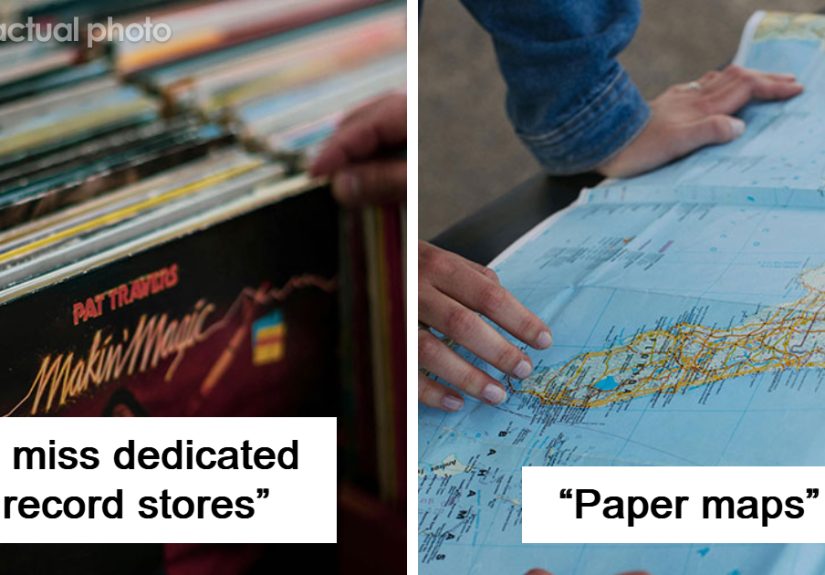
- Record stores. Browsing albums meant discovering music with your hands, not being nudged by an algorithm named “Because You Liked One Song in 2019.”
- Arcades. They were loud, sticky, neon temples of competition, and a single quarter could carry heroic importance.
- Malls as social networks. Before feeds, there were food courts. Before DMs, there was awkward eye contact near Orange Julius.
- Not being photographed constantly. Bad haircuts could die naturally instead of becoming permanent evidence.
- Paper maps. They were confusing, enormous, and somehow made road trips feel like quests.
- Video stores. Choosing a movie was an event. Sometimes you picked based on the cover art and suffered the consequences with dignity.
- Handwritten letters. They took time, carried personality, and did not arrive with a read receipt.
- Neighborhood pickup games. Baseball, basketball, football, tagwhatever had enough kids and one usable ball.
- Community pools. Sunscreen, chlorine, concession-stand fries, and the thrill of a lifeguard whistle.
- Photo albums. Pictures were fewer, blurrier, and somehow more precious.
- Waiting for film to develop. You had to wait days to find out someone blinked in every shot.
- Phone booths. They made people feel like spies, superheroes, or teenagers asking for a ride.
- Radio surprises. You listened because you did not know what song was coming next.
- Original MTV. Music videos felt like cultural events, not background noise between influencer ads.
- Magazines. They were glossy, opinionated, portable, and perfect for bedroom-floor reading.
- Christmas catalogs. Circling toys in a catalog was a sacred childhood negotiation tactic.
- Cars without screens. You drove, you listened, you got lost, and no dashboard judged your lane discipline.
- School without online portals. Grades arrived on paper, which gave everyone a little time to emotionally prepare.
- Not replying instantly. Silence used to mean “busy,” not “rude,” “dead,” or “secretly mad.”
- Repairing things. Appliances, radios, bikes, and jeans were fixed instead of instantly replaced.
- Affordable concerts. Seeing a band did not require a payment plan and emotional counseling from a ticketing website.
- Sleepovers without surveillance. Parents had phone numbers, not live location dashboards.
- Local diners. The best places had laminated menus, bottomless coffee, and a waitress who called everyone “hon.”
- Libraries as hangouts. They were quiet, free, and full of useful rabbit holes.
- One TV households. Families negotiated, argued, and occasionally learned compromise through remote-control scarcity.
- Reading cereal boxes. Breakfast entertainment did not require a screen.
- Board games. Flipping the board was wrong, but sometimes emotionally understandable.
- Simple birthday parties. Cake, soda, a backyard, maybe a piñata. Nobody needed a balloon arch shaped like a personal brand.
- Stores closing on holidays. Not everything was available 24/7, and that made time feel more human.
- Public places that did not demand purchases. Parks, benches, libraries, rec centers, and sidewalks mattered.
- Less curated beauty. Wrinkles, bad angles, and normal human faces were not treated like software bugs.
- Slow news cycles. You could learn what happened without being trapped in a 400-comment argument by breakfast.
- Privacy. Ordinary life stayed ordinary. That was the magic.
- Summer boredom. Boredom made kids inventive, annoying, creative, and occasionally brilliant.
- Passing notes. Risky, dramatic, folded into strange shapes, and far more thrilling than a notification.
- Making plans and sticking to them. If someone said, “Meet at 7,” they showed up because there was no easy way to cancel from the couch.
- Hanging out for no reason. Not networking. Not content creation. Just sitting around being human.
- Real-world discovery. You found restaurants, bands, shortcuts, and strange little stores by wandering.
- The sound of a landline hang-up. Dramatic. Final. Deeply satisfying.
- Skinny-dipping under the stars. In safe, legal, private places, it symbolized a freedom that did not need a caption.
- Cheap hobbies. A notebook, a skateboard, a basketball, a library card, or a used guitar could open a whole world.
- Neighbors who knew each other. People borrowed tools, watched pets, and sometimes knew your businessbut usually with snacks.
- Hope. Not perfect optimism, but the sense that the future might be weird, exciting, and still partly unwritten.
- A life that was not always content. Moments could happen once, be remembered imperfectly, and belong only to the people who were there.
The Real Reason “Skinny-Dipping” Became the Perfect Symbol
Of all the things Gen X misses, “skinny-dipping” stands out because it captures so much in one mischievous image. It suggests night air, lake water, laughter, nervous bravery, and the thrilling possibility of getting away with something harmless. It also suggests trust. You had to trust your friends. You had to trust the darkness. Most importantly, you had to trust that nobody had a phone in their hand.
Today, even innocent spontaneity can feel risky because cameras are everywhere. People document meals, outfits, workouts, concerts, vacations, mistakes, jokes, and sometimes strangers who never agreed to be part of the show. For Gen X, the appeal of the old world is not that everything was better. Plenty of things were harder, less fair, less safe, and less convenient. The appeal is that some moments felt private enough to be free.
“Skinny-dipping” in this context is not really about nudity. It is about being unfiltered. It is about having a body before every body was analyzed, edited, compared, optimized, and sold a serum. It is about a world where a ridiculous summer story could become a memory instead of a liability.
Modern Convenience Has a Cost
It would be silly to pretend the past was perfect. Gen X also remembers smoking sections in restaurants, cars without airbags, encyclopedias that became outdated, and trying to call a friend while their sibling hogged the phone line. Modern life has real benefits: medical advances, navigation tools, instant communication, online learning, remote work, and access to communities that many people could not find locally.
But convenience has a way of sneaking into every corner of life and charging rent. A subscription replaces ownership. A notification replaces quiet. A feed replaces wandering. A five-star rating replaces a simple human exchange. Even leisure can feel like homework when every hobby comes with gear reviews, tutorials, monetization strategies, and someone online telling you that you are doing it wrong.
That is why Gen X complaints often sound funny on the surface but serious underneath. When they miss malls, catalogs, diners, and record stores, they are also missing third placesspots outside home and work where people could gather without scheduling a Zoom link. When they miss life before smartphones, they are missing attention. When they miss being unreachable, they are missing boundaries. When they miss skinny-dipping, they are missing the right to be joyfully unpolished.
What Younger Generations Can Learn From Gen X Nostalgia
The point is not to throw your phone into a lake, although many people have considered it during a software update. The point is to ask what made those older experiences feel good and how to bring some of that feeling back.
Bring Back Ownership
Buy a physical book. Keep a DVD of a movie you love. Print favorite photos. Own a few things that cannot vanish because a platform changed its terms. Ownership creates emotional weight. It says, “This matters enough to keep.”
Protect Unrecorded Time
Not every dinner needs a photo. Not every joke needs a post. Not every sunset needs proof. The best moments often become stronger when they are allowed to remain partly private.
Revive Third Places
Go to the library. Sit in a park. Support a local diner, coffee shop, bowling alley, bookstore, or community center. Human connection grows in places where people can linger without being rushed away by the next appointment.
Practice Slow Fun
Make a playlist for someone. Host a board game night. Watch a movie without checking your phone. Take a walk without tracking your steps. Let boredom do its strange little magic trick.
Why Gen X Nostalgia Resonates Today
Gen X nostalgia resonates because modern fatigue is not limited to one generation. Millennials, Gen Z, and even younger kids are also discovering the appeal of analog life. Vinyl records, film cameras, flip phones, handwritten journals, and “digital detox” weekends are popular for a reason. People are not rejecting technology entirely; they are trying to recover a sense of control.
Gen X simply has a living memory of what that control felt like. They remember when the internet was a place you visited, not a weather system you lived inside. They remember when music discovery involved friends, radio, record stores, and weird older siblings. They remember when a small town, a city block, or a suburban neighborhood could feel like an entire universe.
They also remember that freedom came with rough edges. You got lost. You waited. You missed calls. You had to talk to strangers. You had to figure things out without a tutorial. But those inconveniences built patience, confidence, and stories. And stories, unlike apps, do not require updates.
Extra Experiences: The Feeling Gen X Wants Back
Imagine a summer evening before smartphones. The air is warm, the sky is turning purple, and someone’s older brother has a car that smells like vinyl seats, gasoline, and questionable decisions. Nobody has a perfect plan. That is the plan. A group of friends drives to a lake, a beach, a quarry, or a quiet stretch of river where the water catches the moonlight. Someone has a towel. Someone forgot one. Someone brought a radio with batteries that may or may not survive the night. Nobody is thinking about content. Nobody is checking angles. Nobody is worried about being tagged.
That is the experience many Gen Xers mean when they talk about missing “skinny-dipping.” It is not a demand that everyone run into the nearest body of water like a shampoo commercial gone rogue. It is a memory of freedom that felt physical. Cold water. Loud laughter. Goosebumps. A dare. A splash. A shared secret. The kind of night that became funnier every time the story was retold because memory improved the lighting and edited out the mosquitoes.
Modern life has made many people safer in important ways, but it has also made them more visible. The old Gen X world had room for harmless embarrassment. You could sing badly in a car, wear a terrible outfit, dance at a party, or trip over your own confidence without wondering whether a stranger would upload it. That privacy gave people permission to be goofy. It gave friendship a backstage area.
There were other experiences wrapped around that same feeling. The late-night diner after a movie, when everyone ordered fries because nobody had money for a real meal. The long phone call on a landline, lying on the floor with your feet on the wall, twisting the cord until it looked like a DNA experiment. The record store employee who judged your purchase but also recommended a band that changed your life. The mall fountain where friends met before anyone had a phone to say, “I’m outside by the pretzel place.” The road trip where getting lost created the best part of the day.
These memories matter because they remind us that life does not have to be optimized to be meaningful. A great night does not need perfect lighting. A friendship does not need a group chat name. A hobby does not need a side hustle. A body does not need editing to deserve joy. And a summer adventure does not need to be broadcast to count.
So maybe the lesson from Gen X is not “modern life is terrible.” Maybe it is simpler: leave some room for mystery. Own a few things. Visit real places. Keep private jokes private. Let kids and adults have safe adventures that do not turn into performance. And every now and then, do something purely because it makes you feel alivenot because it will look good online.
Conclusion: Gen X Is Not Just ComplainingThey Are Remembering Something Useful
When Gen X says they are tired of modern life, it is easy to laugh and picture someone yelling at a cloud, a QR code, or a subscription renewal email. But underneath the jokes is a valuable cultural warning. People need privacy. They need community. They need ownership. They need boredom, spontaneity, and places where life is not constantly measured.
The past was not perfect, and no serious person wants to bring back every part of it. But some parts are worth rescuing: the freedom to be unreachable, the joy of hanging out without a reason, the comfort of familiar public places, and the courage to live moments without turning them into content.
That is why “skinny-dipping” works so well as a symbol. It is silly, rebellious, nostalgic, and oddly profound. It reminds us of a time when people could jump into the water, laugh at the stars, and come back with nothing but a story. In a world full of apps trying to capture everything, that kind of freedom feels almost revolutionary.