Table of Contents >> Show >> Hide
- What Makes a Movie Song Truly Great?
- The Golden Age: When Hollywood Songs Became American Memory
- Movie Musicals and Songs That Dance Right Off the Screen
- Romantic Movie Songs That Made the Whole Theater Sigh
- Action, Soul, and Songs With Serious Attitude
- Animated Movie Songs That Became Family Anthems
- Modern Movie Songs That Expanded the Canon
- Why Original Movie Songs Stay With Us
- More Personal Experiences With Classic Movie Songs
- Conclusion: The Song Ends, but the Movie Lives On
Editorial note: This article is written for web publication, based on real film-music history, and does not reproduce copyrighted song lyrics.
Some movie songs do not simply play during a scene. They move in, unpack a suitcase, rearrange the emotional furniture, and live in the audience’s head rent-free for decades. The best movie songs of all time are not just pleasant tunes attached to famous films; they are storytelling devices, cultural souvenirs, and sometimes the entire reason people remember a scene with goosebumps instead of a shrug.
From golden-age Hollywood musicals to animated Disney classics, from Bond themes to hip-hop breakthroughs, original songs from classic movies have done what great cinema always tries to do: make a feeling impossible to forget. A strong film song can introduce a character, explain a dream, sell a romance, energize a montage, or turn a quiet emotional moment into a worldwide singalong. In other words, it is not background music. It is plot with a melody.
This guide explores the most unforgettable movie songs, why they matter, and how they became permanent fixtures in pop culture. No karaoke machine is required, although it may become emotionally necessary by paragraph seven.
What Makes a Movie Song Truly Great?
A great movie song needs more than a memorable hook. It has to belong to its film so naturally that removing it would feel like taking the ruby slippers out of The Wizard of Oz or the leather jacket out of Grease. The best original movie songs work on two levels: they serve the story in the moment and survive outside the theater as independent pieces of music.
That dual life is difficult to achieve. A pop song can be catchy without being cinematic. A film cue can be moving without becoming a radio hit. But when the two forces meet, the result can define an era. Think of “Over the Rainbow,” “Moon River,” “Theme from Shaft,” “My Heart Will Go On,” “Lose Yourself,” “Shallow,” or “What Was I Made For?” Each song carries the fingerprints of its movie while still standing tall on its own.
The Golden Age: When Hollywood Songs Became American Memory
“Over the Rainbow” – The Wizard of Oz
No list of the best movie songs of all time can begin anywhere else with a straight face. “Over the Rainbow,” performed by Judy Garland in The Wizard of Oz, is one of the most enduring original songs in film history. Written by Harold Arlen and E. Y. Harburg, it does something deceptively simple: it gives Dorothy’s longing a voice before the fantasy adventure begins.
The song is not grand in the obvious sense. There are no armies, no fireworks, no flying monkeys yet doing their union-approved chaos. Instead, it captures the ache of wanting life to be bigger, kinder, and brighter. That is why it still works. It is specific to Dorothy but universal to anyone who has ever stared out a window and imagined a better somewhere.
“White Christmas” – Holiday Inn
Before it became a seasonal empire of sweaters, shopping malls, and department-store speakers, “White Christmas” appeared in the 1942 film Holiday Inn. Written by Irving Berlin and performed by Bing Crosby, the song became one of the most famous movie-born standards ever recorded. Its genius lies in restraint. It does not overdecorate the holiday feeling; it lets nostalgia do the heavy lifting.
Classic movie songs from this era often became part of daily life because they were built like standards. They had clear melodies, emotional directness, and enough elegance to survive endless reinterpretation. “White Christmas” is a perfect example: simple, wistful, and practically wrapped in a bow.
“Moon River” – Breakfast at Tiffany’s
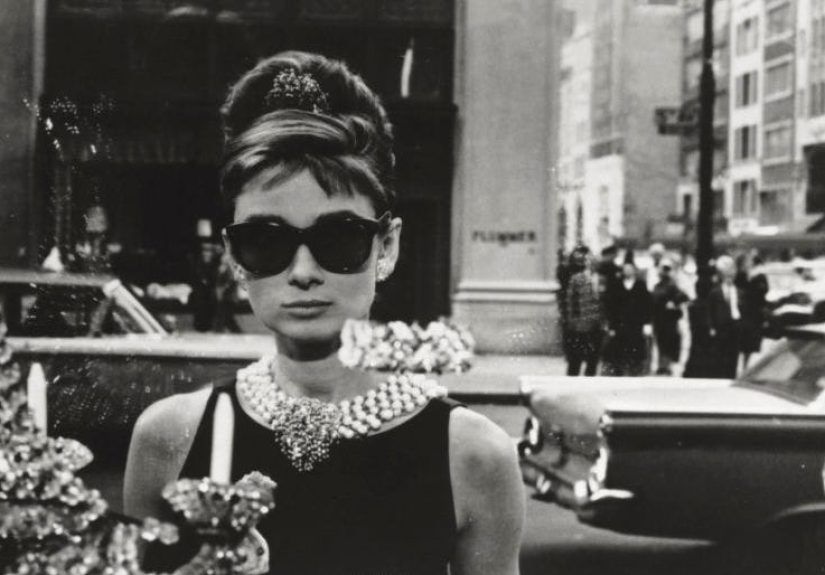
Henry Mancini and Johnny Mercer’s “Moon River,” performed by Audrey Hepburn in Breakfast at Tiffany’s, is one of cinema’s finest examples of character revealed through song. It is gentle, intimate, and a little fragile, which is exactly why it suits Holly Golightly. The song gives the audience a glimpse beneath the glamour, sunglasses, and carefully arranged mystery.
Many movie songs announce themselves loudly. “Moon River” whispers and wins anyway. It proves that one of the greatest film songs can feel less like a performance and more like a secret accidentally overheard.
Movie Musicals and Songs That Dance Right Off the Screen
Movie musicals are where original songs become architecture. In a musical, songs do not interrupt the story; they are the story’s staircase, elevator, trapdoor, and occasionally its confetti cannon. Great musical numbers push characters into action, expose feelings too large for dialogue, and make viewers believe that dancing in public is a perfectly reasonable response to stress.
“Singin’ in the Rain” – Singin’ in the Rain
Although the song itself existed before the 1952 film, Gene Kelly’s performance in Singin’ in the Rain turned it into one of the most iconic movie music moments ever captured. It is a reminder that sometimes a classic film song is not only about authorship; it is about cinematic transformation. The image of Kelly dancing through rain-soaked streets gives the song a permanent home in movie history.
“The Sound of Music” and the Power of Place
The songs from The Sound of Music demonstrate how music can turn landscapes into emotional landmarks. The title song opens the film with a sense of freedom so large it practically needs its own zip code. Songs such as “Do-Re-Mi” and “My Favorite Things” became cultural staples because they combine character, melody, and a clean sense of joy.
Classic movie songs endure when they invite audiences into a world. In The Sound of Music, music is not decoration. It is how Maria teaches, comforts, rebels, and connects. That is why the songs still feel fresh even after decades of school concerts, family viewings, and enthusiastic living-room performances by people who absolutely should have stretched first.
Romantic Movie Songs That Made the Whole Theater Sigh
“The Way We Were” – The Way We Were
Performed by Barbra Streisand, “The Way We Were” is one of the great romantic movie songs because it understands that memory is rarely tidy. Written by Marvin Hamlisch with lyrics by Alan and Marilyn Bergman, it carries the emotional weight of a relationship that cannot be reduced to a happy ending or a clean heartbreak.
The song became inseparable from the film because it captures the central tension: love remembered is often softer than love lived. That is a painfully human idea, and Streisand’s performance gives it the dramatic sweep of a full diary written in cursive.
“My Heart Will Go On” – Titanic
Celine Dion’s “My Heart Will Go On,” from James Cameron’s Titanic, is one of the most commercially recognizable movie songs ever released. It became more than a theme song; it became shorthand for epic romance, tragic memory, and the 1990s belief that every emotional climax required a key change big enough to register on radar.
What makes the song effective is its placement within the film’s emotional afterlife. The story ends, but the song keeps the feeling afloat. That is the job of a great movie ballad: it escorts the audience out of the theater while the heart is still trying to file paperwork.
“Shallow” – A Star Is Born
“Shallow,” performed by Lady Gaga and Bradley Cooper in A Star Is Born, became a modern classic because it functions as both a love duet and a career ignition switch. In the film, the song marks a turning point: private talent becomes public revelation. Outside the film, it became a major awards-season and pop-culture phenomenon.
The song’s strength comes from its dramatic build. It begins with hesitation and grows into release, mirroring the emotional risk of stepping into the spotlight. Great original songs from movies often do this: they do not merely comment on a character’s change; they enact it.
Action, Soul, and Songs With Serious Attitude
“Theme from Shaft” – Shaft
Isaac Hayes’ “Theme from Shaft” changed what a movie theme could sound like. The song is cool, funky, stylish, and absolutely aware that it has entered the room wearing sunglasses indoors. Created for Gordon Parks’ 1971 film Shaft, it helped define the sound of a character before he even needed to explain himself.
The best movie songs often act as character introductions. “Theme from Shaft” does that with swagger. It tells the audience what kind of hero they are dealing with: streetwise, confident, and musically accompanied by a rhythm section that clearly knows it is doing historic work.
“Eye of the Tiger” – Rocky III
Survivor’s “Eye of the Tiger,” written for Rocky III, is the heavyweight champion of workout playlists and motivational montages. The song is direct, muscular, and built for forward motion. It does not politely suggest determination; it grabs determination by the shoulders and sends it jogging up the steps.
Its enduring popularity shows how movie songs can escape the film and become cultural tools. People use it to train, focus, compete, or simply fold laundry with unnecessary intensity. That is range.
Animated Movie Songs That Became Family Anthems
“A Whole New World” – Aladdin
Disney’s animated renaissance gave the world some of the most beloved original songs from classic movies, and “A Whole New World” from Aladdin remains one of the crown jewels. Written by Alan Menken and Tim Rice, the song combines romance, wonder, and narrative momentum. It is not just a love song; it is a magic-carpet thesis statement.
In animation, songs often carry extra responsibility. They must appeal to children without boring adults, advance the story without feeling like homework, and become memorable without turning parents into haunted jukeboxes. “A Whole New World” manages the balance with elegance.
“Can You Feel the Love Tonight” – The Lion King
Elton John and Tim Rice’s “Can You Feel the Love Tonight” from The Lion King is another Disney classic that became a major cultural hit. It softens the film’s coming-of-age arc and gives Simba and Nala’s reunion emotional gravity. The song works because it connects romance, destiny, and the larger circle of the story.
Disney songs endure because they are engineered for emotional clarity. The best ones make big ideas easy to feel: love, grief, courage, identity, belonging. That clarity is not simplistic. It is craft wearing mouse ears.
“Remember Me” – Coco
“Remember Me,” from Pixar’s Coco, is one of the most moving modern examples of a song changing meaning across a film. At first, it appears as a public-facing performance piece. Later, it becomes intimate, familial, and deeply tied to memory. That transformation is why it resonates so strongly.
Great film songs are often flexible. They can return in different arrangements and reveal new emotional information each time. “Remember Me” is not simply repeated; it is re-understood. By the end, the audience hears the same title with a fuller heart.
Modern Movie Songs That Expanded the Canon
“Lose Yourself” – 8 Mile
Eminem’s “Lose Yourself,” from 8 Mile, made history as the first hip-hop song to win the Academy Award for Best Original Song. Its impact came from authenticity and urgency. The track is not pasted onto the movie; it feels born from the same pressure, ambition, and fear that drive the main character.
The song also widened the definition of what an Oscar-winning movie song could be. It proved that cinematic music did not have to arrive in traditional ballad form to be emotionally and narratively powerful. Sometimes the best movie song sounds like a challenge thrown under fluorescent lights.
“Naatu Naatu” – RRR
“Naatu Naatu,” from RRR, became a global sensation because it is pure cinematic electricity. Written by M. M. Keeravani and Chandrabose, the song combines rhythm, choreography, friendship, defiance, and joy in a way that feels impossible to watch passively. Your foot either taps or files a formal complaint against your self-control.
Its Oscar win marked an important moment for international film music in mainstream American awards conversation. More importantly, it reminded global audiences that the movie musical tradition is alive, athletic, and fully capable of making a room explode with enthusiasm.
“What Was I Made For?” – Barbie
Billie Eilish and Finneas’ “What Was I Made For?” from Barbie is a striking example of a quiet song becoming a cultural lightning rod. Instead of matching the film’s brightest comic surfaces, the song reaches into its existential center. It asks a question that belongs to the character, the audience, and honestly anyone who has ever stared at a ceiling at 2:00 a.m. wondering whether adulthood came with missing instructions.
The song’s success shows that modern movie music can still create intimate emotional moments at blockbuster scale. It does not need to shout to be heard. It lingers because it identifies the soft ache under the plastic sparkle.
Why Original Movie Songs Stay With Us
Original songs from classic movies last because they attach themselves to memory. We remember where the character was standing, what the scene felt like, and how the music changed the emotional temperature. A great film song is not just heard; it is stored with images.
That is why the best movie songs of all time are so diverse. Some are romantic ballads. Some are comic showstoppers. Some are soul themes, rock anthems, animated lullabies, or rap tracks sharpened like a survival tool. What unites them is purpose. Each song knows why it exists inside the movie.
For filmmakers, the lesson is clear: a song should not be added merely because the soundtrack needs a marketable single. It should deepen the story. It should tell us something dialogue cannot. It should make the audience feel that the film briefly found a more honest language than speech.
More Personal Experiences With Classic Movie Songs
One of the most interesting things about famous movie songs is how they follow people outside the film. You may first hear a song in a theater, but years later it shows up at a wedding, in a car, at a graduation party, in a grocery store aisle, or during a late-night scroll when nostalgia decides to attack without warning. Movie songs are sneaky like that. They pretend to belong to Hollywood, then quietly become part of ordinary life.
For many viewers, the first unforgettable movie song arrives in childhood. Maybe it is a Disney song played so many times that the family DVD player deserves a retirement ceremony. Maybe it is a musical number from an old film watched with grandparents. Maybe it is a dramatic ballad from a blockbuster that adults seemed to take very seriously while children mostly noticed the big ship, the big hair, or the big emotions. Over time, the song becomes a memory container. You do not just remember the movie; you remember the room, the people, the snacks, and the exact couch cushion that tried to swallow the remote.
Movie songs also have a strange ability to make people brave for three minutes. A shy person may suddenly sing “Shallow” with theatrical intensity in a car. Someone who has never boxed anything more dangerous than a cardboard package may hear “Eye of the Tiger” and walk with championship posture. A person doing chores may turn a mop into a microphone because a classic soundtrack has temporarily overruled common sense. This is not foolishness. This is cinema doing overtime.
Another experience many people share is rediscovering a movie song later in life and realizing it means something different. A song that once sounded romantic may later sound bittersweet. A song that felt playful may reveal sadness underneath. “Remember Me” is a perfect example because its emotional meaning changes depending on where you are in the story and, frankly, where you are in life. The best movie songs grow with the audience. They do not stay frozen in the first viewing.
There is also the communal magic. Watching a musical number alone can be moving, but watching one with a crowd is a different sport. When an audience laughs, gasps, claps, or sits in perfect silence during a song, the theater becomes part of the performance. That is why songs from films like RRR, The Lion King, Barbie, A Star Is Born, and The Wizard of Oz travel so well across generations. They give people something to feel together.
In the streaming age, where viewers can pause, skip, replay, and multitask, a truly great movie song still has the power to make everything stop. The phone lowers. The conversation pauses. The room listens. That is the secret ingredient behind the best original songs from classic movies: they create a moment that asks to be experienced, not consumed. And when a song can do that decades after its release, it has earned its place in film history.
Conclusion: The Song Ends, but the Movie Lives On
The best movie songs of all time prove that cinema is not only a visual art. It is also a musical memory machine. From “Over the Rainbow” to “Moon River,” from “Theme from Shaft” to “Lose Yourself,” from Disney classics to modern Oscar winners, original songs from classic movies help stories leap beyond the screen and into everyday culture.
A truly great film song does not just decorate a scene. It reveals character, intensifies emotion, and gives the audience something portable to carry home. Years later, when the melody returns, so does the movie. That is the real magic: one song, a few minutes long, can reopen an entire world.