Table of Contents >> Show >> Hide
- Why Turn a Pine Coffee Table Into a Kids Chalkboard Activity Table?
- Materials and Tools You Will Need
- Step-by-Step: How to Make a Childs Chalkboard Activity Table
- Design Ideas for a Better Kids Activity Table
- Safety Tips for a Child-Friendly Chalkboard Table
- Cleaning and Maintenance
- Common Mistakes to Avoid
- Budget Breakdown
- Creative Ways Kids Can Use the Finished Table
- Extra Experience: What This Project Teaches Beyond Painting
- Conclusion
Some DIY projects begin with a grand plan, a color-coded shopping list, and a Pinterest board that looks like it was curated by a Scandinavian architect with unlimited sunlight. This one begins with a $5 pine coffee table, a few supplies, and the beautiful belief that children will draw on furniture anyway, so we might as well make it legal.
A childs chalkboard activity table from a $5 pine coffee table is one of those rare home projects that checks every happy little box: affordable, practical, creative, kid-friendly, and deeply satisfying. It turns a tired piece of furniture into a playroom hero where crayons, chalk, snack negotiations, puzzle battles, sticker experiments, and tiny masterpieces can all happen in one place.
Even better, pine is a forgiving wood for beginners. It is lightweight, easy to sand, and usually simple to paint. A secondhand pine coffee table may not look glamorous when you drag it home, but with the right prep, chalkboard paint, and a little patience, it can become a sturdy activity station that looks charming instead of “rescued from behind a garage.”
Why Turn a Pine Coffee Table Into a Kids Chalkboard Activity Table?
Kids need surfaces. They need places to draw, build, stack, sort, pretend, erase, start over, and occasionally park a plastic dinosaur in a pile of cereal. A coffee table already has the right basic shape: low height, broad tabletop, and enough room for multiple activities. That makes it an ideal candidate for a DIY kids activity table.
Instead of buying a brand-new children’s table, you can upcycle a used coffee table for a fraction of the cost. The $5 price tag is part of the fun. It gives the project permission to be experimental. If you make a small mistake, the furniture police will not arrive. You are not refinishing a family heirloom from 1883; you are giving a humble pine table a second career as a creativity zone.
The Big Benefits
The biggest benefit is usefulness. A chalkboard tabletop gives children a built-in drawing space without loose paper covering the floor like confetti after a parade. It also encourages open-ended play. One day the table is a restaurant menu. The next day it is a racetrack, a spelling board, a treasure map, or a very serious meeting place for stuffed animals.
The second benefit is durability. When properly sanded, primed, painted, cured, and seasoned, a chalkboard surface can handle regular use. It will not be indestructiblechildren have a magical talent for testing physicsbut it can be tough enough for normal playroom life.
The third benefit is style. A painted base with a chalkboard top can fit farmhouse, cottage, modern, colorful, or playful decor. You can keep it simple with white legs and a black top, go bold with bright colors, or stain the lower shelf for a natural pine look.
Materials and Tools You Will Need
This project does not require a workshop full of intimidating equipment. Most supplies are easy to find at home improvement stores, craft stores, or in the mysterious corner of the garage where half-used paintbrushes go to retire.
Basic Supply List
- A small pine coffee table, preferably solid and stable
- Medium-grit sandpaper, such as 120- to 150-grit
- Fine-grit sandpaper, such as 180- to 220-grit
- Wood filler for dents, cracks, or old screw holes
- Tack cloth or a damp microfiber cloth
- Painter’s tape
- Primer suitable for wood
- Chalkboard paint for the tabletop
- Furniture paint or child-safe water-based paint for the base
- Foam roller or high-quality synthetic brush
- Small angled brush for corners and edges
- Clear water-based protective topcoat for painted legs or shelf areas
- Non-dusty chalk for seasoning and everyday use
If the coffee table is old or already painted, pause before sanding. Older painted furniture may contain lead-based coatings. For a table intended for children, do not gamble. Use a lead test kit or choose a newer unfinished or clearly modern piece. Safety is not the boring part of the project; safety is what keeps the adorable chalk table from becoming a bad idea with legs.
Step-by-Step: How to Make a Childs Chalkboard Activity Table
The process is simple, but the order matters. Paint is a little like a toddler: it behaves better when you give it the right conditions.
Step 1: Inspect the Coffee Table
Start by checking the structure. Wiggle the legs, press on the tabletop, and inspect the underside. Tighten loose screws. Add wood glue to wobbly joints if needed. A kids table must be steady because children rarely use furniture with the calm elegance shown in catalog photos.
Look for sharp corners, splinters, peeling finish, deep dents, or raised knots. Pine is soft, so dents are common. That is not a disaster. Small imperfections can be filled, sanded, and painted over. Large cracks or unstable legs should be repaired before moving forward.
Step 2: Clean the Surface
Before sanding, clean the entire table with mild soap and water or a wood-safe cleaner. Thrifted furniture often carries dust, grease, old polish, sticker residue, and occasionally a smell best described as “basement with opinions.” Paint sticks better to clean surfaces.
Let the table dry completely. Moisture trapped under primer or paint can cause peeling, bubbling, or uneven texture later.
Step 3: Sand the Table
Sand the tabletop and any areas you plan to paint. If the pine is raw or lightly finished, start with medium-grit sandpaper to smooth scratches and rough patches. Then finish with fine-grit sandpaper for a smoother paint-ready surface.
You do not need to sand the table into oblivion. The goal is not to erase its entire life story. The goal is to remove shine, soften rough spots, and give primer something to grip. Always wipe away sanding dust with a tack cloth or damp microfiber cloth before painting.
Step 4: Fill Dents and Holes
Use wood filler for nail holes, dents, or gouges. Let it dry according to the product directions, then sand the filled spots smooth. This step is especially helpful on the tabletop because chalkboard paint looks and performs better on an even surface.
If you want a rustic look, you can leave a few small character marks. Just remember that every bump on a chalkboard top becomes part of the drawing experience. A tiny dent may become a mountain in a chalk city. That may be charmingor annoyingdepending on your tolerance for bumpy stick figures.
Step 5: Tape Off the Chalkboard Area
Use painter’s tape to protect the edges where the chalkboard top meets the painted base. If the coffee table has a lip, apron, or decorative edge, decide whether the chalkboard surface will cover only the flat top or wrap slightly over the edge. For younger children, keeping the chalkboard area flat and clearly defined is usually easier to clean.
Step 6: Prime the Tabletop
Primer helps chalkboard paint adhere evenly, especially on bare pine or previously finished wood. Apply a thin coat and brush with the grain. Let it dry fully, then lightly sand with fine-grit sandpaper. Wipe away dust before moving to paint.
This small sanding step after primer makes a big difference. It removes raised grain and gives the chalkboard paint a smoother foundation. Smooth foundation equals smoother chalk lines. Smooth chalk lines equal fewer complaints from tiny artists with very strong creative standards.
Step 7: Paint the Base
Paint the legs, apron, and lower shelf before or after the chalkboard top, depending on your comfort level. A water-based furniture paint is a smart choice for a child’s table because it is easier to clean up and typically has lower odor than solvent-heavy products. Look for low-VOC or no-VOC options when possible.
Use two thin coats instead of one thick coat. Thick paint drips, stays tacky longer, and creates a finish that may peel more easily. Thin coats take more patience, but they usually look cleaner and last longer.
For a classic look, try white, cream, sage green, navy, or soft gray. For a more playful table, use sunny yellow, coral, sky blue, or a two-tone design. If your playroom already looks like a rainbow had a meeting with a toy store, a simple neutral base may bring visual peace.
Step 8: Apply Chalkboard Paint
Stir the chalkboard paint thoroughly. Do not shake it like a maraca unless the label says to do so; bubbles can affect the finish. Use a dense foam roller for a smooth tabletop or a high-quality synthetic brush if you prefer brushing. Apply thin, even coats.
For the best writing surface, apply at least two coats. Some DIYers prefer three light coats on tabletops because kids will use the surface heavily. Let each coat dry according to the paint label before recoating. If the finish feels rough between coats, sand very lightly with fine-grit sandpaper and wipe clean.
Step 9: Let the Chalkboard Cure
This is the step where patience tries to leave the room. Do not hand the table to children the minute the paint feels dry. Dry paint and cured paint are not the same thing. Many chalkboard paints need several days before use. Follow the instructions on your specific product.
If you rush the curing stage, chalk can scratch, ghost, or stick in the surface. Think of curing as the table’s beauty sleep. It may look ready, but it is still becoming its best chalkboard self.
Step 10: Season the Chalkboard Surface
Before the first drawing session, season the chalkboard. Rub the side of a piece of white chalk over the entire tabletop, covering it completely. Then erase it with a soft cloth or felt eraser. This leaves a fine layer of chalk dust that helps prevent the first marks from becoming permanent-looking shadows.
Use traditional chalk rather than permanent chalk markers unless the paint manufacturer says markers are safe for that surface. Chalk markers can be harder to erase and may stain some chalkboard finishes.
Design Ideas for a Better Kids Activity Table
A chalkboard tabletop is the star, but small design upgrades can make the table even more useful.
Add Storage Underneath
If the coffee table has a lower shelf, turn it into supply storage. Add small baskets for chalk, erasers, paper, puzzles, magnetic letters, or building blocks. Label the baskets with simple words or picture tags so children can help clean up. In theory, anyway. In practice, one sock and a toy carrot may still end up in the chalk basket.
Create a Chalk Rail
A narrow wood strip attached along one side can hold chalk. Sand it smooth and paint or seal it. Keep it shallow so it does not become a crumb collector with ambitions.
Round the Corners
If the table has sharp corners, soften them with sanding or add corner protectors. This is especially helpful for toddlers and preschoolers. Rounded corners also give the table a more finished, child-friendly look.
Use a Two-Tone Finish
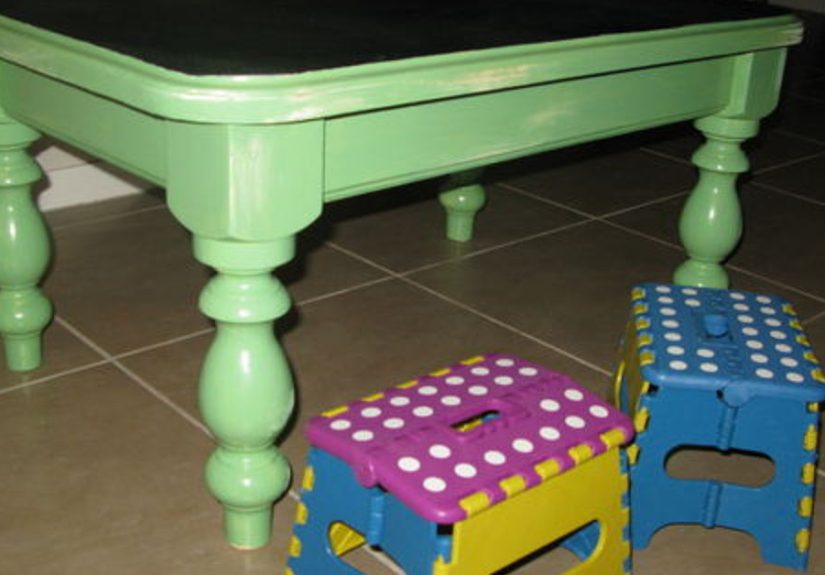
A black chalkboard top with a colorful base creates contrast and looks intentional. A soft green base with a dark top feels vintage. White legs with a natural pine shelf feel clean and farmhouse-inspired. Navy or charcoal legs can make the table look modern enough to live in a family room without screaming “craft explosion headquarters.”
Safety Tips for a Child-Friendly Chalkboard Table
Because this table is for children, safety matters as much as style. Choose non-toxic art supplies intended for kids. Look for labels such as AP non-toxic or materials that conform to recognized safety labeling standards. Pick non-dusty chalk when possible, and clean the table with a damp cloth instead of blowing chalk dust into the air.
Make sure all finishes are fully cured before use. Keep paint cans, tools, sandpaper, and loose hardware away from children during the project. If the original coffee table has unknown paint, test before sanding. If it tests positive for lead, do not turn it into a child’s table.
Also check the finished table for splinters, exposed staples, loose screws, or peeling paint. A DIY project should invite creativity, not give anyone a surprise trip to the first-aid drawer.
Cleaning and Maintenance
A chalkboard activity table is meant to be used, so it will not stay perfect. That is part of its charm. Wipe the tabletop regularly with a soft cloth or felt eraser. For deeper cleaning, use a slightly damp cloth and allow the surface to dry before drawing again.
Avoid harsh cleaners unless the paint label allows them. Strong chemicals can damage the chalkboard finish. If the surface starts to look cloudy, season it again with the side of a chalk stick and erase.
The painted base may need occasional touch-ups, especially near chair legs or toy impact zones. Keep a small jar of leftover paint labeled with the color and date. Future you will be grateful. Future you is already busy looking for the missing blue chalk.
Common Mistakes to Avoid
Skipping Surface Prep
Paint is not a magic blanket. If the surface is dirty, glossy, or dusty, the finish may peel. Clean, sand, prime, and wipe thoroughly.
Using Thick Coats
Thick paint can dry unevenly and leave ridges. Thin coats create a better finish, especially on the chalkboard top.
Forgetting to Season the Chalkboard
Seasoning helps reduce ghost marks and improves erasability. It takes only a few minutes and makes the table feel like a real chalkboard instead of a painted plank with big dreams.
Choosing the Wrong Chalk
Use regular, non-dusty chalk designed for children. Some chalk markers and art chalks can leave residue or scratch depending on the surface.
Letting Kids Use It Too Soon
Give the paint time to cure. Children may not understand why the table must rest for a few days, but the finish will be stronger for it.
Budget Breakdown
The table itself may cost only $5, but you should plan for supplies. If you already own sandpaper, brushes, and primer, this can be a very low-cost project. If you buy everything new, the total may be closer to the cost of a basic store-bought children’s table. The difference is that your finished piece will be customized, sturdier than many plastic options, and far more satisfying to brag about.
A realistic budget might include $5 for the coffee table, $10 to $20 for chalkboard paint, $8 to $15 for primer, $10 to $20 for furniture paint, and a few dollars for sandpaper or a foam roller. Leftover paint can be used for future projects, which is how one simple table makeover becomes the gateway to painting every small object in your house.
Creative Ways Kids Can Use the Finished Table
Once finished, the table becomes more than a drawing surface. It can support learning, storytelling, and pretend play.
- Practice letters, numbers, shapes, and sight words
- Draw roads for toy cars
- Create menus for pretend restaurants
- Design treasure maps
- Play tic-tac-toe or simple math games
- Plan block buildings before construction
- Make seasonal drawings for holidays
- Use it as a homework warm-up station
The best part is that mistakes disappear with an eraser. That is a lovely lesson for children: not every line has to be permanent. Sometimes you draw a cat that looks like a potato with ears, erase it, and try again.
Extra Experience: What This Project Teaches Beyond Painting
Building a childs chalkboard activity table from a $5 pine coffee table teaches more than furniture painting. It teaches resourcefulness. It shows that a useful family item does not always need to come from a big-box aisle, wrapped in plastic, with assembly instructions that make adults question their life choices.
One of the best experiences with this project is the moment you realize how much potential is hiding in cheap secondhand furniture. A pine coffee table that looks plain, scratched, or outdated can still have solid bones. Kids do not care whether a table came from a designer showroom. They care whether it is fun, sturdy, and available at the exact moment they need to draw a giant sun with seventeen rays.
Another valuable experience is learning how important preparation is. Many beginners want to jump straight to the pretty part: paint. But cleaning, sanding, filling, priming, and taping are what separate a lasting makeover from a project that chips after one week of enthusiastic chalk combat. This project is a friendly introduction to basic furniture refinishing because the stakes are low and the reward is high.
It also creates a chance to involve children safely. They should not handle sanding dust, wet paint, or tools without close supervision, but they can help choose colors, pick storage baskets, or decide what the table should be called. Naming the table may sound silly until a child proudly announces, “This is my art station,” and suddenly the little pine table has a job title.
Parents and caregivers often discover that the finished table becomes part of daily rhythm. It can sit in a playroom, kitchen corner, homeschool nook, or family room. While dinner cooks, a child can draw. During a rainy afternoon, the table becomes a game board. During cleanup time, chalk and erasers go back into baskets under the shelf. It creates a defined place for creativity, which can help reduce the famous “art supplies everywhere” situation.
There is also an emotional reward in reusing something old. Upcycling teaches children that objects can be repaired, improved, and reimagined. That lesson is useful far beyond furniture. It encourages creativity and sustainability in a simple, hands-on way. Instead of throwing away a scratched table, you transform it. Instead of buying more, you make better use of what already exists.
From a practical standpoint, the table can grow with the child for several years. Toddlers may use it for scribbles and shape practice. Preschoolers may use it for pretend play. Early elementary kids may use it for spelling words, math facts, comic strips, or elaborate maps involving dragons and snack locations. When the chalkboard top eventually wears down, you can lightly sand and repaint it.
The project also teaches adults a healthy attitude toward imperfection. A handmade kids activity table does not need to look factory-perfect. A tiny brush mark on the leg or a slightly uneven edge does not ruin the piece. In fact, those details often make it feel warmer and more personal. Children will add their own marks anyway, usually within the first hour.
In the end, the best experience is watching a forgotten $5 pine coffee table become a place where imagination happens. That is the real magic of this DIY makeover. It is not just about chalkboard paint or budget decorating. It is about creating a small, useful stage for childhood creativityone erasable masterpiece at a time.
Conclusion
A childs chalkboard activity table from a $5 pine coffee table is proof that great DIY projects do not need to be expensive, complicated, or powered by professional-level tools. With sanding, primer, chalkboard paint, safe materials, and a little patience, an ordinary pine coffee table can become a playful, practical centerpiece for drawing, learning, games, and everyday creativity.
The key is to prepare the surface properly, let the paint cure, season the chalkboard, and choose kid-friendly supplies. Do that, and your bargain table can become a hardworking activity station that looks good, saves money, and gives children permission to draw on furniturefinally, a rule they will happily follow.
Note: Always follow the instructions on your specific paint and finish products. For older painted furniture, test for lead before sanding or refinishing, especially when the finished piece will be used by children.