Table of Contents >> Show >> Hide
- The Antikythera Mechanism: A Pocket-Sized Cosmos
- Why Clickspring’s Workshop Question Matters
- Inside the Imagined Ancient Workshop
- The Antikythera Mechanism Was More Than a Gadget
- Why Clickspring’s Reconstruction Feels Different
- Experimental Archaeology: Learning by Making
- The Lost Workshop as a Character in the Story
- What the Workshop May Have Needed
- Why This Story Still Captivates Modern Makers
- Experience Section: Watching the Ancient Workshop Come Back to Life
- Conclusion
Somewhere in the ancient Mediterranean, long before YouTube tutorials, digital calipers, or that one drawer full of mystery screws every workshop eventually develops, a craftsperson built a machine so sophisticated that modern researchers still argue about it with the intensity usually reserved for sports playoffs and coffee opinions. That machine was the Antikythera Mechanism, a hand-powered bronze astronomical calculator recovered from a shipwreck near the Greek island of Antikythera in the early 20th century.
The device could model celestial cycles, predict eclipses, track calendar systems, and possibly display the movements of the Sun, Moon, and known planets. In other words, it was not merely a fancy antique clock. It was a compact mechanical universe. And that raises a deliciously difficult question: what kind of workshop could have produced it?
This is where Clickspring, the workshop identity of craftsman Chris, enters the story. Through his Antikythera reconstruction project, Clickspring does not simply admire the ancient mechanism from a safe museum distance. He steps into the problem with files, saws, dividers, gravers, bronze, patience, and a willingness to let hand tools answer questions that academic diagrams alone cannot. His work imagines the lost workshop behind the Antikythera Mechanismnot as a fantasy scene with glowing marble columns, but as a real place where metal was cut, marked, corrected, polished, cursed at, and finally transformed into precision.
The Antikythera Mechanism: A Pocket-Sized Cosmos
The Antikythera Mechanism is often described as the world’s first known analog computer, though that phrase can make it sound like someone discovered a bronze laptop in a shipwreck. The truth is more fascinating. The mechanism was a geared astronomical device, probably made in the Hellenistic Greek world sometime around the second or first century BCE. It survived in corroded fragments after being lost in a Roman-era shipwreck, where sea, salt, and time turned it into what looked at first like a lump of ancient leftovers.
Only later did researchers realize that hidden inside the fragments were bronze gears, inscriptions, scales, pointers, and mechanical relationships of extraordinary sophistication. X-ray imaging and computed tomography revealed the internal gear trains, while close study of the inscriptions helped scholars understand how the device may have been used. The back dials included cycles such as the 19-year Metonic cycle and the 223-month Saros eclipse cycle. The front likely displayed the ancient Greek cosmos, including the Sun, Moon, and possibly the five planets known at the time: Mercury, Venus, Mars, Jupiter, and Saturn.
Imagine opening a wooden case about the size of a mantel clock and turning a side handle. As you rotate it, bronze gears move pointers across calendar and zodiac scales. The Moon changes phase. Eclipse predictions appear. Cycles of time interlock like gossip in a small town. This was not decorative cleverness. It was astronomy made mechanical.
Why Clickspring’s Workshop Question Matters
Many discussions of the Antikythera Mechanism focus on what it did. Clickspring asks a different but equally powerful question: how could it have been made?
That question matters because the Antikythera Mechanism did not arrive from space, no matter how tempting it is to blame aliens whenever ancient people do something brilliant. It was made by human beings using the materials, tools, mathematics, and workshop habits available in antiquity. If we want to understand the mechanism, we must understand the craft environment that could produce it.
Clickspring’s project is valuable because it treats ancient craftsmanship as a practical discipline rather than a decorative footnote. The work involves reconstructing parts of the mechanism with historically plausible methods: hand layout, sawing, filing, drilling, scraping, polishing, and gear cutting without modern machine tools. This approach turns the Antikythera Mechanism from a museum mystery into a working question: could skilled ancient makers have produced this level of precision by hand?
The short answer is yesbut not casually, not quickly, and definitely not while distracted. The longer answer is where the magic lives.
Inside the Imagined Ancient Workshop
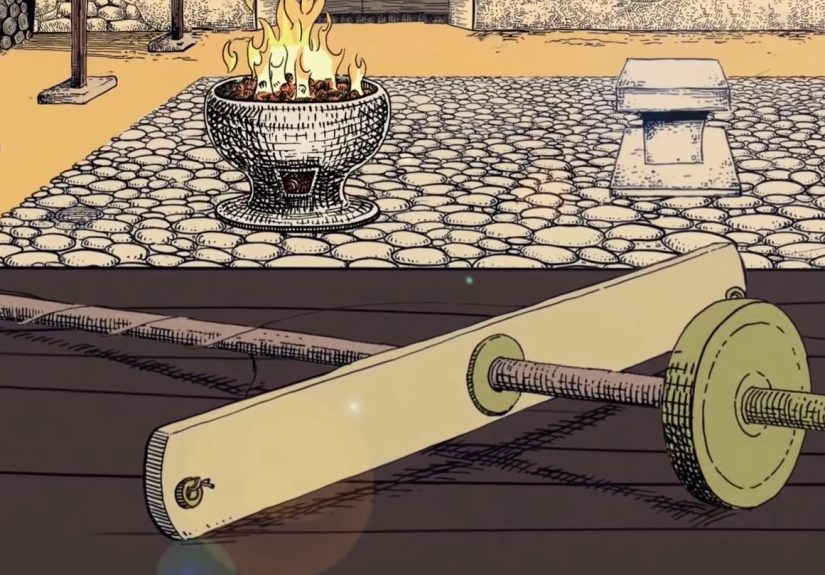
Picture the workshop that may have built the Antikythera Mechanism. It would not look like a modern engineering lab. There would be no CNC mill humming in the corner, no laser cutter, no 3D printer making cheerful little robot noises. Instead, there might be benches, charcoal, bronze stock, abrasives, bow drills, files, chisels, punches, scribers, dividers, straightedges, wooden jigs, and measuring tools refined by generations of craft practice.
Bronze, Wood, and Human Judgment
The mechanism itself was made primarily from bronze components and probably housed in a wooden case. Bronze was a practical material for ancient precision work: durable, workable, and capable of holding fine detail. But bronze does not magically become a gear. It must be cast, hammered, annealed, cut, filed, and finished. Every tooth on a gear has to be laid out. Every center distance matters. Every shaft and bearing surface must cooperate with the rest of the mechanism.
Clickspring’s reconstructions reveal how much judgment is hidden behind the word “handmade.” A gear tooth is not just a notch. A plate is not just a flat piece of metal. When everything must mesh, rotate, and display information over long cycles, tiny errors can multiply. The craftsperson must constantly measure, test, adjust, and recover from mistakes. Ancient makers may not have used modern terminology, but they clearly understood accuracy, repeatability, and mechanical constraint.
The Beauty of Layout Lines
One of the most interesting parts of Clickspring’s Antikythera work is the attention to layout: the process of marking where cuts, holes, divisions, and gear teeth should go before tools remove metal. In a world without digital readouts, layout was the blueprint, calculator, and quality-control system all at once.
Ancient artisans could have used compasses, dividers, straightedges, and geometric construction to divide circles and position features. This is especially important for gear cutting. A gear with many teeth demands consistent spacing. If the spacing wanders too much, the gear train becomes noisy, stiff, inaccurate, or useless. Clickspring’s experiments show how carefully designed hand techniques can produce results far better than many modern people assume possible.
That is the quiet lesson of the project: precision is not the exclusive property of electricity. Precision is also a habit.
The Antikythera Mechanism Was More Than a Gadget
Calling the Antikythera Mechanism a gadget is like calling the Parthenon a porch. The device condensed centuries of Greek astronomy, mathematics, and mechanical craftsmanship into a portable object. It represented an intellectual culture capable of modeling time through ratios and cycles.
The Metonic cycle connected 235 lunar months with 19 solar years, helping reconcile lunar and solar calendars. The Saros cycle helped predict eclipses across a period of 223 lunar months. The mechanism’s gearing translated these cycles into physical motion. That means the maker did not merely understand how to cut bronze. Someone involved understood astronomical theory well enough to encode it into gear ratios.
This suggests a workshop at the intersection of science and craft. Perhaps the maker worked with astronomers, philosophers, instrument designers, or wealthy patrons. Perhaps the device was a teaching tool, a prestige object, a navigational aid, a calendar calculator, or some combination of all these. Its exact social role remains debated, but its complexity tells us one thing clearly: the workshop behind it was not ordinary.
Why Clickspring’s Reconstruction Feels Different
There are many digital models of the Antikythera Mechanism, and they are useful. A computer rendering can show gear trains cleanly, rotate parts smoothly, and make the whole machine look inevitable. But real metal is less polite. It bends, grabs, dulls tools, resists correction, and occasionally teaches humility with sharp edges.
Clickspring’s work feels different because it reintroduces frictionliterally and intellectually. By making components with hand tools, the reconstruction process exposes the decisions ancient makers may have faced. How do you cut a thin bronze plate without distorting it? How do you make a drill run true? How do you divide a circle accurately? How do you hold a small part while filing it without launching it into the shadow realm under the bench?
These are not minor details. They are the living core of the object. A finished artifact can make difficulty invisible. Reconstruction makes difficulty visible again.
Experimental Archaeology: Learning by Making
Clickspring’s Antikythera project belongs to a broader tradition known as experimental archaeology. Instead of only asking what ancient people made, experimental archaeology asks what happens when modern researchers try to make similar things using plausible ancient methods. The goal is not to cosplay the past. The goal is to test assumptions.
For the Antikythera Mechanism, this matters enormously. It is easy to underestimate ancient technology when we measure it against modern industrial convenience. We look at a corroded bronze fragment and forget that it began as a clean, intentional, highly organized machine. By rebuilding parts of it, Clickspring demonstrates that ancient workshops could have achieved remarkable precision through disciplined process.
This does not mean every mystery is solved. Scholars still debate aspects of the mechanism’s front display, planetary gearing, calibration date, and exact origin. But practical reconstruction helps narrow the field. A proposed design must not only make mathematical sense; it must also be buildable.
The Lost Workshop as a Character in the Story
The most compelling part of Clickspring’s imagined workshop is that it gives the unknown maker a presence. The Antikythera Mechanism did not build itself. Behind it was a personor more likely a teamwho made decisions at a bench.
Someone selected the bronze. Someone drew circles. Someone cut teeth. Someone checked whether a pointer moved as intended. Someone probably had a bad day when a nearly finished part went wrong. Someone knew the feeling of being very close to success and still needing to file one more tiny correction.
That human element changes how we see the ancient world. The Antikythera Mechanism is not merely evidence of “advanced technology.” It is evidence of advanced people: observant, patient, mathematically literate, and mechanically fearless.
What the Workshop May Have Needed
A workshop capable of building the Antikythera Mechanism would have required more than tools. It needed knowledge systems.
Mathematical Knowledge
The gear ratios had to represent astronomical cycles. This required familiarity with period relationships, calendar systems, and the geometry of circular display. Even if the craftsperson did not invent the astronomy, the workshop had to translate it into mechanical form.
Material Knowledge
Bronze behaves differently depending on composition, work-hardening, thickness, and heat treatment. A skilled maker would know when to cut, when to anneal, when to scrape, and when to stop before making an elegant part slightly worse.
Toolmaking Skill
Fine work requires fine tools, and fine tools often require other fine tools to make them. Clickspring’s project highlights this chain of capability. To build the mechanism, an ancient workshop may first have needed to build or refine the tools that made the mechanism possible.
Patronage and Time
A machine this complex was unlikely to be a quick market-stall product. It required time, materials, expertise, and probably a patron who valued scientific prestige. The object may have belonged to a wealthy individual, institution, teacher, or collector. Whatever its exact purpose, it was a high-status piece of intellectual machinery.
Why This Story Still Captivates Modern Makers
The Antikythera Mechanism captivates modern makers because it breaks the lazy timeline of progress. We like to imagine technology as a staircase: ancient people at the bottom, modern people at the top, everyone politely climbing in order. Then along comes the Antikythera Mechanism, wearing bronze gears and a smug little grin, reminding us that history is messier.
Complex ideas can appear, disappear, and reappear. Mechanical traditions can flourish and then be lost. Knowledge is not guaranteed to survive just because it is impressive. The Antikythera Mechanism is a survivor from a larger technical world that mostly vanished. It hints at workshops, instruments, and makers we may never fully recover.
Clickspring’s reconstruction gives that lost world a tactile reality. It shows that ancient precision was not a miracle. It was the result of craft culture, careful geometry, and thousands of small decisions made by people with steady hands and ambitious minds.
Experience Section: Watching the Ancient Workshop Come Back to Life
Spending time with Clickspring’s Antikythera project feels less like watching a simple build video and more like standing quietly in the doorway of a lost workshop. At first, the subject sounds almost impossible: recreate parts of a 2,000-year-old astronomical computer using tools and methods that ancient craftspeople might recognize. But the experience quickly becomes surprisingly intimate. The mystery stops being abstract. It becomes a line scratched into bronze, a tiny drill hole, a gear tooth shaped one careful stroke at a time.
What stands out most is the pace. Modern viewers are trained to expect speed. We want the quick cut, the before-and-after reveal, the “I built this in 24 hours” headline. Clickspring’s Antikythera work offers the opposite pleasure. It asks the viewer to slow down enough to notice process. A plate is not finished because it looks finished. It is finished when it fits the logic of the machine. A tool mark is not just a tool mark. It is evidence of a decision.
That slow pace creates a strange kind of suspense. Will the hand-divided circle come out accurately? Will the tooth spacing work? Will the ancient-style method prove practical, or will it collapse under its own romantic charm? The drama is not loud, but it is real. Anyone who has ever tried to make something precise by hand knows the feeling. There is a moment when the material seems to be negotiating with you. Push too hard, and you ruin the part. Hesitate too much, and you never finish. Somewhere between confidence and caution, the work happens.
The project also changes how you look at ancient makers. It becomes harder to use words like “primitive” after watching what hand methods can accomplish. The imagined Antikythera workshop was not primitive. It was disciplined. It may have lacked electric motors, but it did not lack intelligence. Its tools were simpler, yet the thinking behind them was profound. In some ways, the limitations made the achievement more impressive. Without modern shortcuts, every successful part demanded planning, muscle memory, and an eye trained by repetition.
There is also an emotional pleasure in seeing astronomy become physical. Today, most of us meet the cosmos through screens: apps, simulations, telescope images, calendar alerts. The Antikythera Mechanism represents a different relationship with the sky. It turns celestial cycles into bronze motion. The Moon is not just observed; it is geared. Time is not just counted; it is constructed. Clickspring’s work helps modern viewers feel how astonishing that idea must have been.
By the end, the imagined workshop no longer feels like a backdrop. It feels like the missing main character. The benches, tools, lamps, abrasives, and bronze scraps become part of the story because they explain how genius becomes an object. The Antikythera Mechanism was not only designed in the mind. It was argued into existence by hands. Clickspring’s greatest contribution may be reminding us that history’s most brilliant machines were not born in polished museum cases. They were born on workbenches, among filings, failures, corrections, and the quiet satisfaction of a gear finally turning as it should.
Conclusion
Clickspring’s imagined workshop behind the Antikythera Mechanism gives us more than a beautiful reconstruction project. It gives us a better way to respect ancient intelligence. The Antikythera Mechanism was a mechanical cosmos, but it was also a workshop achievement: a union of astronomy, geometry, metallurgy, toolmaking, and patient human skill.
By exploring how such a device could have been made, Clickspring moves the conversation from “How advanced was this object?” to “What kind of craft culture made this possible?” That shift matters. It replaces mystery with admiration and vague wonder with practical understanding. The ancient maker becomes less like a legend and more like a colleague across timesomeone who knew the stubborn joy of turning raw material into working precision.
The Antikythera Mechanism remains one of the most extraordinary artifacts ever recovered from the ancient world. Clickspring’s work reminds us that behind every extraordinary artifact is an extraordinary workshop, and behind that workshop are human hands capable of making the universe turn.
Note: This article is written for educational web publishing and synthesizes established public research on the Antikythera Mechanism, ancient Greek astronomical technology, and Clickspring’s experimental reconstruction work without adding source-link clutter to the article body.