Table of Contents >> Show >> Hide
- What Is the Game Boy Camera?
- How the Gameboy Camera Becomes Camcorder
- Why Anyone Would Turn a Game Boy Camera Into a Camcorder
- The Hardware Behind the Hack
- Popular Game Boy Camera Mods and Related Projects
- The Aesthetic: Why Lo-Fi Video Feels So Good
- Creative Uses for a Game Boy Camera Camcorder
- Challenges of Turning the Game Boy Camera Into a Camcorder
- Why the Game Boy Camera Still Matters
- Experience: What It Feels Like to Use a Game Boy Camera Camcorder
- Conclusion
Long before smartphones turned everyone into a pocket-sized Spielberg, Nintendo released a strange little accessory that looked like a toy, behaved like a camera, and produced images so crunchy they could almost be served with milk. The Game Boy Camera, launched in 1998, captured tiny black-and-white pictures with a resolution that modern devices would politely call “adorable.” Yet decades later, this quirky cartridge has become more than a nostalgic collectible. Thanks to clever hardware hackers, retro photographers, and DIY electronics fans, the Gameboy Camera becomes camcorder and somehow, that sentence makes perfect sense.
The idea sounds ridiculous at first. A 1990s handheld camera with four shades of gray should not be competing with modern video gear. It should be sitting in a drawer next to a dead Tamagotchi and a pack of questionable AA batteries. But the Game Boy Camera has something modern cameras often lack: personality. Its limitations are not bugs; they are the whole show. When modders turn the Game Boy Camera into a camcorder, they are not chasing clean 4K footage. They are chasing the visual equivalent of a photocopied dream.
This article explores how the Game Boy Camera became a camcorder, why people are still obsessed with its lo-fi look, what kinds of hardware mods make video capture possible, and why this tiny Nintendo oddity continues to inspire makers, photographers, and retro gaming fans.
What Is the Game Boy Camera?
The Game Boy Camera was one of Nintendo’s most wonderfully weird accessories. Released for the Game Boy family, it plugged into the cartridge slot just like a game. Instead of battling monsters or jumping over pits, users could take photos, edit them, decorate them with stamps, play mini-games, and print tiny images using the Game Boy Printer.
By today’s standards, the specs are comically humble. The camera used a low-resolution CMOS sensor and produced 128-by-112-pixel images in four shades of gray. That is not “low resolution” in the modern marketing sense. That is “your smart fridge has more imaging power” low resolution. Still, the result was charming, strange, and instantly recognizable. Faces became chunky mosaics. Shadows became dramatic blobs. Bright light turned into pure ghost energy.
The camera also had a rotating lens module, making it surprisingly selfie-friendly before “selfie” became a word everyone’s uncle used on vacation. Combined with Nintendo’s playful software, it was less a serious camera and more a creative toy box. And that is exactly why it survived in the hearts of artists and hackers.
How the Gameboy Camera Becomes Camcorder
The original Game Boy Camera was designed for still images, not video recording. It could capture photos, display them through the Game Boy screen, and store a limited number of images in cartridge memory. Turning it into a camcorder requires one big change: bypassing or replacing the Game Boy’s normal role as the camera’s host system.
Modern modders have approached this in several ways. Some projects use custom circuit boards to communicate directly with the camera cartridge. Others extract or interface with the original image sensor and connect it to microcontrollers, displays, or storage devices. In practical terms, the camcorder mod usually needs to handle three jobs: read the image data, show a live preview, and save a stream of frames to storage such as a microSD card.
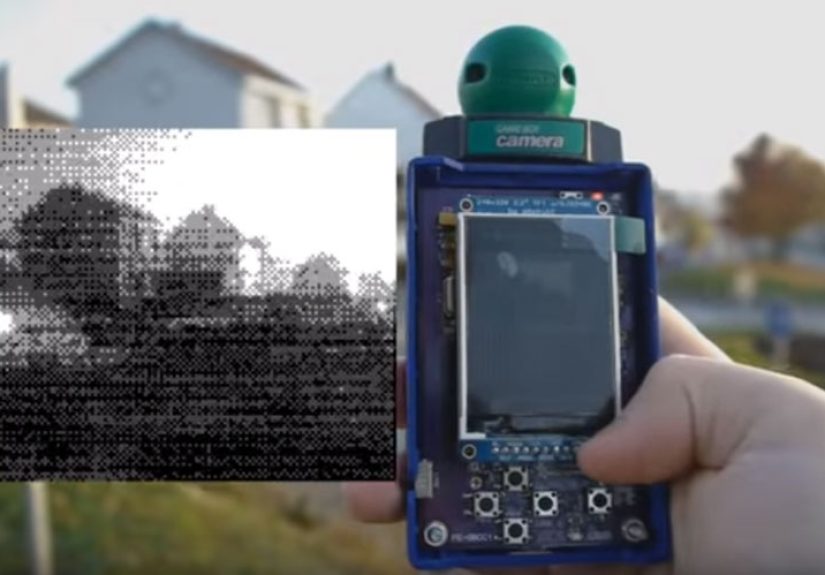
One of the best-known examples is Furrtek’s GBCamcorder, a lo-fi portable video recorder built around the Game Boy Camera cartridge. Instead of using the Game Boy itself, the device captures images from the camera, displays them on a screen, and saves footage to a microSD card. That is the essential magic trick: the cartridge keeps its unmistakable visual DNA, while the new hardware gives it camcorder behavior.
From Still Photos to Moving Pictures
A camcorder is basically a camera that captures many still images in rapid sequence and stores them as video. The Game Boy Camera was never built to be fast or slick, but its sensor can still provide image data. With the right electronics, those frames can be collected one after another. The final output may be slow, choppy, grainy, and dramatically imperfect which is precisely the point.
The resulting footage does not look like old home video. It looks like surveillance footage from a haunted vending machine. Motion becomes smeared and robotic. Faces appear as pixel spirits. Everyday scenes suddenly feel like lost footage from an alternate 1998 where Nintendo accidentally invented experimental cinema.
Why Anyone Would Turn a Game Boy Camera Into a Camcorder
The obvious question is: why? Modern phones can record cinematic video, stabilize shaky hands, color-correct skin tones, and make a sandwich look like it has its own agent. Why spend time turning a 1998 toy camera into a camcorder?
The answer is simple: because perfect is boring. The Game Boy Camera creates images that cannot be easily replicated by clean digital filters. Yes, apps can imitate the look, but real hardware has a stubborn weirdness that software often smooths away. The sensor reacts to light in odd ways. The contrast crushes details without apology. The limited grayscale palette forces every scene into a tiny visual argument between black, white, and two grays trying their best.
For artists, musicians, filmmakers, and retro fans, that look is valuable. It is not about accuracy. It is about mood. A Game Boy Camera camcorder can make a walk down the street feel like a memory from a broken robot. It can turn a music video into pixelated folklore. It can transform a normal room into a digital cave painting.
The Hardware Behind the Hack
To understand the appeal, it helps to understand the technical challenge. The Game Boy Camera was built around a tiny image sensor and cartridge-based software. The Game Boy handled the interface, controls, display, and storage limitations. Once you remove the Game Boy from the equation, you need something else to do that work.
That “something else” might be a custom PCB, a microcontroller, a Raspberry Pi Pico-style board, or another embedded system. The hardware needs to talk to the camera, manage timing, process image data, and send the result to a display or storage device. This is not a beginner-level “stick two cables together and hope” project. It requires knowledge of electronics, firmware, signal timing, and the patience of a person who has accepted that debugging is a lifestyle.
Microcontrollers and Modern Maker Tools
Modern maker hardware has made these experiments much easier than they would have been in the early 2000s. Boards based on chips like the RP2040 are inexpensive, flexible, and powerful enough for creative retro-computing projects. Other projects in the Game Boy ecosystem use similar hardware to capture video from original Game Boy systems, emulate printer behavior, or transfer old camera photos to modern devices.
This matters because the Game Boy Camera community is no longer limited to taking 30 tiny pictures and praying the cartridge battery behaves. Makers can now build adapters, docks, capture tools, and custom camera bodies. The original accessory becomes a platform. Once that happens, people begin asking delightfully dangerous questions like, “Can this be a webcam?” “Can it record video?” and “Can I take it to a concert and confuse everyone?”
Popular Game Boy Camera Mods and Related Projects
The camcorder concept is part of a larger wave of Game Boy Camera experimentation. Some projects preserve the cartridge experience. Others remove the Game Boy entirely. Many focus on exporting photos, improving usability, or adapting the sensor for more advanced shooting styles.
GBCamcorder
GBCamcorder is the project that most directly matches the phrase “Gameboy Camera becomes camcorder.” It uses the Game Boy Camera cartridge as the imaging source and adds custom hardware to display and record footage. The result is a portable, lo-fi video device that feels like it escaped from a parallel universe where camcorders were sold in the toy aisle next to Pokémon cards.
DashBoy Camera
Another fascinating project is the DashBoy Camera, which uses the Mitsubishi image sensor associated with the Game Boy Camera and pairs it with modern hardware. The project explores what happens when the original sensor is given a more flexible body and firmware environment. Features such as time-lapse, motion detection, HDR-like experiments, night shooting, and SD card storage show how much creative potential still exists inside old components.
Game Boy Camera as Webcam
The Game Boy Camera has also found new life as a webcam. Modern docks and adapters can help bring its tiny grayscale output into computer workflows. Is it practical for a board meeting? Only if your goal is to look like a witness in a paranormal documentary. But for livestreams, retro shows, music visuals, and online art projects, it is fantastic.
The Aesthetic: Why Lo-Fi Video Feels So Good
Lo-fi technology has a strange emotional power. Vinyl crackle, VHS noise, cassette hiss, early digital compression, and Game Boy Camera pixels all remind us that media used to have texture. Modern cameras work hard to remove flaws. Retro cameras make flaws the main character.
When the Gameboy Camera becomes camcorder, the footage gains a special kind of tension. It is both digital and ancient-looking. It feels playful, but also slightly eerie. It can make a sunny backyard look like evidence from a lost space mission. It can turn a coffee mug into a minimalist art object. It can make a cat look like the final boss of a very small video game.
This aesthetic is not just nostalgia. It is a creative constraint. With only four shades of gray, composition becomes more important. Lighting becomes more dramatic. Silhouettes matter. Simple subjects work better than busy scenes. You start thinking less like a smartphone user and more like a printmaker, animator, or early video artist.
Creative Uses for a Game Boy Camera Camcorder
A Game Boy Camera camcorder is not designed for weddings, unless the couple specifically requested “1998 ghost terminal chic.” But it can be surprisingly useful in creative projects.
Music Videos
Musicians love distinctive visuals, and the Game Boy Camera delivers them instantly. A performance shot through this device can feel raw, intimate, and strange. It works especially well for chiptune, synthwave, punk, experimental pop, and any band that owns at least one cable no one can identify.
Short Films and Visual Essays
For filmmakers, the Game Boy Camera camcorder can be used as a visual layer. It may not carry an entire narrative on its own, but it can create dream sequences, flashbacks, surveillance shots, memory fragments, or glitchy transitions. Because the image is so limited, viewers immediately understand that they are seeing something subjective or stylized.
Live Streaming and Performance Art
Using the Game Boy Camera as a live camera or webcam creates a memorable visual identity. Streamers, visual artists, and performers can use it for intros, reaction shots, background projections, or interactive installations. It is not the camera you use when you want to look polished. It is the camera you use when you want people to ask, “Wait, what am I looking at?”
Retro Photography Experiments
Even when modified for video, the Game Boy Camera remains a fascinating still-photo tool. Shooting frames from video, creating stop-motion sequences, or combining footage with printed Game Boy Printer images can produce a unique mixed-media workflow.
Challenges of Turning the Game Boy Camera Into a Camcorder
Of course, this project is not all pixelated sunshine. There are real challenges. The first is image quality. The Game Boy Camera is brutally limited, and no amount of modern hardware can magically turn its original output into crisp HD footage. That would defeat the purpose anyway.
The second challenge is frame rate. Depending on the setup, video may be slow or uneven. This can be artistically charming, but it is not ideal for fast action. If you plan to film sports, wildlife, or a toddler after cake, prepare for abstract results.
The third issue is hardware complexity. Many Game Boy Camera camcorder-style builds require soldering, firmware flashing, 3D printing, circuit design, or at least comfort with open-source project documentation. Beginners can still learn from these projects, but they should start carefully and avoid sacrificing rare hardware without understanding the process.
Finally, there is preservation. The Game Boy Camera is now a collectible piece of gaming history. Modding can be fun, but destructive modifications should be considered thoughtfully. Whenever possible, reversible adapters and non-destructive builds are better for preserving original hardware.
Why the Game Boy Camera Still Matters
The Game Boy Camera matters because it sits at the intersection of gaming, photography, toy design, and digital culture. It arrived before camera phones became normal. It treated photography as play. It encouraged users to edit, decorate, distort, print, and share images in a way that now feels oddly prophetic.
In a sense, the Game Boy Camera predicted the social camera. It was not about perfect image quality. It was about identity, humor, customization, and quick creative output. Add stickers? Yes. Take weird selfies? Absolutely. Print tiny photos? Of course. Make your face look like a creature from a haunted spreadsheet? Nintendo had you covered.
Today’s mods simply continue that spirit. When makers turn the Game Boy Camera into a camcorder, webcam, dashcam-style device, or standalone camera, they are extending Nintendo’s original invitation: play with images. Break the rules. Make something funny. Make something ugly. Make something so ugly it becomes beautiful.
Experience: What It Feels Like to Use a Game Boy Camera Camcorder
Using a Game Boy Camera camcorder-style setup is less like operating a camera and more like negotiating with a tiny time machine. You do not point it at a scene expecting accuracy. You point it at a scene and wait to see what kind of pixelated prophecy comes back.
The first thing you notice is how much lighting matters. A modern phone forgives almost everything. It balances exposure, brightens faces, reduces noise, sharpens details, and quietly does a thousand tiny calculations so your lunch looks heroic. The Game Boy Camera does not care about your lunch. It gives you four shades and a shrug. If the light is too bright, highlights vanish. If the room is too dark, shadows become a black soup. Somewhere in the middle, though, magic happens.
Outdoor scenes are especially fun. Trees turn into textured patterns. Clouds become chunky gray islands. Sidewalks and buildings look like they belong in a lost handheld adventure game. People walking across the frame appear as animated silhouettes, especially when the frame rate is low. The footage feels imperfect in the best possible way, like a memory trying to load on old hardware.
Portraits are even stranger. The Game Boy Camera was always famous for making faces look funny, dramatic, or mildly cursed. In motion, that effect becomes stronger. A smile flickers. Eyes become dark pixels. Hair turns into a graphic shape. If the subject moves too quickly, the image breaks into a delicious mess. This is not flattering footage, but it is unforgettable footage. In a world where every camera wants to smooth your skin into plastic, the Game Boy Camera says, “What if you were a cave painting with buttons?”
Recording with a modded setup also changes how you think about composition. You quickly learn to simplify. Big shapes work better than fine details. High contrast works better than subtle colors, because color does not exist here. Strong outlines, window light, shadows, signs, hands, faces, and objects with clear silhouettes all become excellent subjects. Busy backgrounds can collapse into visual static, which may be useful if you are making experimental art, but less useful if you are trying to show your friend’s new haircut.
The experience can also be surprisingly social. Pulling out a Game Boy Camera camcorder at a gathering is like bringing a small mechanical dog. People want to see it. They ask questions. They laugh when they see themselves on the screen. They immediately suggest filming something ridiculous. The device creates participation because it is visibly playful. Nobody expects perfection, so everyone relaxes.
There is also a slower rhythm to it. You become more patient. You test angles. You move closer. You look for contrast. You accept accidents. A modern phone encourages endless shooting because storage is cheap and results are predictable. A Game Boy Camera camcorder encourages curiosity because results are unpredictable. Sometimes the footage fails. Sometimes it looks like electronic oatmeal. And sometimes, for reasons that feel almost supernatural, it captures a scene with more mood than a camera worth a thousand times more.
That is the real joy of the project. The Game Boy Camera camcorder is not useful because it beats modern tools. It is useful because it refuses to be modern. It reminds creators that limitations can be creative engines. It proves that old hardware still has stories left inside it. And it shows that even a toy camera from 1998 can become a camcorder when enough curious people refuse to let it retire quietly.
Conclusion
The story of how the Gameboy Camera becomes camcorder is really a story about creative stubbornness. Nintendo built the Game Boy Camera as a playful accessory for still images, mini-games, and tiny thermal prints. Decades later, modders saw more potential hiding inside its strange little shell. By pairing the original camera hardware with modern electronics, custom boards, microcontrollers, displays, and microSD storage, they transformed a low-resolution toy into a one-of-a-kind lo-fi video machine.
It will never replace a smartphone, mirrorless camera, or real camcorder. That is not the goal. Its power comes from its limits: the grain, the grayscale, the awkward motion, the tiny resolution, and the unpredictable charm. In a digital world obsessed with sharpness, the Game Boy Camera camcorder offers something better than perfection. It offers character.
Whether used for music videos, retro livestreams, short films, art projects, or pure maker curiosity, the Game Boy Camera remains one of the most lovable oddities in gaming history. It is proof that technology does not have to be new to feel exciting. Sometimes all it needs is a clever hack, a microSD card, and a willingness to see beauty in 128 by 112 pixels.