Table of Contents >> Show >> Hide
- Why Employers Ask Teamwork Interview Questions
- How to Structure the Best Teamwork Interview Answers
- Common Teamwork Interview Questions and Best Answers
- 1. “Tell me about a time you worked successfully as part of a team.”
- 2. “What role do you usually play on a team?”
- 3. “How do you handle conflict with a team member?”
- 4. “Do you prefer working independently or on a team?”
- 5. “Describe a time you helped a struggling team member.”
- 6. “Tell me about a time your team failed. What happened?”
- 7. “How do you build relationships with new team members?”
- 8. “Have you ever led a team project?”
- 9. “What makes a good team?”
- 10. “How do you make sure teamwork stays productive under pressure?”
- Tips for Giving Stronger Teamwork Interview Answers
- Common Mistakes to Avoid
- Teamwork Interview Experiences: Real Lessons Candidates Learn the Hard Way
- Final Thoughts
- SEO Tags
Teamwork interview questions look innocent at first. Then suddenly you are sitting across from a hiring manager, smiling bravely, trying not to answer, “Yes, I work well with others, especially if they bring snacks.” Unfortunately, employers usually want a little more than snack diplomacy. They want proof that you can collaborate, communicate clearly, solve problems with other people, and keep projects moving even when opinions clash or deadlines start doing cartwheels.
If you are preparing for a job interview, learning how to answer common teamwork interview questions can give you a major advantage. These questions are designed to reveal how you behave in group settings, whether you can handle conflict like an adult, and how you contribute to shared goals without turning every answer into a solo victory speech. The strongest answers show teamwork skills, leadership when needed, flexibility when needed even more, and measurable results.
In this guide, you will learn the most common teamwork interview questions, what interviewers are really trying to discover, and the best answer strategies for each one. You will also find sample answers, practical tips, and real-world interview experiences that can help you sound confident, prepared, and refreshingly human.
Why Employers Ask Teamwork Interview Questions
Most employers are not simply checking whether you can survive a group project without emotionally moving to another planet. They are trying to understand how you communicate, how you respond to pressure, how you deal with different personalities, and whether you can contribute to team goals without creating unnecessary drama. In many workplaces, teamwork is tied closely to communication, accountability, adaptability, and problem-solving.
That is why your answer should never stop at, “I’m a team player.” That phrase has been used so often it now has the energy of plain toast. Instead, give specific examples. Show how you supported a team, handled a challenge, improved collaboration, or helped the group get a result. The best teamwork interview answers are concrete, relevant, and structured.
How to Structure the Best Teamwork Interview Answers
Before diving into the most common questions, use one simple formula: STAR.
STAR stands for:
- Situation: Briefly explain the context.
- Task: Describe the goal, challenge, or responsibility.
- Action: Explain what you did to help the team.
- Result: Share the outcome and what the team achieved.
This method keeps your answer focused and makes it easier for interviewers to see your teamwork skills in action. It also stops you from wandering into a ten-minute origin story when the interviewer only asked about one project.
Common Teamwork Interview Questions and Best Answers
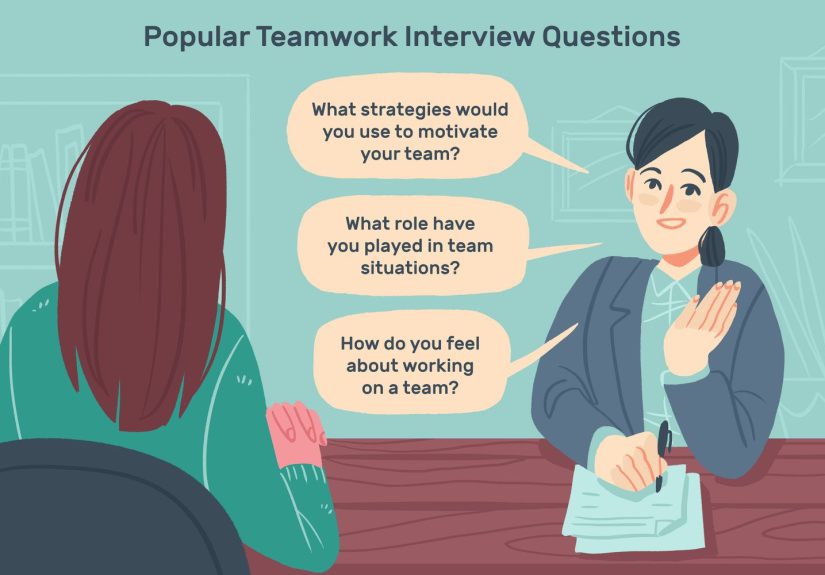
1. “Tell me about a time you worked successfully as part of a team.”
This is one of the most common teamwork interview questions because it gives employers a fast look at how you operate in a collaborative environment. They want to know your role, how you worked with others, and whether the team achieved a meaningful result.
Best answer strategy: Choose a clear example where your contribution mattered. Focus on collaboration, communication, and outcome.
Sample answer: “In my previous role, I worked with a cross-functional team to launch a new client onboarding process. My responsibility was to collect feedback from sales and customer support so we could identify pain points. I organized short weekly check-ins, summarized the key issues, and helped the team prioritize fixes. Because we stayed aligned and acted quickly, we reduced onboarding delays by 25% and improved customer satisfaction scores during the next quarter.”
2. “What role do you usually play on a team?”
This question helps interviewers understand your self-awareness. They want to know whether you recognize your strengths and whether your style fits the role you are applying for.
Best answer strategy: Be honest, but avoid boxing yourself into one identity. Show flexibility. Maybe you are often the organizer, the connector, the problem-solver, or the calm voice when everyone else is speed-running panic.
Sample answer: “I often become the organizer on a team because I like creating clarity around deadlines, responsibilities, and next steps. That said, I adapt based on what the team needs. Sometimes I am the person keeping communication on track, and other times I step back and support someone else’s lead. I have learned that strong teamwork is less about having one fixed role and more about helping the team function well.”
3. “How do you handle conflict with a team member?”
Ah yes, the classic interview favorite. Employers ask this because conflict is normal in any workplace. They want to see whether you respond with professionalism, maturity, and a solution-focused mindset.
Best answer strategy: Do not blame the other person. Do not make yourself look flawless. Show that you listened, stayed respectful, and worked toward a shared goal.
Sample answer: “In one project, a teammate and I disagreed about how to prioritize tasks before a deadline. Instead of letting the frustration build, I asked if we could take fifteen minutes to review the project goals together. We compared our reasoning, identified the highest-impact tasks, and agreed on a revised order. That conversation helped us move forward without tension, and we delivered the project on time. It reminded me that conflict is often easier to resolve when people focus on the goal instead of protecting their egos.”
4. “Do you prefer working independently or on a team?”
This is a trap only if you answer it like a trap. Most roles require both independent work and collaboration. Interviewers want to know whether you can balance the two.
Best answer strategy: Avoid choosing one extreme. Emphasize that you are comfortable working independently but understand how collaboration improves results.
Sample answer: “I’m comfortable working independently when I need to focus and take ownership of my tasks, but I also enjoy working as part of a team because collaboration usually leads to better ideas and fewer blind spots. My best work tends to happen when I can manage my responsibilities independently while staying closely connected to the team’s larger goals.”
5. “Describe a time you helped a struggling team member.”
This question reveals empathy, communication skills, and your willingness to support others without turning into a dramatic workplace savior in your own story.
Best answer strategy: Show initiative, respect, and teamwork. The goal is not to prove someone else failed. The goal is to show that you helped the team succeed.
Sample answer: “During a busy reporting cycle, one teammate was falling behind because they were learning a new system. I noticed the delay was starting to affect the whole group, so I offered to walk through the process with them after our meeting. I also created a short step-by-step reference guide they could reuse later. That saved time for both of us, helped them catch up, and made the team more efficient for the rest of the month.”
6. “Tell me about a time your team failed. What happened?”
This is where many candidates accidentally audition for the role of finger-pointer. Don’t. Interviewers ask this because they want to see accountability, reflection, and growth.
Best answer strategy: Choose a real example, explain what you learned, and show how you improved your approach afterward.
Sample answer: “Early in my career, I worked on a team presentation that fell short because we assumed everyone had the same understanding of the client’s priorities. We did not clarify responsibilities early enough, and our final proposal lacked consistency. I took that lesson seriously. Since then, I make a point of confirming roles, expectations, and deadlines at the start of group projects. That experience taught me that good teamwork depends on clarity just as much as effort.”
7. “How do you build relationships with new team members?”
Interviewers ask this to measure communication style, adaptability, and emotional intelligence. In many roles, especially remote or cross-functional ones, relationship-building matters just as much as technical skill.
Best answer strategy: Talk about listening, asking good questions, and learning how others prefer to work.
Sample answer: “When I join a new team, I try to learn how people communicate, what they are responsible for, and what success looks like from their perspective. I usually start by asking thoughtful questions, following through on commitments, and being consistent in how I communicate. I have found that trust builds faster when people see that you listen well and do what you say you will do.”
8. “Have you ever led a team project?”
Even if the role is not management-focused, employers often want to know whether you can step up when needed. Leadership in teamwork does not always mean being the loudest person in the room. Sometimes it means creating structure, keeping people aligned, and helping the group make progress.
Best answer strategy: Highlight coordination, communication, and results, not control.
Sample answer: “Yes. I led a small team during a website content update with a tight deadline. I created a timeline, divided tasks based on each person’s strengths, and held brief progress check-ins twice a week. Midway through the project, one requirement changed, so I adjusted the schedule and redistributed work to keep us on track. We launched on time, and the updated pages improved engagement metrics over the following month.”
9. “What makes a good team?”
This question sounds broad, but it helps employers understand your values. Your answer gives clues about how you collaborate and what kind of work environment brings out your best.
Best answer strategy: Focus on a few core ideas such as trust, accountability, communication, and shared goals.
Sample answer: “A good team has clear goals, open communication, and mutual accountability. People know what they are responsible for, but they also support one another when priorities shift. I think the strongest teams are the ones where people can share ideas honestly, disagree respectfully, and still stay focused on the outcome.”
10. “How do you make sure teamwork stays productive under pressure?”
This question is especially common for fast-paced roles. Employers want to know whether you can stay calm, organized, and collaborative when deadlines are tight.
Best answer strategy: Explain how you prioritize, communicate, and reduce confusion.
Sample answer: “When a team is under pressure, I focus on clarity first. I make sure everyone understands the top priorities, who owns each task, and when we need updates. I also try to keep communication simple and frequent so problems surface early instead of turning into last-minute surprises. In stressful situations, steady communication can save a project faster than heroics.”
Tips for Giving Stronger Teamwork Interview Answers
Use specific examples
Details make your answers believable. Instead of saying you are collaborative, describe a time you coordinated across departments, helped resolve a disagreement, or improved a team process.
Show your individual contribution
Teamwork answers should include “we,” but they also need “I.” The interviewer wants to know what you did, not just what the group accomplished while you stood nearby being supportive in spirit.
Mention measurable results
Whenever possible, include outcomes such as improved efficiency, stronger customer satisfaction, faster delivery, reduced errors, or better team alignment. Results make your teamwork examples stronger and more memorable.
Stay professional when discussing conflict
Even if a past teammate was difficult, avoid sarcasm, blame, or passive-aggressive storytelling. Interviewers notice tone as much as content.
Tailor your answer to the job
If the role involves cross-functional work, highlight collaboration across departments. If it is remote, emphasize communication and accountability. If it is leadership-focused, include examples where you aligned and motivated others.
Common Mistakes to Avoid
- Giving vague answers with no real example
- Talking only about yourself and ignoring the team
- Talking only about the team and hiding your contribution
- Blaming coworkers in conflict-related answers
- Using generic buzzwords instead of real actions
- Forgetting to explain the result
In other words, do not let your answer sound like a motivational poster wearing a business suit. Make it real. Make it relevant. Make it clear.
Teamwork Interview Experiences: Real Lessons Candidates Learn the Hard Way
One candidate I once coached had excellent experience but weak interview answers. When asked about teamwork, he kept saying things like, “I collaborate really well with everyone” and “I’m easy to work with.” None of that was wrong, but none of it was memorable either. We replaced those broad claims with one clear story about a product launch where he coordinated feedback between sales, support, and design. The result was immediate: his answer sounded more credible, more confident, and much more hireable. The lesson was simple. In a teamwork interview, examples beat adjectives every single time.
Another candidate had the opposite problem. She had strong examples, but every story turned into a one-woman action movie. Her answers were polished, but they made it sound as if the team existed mainly to watch her succeed in slow motion. We adjusted her responses so she still highlighted her contributions while showing how she gathered input, kept others informed, and helped the group move forward. That small shift made her sound more collaborative and more mature. Interviewers are usually not looking for a solo genius in teamwork questions. They are looking for someone who can create progress with other people.
A third experience came from a recent graduate who worried that he had no “real” teamwork stories because most of his background came from class projects and part-time jobs. That is a very common fear, and it is usually unnecessary. We used a university capstone project where he helped divide responsibilities, solved a scheduling conflict, and kept the team presentation on track. It worked beautifully because the example showed communication, reliability, and problem-solving. Teamwork examples do not have to come from a fancy corporate setting. If the story shows how you contributed to a shared goal, it can absolutely work.
One of the most useful lessons comes from candidates answering conflict questions. The strongest candidates do not pretend conflict never happens. They also do not tell stories that sound like courtroom testimony against a former coworker. The best answers usually follow the same pattern: identify the issue, explain how they communicated respectfully, describe the steps they took to align on a solution, and share what changed afterward. That approach shows emotional intelligence, which matters far more than pretending every team you ever joined was a magical village of perfect agreement.
There is also a big difference between sounding prepared and sounding rehearsed. Candidates who memorize a script word for word often sound stiff. Candidates who know the structure of their stories tend to sound natural. The best approach is to prepare two or three solid teamwork stories in advance, each covering a different angle: collaboration, conflict resolution, leadership, or helping a struggling teammate. Then adapt the story to the question. Think of it like having ingredients ready rather than trying to microwave a perfect answer from memory.
Across all these experiences, one pattern shows up again and again: the candidates who perform best are the ones who combine self-awareness with specificity. They know how they work with others. They can explain what they did. And they can show what happened because of it. That combination turns ordinary interview answers into convincing proof that they will be a strong addition to any team.
Final Thoughts
Common teamwork interview questions are not there to trick you. They are there to reveal how you collaborate, communicate, adapt, and contribute when the work involves other humans, which, inconveniently enough, is most jobs. The best answers use real examples, a clear structure, and honest reflection. Show that you can work independently, contribute to a group, handle conflict professionally, and help a team achieve results.
If you prepare a few strong STAR stories before your next interview, you will be ready for almost any teamwork question that comes your way. And that means less panicking, fewer generic answers, and a much better chance of leaving the interview sounding like someone every team would actually want to work with.