Table of Contents >> Show >> Hide
- What Actually Happened at the Savannah River Site?
- Why a Wasp Nest Can Be Radioactive Without Turning Into a Monster Movie
- The Bigger Cold War Backstory
- Why Watchdogs and Critics Wanted More Answers
- Public Health Risk Versus Public Unease
- What the Radioactive Wasp Nest Story Really Means
- Experiences Related to the Topic: What This Kind of Story Feels Like in Real Life
- Conclusion
Some headlines sound like they were brainstormed by a science-fiction writer after three cups of coffee and a late-night documentary binge. “Radioactive wasp nests” is absolutely one of them. But this story is not a campy creature feature, and it is not a joke. It is a real environmental and public-trust story tied to one of the most consequential landscapes of the Cold War: the Savannah River Site in South Carolina.
In 2025, workers at the former nuclear weapons production complex discovered a wasp nest near tanks holding radioactive liquid waste. Testing found contamination levels high enough to trigger national headlines and even higher levels of public curiosity. Federal officials said there was no danger to the public and no evidence of an active leak from the tanks. Watchdog groups, meanwhile, argued that the discovery raised serious questions about what was known, what was not known, and what should have been explained more clearly.
That tension is what makes this story worth unpacking. The radioactive wasp nest itself is weird enough to grab attention, but the bigger issue is what it reveals about aging nuclear infrastructure, legacy contamination, environmental cleanup, and the enduring ability of old Cold War sites to produce new anxieties. In other words, the wasps may have built the nest, but history built the plot.
What Actually Happened at the Savannah River Site?
The incident centered on the Savannah River Site, or SRS, a sprawling federal reservation in South Carolina created in the early 1950s to support America’s nuclear weapons program. For decades, the site produced plutonium and tritium and generated large amounts of radioactive waste in the process. Since the end of the Cold War, its mission has shifted toward environmental cleanup, waste management, and ongoing nuclear materials work.
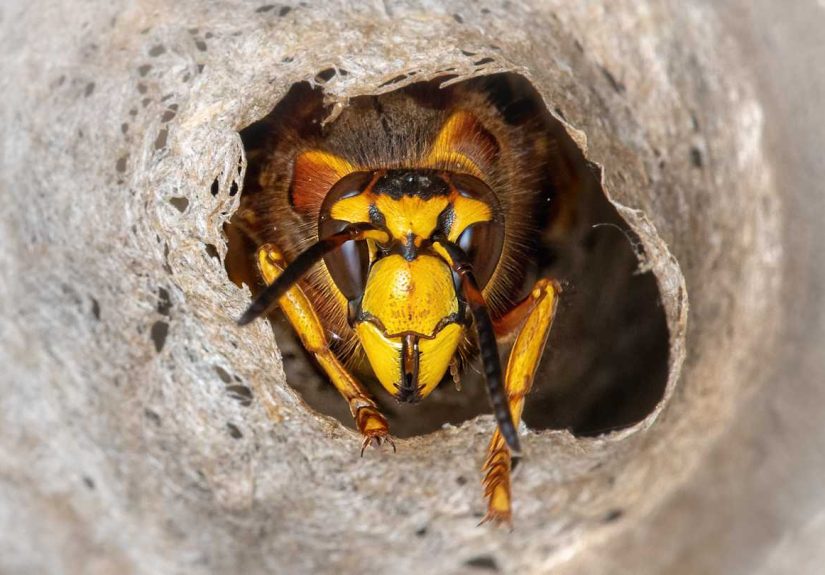
In early July 2025, workers performing routine monitoring in the site’s F Tank Farm found a wasp nest attached to a stanchion near tanks used to store liquid radioactive waste. According to the Department of Energy’s occurrence report, the nest registered contamination above the applicable federal surface contamination value. The nest was sprayed, removed, bagged, surveyed, and disposed of as radiological waste. Officials also said the surrounding ground and nearby area did not show contamination, and no wasps were present on the first nest when it was removed.
That last point matters, because the public imagination went directly to “flying radioactive insects.” Reality, thankfully, was less blockbuster and more bureaucratic. The first concern was the nest as contaminated material, not a swarm of tiny glowing villains plotting revenge on suburbia.
Then the story got stranger
After the initial discovery became public, later reporting said additional radioactive wasp nests were found in the same general tank farm area. Site officials said those nests were also handled safely and that the contamination levels involved remained very low in terms of public health risk. Some reporting also noted that the insects associated with the later nests showed lower contamination than the nests themselves.
So the story evolved from “one bizarre discovery” into something more meaningful: evidence that this was not a totally isolated oddity, but part of a broader pattern of wildlife interacting with a complicated cleanup environment. That does not automatically mean there is a fresh leak or an unfolding emergency. It does mean the discovery deserved serious explanation, not just a collective “well, that’s weird” and a shrug.
Why a Wasp Nest Can Be Radioactive Without Turning Into a Monster Movie
The phrase radioactive wasp nest sounds like pure chaos, but the underlying science is more ordinary and, in some ways, more unsettling. Officials said the nest contamination likely came from “legacy” radioactive material. In plain English, that means old contamination left over from past site operations rather than a new failure in the waste tanks.
Wasps build nests from materials they gather from the environment. Depending on the species, that can include wood fibers, plant matter, dirt, or other tiny bits of surrounding material. If those materials come from a place with lingering radioactive residue, the nest can act like a tiny construction project made from contaminated ingredients. The nest does not need to be near a dramatic spill, and the wasps do not need to be mutant super-insects. They just need access to the wrong raw materials in the wrong place.
This is a helpful moment to separate two concepts that often get mashed together in headlines: contamination and dose. A contaminated object can register significant surface radioactivity, but that does not automatically translate into a meaningful dose to the public. That distinction is one reason officials emphasized that the nest posed no broader danger. It is also why later site statements comparing the nests to everyday background exposure were not entirely unreasonable, even if they did little to calm a public already picturing an insect-themed apocalypse.
Still, contamination is contamination. When it shows up in wildlife-built structures near nuclear waste systems, people are right to ask how it got there, what pathways exist, and whether monitoring is sufficiently transparent. That is not panic. That is basic grown-up citizenship.
The Bigger Cold War Backstory
To understand why the discovery resonated so strongly, you have to appreciate what the Savannah River Site represents. This is not just any industrial facility. It is one of the great landscapes of Cold War production, built to make materials for the U.S. nuclear arsenal. Large reactors, chemical processing areas, support facilities, and waste systems helped feed the machinery of deterrence. The site’s cleanup burden today exists because the production mission once came first and the environmental bill arrived later.
The tank farms are especially important in this story. Over the decades, radioactive liquid waste generated by chemical separations and related processes was stored in large underground tanks in the F and H Areas. Official site materials describe dozens of tanks still in various stages of waste removal, cleaning, or closure. That means the landscape is neither untouched nor forgotten; it is actively managed, but it still carries the stubborn residue of earlier decades.
This is why the wasp nest story struck such a nerve. It condensed seventy years of American nuclear history into one absurdly memorable image. A wasp nest near a waste tank is not just an odd cleanup anecdote. It is the kind of symbol that instantly communicates a larger truth: nuclear history does not stay politely in the history books. It lingers in concrete, in steel, in soil, in oversight paperwork, and apparently, on occasion, in insect architecture.
Why Watchdogs and Critics Wanted More Answers
Federal officials stressed that the first nest reflected legacy contamination and not a loss of contamination control from the tank system. That is a meaningful statement, and if correct, it sharply limits the severity of the incident. But watchdog groups and some outside observers argued that the public still had good reason to want more detail.
Their questions were pretty straightforward. What kind of wasp built the nest? What material was the nest made from? Where exactly could the contaminated building material or dirt have originated? If multiple nests turned up, what does that suggest about the environmental pathways available within the tank farm? And why did the initial explanation feel so much thinner than the public expected for something this unusual?
None of those questions require assuming a hidden catastrophe. They are the natural questions that arise whenever officials say, in effect, “There is no danger, trust us,” while the facts sound like they were pulled from the first page of a satirical novel. Trust is not maintained by insisting the public remain calm. Trust is maintained by showing your work.
In a story like this, transparency is not some optional communications accessory. It is the whole ballgame. The nest may have been small, but the credibility stakes were not.
Public Health Risk Versus Public Unease
It is possible for two things to be true at the same time. First, the radioactive wasp nests may have posed very little real-world risk to workers, nearby communities, or the environment beyond the immediate cleanup area. Second, the discovery can still be symbolically alarming and institutionally important.
Officials and later coverage pointed out that the nests did not imply a mass exposure event and that the contamination involved was low compared with many radiation exposures people already know about from medicine or natural background sources. That matters. A scary headline should not automatically be mistaken for a major public health crisis.
But it is also true that people do not judge nuclear stories on dose tables alone. They judge them on competence, candor, and context. When the public hears “radioactive wasp nest near nuclear waste tanks,” the question is not just “Will this hurt me?” It is also “How well is this place understood, controlled, and explained?” Those are different questions, and both deserve answers.
That is one reason this story spread so fast. It sat right at the intersection of science, memory, and trust. The science said the immediate danger was limited. The memory said Cold War sites have a long afterlife. Trust, as usual, was the part under stress.
What the Radioactive Wasp Nest Story Really Means
The simplest reading of this episode is also the most useful: a contaminated nest is not proof of an active disaster, but it is a reminder that legacy contamination can remain present in surprising ways at former weapons sites. Nature does not care about neat administrative categories. If small animals, insects, weather, dust, and decaying infrastructure interact in a complex cleanup zone, unexpected things will happen.
That does not mean every odd discovery signals looming catastrophe. It means long-term stewardship has to be relentless, monitoring has to be honest, and public communication has to be better than a vague reassurance issued after everyone has already read the headline and imagined the worst.
In that sense, the wasp nest is not just a curiosity. It is a case study in how environmental cleanup is lived in the real world. The work is technical, slow, expensive, and often visually boringuntil one day a wasp nest reminds everyone that the leftovers of the atomic age are still very much with us.
Experiences Related to the Topic: What This Kind of Story Feels Like in Real Life
The most interesting part of this story may be the human experience around it. For workers at a site like Savannah River, the discovery of a radioactive wasp nest probably did not feel cinematic. It likely felt procedural at first: stop, survey, document, contain, report. People who work in cleanup environments are trained to respond to anomalies without dramatics. The strange thing is not that they found something unusual. The strange thing is that the unusual item happened to be so headline-friendly that the rest of the country suddenly paid attention.
For nearby residents, the experience is different. Imagine living within regional earshot of a former Cold War nuclear site. You already know the place exists. You know it has a history. You may even know people who work there. Then one day you see a headline about radioactive wasp nests. Even if you trust the science, your stomach probably does a small, involuntary somersault. That reaction is not irrational. It is the emotional residue of decades of nuclear secrecy, accidents, cleanup promises, and official language that too often sounds polished before it sounds clear.
For environmental watchdogs, the experience is often one of weary recognition. A story like this fits a familiar pattern: odd event, official reassurance, public confusion, then a scramble for specifics. Critics do not necessarily need the story to be catastrophic in order to see it as significant. For them, significance lies in what the event reveals about monitoring, communication, and institutional habits. They hear “legacy contamination” and immediately ask: where, how, how much, and for how long have we known? That impulse may irritate officials, but it is also part of how public accountability works.
For journalists, the experience is almost comically difficult. You have a headline that sounds ridiculous and a subject that is actually serious. Lean too hard into the absurdity and you trivialize nuclear cleanup. Lean too hard into the danger and you risk overstating the public health implications. The best coverage of this story tried to walk that line: yes, the phrase “radioactive wasp nest” is wild, but no, this is not a joke item from the back of a tabloid. It is a real event that points to real issues in a real cleanup landscape.
For readers, the experience is one of cognitive whiplash. First comes disbelief. Then curiosity. Then the search for a sane translation of the facts. Was the nest dangerous? Were the wasps dangerous? Is there a leak? Is this old contamination? Why are there multiple nests? Why does every answer somehow make the story less scary and more unsettling at the same time? That is the peculiar emotional shape of many modern environmental stories: the immediate danger may be limited, but the long-term meaning is still heavy.
And for the broader public, the experience lands as a reminder that the Cold War never fully ended in material terms. Its machinery stopped humming at full volume, but its residue stayed behind in places that still need guarding, studying, and cleaning. Sometimes those reminders arrive in technical reports. Sometimes they arrive in billion-dollar budget discussions. And sometimes, because history has a dark sense of humor, they arrive in the form of a wasp nest that seems designed in a lab to terrify headline editors.
That is why this story sticks. It is weird, yes. But it is also intimate. It brings a giant, abstract subjectnuclear legacy contaminationdown to the scale of something you might find under an eave, near a pole, or beside a fence. One nest, one scan, one ugly little symbol of how the past can cling to the present. It is hard to forget that image once you have it. Which, frankly, is probably why it matters.
Conclusion
The radioactive wasp nests discovered near the Savannah River Site were not proof of a Hollywood-style disaster, and officials were right to emphasize that the immediate public health risk appeared low. But the incident still matters. It highlights the stubborn afterlife of Cold War nuclear production, the importance of environmental monitoring, and the need for transparent public communication when unusual contamination events occur.
More than anything, this story shows how legacy nuclear waste issues continue to surface in unexpected forms. A wasp nest is small. The systems behind it are not. When an insect-built structure becomes the latest symbol of atomic history’s unfinished business, the lesson is simple: cleanup is not just about tanks, charts, and regulations. It is also about trust, vigilance, and the strange ways the past keeps buzzing back into view.