Table of Contents >> Show >> Hide
- Why Designers Say ChatGPT Works Best for Home Projects
- So I Tried It on a Very Normal, Very Opinionated Living Room
- What ChatGPT Got Right
- What ChatGPT Got Wrong
- The Best Way to Use ChatGPT for Home Projects
- Prompt Ideas That Actually Help
- Where ChatGPT Helps Most in Home Design
- My Extended Experience: What Happened After the First Test
- Final Thoughts
If you have ever stood in the middle of your living room holding a tape measure, a coffee, and a rapidly fading sense of purpose, welcome. You are among friends. Home projects are exciting in theory, but in practice they often turn into a strange little theater production where the couch is too big, the paint swatch is lying to you, and suddenly you are googling “best rug size” at 11:47 p.m.
That is exactly why so many designers have started talking about the best way to use ChatGPT for home projects. Not as a magical robot decorator that descends from the cloud wearing linen and good taste, but as a fast, flexible planning assistant. The idea is simple: use ChatGPT for brainstorming, layout ideas, style direction, shopping filters, and task organizationthen let human judgment, real measurements, and actual professionals handle the stuff that could flood your bathroom or knock out a wall that was never meant to be knocked out.
That sounded sensible enough for me to try. So I did what any curious homeowner with a mildly chaotic room and an overconfident throw pillow collection would do: I fed ChatGPT photos, measurements, budget limits, and a list of complaints about my space. The results were surprisingly helpful, occasionally weird, and at one point deeply committed to a lamp that absolutely did not belong in my house. Here is what happened, what worked, what didn’t, and how to actually use ChatGPT for home design without letting it redecorate your life into oblivion.
Why Designers Say ChatGPT Works Best for Home Projects
The smartest advice I found came down to one principle: ChatGPT works best when you treat it like a collaborator, not a contractor. That means using it to generate options, compare ideas, translate design language, organize tasks, and help you move from “I hate this room” to “I have a plan.”
It is good at patterns, options, and fast idea generation
When you give ChatGPT room dimensions, photos, a rough budget, and a clear design goal, it can quickly suggest furniture arrangements, storage ideas, paint directions, lighting upgrades, and even a step-by-step project order. This is especially useful if you feel stuck. Sometimes the hardest part of a home refresh is not the shopping. It is knowing where to begin.
It is also helpful for translating fuzzy style preferences into something more practical. If you say, “I want my living room to feel cozy but not cluttered, polished but not formal, warm but not orange,” ChatGPT can turn that emotional soup into useful terms like layered neutrals, soft contrast, mixed textures, closed storage, warm wood tones, and ambient lighting. That alone can save hours of wandering through the internet like a decor ghost.
It is much better with specifics than vibes alone
This part is important. If you ask, “How should I decorate my room?” you will get a broad answer that is about as helpful as being told to “just be yourself” in middle school. If you ask, “Help me redesign a 12-by-15-foot living room with one window, a dark gray sofa, two kids, a dog, and a $1,200 budget,” the answer gets dramatically better.
The more details you provide, the more useful the output becomes. Room size, ceiling height, existing furniture, color preferences, budget, storage needs, must-keep pieces, and what you dislike all matter. Good prompts lead to better design help. Shocking, I know.
It is a great first pass, not the final word
This is where people get into trouble. ChatGPT can suggest a layout that sounds brilliant until you realize the proposed chair would block the only walkway, the side table is fantasy-sized, or the “simple weekend update” somehow involves rewiring lighting. It can also sound extremely confident while being gloriously wrong. So yes, use it for home renovation planning and room refresh ideas. But always verify dimensions, product details, material performance, and anything involving plumbing, wiring, load-bearing walls, permits, or safety.
So I Tried It on a Very Normal, Very Opinionated Living Room
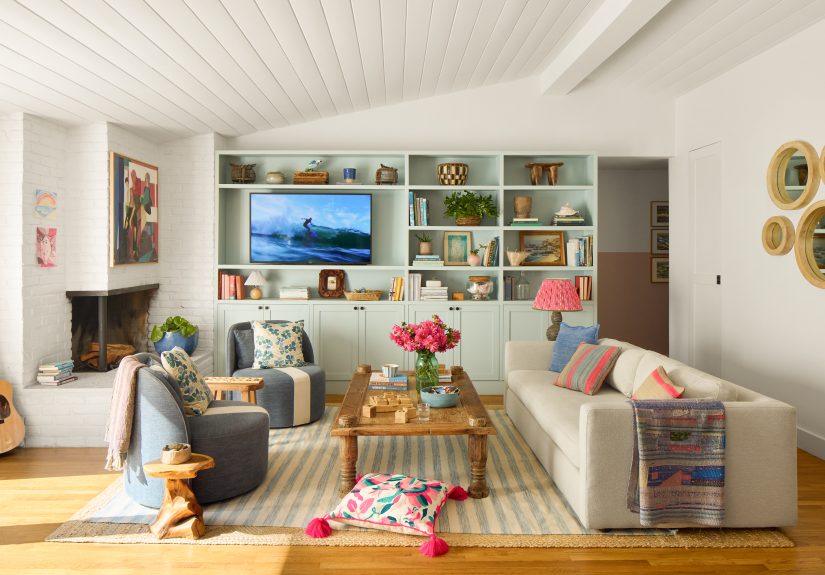
My test subject was my living room, which had all the classic symptoms of a space that technically functioned but emotionally felt like a waiting room with better snacks. The sofa was fine, the rug was too small, the lighting was aggressively overhead, and the whole room had the warm personality of a tax form.
I gave ChatGPT the room dimensions, a phone photo taken in daylight, a list of the pieces I already owned, and a budget cap. Then I added style guidance: “I want this room to feel warmer, more pulled together, and a little more designer without buying all new furniture. I like natural textures, soft contrast, hidden storage, and a lived-in look. I do not want anything too trendy, too minimal, or too farmhouse.”
Then I asked it for three things:
- a better furniture layout,
- a shopping plan under budget,
- and a weekend action list in the correct order.
Honestly, this is where the experience started to get good. Instead of dumping random decor advice into my lap like confetti, it organized the room into priorities: scale, lighting, texture, storage, then styling. That alone felt more useful than scrolling through fifteen tabs and forgetting why I opened half of them.
What ChatGPT Got Right
1. It diagnosed the room faster than I did
The first useful insight was that the room had a scale problem, not a furniture problem. In other words, I did not need to replace everything. I needed better proportion. ChatGPT suggested a larger rug, a more intentional lighting mix, and fewer small decorative items. Rude, but fair.
That is one of the best uses of AI interior design: identifying the category of the problem. Not every room needs a makeover. Some rooms just need fewer tiny things trying very hard to matter.
2. The layout suggestions were practical
It proposed shifting the seating area a few inches to improve traffic flow, moving a chair to create a proper conversation zone, and replacing one bulky side table with a narrower option. None of this was revolutionary. That was actually the point. The recommendations felt calm, realistic, and doable.
It also suggested anchoring the room around one visual focal point instead of three competing ones. That was the moment I realized my room had accidentally become a committee.
3. It created a shopping filter instead of a shopping frenzy
Rather than shouting “buy new stuff” like an overexcited algorithm at midnight, ChatGPT helped define what to shop for. It recommended categories, dimensions, finishes, and priorities: a larger rug in a muted pattern, one floor lamp with a warm linen shade, two larger pillows instead of four tiny ones, and a storage-forward coffee table or ottoman.
That was useful because it kept me from impulse-buying decor objects that would only make the room feel busier. The internet is full of pretty distractions. ChatGPT, at its best, can act like a bouncer for your bad decor decisions.
4. The task list was weirdly excellent
This may have been the most underrated feature. It broke the project into a smart sequence: measure, declutter, test layout, address lighting, add textiles, then style the surfaces last. That saved me from doing what I usually do, which is buy candles before solving literally anything.
What ChatGPT Got Wrong
1. It occasionally designed for a fictional room
At one point, it recommended a bench behind the sofa in a way that would have forced people to sidestep into the room like crabs. It also proposed “symmetrical sconces” on a wall that was interrupted by a window. Beautiful in theory. Slight issue: geometry.
This is your reminder that ChatGPT for home projects is only as good as the real-world constraints you keep feeding it. If something looks awkward on the floor plan or in your photo, trust the room over the robot.
2. It can be overenthusiastic about trends
Like many digital tools, ChatGPT sometimes swings a little too hard into trendy language. One minute you are asking for a warmer living room, and the next minute it is pitching “organic modern sculptural accents” like it is being paid by the adjective.
That is not a deal-breaker. You just have to edit aggressively. Ask it to remove trend-driven suggestions, prioritize timeless pieces, and focus on function first. If you do not, your room may start sounding like an influencer’s mood board with Wi-Fi.
3. It cannot physically stand in your house and squint
Human designers do something technology still struggles with: they read context in a nuanced way. They understand how a room feels at 7 p.m. with bad overhead lighting. They notice where people drop their bags. They spot the awkward corner that no one talks about. ChatGPT can help, but it cannot replace lived experience, material knowledge, or good old-fashioned eyeballing.
The Best Way to Use ChatGPT for Home Projects
After trying it myself, here is the method that actually works.
Start with constraints, not aesthetics
Before asking for style ideas, give ChatGPT the practical facts: room size, budget, who uses the space, what stays, what goes, and any limitations. This creates a useful framework instead of a fantasy set.
Upload photos and describe the room honestly
If the room is dark, say it is dark. If storage is a mess, say that too. If one wall is awkward and another wall has the visual charisma of plain oatmeal, include it. Photos plus context make a huge difference.
Ask for multiple options
Do not ask for one perfect answer. Ask for three layout ideas, three lighting approaches, or three ways to make the room feel more expensive on a budget. Options are where ChatGPT shines.
Use it to narrow decisions
ChatGPT is especially good at reducing overwhelm. Ask it to compare rug sizes, explain the difference between warm beige and greige, build a shopping checklist, or identify what to buy first. That is often more valuable than asking for a full makeover.
Always fact-check anything technical
For electrical work, plumbing, structural changes, permits, code questions, material safety, and exact product compatibility, verify everything independently. No exceptions. Charm is not a building standard.
Prompt Ideas That Actually Help
If you want better results, use prompts like these:
- “Help me redesign a 10-by-12-foot guest room with one window, low natural light, and a $900 budget. Keep the bed and dresser, improve storage, and make it feel calm and airy.”
- “Look at this photo of my living room and suggest three better furniture layouts that improve traffic flow and conversation seating.”
- “Create a shopping checklist for a cozy, timeless living room using warm wood, textured neutrals, and black accents. Prioritize the biggest visual impact first.”
- “Give me a weekend plan to refresh my kitchen without renovating. Focus on lighting, hardware, paint, organization, and styling.”
- “Tell me what is making this room feel cluttered based on my photo and description, then suggest fixes that do not require buying a lot.”
Where ChatGPT Helps Most in Home Design
In my experience, the sweet spot is not “design my entire house.” It is smaller, sharper asks. ChatGPT for DIY home projects works especially well for room layouts, gallery wall planning, decluttering systems, product category comparisons, outdoor planting brainstorms, and creating a step-by-step sequence for a refresh. It is also great when you have decent taste but too many tabs open.
Where it struggles is the final layer of judgment. The exact paint undertone. The right upholstery for your actual life. Whether that “easy” update will quietly become a three-week saga involving drywall dust and personal growth. That is still human territory.
My Extended Experience: What Happened After the First Test
Because I apparently enjoy experimenting on my own house, I kept going. After the living room test, I tried using ChatGPT for three more mini-projects: a gallery wall, a guest bedroom refresh, and a small outdoor corner that had previously served as a storage zone for neglected pots and broken ambition.
The gallery wall test was the most unexpectedly useful. I uploaded the wall dimensions, listed the art I already owned, and asked for three arrangement styles: clean and symmetrical, organic and layered, and one that looked polished without feeling too precious. It gave me spacing guidance, suggested starting with the largest anchor piece, and reminded me to leave enough negative space so the whole thing did not feel like my wall was being swarmed. Was every inch perfect? No. But it gave me enough structure to stop overthinking and finally start hanging.
The guest room was even more revealing. I asked ChatGPT how to make a small spare room feel more welcoming without buying a whole matching furniture set, because nothing says “please enjoy your stay” like a room that looks like a hotel liquidation sale. It suggested softer layered bedding, a smaller bedside table to create breathing room, one warm lamp instead of harsh overhead light, and a few practical touches like a luggage stand, hooks, and a place to charge devices. That felt less like decoration and more like actual hospitality. Very civilized. Very grown-up.
Then came the outdoor nook. This was a humbling exercise because the space had exactly two moods: neglected and sunburned. I described the light conditions, my lack of gardening expertise, and my desire for something low-maintenance that would not die the second I looked away. ChatGPT helped me think in categories: shade tolerance, drought friendliness, visual height, and seasonal interest. More importantly, it talked me out of trying to cram twelve plants into a corner that clearly wanted four. That alone may have saved both money and future embarrassment.
What I noticed across all three tests was that ChatGPT was at its best when I was honest, detailed, and willing to push back. If I gave it lazy input, I got generic results. If I gave it measurements, context, constraints, and photos, the answers became far more thoughtful. When something felt off, I asked follow-up questions. When a suggestion seemed unrealistic, I told it to revise around the actual size of the room or my real budget. The process felt less like pressing a magic button and more like having a fast, tireless brainstorming partner who never got annoyed when I changed my mind about beige.
And maybe that is the real lesson here. The best way to use ChatGPT for home projects is not to hand over your taste, your judgment, or your common sense. It is to use the tool to get unstuck. To explore possibilities. To organize the chaos. To move from vague frustration to specific action. In other words, ChatGPT did not magically transform my house into a designer showplace. But it absolutely helped me make smarter decisions, faster. And in home projects, that is basically a superpower.
Final Thoughts
So, did the designers have it right? Yes. The best way to use ChatGPT for home projects is to treat it like a creative assistant with excellent stamina and occasional nonsense. Use it to brainstorm, plan, compare, edit, and organize. Let it help you see possibilities you might have missed. But keep one hand on the tape measure and the other on your judgment.
Would I use it again? Absolutely. Not because it can replace designers, contractors, or real-world testing, but because it can make the messy middle of a project feel much less messy. And if a tool can help you choose a rug size before you spiral into decor despair, that is not artificial intelligence. That is public service.