Table of Contents >> Show >> Hide
- Why Philosophy Memes Are So Relatable
- Philosophy and Memes: A Surprisingly Good Match
- 50 Funny Philosophy Meme Ideas That Hit Too Close to Home
- The Big Ideas Behind the Jokes
- Why Smart Humor Feels So Good
- How Philosophy Memes Reflect Modern Life
- Experience Section: What It Feels Like to Live Inside a Philosophy Meme
- Conclusion
- SEO Tags
There are two kinds of people in the world: people who take a relaxing bath and people who accidentally reinvent existentialism while staring at a shampoo bottle. Philosophy memes live in that steamy little corner of the internet where deep thoughts, bad sleep schedules, and oddly specific jokes all decide to share a towel.
The title “Here Are Some Thoughts I Had In The Bath”: 50 Funny, Silly And Relatable Memes About Philosophy sounds playful, but it points to something surprisingly real: philosophy is not just a dusty subject locked inside college textbooks. It is the thing that happens when your brain asks, “What is the meaning of life?” while your phone battery is at 2%, your laundry is still wet, and you suddenly remember one embarrassing thing you said in 2014.
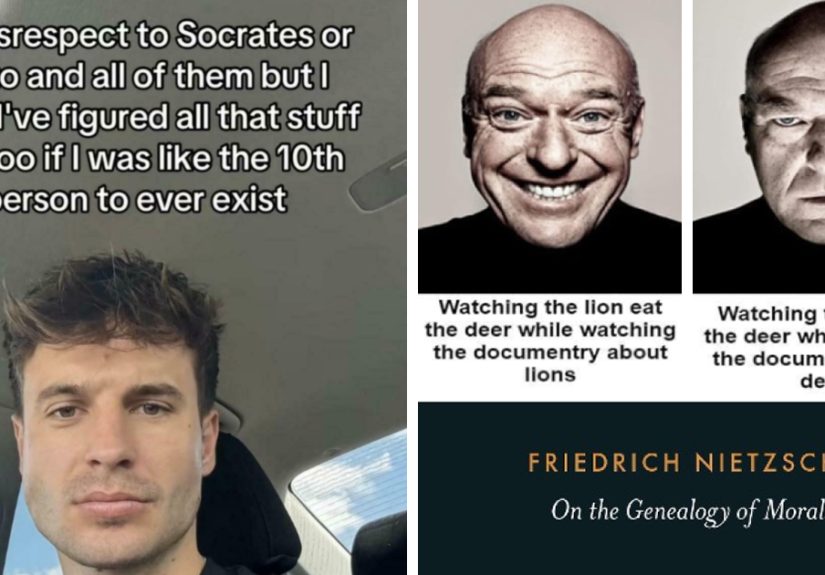
Funny philosophy memes work because they turn huge ideasethics, logic, identity, free will, absurdism, nihilism, metaphysicsinto bite-sized jokes. They make Plato feel like a group chat participant, Socrates like that friend who answers every question with another question, and Nietzsche like someone who definitely needed a snack and perhaps a better lighting setup.
Why Philosophy Memes Are So Relatable
Philosophy has always been about asking uncomfortable questions. What is truth? What makes an action right or wrong? Are we free, or are we just highly caffeinated consequences? Do chairs exist, or are they merely socially accepted sitting platforms? Philosophy memes take these classic questions and place them in everyday situations: ordering coffee, scrolling at midnight, arguing with yourself in the shower, or pretending to understand a complicated concept after reading one paragraph online.
The humor comes from contrast. A meme might place a dramatic existential crisis next to a tiny inconvenience, such as running out of cereal. Suddenly, the gap between cosmic meaning and breakfast becomes hilarious. That is the magic of the genre: it makes the grand feel silly and the silly feel strangely grand.
The Bath Thought Effect
Bath thoughts, shower thoughts, and late-night thoughts all have one thing in common: they appear when the brain is finally unsupervised. During the day, we are busy being practical. We answer emails, make lists, buy groceries, and pretend the printer is not personally attacking us. But when the noise fades, the mind wanders toward deeper territory.
That is why “thoughts I had in the bath” is such a perfect frame for philosophy memes. It captures the moment when relaxation accidentally becomes analysis. One minute you are washing your hair; the next, you are wondering whether personal identity survives if every cell in your body eventually changes. Congratulations, you have become the Ship of Theseus, but with conditioner.
Philosophy and Memes: A Surprisingly Good Match
At first glance, philosophy and memes seem like opposite worlds. Philosophy is careful, slow, and often complicated. Memes are fast, chaotic, and frequently involve a raccoon, a skeleton, or a frog making poor decisions. But the two actually fit together beautifully.
Both philosophy and memes depend on patterns. A philosophical argument builds meaning through structure: a claim, a reason, a counterexample, a conclusion. A meme builds meaning through recognition: an image, a caption, a shared cultural reference, and a punchline. In both cases, the audience has to connect the dots. The difference is that philosophy may take forty pages, while a meme can make the same emotional point before your microwave finishes reheating pizza.
Memes also thrive on repetition with variation. A familiar format gets reused, twisted, and adapted. Philosophy does something similar. Thinkers revisit old questions in new contexts. Plato asked about reality and appearance; modern people ask why their online personality feels more organized than their actual bedroom. Different century, same nervous system.
50 Funny Philosophy Meme Ideas That Hit Too Close to Home
Here are fifty philosophy meme-style thoughts that capture the silly, clever, and painfully relatable side of thinking too much:
- Socrates asking “Why?” until the group chat goes silent.
- Plato leaving the cave and immediately asking for better Wi-Fi.
- Descartes saying “I think, therefore I am,” while overthinking a text message.
- Nietzsche staring into the abyss and realizing the abyss has read receipts.
- Camus pushing the boulder uphill, but the boulder is Monday.
- Aristotle categorizing snacks by virtue, vice, and “I deserve this.”
- The Trolley Problem, but the trolley is your inbox.
- Existentialism: choosing your own path, then blaming the path.
- Nihilism at 2 a.m.; optimism after breakfast.
- Stoicism until someone eats your leftovers.
- Free will, but only after coffee.
- Ethics class: “What is the right thing?” Me: “Depends who is watching.”
- Metaphysics asking whether the chair exists while everyone else just wants to sit down.
- Epistemology: “How do you know?” Anxiety: “Exactly.”
- Logic: the art of proving your argument is valid even when your life is not.
- Absurdism: laughing because the alternative requires paperwork.
- Kant explaining duty while you ignore your laundry.
- Utilitarianism choosing the option that makes the most people mildly annoyed.
- Hedonism buying dessert before dinner and calling it a worldview.
- Determinism blaming your childhood for ordering fries.
- The Ship of Theseus, but it is your favorite hoodie after ten years.
- Solipsism wondering if everyone else is real, then still asking for validation.
- Existential dread wearing pajama pants.
- Moral philosophy meeting online comment sections and immediately resigning.
- Ancient wisdom, modern panic.
- The meaning of life hidden somewhere between “add to cart” and “place order.”
- Dialectics: arguing with yourself and somehow losing.
- Phenomenology: describing how it feels to be tired in twelve paragraphs.
- Pragmatism: does it work, or does it merely sound impressive?
- Rationalism believing in reason while crying over a spreadsheet.
- Empiricism needing evidence that you actually drank enough water.
- Skepticism: “Are we sure?” but as a lifestyle.
- Ontology asking what exists, including your motivation.
- Aesthetics deciding whether chaos can be a decor theme.
- Virtue ethics: be good, but also be funny.
- Postmodernism entering the chat and questioning the chat.
- Plato’s Forms, but the ideal pizza exists only in theory.
- Schopenhauer watching a rom-com and taking notes pessimistically.
- Hume doubting cause and effect after the toaster burns one slice.
- Confucius reminding everyone that manners are cheaper than drama.
- Laozi suggesting you go with the flow; your calendar disagrees.
- Simone de Beauvoir asking who benefits from your “normal.”
- Hannah Arendt analyzing your office meeting with terrifying accuracy.
- Wittgenstein saying language has limits while you try to explain a meme to your parents.
- Pascal’s Wager, but about whether to bring an umbrella.
- The good life, now available with free shipping.
- Philosophy major: broke, confused, spiritually aerodynamic.
- Deep thought: what if the real assignment was the panic we made along the way?
- Bath thought: if time is money, why am I always late and broke?
- Final philosophy meme: nobody knows what is happening, but some people cite sources.
The Big Ideas Behind the Jokes
What makes these memes more than random internet giggles is that they often smuggle in real philosophical concepts. The joke lands because the idea underneath it is recognizable, even if the viewer has never opened a philosophy textbook.
Existentialism: The Meme of Personal Responsibility
Existentialist humor is everywhere because modern life constantly asks us to define ourselves. Choose a career. Choose a brand. Choose a streaming service. Choose an identity. Choose whether to reply “sounds good” or “great, thanks!” as if civilization depends on it.
Existentialism focuses on freedom, choice, anxiety, and meaning. That is why memes about staring at the ceiling and wondering what to do with your life feel so philosophical. They are not just jokes about being tired; they are tiny portraits of human freedom looking for instructions and finding none.
Absurdism: Laughing at the Cosmic Glitch
Absurdist memes are the ones that say, “Life may not make perfect sense, but at least this raccoon looks like he understands taxes.” Absurdism recognizes the tension between our hunger for meaning and the universe’s refusal to hand us a neat answer key.
That is why the image of Sisyphus pushing a boulder uphill remains so meme-friendly. Everyone has a boulder: email, rent, laundry, student loans, software updates, or that one drawer full of cables nobody can identify. The joke is not that struggle is meaningless. The joke is that we keep going anyway, sometimes with dramatic music, sometimes with snacks.
Nihilism: Dark Humor With a Soft Center
Nihilism memes often sound bleak, but many of them are secretly comforting. They joke that nothing matters, then somehow make people feel less alone. This is the internet’s emotional paradox: a meme can say “existence is chaos” and still function like a warm blanket shared among strangers.
Of course, nihilism in serious philosophy is more complex than a skull image with a caption. But online, nihilistic humor often becomes a coping style. It lets people admit that they feel overwhelmed without having to deliver a formal speech titled “My Feelings: A Tragedy in Six Parts.”
Stoicism: Calm Until the Minor Inconvenience Arrives
Stoicism is another favorite topic because it sounds noble in theory and becomes hilarious in practice. The Stoic ideal encourages self-control, perspective, and acceptance of what we cannot change. Then real life arrives carrying a slow internet connection, a parking ticket, and a person chewing loudly nearby.
That gap between wisdom and irritation creates excellent comedy. A Stoicism meme might show someone calmly accepting fate, then immediately losing emotional balance because the restaurant forgot the dipping sauce. It is funny because it is honest. We all want to be philosophers until customer service puts us on hold.
Why Smart Humor Feels So Good
Philosophy memes are satisfying because they reward recognition. When you understand the reference, you feel included. When you do not understand it, the meme may still be funny because the emotional situation is familiar. You may not know Kant’s entire moral system, but you probably understand the pain of doing something because you “should.”
This is why philosophy memes travel well across audiences. Students enjoy them because they turn difficult material into something playful. Casual readers enjoy them because they make abstract ideas feel human. Teachers may enjoy them because, let’s be honest, anything that gets people voluntarily thinking about epistemology deserves a small parade.
They also help remove the fear around philosophy. Many people assume philosophy is only for experts who wear tweed, speak in footnotes, and have strong opinions about chairs. Memes break that image. They remind us that philosophy begins with ordinary wonder. You do not need a PhD to ask whether you are living well. You just need curiosity, honesty, and possibly a waterproof notebook for bath thoughts.
How Philosophy Memes Reflect Modern Life
Modern culture is fast, fragmented, and overloaded with information. Philosophy memes respond to that reality by compressing huge ideas into compact emotional packages. A single image can express burnout, self-doubt, moral confusion, identity crisis, and the urge to order tacos. That is efficiency Aristotle could respect.
They also reflect how people learn today. Many readers first encounter a philosophical idea through a joke, quote, video, or meme. That does not replace deeper study, but it can open the door. A meme about the Trolley Problem might lead someone to learn about ethics. A joke about the Ship of Theseus might spark interest in identity and change. A nihilism meme might push someone toward existentialism, absurdism, or therapy, depending on the week.
In that sense, funny philosophy memes are not anti-intellectual. They are invitations. They say, “Come for the joke, stay for the terrifying realization that your assumptions are made of wet cardboard.” Delightful.
Experience Section: What It Feels Like to Live Inside a Philosophy Meme
Everyone has had a philosophy meme moment, even if they did not label it that way. Maybe it happened in the bath, when the room was quiet and your brain suddenly asked whether you are the same person you were ten years ago. Maybe it happened in line at the grocery store, while you wondered why choosing cereal requires more moral courage than expected. Maybe it happened at work, during a meeting so circular that Socrates himself would have walked in, asked one question, and been removed by security.
The most relatable experience behind philosophy memes is overthinking. Not regular thinkingoverthinking, the deluxe edition with bonus anxiety tracks. You start with a simple question like, “Should I send this email?” Five minutes later, you are debating intention, consequence, tone, authenticity, professional identity, and whether “Best” sounds too cold. Congratulations, you have accidentally built a seminar on applied ethics in your drafts folder.
Another common experience is the tiny existential crisis caused by routine. Folding laundry can become a meditation on repetition. Commuting can feel like a modern version of Sisyphus, except the boulder has Bluetooth and traffic updates. Cleaning your room can become a metaphysical battle between order and entropy. You begin by picking up socks and end by wondering whether humans create meaning through small acts of care. Then you find a receipt from three months ago and lose the plot entirely.
Philosophy memes also capture the strange comfort of realizing that confusion is normal. Most people are quietly improvising. They may look organized, but inside, they are also wondering whether they made the right choices, whether time is moving too fast, and why every password now requires a symbol, a number, a capital letter, and a blood oath. A good meme takes that private confusion and makes it public in a harmless, funny way. It says, “You too? Excellent. We are all lost, but at least the map is hilarious.”
There is also joy in intellectual silliness. Deep ideas do not always need solemn packaging. Sometimes the best way to understand free will is through a joke about ordering the same coffee every day. Sometimes the best way to feel absurdism is by laughing at a duck standing in the rain with the caption, “I have accepted my role in the universe.” Humor does not cheapen philosophy. It makes philosophy breathable.
That is the real experience behind “Here Are Some Thoughts I Had In The Bath”: the discovery that your ordinary life is already full of philosophical material. Your calendar raises questions about freedom. Your group chat tests theories of communication. Your snack choices reveal your ethics. Your midnight thoughts audition for a minor role in existential literature. Philosophy is not hiding in a marble temple. It is in your bathwater, your browser tabs, your awkward pauses, and the memes you save because they are “too real.”
Conclusion
Funny, silly, and relatable philosophy memes prove that deep thinking does not have to wear a serious face. They turn ancient questions into modern jokes and make complex ideas feel approachable without draining them of meaning. Whether the meme is about Socrates interrogating your life choices, Camus pushing Monday uphill, or Nietzsche staring into the abyss of unread notifications, the best philosophy humor reminds us that being human is both profound and ridiculous.
And maybe that is why these memes work so well. Philosophy asks us to examine life. Memes help us survive the examination with a laugh. Somewhere between the bath thought, the existential crisis, and the perfectly timed caption, we find a strange little truth: thinking deeply is easier when we do not take ourselves too seriously.
Note: This article is written as original web-ready content based on real philosophy concepts, meme culture, and common educational interpretations of major philosophical ideas.