Table of Contents >> Show >> Hide
- Why a Handkerchief in a Suit Jacket Still Works
- Before You Fold: Three Rules That Make Everything Easier
- Best Fabrics for Pocket Square Folds
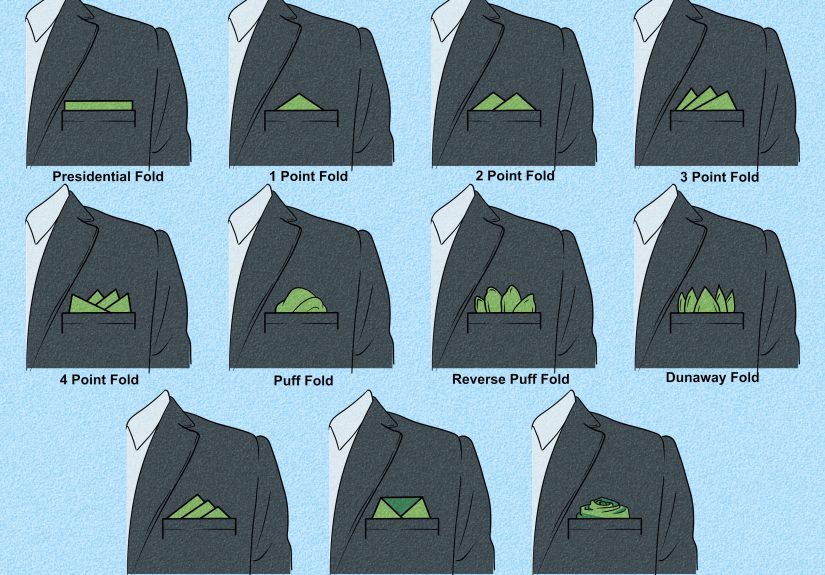
- How to Fold a Handkerchief For a Suit Jacket: 11 Ways
- Which Fold Should You Wear?
- Common Pocket Square Mistakes to Avoid
- How to Make Your Handkerchief Stay Put
- Real-Life Experiences: What Wearing Pocket Squares Actually Teaches You
- Final Thoughts
A suit can do a lot of heavy lifting on its own. It can make you look sharper, taller, more expensive, and occasionally like y the trick.
Technically, the stylish cloth you place in a suit jacket is closer to a pocket square than the everyday handkerchief you keep for practical use. Still, plenty of people use the terms interchangeably, and that is exactly why so many style questions begin with, “How do I fold this thing?”
The good news: you do not need magician hands, a fashion degree, or an emergency call with your most stylish cousin. You just need a square of fabric, a few easy folding techniques, and the confidence to stop overthinking it. In this guide, you will learn 11 stylish ways to fold a handkerchief for a suit jacket, plus when to use each fold, what fabric works best, and how to avoid the classic mistakes that make your pocket square look like it lost a fight with your dry cleaner.
Why a Handkerchief in a Suit Jacket Still Works
A pocket square adds color, texture, and personality to tailored clothing. It can make a navy suit feel less corporate, give a wedding look more polish, or help a sport coat feel intentionally dressed instead of “I grabbed this off a chair.”
It also works because it sits close to your face. That means the right handkerchief fold can brighten your outfit, echo another color in your look, and make even a simple suit feel considered. In style terms, it is a small detail with suspiciously large powers.
Before You Fold: Three Rules That Make Everything Easier
1. Do not match it exactly to your tie
Your handkerchief should complement your tie or shirt, not look like it was cut from the exact same curtain. Matching too perfectly can feel stiff and old-fashioned. Instead, repeat a color, echo a pattern, or stay within the same color family.
2. Keep the visible part modest
For most outfits, about half an inch to one inch showing above the pocket is enough. More than that, and your pocket starts looking like it is trying to escape the jacket.
3. Match the fold to the occasion
Crisp folds like the presidential or one-point look better for formal events, business settings, and weddings. Softer folds like the puff or winged puff feel more relaxed, stylish, and expressive for parties, dinners, and smart-casual outfits.
Best Fabrics for Pocket Square Folds
Not every handkerchief behaves the same way, and that matters.
- Linen: Best for crisp, clean folds. Great for the presidential, one-point, and multi-point folds.
- Cotton: Easy to handle and beginner-friendly. A solid all-around choice.
- Silk: Softer and more fluid. Excellent for puff folds and more relaxed shapes.
- Wool or blends: Good for fall and winter texture, especially in casual jackets and sport coats.
If you are just getting started, a white linen square and a patterned silk square will cover most situations. One is your dependable straight-A student. The other is your charming troublemaker.
How to Fold a Handkerchief For a Suit Jacket: 11 Ways
1. The Presidential Fold
Best for: Business wear, formal events, black-tie-adjacent outfits, interviews, and minimalist dressers.
This is the clean horizontal strip at the top of the pocket. It is neat, timeless, and almost impossible to argue with.
- Lay the handkerchief flat.
- Fold it in half vertically.
- Fold it again until it matches the width of your breast pocket.
- Fold the bottom upward so the height fits your jacket pocket.
- Place it in the pocket so only a straight line shows.
Style tip: A white linen handkerchief with a dark suit is about as reliable as coffee on a Monday morning.
2. The One-Point Fold
Best for: Weddings, office wear, dressy dinners, and classic suits.
This fold adds just enough personality without looking flashy.
- Lay the square like a diamond.
- Bring the bottom corner up to meet the top corner, forming a triangle.
- Fold one side inward.
- Fold the other side inward to fit your pocket width.
- Tuck it into the pocket with one point showing.
Style tip: This is the fold to use when you want to look polished but not like you spent 45 minutes practicing in the mirror.
3. The Two-Point Fold
Best for: Semi-formal events, date nights, and suits that need a little more energy.
The two-point fold is a simple upgrade from the single peak.
- Start with the square in a diamond position.
- Fold the bottom corner upward slightly off-center so two tips appear at the top.
- Fold the left side inward.
- Fold the right side inward.
- Adjust the two peaks so they look balanced.
Style tip: This looks especially good with patterned handkerchiefs because the double points create a little visual motion.
4. The Three-Point Fold
Best for: Weddings, festive tailoring, and occasions where a little flair is welcome.
Now we are getting dressier and slightly more decorative.
- Place the square like a diamond.
- Fold the bottom corner up slightly off-center to create two visible points.
- Take one lower side corner and fold it upward to create a third point.
- Fold the sides inward to fit your pocket.
- Insert carefully and tweak the peaks.
Style tip: This fold works best when the fabric holds shape well, so linen or cotton is your friend here.
5. The Four-Point Fold
Best for: Bold dressers, fashion-forward weddings, and advanced pocket-square enthusiasts.
The four-point fold looks intricate and a little regal. It says, “Yes, I know exactly what I am doing,” even if you learned it ten minutes ago.
- Begin with the square laid out as a diamond.
- Fold the bottom point upward slightly off-center to create two points.
- Bring one lower side corner up to create a third point.
- Bring the other lower side corner up to create a fourth point.
- Fold the outer edges inward and insert into the pocket.
Style tip: Keep the peaks imperfect by a tiny amount. Too symmetrical, and it starts looking like origami homework.
6. The Puff Fold
Best for: Cocktail attire, parties, softer tailoring, silk handkerchiefs, and relaxed elegance.
The puff is effortless when done right. Which is wonderful, because “effortless” is usually code for “this took three tries.”
- Lay the square flat.
- Pinch the center with one hand.
- Let the fabric drape downward.
- Gather the hanging fabric with your other hand.
- Fold or tuck the bottom underneath and place the rounded puff in your pocket.
Style tip: Silk is ideal here because it naturally creates soft volume.
7. The Reverse Puff
Best for: Textured looks, patterned handkerchiefs, and men who want a little more visual interest.
Instead of showing a rounded center, this fold lets the edges or points become part of the display.
- Pinch the center of the square.
- Turn it so the pointed edges face upward rather than tucking them away.
- Gather the bottom to fit your pocket.
- Insert it so the edges frame the top.
- Adjust until it looks airy, not chaotic.
Style tip: This is a great way to show off a border detail or rolled edge.
8. The Winged Puff
Best for: Stylish evening wear, statement jackets, and events where you want a softer fold with shape.
The winged puff combines the relaxed center of a puff with visible pointed edges behind it.
- Lay the square flat with the reverse side up if applicable.
- Pinch near the center and lift it.
- Let two corners sit behind the puff like wings.
- Gather the lower part so it fits inside the pocket.
- Adjust the center puff and side points until balanced.
Style tip: This fold looks especially good in silk or a soft cotton blend with a lightly textured blazer.
9. The Stairs Fold
Best for: Creative formalwear, fashion events, and anyone who enjoys geometric detail.
The stairs fold creates layered edges that step upward across the pocket.
- Lay the square flat.
- Make a series of angled folds that create visible stacked layers.
- Compress the shape gently into a narrow rectangle.
- Fold the bottom so it fits the pocket depth.
- Insert carefully so the stepped layers remain visible.
Style tip: This is not your everyday office fold, but it is excellent when the dress code allows personality.
10. The Crown Fold
Best for: Weddings, celebratory events, patterned handkerchiefs, and romantic styling.
The crown fold creates multiple points that resemble a small crown along the pocket line.
- Start with the square in a diamond shape.
- Layer folds upward so several points remain visible.
- Fold in the sides to fit the pocket.
- Tuck the lower section neatly into the breast pocket.
- Spread the points slightly for a fuller top line.
Style tip: If your suit is very formal and simple, this fold can bring the fun without going overboard.
11. The Scallop Fold
Best for: Silk handkerchiefs, elegant evening outfits, and men who like old-school flair.
The scallop fold creates rounded, layered curves instead of sharp peaks.
- Lay the square flat.
- Fold and roll the top portion gently into rounded layers.
- Bring the sides inward to secure the shape.
- Fold the bottom up to fit the pocket.
- Insert and arrange the curved top edge so it sits softly above the pocket.
Style tip: This fold loves silk and hates stiff fabric. Know your audience.
Which Fold Should You Wear?
If you are staring at your handkerchief like it is a geometry test, here is the shortcut:
- For interviews and business meetings: Presidential or one-point.
- For weddings: One-point, two-point, or three-point.
- For cocktail parties: Puff or winged puff.
- For black-tie-inspired looks: Presidential or a conservative point fold.
- For creative or fashion-forward events: Four-point, stairs, crown, or scallop.
Common Pocket Square Mistakes to Avoid
- Using the same exact fabric as your tie: It can look too coordinated.
- Showing too much fabric: A little visible detail looks elegant. A giant fabric explosion looks startled.
- Ignoring the jacket pocket size: Fold to fit your pocket, not your dreams.
- Choosing the wrong fabric for the fold: Silk for soft folds, linen or cotton for crisp ones.
- Trying to make it perfectly identical every time: Some folds should look a little natural.
How to Make Your Handkerchief Stay Put
If your fold keeps sliding into the pocket like it is trying to avoid social interaction, try one of these tricks:
- Fold the base slightly wider for a snug fit.
- Use a pocket square holder if your jacket pocket is deep.
- Layer a tissue behind a silk square for more structure.
- Check the fold while your jacket is off, then put it on and make final adjustments.
Real-Life Experiences: What Wearing Pocket Squares Actually Teaches You
The funny thing about learning how to fold a handkerchief for a suit jacket is that the first few times feel oddly dramatic. You stand there with a square of fabric in your hand, convinced that men in old movies must have had secret training. Then you try the presidential fold, realize it is just a neat rectangle, and immediately gain an unreasonable amount of confidence.
One of the first real lessons people learn is that the occasion decides the fold more than personal mood does. At a job interview or professional meeting, a crisp white presidential fold feels calm and deliberate. It never competes with the suit. It just says you pay attention. But wear that same fold to a lively wedding reception with a textured blazer and colorful tie, and it can feel a little too restrained. That is when a puff or two-point fold starts to make more sense. The handkerchief is not changing your personality; it is just helping your outfit speak the room’s language.
Another practical discovery comes from fabric. Beginners often think the problem is their folding technique when the real problem is the cloth itself. A soft silk square will refuse to behave like stiff linen, and a crisp cotton square will not drape like silk no matter how politely you ask. Once you accept that different fabrics want different folds, life becomes easier. Suddenly the puff fold works because you used silk, and the one-point fold looks sharp because you switched to linen.
There is also the matter of proportion. In real life, what looks good on a tutorial image may need adjusting on your actual jacket. Some breast pockets are shallow. Some are wide. Some seem to have been designed by a tailor who clearly enjoyed watching people struggle. After a few wears, you learn that folding for the pocket matters more than memorizing exact steps. A great-looking handkerchief is often just a well-adjusted version of a basic fold.
Then there is the confidence factor, which is very real. A suit with no pocket square can look perfectly fine. Add the right one, and the whole outfit suddenly feels intentional. People may not always know why you look better, but they notice. It is the style equivalent of seasoning food properly. Nobody applauds the salt, but everyone enjoys dinner more.
Perhaps the best experience-related lesson is this: the folds that get the most compliments are usually not the most complicated. The presidential fold, the one-point fold, and the puff do most of the heavy lifting in everyday life. They are easy to wear, easy to adjust, and hard to mess up beyond repair. The dramatic folds are fun, but the classics are the ones you will actually use again and again.
So if you are building your pocket square skills, do not worry about mastering all 11 folds in one afternoon. Learn three that fit your lifestyle. Keep one white linen square for formal moments, one patterned silk square for personality, and one cotton option for versatility. The rest comes with wear, experimentation, and the occasional pre-event re-fold at the mirror. That is not failure. That is menswear.
Final Thoughts
Learning how to fold a handkerchief for a suit jacket is one of those small skills that pays off immediately. It makes your suit look sharper, helps your outfit feel finished, and gives you a simple way to show style without shouting. Whether you prefer the clean presidential fold, the classic one-point, or the easy charm of the puff, the best fold is the one that fits your jacket, your fabric, and your occasion.
Start simple, practice a few times, and remember: the goal is not to look like you tried too hard. The goal is to look like you knew exactly what you were doing all along.