Table of Contents >> Show >> Hide
- Why Your Harmonica Grip Matters
- How to Hold a Harmonica: 10 Steps
- Step 1: Identify the Top and Front of the Harmonica
- Step 2: Relax Your Shoulders, Wrists, and Fingers
- Step 3: Make a Loose “C” Shape with Your Left Hand
- Step 4: Grip the Harmonica Near One End, Not Across the Whole Body
- Step 5: Keep Your Grip Firm but Light
- Step 6: Bring Your Right Hand Around the Back to Form a Cup
- Step 7: Leave Room for the Harmonica to Breathe
- Step 8: Bring the Harmonica Deep Enough into Your Mouth
- Step 9: Use Gentle Breath, Not Brute Force
- Step 10: Test the Grip with a Simple Open-and-Close Exercise
- Common Mistakes Beginners Make
- What About a Harmonica Holder?
- Final Thoughts
- Experience Notes: What It Actually Feels Like to Learn This
- SEO Tags
If you have ever picked up a harmonica and immediately sounded like a goose arguing with a screen door, welcome to the club. The good news is that learning how to hold a harmonica is not some secret blues wizard ritual. It is a practical skill, and once you get it right, everything gets easier: cleaner notes, better tone, smoother movement, and less random wheezing that makes your dog look concerned.
For beginners, a good harmonica grip matters more than people think. Many new players focus on songs first, but the truth is that hand position, mouth placement, and breath control form the foundation of everything else. If your grip is awkward, your tone suffers. If your hands are too stiff, your sound gets small. If your harmonica is positioned wrong, even simple notes can feel like a wrestling match. So before you try to impress anyone with a blues lick, let’s make sure you are actually holding the instrument the right way.
This guide breaks down how to hold a harmonica in 10 simple steps, with beginner-friendly explanations, practical examples, and a few reality checks for people whose hands do not magically cooperate on day one.
Why Your Harmonica Grip Matters
A proper harmonica grip does three important things. First, it helps you control the instrument without squeezing it like it owes you money. Second, it creates a better seal with your hands, which improves tone and lets you shape sound. Third, it supports better mouth position and airflow, which are essential if you want clean notes instead of accidental farm-animal effects.
Most beginners start with a 10-hole diatonic harmonica, usually in the key of C. That standard setup is ideal for learning basic hand position, breath patterns, and note layout. Once that feels natural, your progress in beginner harmonica technique becomes much smoother.
How to Hold a Harmonica: 10 Steps
Step 1: Identify the Top and Front of the Harmonica
Before you hold it, make sure you are not holding it upside down. Yes, this happens. More than people admit.
On most diatonic harmonicas, the hole numbers face up. Hole 1, which plays the lowest notes, sits on the left. Hole 10, the highest, sits on the right. The side with the holes faces your mouth. If the numbers are upside down or the holes are facing away from you, your harmonica is not ready for prime time.
This orientation matters because most lessons, tabs, and beginner exercises assume the standard layout. Learning it correctly now saves confusion later.
Step 2: Relax Your Shoulders, Wrists, and Fingers
This sounds almost too simple, but tension is one of the biggest beginner mistakes. A stiff body creates a stiff sound. Before you bring the harmonica to your mouth, let your shoulders drop, loosen your wrists, and keep your fingers relaxed.
Think of holding the harmonica like holding a sandwich you actually want to eat: secure, but not crushed into a sad pancake. If your grip is tight from the start, your hand position will fight your playing instead of helping it.
Step 3: Make a Loose “C” Shape with Your Left Hand
The most common setup for a right-handed orientation starts with the left hand. Open your left hand and form a loose “C” shape using your thumb and index finger. This becomes the main cradle for the harmonica.
Your left thumb should sit underneath, and your index finger should rest above. Keep the shape open and natural. You are building a home for the harmonica, not a trap.
If you are left-handed, you can reverse this and still play well. Many players do. The standard left-hand hold is common because it makes traditional hand effects easier for many people, but comfort and control matter more than following imaginary harmonica law.
Step 4: Grip the Harmonica Near One End, Not Across the Whole Body
Now place the harmonica deep into that “C” shape, holding it near the left side between your thumb and index finger. Keep the grip as far back on the instrument as is comfortable, so most of the harmonica remains free in front of your mouth.
This is important because you do not want your fingers blocking the holes, crowding your lips, or making it harder to move across the instrument. Holding the harmonica too close to the middle is a classic beginner move. It feels secure, but it limits control and tone.
Step 5: Keep Your Grip Firm but Light
The harmonica should feel stable, not strangled. A light but confident grip gives you enough control to move smoothly from hole to hole without unnecessary tension. If the harmonica shakes wildly, grip a little more securely. If your fingers go rigid and your knuckles look dramatic, back off.
A good test is this: can you hold the harmonica comfortably for a full minute without fatigue? If not, your hand position probably needs adjustment. Comfort is not a luxury in harmonica playing. It is part of good technique.
Step 6: Bring Your Right Hand Around the Back to Form a Cup
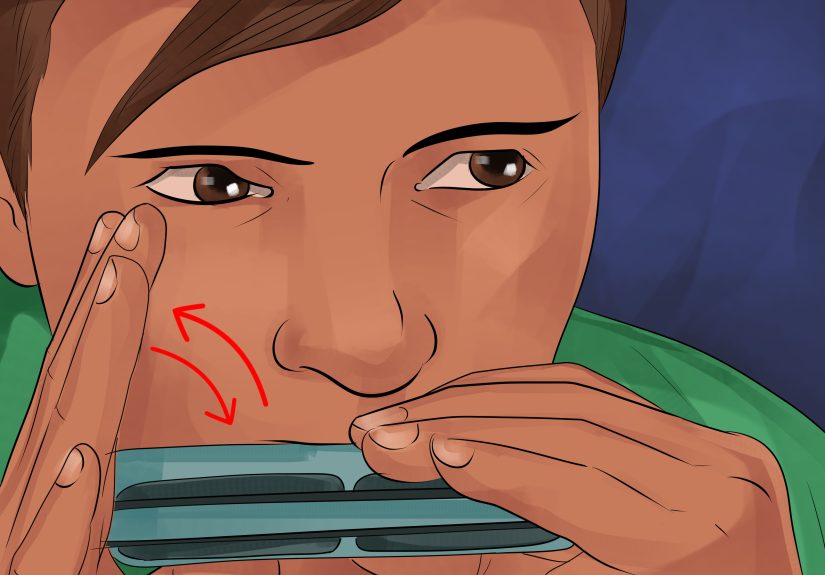
Once the harmonica is resting in your left hand, bring your right hand around the back of the instrument. Your palms and fingers should meet to create a cupped chamber behind the harmonica. This cup acts like a little resonance room for your sound.
Here is where your tone starts getting interesting. A closed cup creates a warmer, more muted sound. A more open cup creates a brighter, more open tone. This is the beginning of hand effects, including the classic “wah” sound that gives harmonica playing so much personality.
If your hands are small, do not panic. You do not need perfect hand architecture. Just aim for a comfortable cup that can open and close. Even a modest hand seal can make a noticeable difference.
Step 7: Leave Room for the Harmonica to Breathe
While you are forming that cup, do not cover everything so aggressively that the instrument feels buried. You still need the front holes clear for playing, and your hands should not force the harmonica into an awkward angle.
Many beginners think better tone comes from clamping both hands tightly around the instrument. Usually, that just creates tension and clumsy movement. The goal is controlled resonance, not a hostage situation.
Keep your cup flexible. Open it for a brighter sound. Close it for a darker one. This simple motion is one of the earliest tone-shaping tools in how to play harmonica well.
Step 8: Bring the Harmonica Deep Enough into Your Mouth
Technically, this is part mouth position rather than hand position, but the two are best friends, so we are keeping them together. Beginners often place only the edge of the harmonica against their lips. That usually leads to thin tone and frustrating note control.
Instead, bring the harmonica a little deeper into the mouth so the moist inner part of the lips contacts the cover plates. The back of the harmonica should angle slightly upward, which helps the lower lip sit naturally and supports a fuller sound.
This deeper placement also helps with clean single notes later, whether you eventually use pucker embouchure or tongue blocking. In plain English: stop kissing the harmonica like you are meeting it for the first time. Get comfortable.
Step 9: Use Gentle Breath, Not Brute Force
Holding the harmonica correctly only works if your airflow is also under control. Harmonica reeds are small and responsive. They do not need hurricane-force air. In fact, blowing or drawing too hard makes the tone rough, reduces control, and can wear out the reeds faster.
Try breathing as if you are warming your hands on a cold day. Gentle, steady, and relaxed. Sit or stand upright, keep your chest comfortably open, and let the breath come from deep support rather than shallow tension in the throat.
This small shift changes everything. Better breath makes your grip more effective, your tone fuller, and your playing less exhausting.
Step 10: Test the Grip with a Simple Open-and-Close Exercise
Once your hands are in place, play a few easy blows and draws on the lower holes, then slowly open and close your cupped right hand. Listen for the tone change. You should hear the sound move from more muted to more bright and open.
This is a great beginner exercise because it confirms three things at once: your harmonica orientation is correct, your hands are positioned properly, and your cup is actually shaping the tone. It is also a fun reminder that the harmonica is not just a row of holes. It is a surprisingly expressive little machine.
Common Mistakes Beginners Make
Holding the Harmonica Too Tightly
A death grip makes movement harder and tone smaller. Keep the instrument secure, but let your hands stay loose.
Covering the Holes with Your Fingers
If your fingers creep toward the mouthpiece, note access becomes messy fast. Hold near the side and back, not across the playing surface.
Using Only the Lips, Not the Mouth
Shallow mouth placement usually sounds thin. A deeper, more relaxed position helps produce a richer sound and cleaner response.
Ignoring Posture
Good harmonica hand position works best when paired with a relaxed upper body and smooth breathing. Slouching makes everything harder.
Assuming There Is Only One Correct Grip
There is a standard approach, but hand size, comfort, and musical goals matter. Use the proven fundamentals, then fine-tune the details to fit your body.
What About a Harmonica Holder?
If you sing, play guitar, or just want your hands free, a harmonica holder can be useful. These neck-mounted racks are designed for common 10-hole diatonic harmonicas and let you play without using your hands to support the instrument.
That said, a holder is not a replacement for learning proper grip. It is a tool for a different playing situation. If you are learning basic tone, single notes, and hand effects, your regular hand-held setup is still the best place to start. A holder helps with convenience. Your hands still teach you control.
Final Thoughts
Learning how to hold a harmonica is one of those small skills that pays off in a big way. A better grip improves tone, comfort, control, and confidence. It also makes every future lesson less frustrating, because you are no longer fighting the instrument before the music even begins.
So keep it simple: numbers up, low notes on the left, relaxed left-hand cradle, right-hand cup for resonance, deeper mouth placement, and gentle breath. That is your launchpad. Once this feels natural, you will be ready for cleaner notes, smoother phrasing, and a sound that is much more music and much less confused duck.
Experience Notes: What It Actually Feels Like to Learn This
Most beginners have a very similar experience when they first work on holding a harmonica. At first, everything feels weirdly mechanical. You are thinking about the top of the instrument, the hole numbers, the angle of your hands, whether your lips are too tight, and whether your breathing sounds musical or like you just climbed three flights of stairs. It can feel like there are too many little details happening at once.
Then something interesting happens. After a few short practice sessions, the grip starts to feel less like a set of instructions and more like a habit. You stop checking the instrument every two seconds. Your hands learn where the harmonica sits best. Your mouth stops hovering nervously at the edge and starts settling into a more relaxed, confident position. The sound gets less sharp and squeaky. Notes begin to respond more easily. It is not magic. It is familiarity.
Another common experience is realizing that tiny adjustments make a huge difference. Moving the harmonica just a little farther back in the hand can suddenly make it easier to slide across holes. Relaxing the shoulders can make breathing feel smoother almost instantly. Opening the cupped hand a bit more can brighten the tone in a way that surprises beginners. The harmonica is small, but it is incredibly sensitive to small changes in technique.
Many players also discover that comfort matters more than looking “correct.” You might copy a photo perfectly and still feel awkward. That does not mean the basics are wrong. It usually means your hands are learning how to adapt the basics to your body. Players with small hands may create a smaller cup. Players with larger hands may wrap more of the instrument. Left-handed players may reverse the setup. What matters most is that the grip gives you control, good airflow, and a tone that improves over time.
One of the most encouraging experiences for beginners is hearing the first real tone change created by the hands. The first time you close your cup and then open it while playing, the instrument suddenly feels more expressive. You realize you are not just holding the harmonica anymore. You are shaping the sound. That moment tends to hook people. It is the point where the harmonica stops feeling like a toy and starts feeling like an instrument.
There is also the very human experience of sounding terrible before sounding decent. That part is normal. Some days your grip feels natural and your tone opens up. Other days the harmonica seems determined to argue with your face. Stick with it. Short, focused practice usually works better than marathon sessions. Five or ten mindful minutes spent checking grip, breath, and tone can build better habits than a full hour of random puffing.
Over time, holding the harmonica correctly becomes automatic. You pick it up, your hands settle in, and your body gets ready to play without a long internal speech. That is the real goal. Not perfection on day one, but a reliable setup that supports everything else you want to learn. Once your grip becomes second nature, the harmonica stops feeling awkward in your hands and starts feeling like part of your voice. That is when practice gets more fun, progress gets faster, and the little pocket instrument starts delivering a very big payoff.