Table of Contents >> Show >> Hide
- What Is Garden Lime?
- Why Soil pH Matters in Landscaping
- Common Uses of Garden Lime in Landscaping
- When Should You Use Garden Lime?
- How to Apply Garden Lime the Smart Way
- Garden Lime vs. Gypsum: Not the Same Thing
- Powdered Lime vs. Pelletized Lime
- When You Should Not Use Garden Lime
- Signs Your Landscape Might Need Lime
- Real-World Landscaping Examples
- Common Mistakes to Avoid
- Experiences Homeowners and Landscapers Commonly Report
- Conclusion
Note: Clean HTML body only, ready for web publishing, with citation artifacts removed.
Garden lime does not have the flashy reputation of a flowering shrub or the instant gratification of fresh mulch, but in landscaping, it quietly does one of the most important jobs in the yard: it helps create the right soil conditions for plants to actually use the nutrients already in the ground. In other words, it is less “look at me” and more “I fixed the plumbing behind the wall.” Not glamorous, but very useful.
If your lawn looks tired, your flower beds seem unimpressed by fertilizer, or your landscape plants act like they are on strike, the issue may not be a lack of food. It may be soil pH. That is where garden lime enters the chat.
This guide breaks down what garden lime is, how it works, when to use it, when to avoid it, and how landscapers and homeowners use it to improve lawns, planting beds, and ornamental areas without turning the yard into a chemistry experiment gone wrong.
What Is Garden Lime?
Garden lime is a soil amendment made from ground limestone. Its main job is to reduce soil acidity by raising soil pH. When soil is too acidic, many plants struggle to absorb nutrients efficiently, even when those nutrients are technically present. Garden lime helps correct that imbalance and can also add calcium or magnesium, depending on the type you choose.
In landscaping, “garden lime” usually refers to agricultural lime, not the harsher products used in construction or industrial settings. That distinction matters. A lot.
The two main types of garden lime
Calcitic lime is mostly calcium carbonate. It is commonly used when the goal is to raise pH and add calcium without pushing magnesium too high.
Dolomitic lime contains calcium carbonate and magnesium carbonate. It raises soil pH too, but it also supplies magnesium, which can be useful in sandy soils or soils that test low in magnesium.
What garden lime is not
Garden lime is not fertilizer. It does not replace nitrogen, phosphorus, or potassium. Instead, it helps the soil environment become more favorable so plants can use nutrients more effectively. Think of fertilizer as groceries and lime as fixing the kitchen. One does not cancel out the need for the other.
Garden lime is also not the same thing as hydrated lime or quicklime. Those faster-acting materials are far more caustic and are not what most homeowners should be spreading in lawns or ornamental beds. For routine landscape use, agricultural lime is the safer and more appropriate choice.
Why Soil pH Matters in Landscaping
Soil pH affects how available nutrients are to plant roots. When soil becomes too acidic, nutrients may become harder for plants to access, while some elements can become overly available and create stress. The result is a landscape that looks underwhelming despite your best efforts.
That is why gardeners sometimes fertilize faithfully and still get disappointing growth. The issue is not always the fertilizer itself. Sometimes the soil chemistry is standing at the door like an overzealous bouncer saying, “Sorry, roots, not tonight.”
For many lawns, ornamentals, and garden plants, slightly acidic to near-neutral soil is a comfortable range. But the exact target depends on what you are growing. Turfgrass, foundation shrubs, perennial beds, and edible gardens do not all play by the exact same rules. That is why a soil test matters more than guesswork and dramatically more than internet bravado.
Common Uses of Garden Lime in Landscaping
1. Improving acidic lawn soil
One of the most common landscaping uses for garden lime is in lawns. When turf grows in soil that is too acidic, grass may become weak, thin, or less efficient at using nutrients. Applying lime based on a soil test can help bring pH into a better range, giving grass a stronger chance to grow dense and healthy.
This does not mean lime is a magic lawn makeover in a bag. It will not instantly erase weeds, repair compaction, or resurrect a neglected yard by next Tuesday. But when acidity is the real problem, lime can be an important part of the fix.
2. Preparing new planting beds
Before installing shrubs, perennials, or a new lawn area, many landscapers correct soil pH during site preparation. This is often the smartest time to use lime because it can be worked into the soil more evenly before plants go in. Incorporating lime ahead of planting gives it better contact with the root zone and avoids the awkwardness of trying to improve soil after everything is already growing.
3. Supporting flower beds and ornamental landscapes
In ornamental beds, garden lime is used when soil tests show acidity is limiting plant performance. Beds filled with annuals, many perennials, and a wide range of landscape plants may benefit from pH correction when the soil is too acidic. Healthier soil chemistry can improve overall vigor, root development, and nutrient availability.
4. Helping soil work better with fertilizer
Because acidic soil can reduce nutrient availability, lime is often used as part of a larger landscape fertility plan. That means the lime is not replacing fertilizer. It is helping the fertilizer do its job more effectively. Homeowners sometimes overlook this and keep adding more fertilizer when the real issue is pH. That is a bit like adding more soap when the washing machine is not plugged in.
5. Adding calcium or magnesium when needed
Garden lime is also valuable because it can contribute calcium and, in the case of dolomitic lime, magnesium. These are essential plant nutrients. Still, the choice between calcitic and dolomitic lime should be guided by soil test results, not shelf labels that sound confident.
When Should You Use Garden Lime?
The best answer is simple: use garden lime when a soil test says you need it. That is the golden rule.
Fall is often a popular time to apply lime in landscaping because it gives the material time to react with the soil before the next active growing season. Spring can also work, especially for lawns, but lime is not an instant fix. Soil pH changes usually take time, and visible plant response may take months rather than days.
For established landscapes, lime is generally most useful when applied during periods when rainfall can help move it into the soil. For new beds or lawn installations, it is ideal to mix the recommended amount into the soil before planting whenever possible.
How to Apply Garden Lime the Smart Way
Start with a soil test
A soil test tells you two crucial things: whether lime is needed and how much to apply. This matters because two soils can have the same pH and still need very different amounts of lime depending on texture, organic matter, and buffering capacity. Translation: one bag recommendation does not fit all.
Choose the right product
If your soil needs magnesium, dolomitic lime may be the better fit. If magnesium is already adequate, calcitic lime may make more sense. The label can also tell you about the material’s quality and particle size, which influence how effectively and how quickly it works.
Spread evenly
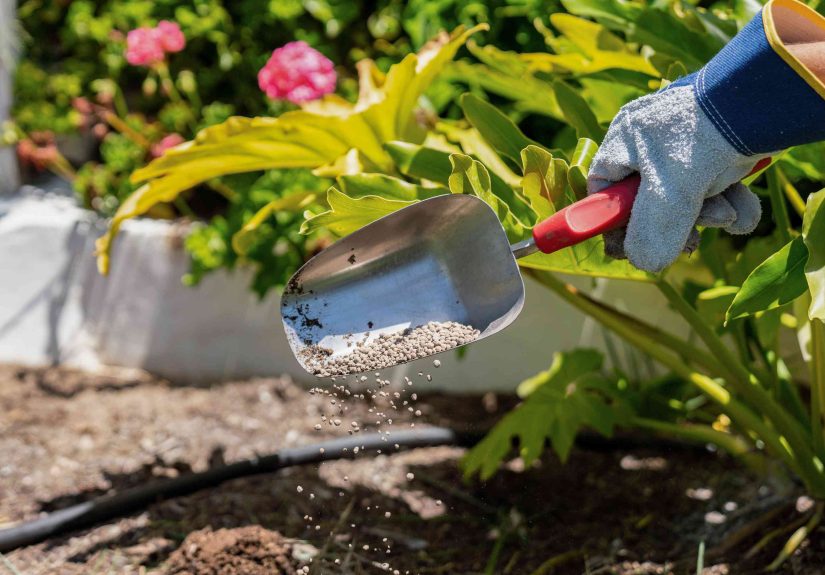
For lawns, a broadcast spreader is commonly used to distribute lime as evenly as possible. In beds, the material can be spread over the soil surface and incorporated where practical. Uneven application can create uneven pH, which is exactly the kind of patchy yard drama most people do not need.
Water it in or work it in
Water helps settle lime and move it toward the soil surface, but incorporation is even better when preparing new areas. Lime works through contact with soil particles, so mixing it into the root zone before planting often delivers the best results.
Garden Lime vs. Gypsum: Not the Same Thing
This is one of the most common landscaping mix-ups. Garden lime and gypsum are both soil amendments, but they do different jobs.
Garden lime raises soil pH and reduces acidity.
Gypsum supplies calcium and sulfur, but it does not significantly raise soil pH.
So if your yard has acidic soil and you need to raise pH, gypsum is not the fix. If you need calcium without changing pH much, gypsum may be useful in certain situations. Mixing them up is a little like bringing a rake to fix a leaking faucet. Good tool, wrong problem.
Powdered Lime vs. Pelletized Lime
Homeowners often see both powdered and pelletized lime at garden centers. The core material may be similar, but the form changes how it handles.
Powdered lime is often less expensive, but it can be dusty and messier to spread.
Pelletized lime is usually easier to handle, cleaner to apply, and popular for residential lawns and beds. It often costs more, but many people consider the convenience worth it.
In practical terms, pelletized lime wins points for user-friendliness, while powdered lime wins points for budget efficiency. Your spreader, patience level, and tolerance for white dust on your shoes may help decide the winner.
When You Should Not Use Garden Lime
Garden lime is helpful when soil is too acidic. It is a problem when the soil is already neutral or alkaline. Adding lime without testing can push pH too high and reduce nutrient availability, leading to yellowing leaves, poor growth, and unnecessary frustration.
You should also avoid using lime around acid-loving plants unless a soil test specifically calls for it. Plants such as azaleas, rhododendrons, blueberries, and similar acid-preferring species generally do not want your helpful bucket of lime. To them, it is not a gift. It is sabotage wearing gardening gloves.
Another mistake is assuming lime fixes every sad-looking landscape. Poor drainage, compaction, shade, disease, drought stress, and low fertility can all cause symptoms that lime will not solve. Lime is powerful, but it is not a motivational speaker for grass.
Signs Your Landscape Might Need Lime
A soil test is the real decision-maker, but there are a few clues that can suggest acidic soil may be part of the problem:
- Grass that struggles despite regular feeding
- Poor growth in beds where plants should be thriving
- Nutrient deficiency symptoms that linger even after fertilizing
- Older landscapes where pH has not been checked in years
- Sites with naturally acidic soils or heavy rainfall patterns
That said, symptoms alone are not enough. Many plant problems look similar on the surface. Soil testing is what separates smart landscaping from expensive guessing.
Real-World Landscaping Examples
Example 1: Reviving a patchy lawn
A homeowner notices thin turf, weak color, and underwhelming results from fertilizer. A soil test shows acidic soil and recommends lime. After a proper lime application and a season of routine lawn care, the turf begins filling in more evenly and responds better to feeding.
Example 2: Building a better perennial bed
Before installing a new bed of coneflowers, black-eyed Susans, and ornamental grasses, the soil is tested and found to be too acidic. Lime is incorporated before planting. The plants establish more evenly, and the bed performs better long-term because the pH issue was corrected at the start rather than ignored.
Example 3: Avoiding the wrong amendment
A gardener assumes gypsum and garden lime are interchangeable and nearly buys the wrong product. After reviewing the soil test, they choose lime because the real goal is to raise pH. The landscape gets what it actually needs instead of what happened to be on sale near the checkout line.
Common Mistakes to Avoid
- Applying lime without a soil test
- Using hydrated lime instead of agricultural lime
- Assuming lime is fertilizer
- Overapplying because “more must be better”
- Using lime around acid-loving landscape plants
- Expecting overnight results
- Confusing lime with gypsum
If there is a theme here, it is this: garden lime works best when it is used precisely, not enthusiastically.
Experiences Homeowners and Landscapers Commonly Report
One of the most useful ways to understand garden lime is to look at how it behaves in real landscapes over time. People who use it correctly often describe the experience as subtle at first and increasingly rewarding later. That sounds suspiciously like a retirement account, but it is true. Lime usually does not deliver a dramatic overnight transformation. Instead, it improves the soil conditions that make good landscaping more likely in the months ahead.
For lawns, many homeowners say the biggest surprise is how unexciting the first few weeks look. They spread the lime, water the yard, and then stare at the grass waiting for applause. Nothing much happens right away. Then, later in the season or the following growing cycle, the lawn starts responding better to fertilizer, filling in more evenly, and looking less washed out. The change feels more “steady recovery” than “television makeover reveal.”
In ornamental beds, landscapers often notice that plants begin growing more consistently after pH issues are corrected. A bed that used to produce uneven growth may start behaving like a coordinated planting instead of a botanical group project where only two members did the work. Perennials settle in more reliably, shrubs develop more balanced growth, and nutrient-related yellowing may become less common when soil acidity was the underlying issue.
Another common experience involves product choice. Many people who use powdered lime once decide they prefer pelletized lime for future applications simply because it is easier to spread and less messy. The convenience factor matters, especially in smaller residential landscapes where clean handling is half the battle. Others stick with powdered lime because it is more budget-friendly and they do not mind a little dust if it saves money.
There is also the classic lesson of overconfidence. Some homeowners assume lime is a general “yard booster” and spread it everywhere, only to learn later that certain plants wanted acidic soil all along. This is especially true in mixed landscapes where one bed contains turf-friendly conditions while another includes acid-loving shrubs. The experience teaches an important rule: one yard can have multiple needs, and lime should not be applied like powdered sugar on French toast.
Experienced gardeners often say the smartest use of garden lime happens before a landscape is planted. Correcting pH during soil preparation is easier, cleaner, and more effective than trying to fix things after a lawn, shrub border, or perennial bed is already established. In that sense, lime becomes part of good planning rather than emergency repair. And that is probably the best real-world takeaway of all: garden lime works best when it is used thoughtfully, with testing, timing, and a little patience.
Conclusion
Garden lime is one of the most practical tools in landscaping when used for the right reason. It raises soil pH, helps reduce acidity, improves nutrient availability, and can support stronger performance in lawns, ornamental beds, and newly prepared planting areas. It is especially valuable when soil tests reveal that acidic conditions are holding the landscape back.
The key is precision. Choose agricultural lime, not harsher lime products. Pick calcitic or dolomitic lime based on soil needs. Do not confuse lime with gypsum. And above all, let a soil test guide your decisions.
Used wisely, garden lime will not just change the soil. It can change how well the entire landscape performs. Quietly, slowly, and with very little need for dramatic speeches.