Table of Contents >> Show >> Hide
- What Is a PVC Didgeridoo?
- Materials and Tools You Will Need
- Step 1: Choose the Right PVC Pipe
- Step 2: Cut, Smooth, and Clean the Pipe
- Step 3: Make a Comfortable Mouthpiece
- Step 4: Test the Drone and Adjust the Sound
- How to Decorate Your PVC Didgeridoo
- How to Play Your Homemade Didgeridoo
- Common Mistakes to Avoid
- How to Clean and Maintain a PVC Didgeridoo
- Real-World Experience: What Making a PVC Didgeridoo Teaches You
- Conclusion
Learning how to make a didgeridoo out of PVC pipe is one of those projects that sounds suspiciously too easylike “just add water” pancakes or assembling furniture without arguing with the instructions. But in this case, the simple version really works. With one length of PVC pipe, a comfortable mouthpiece, a little sanding, and a few minutes of patient buzzing, you can build a playable DIY didgeridoo that produces a deep, satisfying drone without requiring a forest, a termite colony, or a royal budget for world instruments.
Before we start cutting pipe like a backyard orchestra is about to happen, a quick note of respect: the didgeridoo is strongly associated with Aboriginal peoples of northern Australia and carries cultural meaning beyond its sound. This PVC version is a beginner-friendly craft instrument for learning about sound, breath control, resonance, and rhythmnot a replacement for traditional instruments or the cultures connected to them. Approach it with curiosity, humility, and appreciation, and your homemade didgeridoo will be more than just plumbing with confidence.
This guide walks you through four practical steps: choosing the right PVC pipe, cutting and smoothing it, creating a mouthpiece, and testing the sound. You will also find tips for tuning, decorating, cleaning, and playing your first drone without feeling like your lips have filed a formal complaint.
What Is a PVC Didgeridoo?
A PVC didgeridoo is a homemade wind instrument made from plastic pipe. Like a traditional didgeridoo, it works by vibrating your lips into one end of a long tube, creating a continuous drone. The tube acts as a resonating chamber. The longer the pipe, the lower the pitch tends to be; the shorter the pipe, the higher the pitch. The diameter also matters: a wider pipe often gives a bigger, fuller sound, while a narrower pipe can feel easier for beginners to control.
Most beginner PVC didgeridoos use pipe between 1 1/4 inches and 2 inches in diameter and between 3 1/2 and 5 feet long. A 4-foot length of 1 1/2-inch PVC is a friendly starting point. It is long enough to produce a pleasantly low tone but not so long that you need to clear a hallway before practicing.
Materials and Tools You Will Need
Basic Materials
- One piece of PVC pipe, ideally 1 1/2 inches in diameter and about 4 feet long
- Fine-grit sandpaper
- Measuring tape
- Pencil or marker
- Hacksaw or PVC pipe cutter
- Beeswax, a rubber coupling, or a PVC trap adapter for the mouthpiece
- Non-toxic acrylic paint, painter’s tape, or stickers for decoration
- Soft cloth and mild soap for cleaning
Safety Items
- Safety glasses
- Dust mask when sanding
- Work gloves
- A clamp or stable work surface
- Adult supervision if a young maker is cutting the pipe
Do not burn PVC or use open flame to shape it. Heating PVC carelessly can damage the material and create unpleasant fumes. For this beginner build, you do not need to bend, melt, scorch, or perform any backyard wizardry. Straight pipe is perfectly fine. Your didgeridoo does not need curves to sound cool; it needs clean edges, a decent mouthpiece, and a player willing to make strange buzzing noises for science.
Step 1: Choose the Right PVC Pipe
The first step in making a didgeridoo out of PVC pipe is choosing the tube that will become your instrument. Think of this as picking the voice of your didgeridoo. A shorter pipe has a higher pitch. A longer pipe has a lower pitch. A wider pipe may sound fuller, but it can require more air and lip control. A narrower pipe can be easier for beginners, though it may sound a little thinner.
For most first-time builders, a 1 1/2-inch diameter PVC pipe around 4 feet long is a reliable choice. If you want a deeper drone, try a 5-foot pipe. If you want something easier to carry or play indoors without knocking over a lamp, try 3 1/2 to 4 feet. Schedule 40 PVC is common in hardware stores and sturdy enough for this project. You do not need pressure-rated perfection for a musical craft, but you do want a pipe that is clean, straight, and free of cracks.
Beginner Length Guide
- 3 to 3 1/2 feet: easier to handle, higher pitch, good for kids or quick experiments
- 4 feet: balanced beginner choice with a strong drone
- 5 feet: lower pitch, deeper sound, slightly harder to control
If the hardware store sells 10-foot pipe, ask whether they can cut it for you. Many stores will make a rough cut, which saves you from transporting a plastic jousting lance through the parking lot. If you cut it yourself, measure carefully and mark the line all the way around the pipe so the end is as even as possible.
Step 2: Cut, Smooth, and Clean the Pipe
Once you have measured your PVC pipe, secure it on a stable surface. A clamp is helpful because rolling pipe has the survival instinct of a frightened hot dog. Put on safety glasses, then cut slowly along your marked line using a hacksaw or pipe cutter. A hacksaw works well when used with steady strokes. Let the tool do the work; do not try to defeat the pipe in one heroic motion.
After cutting, check both ends. Freshly cut PVC often has burrs, rough plastic shavings, or sharp edges. Sand the inside and outside rim until smooth. This matters for two reasons: comfort and sound. A rough mouthpiece end feels terrible on your lips, and rough interior edges can slightly disturb airflow. You do not need to polish the pipe like a museum artifact, but it should feel smooth to the touch.
Wash the pipe with mild soap and warm water, then dry it completely. PVC from a store can carry dust, labels, and mystery grime from warehouse life. Since your mouth will be involved, cleaning is not optional. It is the difference between “handmade musical instrument” and “I licked the plumbing aisle.”
Optional: Lightly Taper the Mouth End
If your pipe opening feels too large, you can make the mouthpiece more comfortable with beeswax or a fitting rather than reshaping the pipe itself. Some makers like a slightly smaller mouth opening because it helps the lips seal and buzz more easily. For beginners, comfort matters more than looks. A mouthpiece that fits your face will help you get a drone faster.
Step 3: Make a Comfortable Mouthpiece
The mouthpiece is where your PVC didgeridoo becomes playable. Without one, you may still get a sound, but the rim can feel too wide, too sharp, or too awkward. A good mouthpiece creates a comfortable seal around your lips and helps you focus the vibration into the pipe.
Option 1: Beeswax Mouthpiece
Beeswax is a traditional-style solution commonly used on many didgeridoos. To make a beeswax mouthpiece, soften the wax gently with your hands or by placing it in a warm area. Do not melt it over an open flame. Roll the wax into a thick rope, press it around one end of the pipe, and shape it into a rounded ring. The opening should be comfortable for your lipsusually smaller than the full pipe diameter but not tiny.
Press and smooth the wax until it sticks securely. Test the mouthpiece by placing your lips inside the opening and buzzing. If air leaks around the sides, reshape the wax. If the opening feels cramped, widen it slightly. Beeswax is forgiving, which is excellent because first mouthpieces often look like they were sculpted during an earthquake.
Option 2: PVC Fitting Mouthpiece
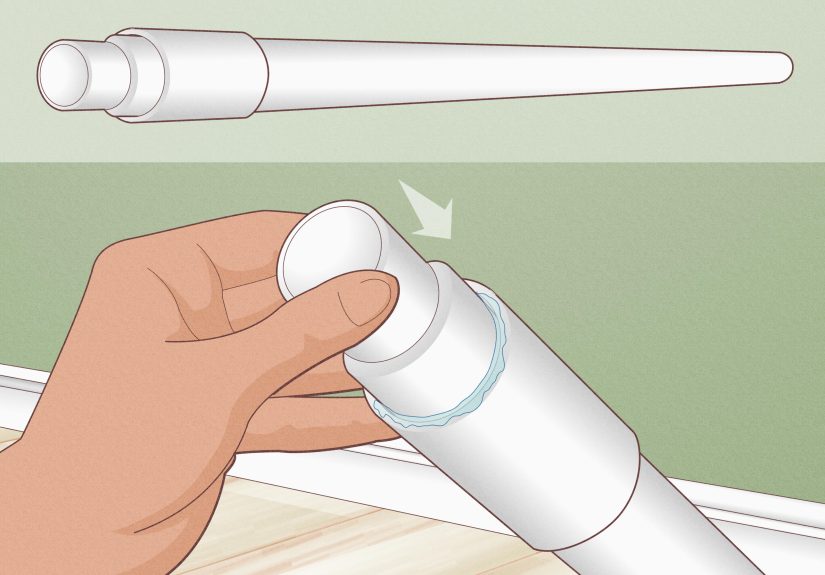
If you want a cleaner, hardware-store-only method, use a PVC trap adapter or reducer fitting. A 1 1/2-inch to 1 1/4-inch adapter can create a narrower mouth opening. Slip it onto the pipe and test the fit. You do not need permanent glue for a beginner didgeridoo; friction-fit parts are easier to adjust, clean, and replace.
Option 3: Rubber Coupling
A small rubber coupling can also work as a soft mouthpiece. It is comfortable, removable, and easy to clean. Just make sure it fits snugly and does not smell strongly of chemicals. If it smells like a tire shop having a dramatic day, wash it well or choose a different option.
Step 4: Test the Drone and Adjust the Sound
Now comes the moment of truth: making sound. Place the mouthpiece lightly against your lips. Relax your cheeks. Blow while vibrating your lips, similar to making a loose “raspberry” sound, but more controlled. You are not blowing like a trumpet player launching a parade. You are letting your lips buzz while the pipe amplifies the vibration.
At first, the sound may be airy, squeaky, or hilariously rude. This is normal. The didgeridoo rewards relaxed lips, steady air, and patience. Try these quick fixes:
- No sound: loosen your lips and buzz before adding air pressure.
- Too much air noise: improve your lip seal around the mouthpiece.
- Pitch jumps around: keep your lips relaxed and steady.
- Sound feels weak: try a slightly smaller mouth opening or a longer pipe.
You can also test pitch with a tuner app. If the sound is too high, use a longer pipe. If it is too low or hard to play, trim a little from the end opposite the mouthpiece. Cut gradually. You can always remove more pipe, but you cannot ask PVC to grow back after a bold mistake.
How to Decorate Your PVC Didgeridoo
Decorating your DIY didgeridoo is optional, but it makes the project feel finished. First, clean and dry the pipe. Lightly sand the outside so paint grips better. Use non-toxic acrylic paint, painter’s tape, stencils, stickers, or permanent markers. Geometric patterns, dots, waves, musical symbols, and nature-inspired designs all work well.
Avoid copying sacred or culturally specific Aboriginal designs unless you have permission and understand their meaning. Instead, create your own pattern: sound waves, desert colors, stars, vines, comic-book lightning bolts, or a tasteful label that says “Not a plumbing emergency.” Finish with a clear non-toxic sealant if you want the design to last.
How to Play Your Homemade Didgeridoo
The basic didgeridoo sound begins with a drone. Sit or stand comfortably, angle the pipe downward, and keep your jaw relaxed. Start by buzzing your lips without the instrument. Then add the mouthpiece. Once you get a steady tone, experiment with vowel shapes inside your mouth: “oo,” “oh,” and “ee” will change the color of the sound. Your tongue, cheeks, and voice can create rhythm and texture.
Simple Beginner Exercises
- Long drone: hold one steady note for five seconds, then ten, then twenty.
- Vowel rhythm: drone while silently shaping “oo-oh-ee-oh.”
- Pulse practice: use your diaphragm to create gentle bursts of sound.
- Voice layer: hum softly while droning to create animal-like overtones.
Circular breathing is the famous didgeridoo technique, but do not panic if you cannot do it immediately. Circular breathing means using air stored in your cheeks to keep the drone going while you inhale through your nose. It feels strange at first, like your face has been assigned a group project. Practice away from the instrument by puffing your cheeks, pushing air out with your cheek muscles, and inhaling through your nose at the same time.
Common Mistakes to Avoid
Using a Pipe That Is Too Short
A very short pipe may produce a sound, but it will not give you the deep drone most people expect from a didgeridoo. Start around 4 feet for a better beginner tone.
Skipping the Sanding
Rough PVC edges are uncomfortable and can scratch your lips. Sand both ends thoroughly, especially the mouthpiece end.
Making the Mouthpiece Too Small
A tiny opening can restrict airflow and make buzzing harder. Aim for a comfortable seal, not a pinhole.
Blowing Too Hard
The didgeridoo is not powered by brute force. Relaxed lips and steady air produce a better drone than aggressive blowing.
Ignoring Cleanliness
Because this is a mouth-blown instrument, clean it regularly. Wipe the mouthpiece after playing and avoid sharing it without cleaning.
How to Clean and Maintain a PVC Didgeridoo
PVC is easy to maintain. Remove the mouthpiece if possible, wipe it down, and clean the pipe with mild soap and water. Let it dry fully before storing. Do not leave beeswax mouthpieces in hot cars or direct sunlight; beeswax can soften and slump into a shape best described as “sad candle.”
Store the instrument horizontally or upright in a safe corner. PVC is durable, but it can still crack if stepped on or slammed in a door. If you used paint, avoid harsh cleaners that might strip the finish.
Real-World Experience: What Making a PVC Didgeridoo Teaches You
The first thing you learn when making a PVC didgeridoo is that simple materials can produce surprisingly rich sound. A plain white pipe from the hardware store does not look magical at first. It looks like something under a sink. But once the edges are smooth, the mouthpiece is shaped, and the first drone finally appears, the whole project changes. Suddenly, the pipe has personality. It vibrates in your hands. The floor may even hum a little. This is the point where most people grin and immediately annoy everyone nearby with “just one more try.”
The second lesson is patience. Beginners often expect the drone to happen instantly. Sometimes it does, but often the first attempts sound like a sleepy duck arguing with a balloon. That is not failure. It is your lips learning a new job. Small adjustments make a huge difference: loosening the lips, changing the angle, using less air, or reshaping the mouthpiece. The process teaches careful listening. You begin to notice when the sound is too airy, when the pipe responds better, and when your breath becomes steadier.
Building the instrument also makes sound physics easy to understand. A longer pipe gives a lower pitch because the air column vibrates differently. A wider bore changes the feel of the back pressure. A smoother rim helps the lips seal. These ideas can seem abstract in a textbook, but they become obvious when you hold two different pipe lengths and hear the difference. It is a science lesson disguised as a musical toy, which is honestly the best kind of science lesson.
Another useful experience is learning how much comfort matters. A rough mouthpiece can make the instrument unpleasant, while a well-shaped beeswax or rubber mouthpiece makes playing easier. Many first-time builders spend more time adjusting the mouthpiece than cutting the pipe, and that is completely reasonable. The mouthpiece is where the player meets the instrument. If that connection feels good, practice becomes fun instead of frustrating.
Decoration adds another layer of ownership. Painting your PVC didgeridoo turns it from “pipe I found” into “instrument I made.” Some people prefer clean minimalist designs. Others go full festival mode with colors, dots, stripes, and patterns. The best design is personal and respectful. When you avoid copying sacred cultural symbols and instead create your own visual language, the instrument becomes both creative and considerate.
Finally, a PVC didgeridoo teaches that music does not need to begin with expensive gear. You can start with affordable materials, curiosity, and a willingness to sound ridiculous for a while. That is how many musical journeys begin: not with perfection, but with play. The homemade didgeridoo is perfect for classrooms, family projects, sound experiments, rhythm practice, or anyone who wants to explore drone music without spending much money. It is lightweight, durable, and forgiving. Best of all, when someone asks where you got it, you get to say, “I made it,” which automatically adds at least 40 percent more coolness.
Conclusion
Making a didgeridoo out of PVC pipe is a simple, affordable project that combines music, craft, science, and a little comedy from your first few practice sounds. With the right pipe length, smooth edges, a comfortable mouthpiece, and patient testing, you can create a playable DIY didgeridoo in four clear steps. Start with a 4-foot length of 1 1/2-inch PVC, sand it carefully, shape the mouthpiece, and practice a relaxed drone. From there, you can decorate it, tune it, and begin exploring rhythm, breath control, and circular breathing.
The beauty of this project is that it does not demand perfection. Your first PVC didgeridoo may not look like a professional instrument, but it will teach you how sound works and how small adjustments change tone. It is practical, fun, beginner-friendly, and just weird enough to be memorablein the best possible way.
Note: This article is written for educational, musical, and craft purposes. Use safe cutting practices, avoid heating or burning PVC, clean the mouthpiece before playing, and approach the didgeridoo with respect for its Aboriginal Australian cultural roots.