Table of Contents >> Show >> Hide
- Before You Start: Why Baby Rabbit Care Is So Delicate
- How to Nurse a Baby Rabbit: 15 Steps
- Step 1: Make sure the baby rabbit is truly orphaned
- Step 2: Figure out whether the rabbit is domestic or wild
- Step 3: Call a rabbit-savvy veterinarian or licensed rehabilitator immediately
- Step 4: Warm the baby before you feed it
- Step 5: Build a safe nest box
- Step 6: Gather the right supplies before feeding time
- Step 7: Use the correct formula
- Step 8: Feed in the correct position
- Step 9: Feed small amounts on a rabbit-style schedule
- Step 10: Stimulate urination and defecation if the eyes are still closed
- Step 11: Introduce solids when the timing is right
- Step 12: Keep the environment quiet, clean, and boring
- Step 13: Watch the bunny every day like a tiny detective
- Step 14: Learn the red-flag signs that mean “vet now”
- Step 15: Wean gradually and transition into full rabbit care
- Common Mistakes to Avoid When Nursing a Baby Rabbit
- How Long Does It Take for a Baby Rabbit to Get Stronger?
- Caregiver Experiences: What Real-Life Baby Rabbit Nursing Usually Feels Like
- Conclusion
Baby rabbits are tiny, quiet, and alarmingly good at making humans panic. One minute you are walking through the yard or checking a nest box, and the next minute you are googling bunny milk replacer with the intensity of someone defusing a bomb. Fair enough. A baby rabbit can go downhill quickly, but the good news is that careful, calm, informed care can make a real difference for a truly orphaned domestic kit.
The first truth to understand is this: nursing a baby rabbit is never the “fun cute project” version of animal care. It is detail work. It is warm towels, tiny syringes, sleepy feedings, and resisting the urge to overdo everything. In rabbit care, more is not always better. In fact, too much formula, too much handling, too much heat, or too much “help” can create the very problems you are trying to prevent.
Note: This article focuses on a genuinely orphaned domestic baby rabbit. If the baby is wild, do not assume it needs to be bottle-fed. Wild rabbit mothers often visit the nest only briefly, and many healthy wild babies should be left where they are or transferred to a licensed wildlife rehabilitator if intervention is truly needed.
Before You Start: Why Baby Rabbit Care Is So Delicate
Unlike puppies or kittens, baby rabbits are not built for constant feeding and cuddling. Their mothers usually nurse them only briefly, often once or twice a day. That means a healthy baby rabbit may look “ignored” to a worried human even when everything is going according to rabbit plan. Rabbit plan, to be clear, is not always emotionally comforting. It is very much a “show up quietly, feed fast, disappear like a tiny woodland spy” strategy.
If you are caring for a domestic orphan because the mother has died, is critically ill, refuses the litter, or the babies have been clearly abandoned, your job is to imitate nature without smothering it. You want warmth, cleanliness, correct formula, proper feeding position, and a gradual transition to solids. You do not want improvisation, random internet potions, or a feeding schedule that turns the bunny into a milk balloon.
How to Nurse a Baby Rabbit: 15 Steps
Step 1: Make sure the baby rabbit is truly orphaned
This is the most important step because it prevents unnecessary hand-feeding. With domestic rabbits, a full belly, warm body, and quiet behavior often mean the mother is doing her job. If the kits are cold, wrinkled, thin, scattered outside the nest, or constantly crying, then you may be dealing with a real emergency. If the mother rabbit is present, always try to keep the babies with her unless a rabbit-savvy veterinarian tells you otherwise.
Step 2: Figure out whether the rabbit is domestic or wild
This step matters more than most people realize. Domestic orphan care and wild rabbit care are not interchangeable. A domestic kit may need foster support, but a wild baby rabbit usually needs reunification or a licensed wildlife rehabilitator, not a DIY bottle-feeding experiment. If the bunny was found in a shallow outdoor nest, pause before “rescuing” it. Many wild babies are not abandoned at all.
Step 3: Call a rabbit-savvy veterinarian or licensed rehabilitator immediately
Even if you need to start supportive care right away, get expert backup fast. Rabbits are not little cats with longer ears. Their digestion, stress response, and feeding needs are different. A rabbit-savvy vet can confirm whether the baby is dehydrated, chilled, injured, bloated, or aspirating, and can tell you whether home feeding is appropriate, how much to feed, and when to come in. Think of this call as your “don’t accidentally improvise your way into a disaster” step.
Step 4: Warm the baby before you feed it
Never try to feed a cold baby rabbit. A chilled kit cannot digest properly and may aspirate more easily. First, make sure the bunny feels warm to the touch. Use a soft nest setup and gentle ambient warmth rather than blasting heat like you are baking a pastry. For domestic babies, a dark, quiet nest area is ideal. If the room is comfortably warm, extra heat may not be necessary, and too much heat can be dangerous.
Step 5: Build a safe nest box
Use a small box lined with clean, soft towels or rabbit-safe nesting material. Keep it dark, calm, and draft-free. The goal is security, not luxury. Your bunny does not need a mini penthouse; it needs consistency. Place the nest in a low-traffic area away from barking dogs, curious children, bright lights, and the kind of household chaos that makes prey animals question all their life choices.
Step 6: Gather the right supplies before feeding time
Do not wait until the bunny is squirming to start your scavenger hunt. Set up a small care station with formula, a 3 cc syringe or eyedropper, clean towels, cotton balls, warm water, a gram scale if available, and a notebook for feedings and observations. Tiny patients do poorly when the caregiver is chaotic. Organization is not glamorous, but it is deeply bunny-friendly.
Step 7: Use the correct formula
For domestic orphan kits, commonly used rescue guidance recommends kitten milk replacer (KMR) or regular goat milk. Follow your veterinarian’s instructions if they give you a specific formula plan, especially for very small, dehydrated, or medically fragile babies. This is not the time to freestyle with random pantry science. A baby rabbit needs a formula choice grounded in actual rabbit rescue guidance, not internet folklore and optimism.
Step 8: Feed in the correct position
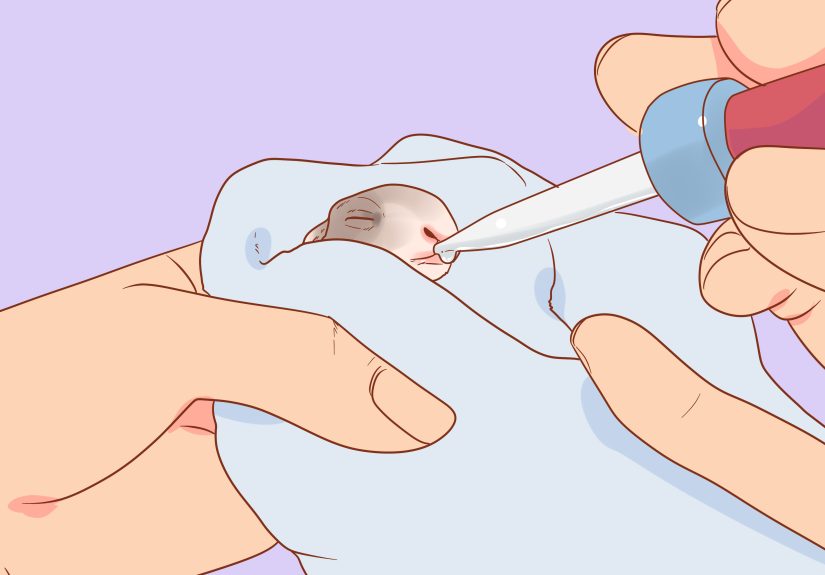
Always feed the bunny upright, not on its back like a human infant. Use the syringe or dropper at the side or lower part of the mouth and go slowly. Very slowly. Think “patient raindrop,” not “tiny milk fire hose.” A few drops may be all the baby will accept at first. That is fine. Rushing the process raises the risk of aspiration, and aspiration is one of the fastest ways to turn a stressful situation into a medical emergency.
Step 9: Feed small amounts on a rabbit-style schedule
Rabbit babies are easy to overfeed, and overfeeding is a notorious problem in hand-raised kits. That is why restraint matters. A commonly cited domestic-rabbit rescue guideline for babies expected to grow to about five pounds uses the following daily totals, usually divided into two feedings unless your vet instructs otherwise:
| Approximate Age | Average Formula Per Day | Care Note |
|---|---|---|
| Newborn | Up to 5 cc | Split into small feedings; watch closely for chilling and weakness |
| 1–2 weeks | 10–15 cc | Some smaller rabbits may need less |
| 2–3 weeks | 26–30 cc | Eyes often open around day 10; begin introducing hay, pellets, and water |
| 3–6 weeks | 26–30 cc | Solids increase while formula is gradually phased down |
Do not treat that chart like a dare. Smaller babies may take less. A weak bunny may need a modified plan. Your vet’s instructions always outrank a general chart.
Step 10: Stimulate urination and defecation if the eyes are still closed
For very young kits, especially during roughly the first 10 days or until the eyes open, use a cotton ball moistened with warm water and gently stroke the anal area after feeding. This imitates what the mother rabbit does naturally. It is one of those glamorous caregiving moments no one puts on greeting cards, but it is essential. If nothing happens, do not scrub like you are removing a stain. Gentle, patient stimulation is the rule.
Step 11: Introduce solids when the timing is right
As domestic babies open their eyes and become more active, begin offering plain alfalfa pellets, alfalfa hay, oat hay, and timothy hay, along with water. This is the beginning of the transition from formula dependence to rabbit life as nature intended: nibbling, chewing, and acting suspiciously judgmental about everything. For domestic babies, fresh greens are usually delayed early on, because sudden diet changes can upset the gut.
Step 12: Keep the environment quiet, clean, and boring
“Boring” is a compliment here. A baby rabbit does not need visitors, selfies, loud music, or a fan club. Clean feeding tools after every use. Replace dirty bedding. Keep the nest dry. Handle only as much as necessary for feeding, cleaning, and monitoring. Rabbits are prey animals, which means stress is not just unpleasant for them; it can actively undermine recovery.
Step 13: Watch the bunny every day like a tiny detective
Look for a warm body, round but not hard belly, active suckling, steady interest in food, normal stool, and gradual growth. A gram scale is extremely helpful because weight trends can reveal trouble before your eyes do. Also pay attention to hydration. A healthy baby generally looks smoother and more filled out, while a dehydrated one can seem thin, wrinkled, weak, or baggy-skinned. This is not paranoia. This is good nursing.
Step 14: Learn the red-flag signs that mean “vet now”
Do not try to tough it out if the bunny is cold, limp, bloated, breathing oddly, refusing to suckle, crying nonstop, having diarrhea, or was in a cat or dog’s mouth. Cat exposure is especially serious because even tiny punctures can lead to life-threatening infection. If the baby suddenly seems weaker than it was a few hours ago, that is your cue to stop guessing and get professional help.
Step 15: Wean gradually and transition into full rabbit care
Domestic babies are typically weaned around six weeks, though exact timing varies. As solids increase, formula decreases. Once weaned, the rabbit’s life should move toward proper long-term housing, a rabbit-savvy veterinary relationship, and a diet built around hay, appropriate pellets, and gradual food transitions. In other words, nursing is only chapter one. The rest of the book is all about raising a healthy rabbit, not just surviving babyhood.
Common Mistakes to Avoid When Nursing a Baby Rabbit
- Feeding a wild rabbit as if it were domestic: this is one of the biggest and saddest errors.
- Overfeeding: more formula does not equal more health.
- Feeding on the back: an upright position is safer.
- Using too much heat: baby rabbits need warmth, not a sauna.
- Handling too often: stress is a real medical issue for rabbits.
- Introducing solids too aggressively: the rabbit gut likes slow, sensible transitions.
- Skipping the vet call: expert help early is almost always better than emergency help late.
How Long Does It Take for a Baby Rabbit to Get Stronger?
That depends on age, size, hydration, the cause of orphaning, and how quickly proper care starts. A rabbit that is only mildly weak but warm and willing to feed may perk up surprisingly fast. A chilled or dehydrated kit may take longer and may need medical support before feedings really become productive. In general, what you want to see is a trend: better tone, fuller belly, more activity, eyes opening on schedule, curiosity about hay, and steadily improving body condition.
Progress in baby rabbit care is rarely dramatic. It is usually a collection of tiny wins: the bunny takes a few more drops, the belly feels better, the stool looks normal, the hay gets nibbled, the panic level in your chest drops from “horror movie” to “mildly caffeinated concern.” That is still progress.
Caregiver Experiences: What Real-Life Baby Rabbit Nursing Usually Feels Like
People often imagine nursing a baby rabbit will feel like bottle-feeding a kitten: frequent meals, visible demand, maybe some squeaks, maybe a sleepy cuddle after dinner. In reality, rabbit care is far more subtle. One of the most common experiences caregivers describe is uncertainty during the first day. The baby may not latch eagerly. It may only take a few drops. It may sit there looking offended, unconvinced, and faintly betrayed. That does not always mean failure. Sometimes it means the bunny is stressed, and the caregiver has to slow down, breathe, and stop expecting cinematic gratitude.
Another common experience is learning how little a healthy feeding may actually look like. New caregivers are often convinced the bunny “didn’t get enough” because the meal was brief and the stomach is not cartoonishly round. Then they discover the hidden rule of rabbit nursing: overfeeding causes trouble faster than underfeeding. A careful, modest feeding followed by a calm bunny is often a better sign than a dramatic stuffing session that ends in bloating or loose stool.
Many rescuers also mention how quickly routine becomes everything. The first feeding is nerve-racking. By the third or fourth, you begin to recognize the bunny’s patterns. Maybe it accepts the syringe better when wrapped loosely in a towel. Maybe it swallows more comfortably after a pause. Maybe it tolerates care best when the room is dim and silent. Tiny observations matter. Baby rabbit care can feel intimidating, but it becomes more manageable once you stop trying to control every outcome and start paying attention to the baby in front of you.
The emotional side is real too. Caregivers often describe a strange combination of tenderness and terror. You are caring for something impossibly small, but you are also very aware that one wrong move could matter. That pressure is why good rabbit rescuers get almost comically serious about details. They label syringes. They track ounces and grams. They wash things immediately. They become the kind of person who can have a five-minute conversation about the shape of a bunny poop and mean every word.
There is also usually a turning point. Often it happens when the eyes open, or when the bunny starts nibbling hay, or when it begins resisting the syringe because it would rather investigate the world. That is when care starts to shift from “keep this fragile baby stable” to “help this young rabbit become a rabbit.” The nest seems less like an ICU and more like a nursery. The bunny starts showing opinion, mobility, and attitude. Frankly, a rabbit with attitude is usually a rabbit heading in the right direction.
Perhaps the biggest lesson experienced caregivers share is this: success is not about doing the most. It is about doing the right things consistently. Warmth without overheating. Feeding without flooding. Monitoring without hovering. Help without chaos. If you can do that, you give a baby rabbit its best chance. And that, in bunny terms, is a very big deal.
Conclusion
If you need to nurse a baby rabbit, the safest mindset is calm, conservative, and precise. Confirm the bunny is truly orphaned, involve a rabbit-savvy vet, warm the baby before feeding, use the right formula and position, feed small amounts, stimulate elimination when needed, and transition carefully to hay and pellets as the rabbit matures. Most of all, remember that baby rabbit care is not about heroic improvisation. It is about quiet competence.
And yes, the whole process can feel nerve-wracking. But with accurate information, patience, and quick professional backup when anything looks off, you can move from panicked Googler to capable caregiver. The bunny will probably never send you a thank-you card, but surviving and thriving is a pretty solid review.