Table of Contents >> Show >> Hide
- What Is House Hushing, Exactly?
- Why People Are So Into It
- Why the Method Is Also Controversial
- I Tried House Hushing in My Own Home
- What Actually Worked for Me
- What Didn’t Work So Well
- Who Should Try House Hushingand Who Should Skip It
- How to Make House Hushing Work Better
- My Final Verdict on the House Hushing Decluttering Method
- A Longer Reflection: What Happened After the First Rush Wore Off
Note: This is a first-person, publication-ready feature written in standard American English and based on real, current expert guidance and media coverage of the house hushing trend.
Every few months, I reach a very specific breaking point in my home. It usually starts with one chair. That chair becomes a part-time closet, a charging station, a mailroom, and, somehow, a museum dedicated to things I swear I was “just putting there for a second.” Then the coffee table joins the rebellion. The entryway follows. Suddenly, my home isn’t messy in a dramatic, reality-TV way. It’s just loud. Visually loud. Mentally loud. Spiritually loud.
So when I kept seeing people talk about the house hushing decluttering method, I was intrigued. The premise sounded almost suspiciously simple: remove the nonessential visible stuff from a room, let the space “quiet down” for a day or two, and then bring back only what truly deserves to be there. It’s often described as backwards decluttering, and depending on who you ask, it is either genius, oddly therapeutic, or one minor inconvenience away from becoming a beautifully staged disaster.
Reader, I tried it. And I have thoughts.
What Is House Hushing, Exactly?
House hushing is a decluttering method built around the idea that clutter creates visual noise. Instead of standing in a room and asking, “What should I get rid of?” you start by removing the visible extras from the space and placing them in a temporary holding area. Then you live with the stripped-down room for 24 to 48 hours before intentionally reintroducing the items you actually miss, need, or love.
That sounds simple, but it’s a meaningful shift. Traditional decluttering often begins with decisions about every object. House hushing starts with the room. It asks a different question: What does this space feel like when it can finally exhale?
That’s part of why this method has taken off in home organization circles. It promises a calmer home without demanding that you turn into a ruthless minimalist who suddenly throws away every decorative bowl and sentimental candle holder. It is less “purge your life” and more “let’s see if your living room really needs seventeen tiny objects staring back at you.”
Why People Are So Into It
It lowers visual clutter fast
One reason the method resonates is that it creates a visible difference almost immediately. When counters, shelves, and tables are cleared, a room often feels lighter before you have even made a single donation pile. That quick win matters. A lot of decluttering advice is technically smart but emotionally exhausting. House hushing delivers relief first, then decisions second.
It reduces decision fatigue
Anyone who has ever stood over a pile of random cords, expired coupons, decorative trays, and mystery keys knows that clutter is not just physical. It’s cognitive. House hushing can make the process easier because you are not trying to decide the fate of every item all at once. You are pausing the noise, creating distance, and then evaluating what earns a return ticket.
It works well for sentimental people
If you are the kind of person who keeps an object because it reminds you of a trip, a person, a version of yourself, or a very ambitious phase involving homemade granola, this method feels gentler than a hard-core purge. Because the items go into a holding zone first, the process feels reversible. That alone can lower the emotional resistance that keeps many people stuck.
Why the Method Is Also Controversial
This is where the conversation gets interesting. The house hushing decluttering method is not controversial because it is dangerous or outrageous. It’s controversial because some organizing experts see it as a brilliant reset, while others think it can be incomplete, overwhelming, or easy to misuse.
It can become “fake decluttering”
If you move everything out of sight but never actually make decisions, congratulations: you have not decluttered. You have simply relocated your chaos like a tiny, inconvenient witness protection program. Critics of house hushing point out that the method can feel successful because the room looks better, even if the clutter is now just haunting a guest room or hallway basket.
It is not meant for deep-storage disasters
Experts also note that house hushing works best for visible everyday clutter in lived-in spaces like a living room, bedroom, or kitchen. It is not the best method for a garage packed with old paint cans, an attic stuffed with unlabeled bins, or a basement that looks like it could reveal three former hobbies and a treadmill from 2009. For those bigger zones, you need a more structured sorting system.
You still need systems afterward
A calm room is wonderful. A calm room that stays calm is better. If your home does not have dedicated homes for mail, chargers, blankets, papers, or the rogue pair of scissors that keeps migrating between rooms, the clutter will simply return wearing a fake mustache.
I Tried House Hushing in My Own Home
I decided to test the method in the spot that had been annoying me most: my living room and entryway area. This was not a full-scale hoarding scenario. It was the more common, sneakier kind of clutterthe kind that makes you say, “It’s not that bad,” while also refusing to make eye contact with the side table.
My targets included a stack of unopened mail, two candles I never lit but apparently needed to display like trophies, a tray full of random receipts, three coasters that had somehow separated from their family, one decorative object I no longer liked but kept out of guilt, a charging cable that served no obvious purpose, a pile of books I intended to read “soon,” and a basket of miscellaneous items that can only be described as domestic shrugging.
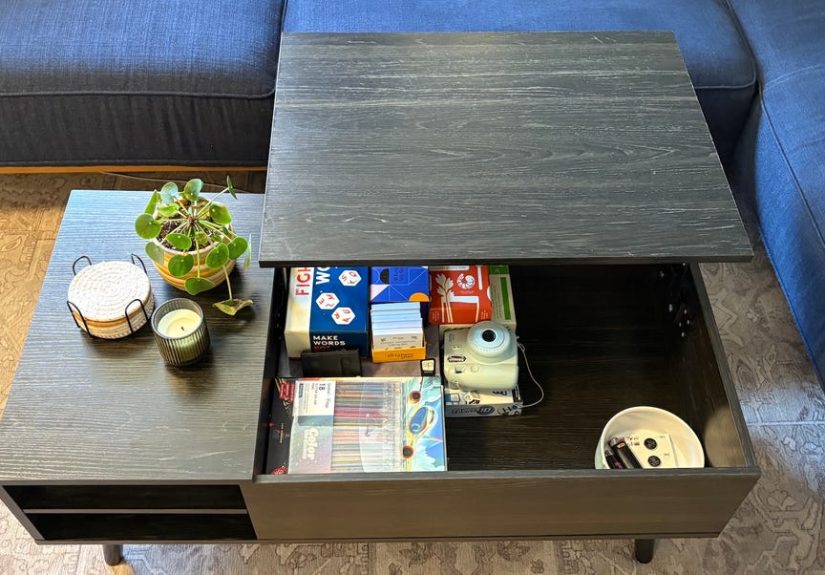
Following the method, I removed everything nonessential from visible surfaces and put it in a holding area in the dining room. I left the larger furniture alone. The sofa stayed. The lamp stayed. The coffee table stayed, but in a suddenly unfamiliar state known as “mostly empty.” I wiped everything down, vacuumed, fluffed pillows, and stood back.
My first reaction was not serenity. It was suspicion.
The room looked bigger, yes. Cleaner, absolutely. But it also looked a little like a rental listing trying too hard. I worried I had gone from “cozy and lived-in” to “someone just moved out and forgot the personality.” This, I think, is where many people panic and start putting everything back immediately. But the whole point of house hushing is to sit with that discomfort long enough to notice what comes next.
And what came next was unexpectedly useful.
By that evening, I realized I felt calmer walking into the room. My eyes were not bouncing from object to object like a browser with too many tabs open. The side table looked like a table again instead of a shrine to unfinished tasks. The entryway felt functional instead of apologetic. I also noticed which items I genuinely missed and which ones I forgot about entirely.
I missed the basket for practical reasons, but not in the form it had taken. I wanted a place for the dog leash, reusable shopping bags, and incoming mail, but I did not need five unrelated objects hanging out in solidarity. I missed one candle because I actually liked the scent and the way it looked. I did not miss the second candle, which apparently had been performing the role of “backup dust collector.” I missed one book on the table because I was actively reading it. I did not miss the other four, which had become a decorative stack designed mainly to signal that I have interests.
The biggest surprise was how clearly I could see my habits once the surfaces were empty. I could tell exactly where I tended to drop things. I could see that my clutter was not random; it was patterned. Mail landed near the door because there was no real mail station. Chargers drifted into the living room because I had never assigned them a home. Decorative clutter built up because I kept adding things without subtracting anything.
After 48 hours, I started bringing items back. But now the room had standards. Harsh? Maybe. Effective? Absolutely.
I returned far less than I expected. Only the useful basket, one candle, one book, a tray for current mail, and a small decorative piece came back. Everything else went into one of three categories: donate, relocate, or “why do I even own this?” That last category was emotionally rich and not always flattering.
Did I become a minimalist overnight? No. Did I stop loving layered, lived-in interiors? Also no. But I finally understood why people say house hushing helps you protect the feeling of a room. Once I experienced the calmer version of the space, I became much less interested in refilling it just because I could.
What Actually Worked for Me
- The method was easier than a traditional purge. Starting with the room instead of the items made the process feel less emotionally loaded.
- It exposed “clutter creep” fast. I could instantly see which objects had become background noise.
- It helped me identify missing systems. My clutter turned out to be a workflow problem, not a moral failure.
- It curbed decorative overkill. I like a cozy room, but cozy and crowded are not the same thing.
What Didn’t Work So Well
- The holding area got ugly. For a day or two, my dining room looked like my living room had sneezed on it.
- It required follow-through. If I had stopped after the “remove everything” phase, I would have created a prettier problem, not a solved one.
- It would be stressful on a larger mess. I would not use this as my only strategy for a packed closet, garage, or storage room.
- It can feel a little stark at first. You have to resist the urge to re-clutter just because emptiness feels unfamiliar.
Who Should Try House Hushingand Who Should Skip It
Try it if: you feel overwhelmed by visible clutter, your home looks busy even after you tidy, you are emotionally attached to decor, or you want a soft reset that does not start with throwing everything out.
Skip it, or at least modify it, if: you are dealing with severe overflow, you do not have a temporary holding area, or you know you tend to start projects and abandon them halfway through. In those cases, a structured method such as sorting by category, using a keep-donate-trash framework, or working one drawer at a time may be more realistic.
How to Make House Hushing Work Better
Start ridiculously small
Do not begin with your whole house unless you enjoy chaos as a personality trait. Start with one shelf, one counter, one cabinet, or one table.
Give the holding zone a deadline
Put a timer on the experiment. Twenty-four to 48 hours is enough to notice what you actually need. Beyond that, your holding area may become a side quest.
Use the 80/20 rule afterward
Once you decide what stays, do not refill every inch of space. Leave a little breathing room in shelves, drawers, and baskets. That buffer matters more than people think.
Add one maintenance habit
My favorite takeaway was the idea of a five-minute nightly reset. It is annoyingly effective. The best decluttering method is often the one that keeps tomorrow from becoming a problem.
My Final Verdict on the House Hushing Decluttering Method
I went into this experiment expecting a trendy organizing trick with a clever name and a decent before-and-after moment. I came out of it with something more useful: a clearer understanding of how visual clutter affects my mood, how quickly “temporary” piles become permanent decor, and how much easier it is to edit a room once you have seen it in a quieter state.
Do I think house hushing is a miracle fix? No. It will not solve deep storage problems, replace practical organizing systems, or magically transform a cluttered home into a magazine spread. But as a decluttering method for busy people who want a calmer home without committing to a full purge, it is surprisingly smart.
My honest review: it is not nonsense, it is not magic, and it is definitely not a substitute for actual decision-making. But it is one of the most helpful reset tools I have tried for reducing visual noise and getting honest about what belongs in a room. In other words, the hype is not completely overblown for once. A rare and beautiful moment on the internet.
A Longer Reflection: What Happened After the First Rush Wore Off
The most revealing part of house hushing was not the first hour, when everything looked clean and I felt smug. It was the next several days, when normal life resumed and I had to see whether the room still worked. That is where a lot of decluttering methods fall apart. They are excellent on Saturday afternoon and much less impressive by Tuesday night when you are tired, carrying groceries, opening mail, and setting down your keys with the energy of a Victorian ghost.
What I noticed first was that the room became easier to reset because there was less to manage. This sounds obvious, but apparently I needed to learn it in a dramatic, hands-on way. Fewer objects on the table meant fewer things to move when cleaning. Fewer decorative pieces meant less dusting and less visual distraction. Fewer “temporary” items meant the room stopped functioning like a layover for stuff on its way to somewhere else.
I also noticed that I felt oddly protective of the newly calm space. That may have been the biggest shift of all. Before, I treated surfaces like public land. If I had a receipt, a charger, or a random object from another room, I would set it down without thinking. After house hushing, I became much more aware of that impulse. I did not want to ruin the calm feeling for something I did not even care about five minutes later. It turned out that once the room felt better, I was more motivated to keep it that way.
That said, the method did not turn me into an organizing saint. I still dropped mail near the door once or twice. I still created one tiny stack of “deal with later” papers. I am human, and also apparently very committed to having at least one mildly questionable habit. The difference was that the clutter no longer spread so easily. Because I had edited the room more intentionally, it hit a visible limit faster. I could catch it sooner.
Another unexpected benefit was that house hushing changed the way I think about decor. I did not stop liking layered spaces, color, books, baskets, and personal objects. But I became more selective. I started asking whether an item was contributing to the room or just occupying it. Was it useful? Beautiful? Meaningful? Or was it simply there because I had gotten used to seeing it there? That question alone probably saved me from putting half my old stuff back.
So here is my extended take: house hushing works best not as a one-time stunt, but as a reset button you can revisit when a room starts feeling noisy, crowded, or strangely stressful. I would use it seasonally, after the holidays, before guests come over, or anytime a space starts looking like it has lost the plot. It is not about making your home bare. It is about making your home readable again. And honestly, in a world where every flat surface seems to attract clutter like it is auditioning for the role, that feels less like a trend and more like survival.