Table of Contents >> Show >> Hide
- The Movie Moment That Sparked a Thousand Searches
- Meet the “Magnificent Lightning”: What the J7W Shinden Actually Was
- The Three Flights That Came Too Late
- So… How Did It “Kill” Godzilla?
- What Makes the Shinden a Dream for Historians (and a Nightmare for Mythmakers)
- Why This Story Plays So Well in 2026
- Conclusion
- Hands-On Experiences to Make the Shinden-and-Godzilla Story Feel Real
A real 1945 interceptor prototype. A fictional nuclear monster. One extremely loud internet argument: “Wait… that plane was REAL?!”
Godzilla has survived a lot. Depth charges. Tanks. Missiles. Human pride. Bad decisions. Even Hollywood physics. So when a WWII-era fighter plane shows up and (on screen) helps “kill” the King of the Monsters, your brain does the normal thing: it opens sixteen tabs and forgets why you walked into the kitchen.
Here’s the twist: the plane at the heart of Godzilla Minus One isn’t a made-up “movie jet.” It’s based on a genuine late–World War II Japanese design so unconventional it looks like an aircraft engineer dared another aircraft engineer to “just… try it.” That aircraft is the Kyushu J7W Shindennicknamed “Magnificent Lightning.”
And no, history books do not record a 1945 dogfight with a radioactive sea lizard (tragically, the archives are silent on this). But the Shinden’s true storywhy it was built, why it barely flew, and why it ended up in an American museummight be even wilder than the movie version.
The Movie Moment That Sparked a Thousand Searches
Godzilla Minus One drops viewers into the wreckage of postwar Japan, following a former kamikaze pilot haunted by survival and shame. The movie’s emotional core is human-sized, but the threat is, well… Godzilla-sized.
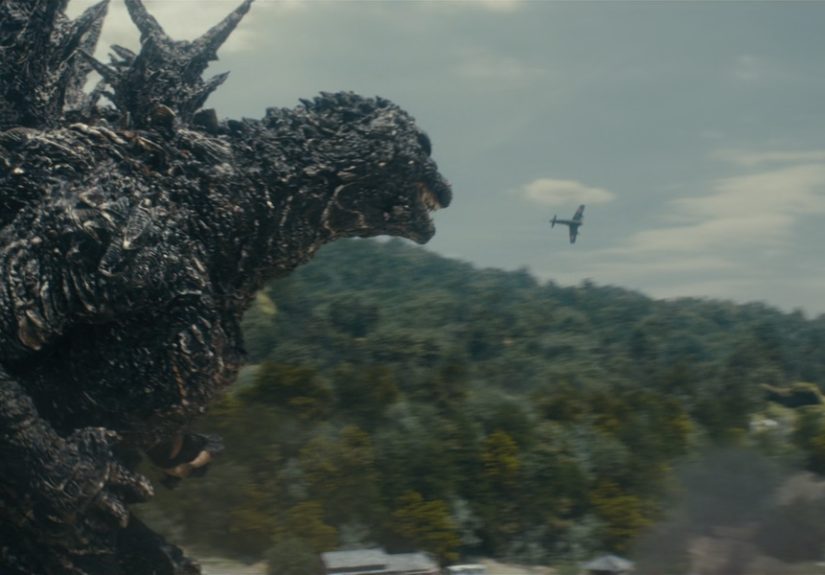
In the film’s final push, the plan to stop Godzilla turns into a two-part gamble: use decommissioned naval ships to drag the monster underwater and weaponize pressurethen keep a brutal backup option ready. That backup option involves a small airplane loaded with explosives aimed straight at Godzilla’s mouth. Not subtle. Extremely effective cinema.
The film hit North American theaters on December 1, 2023 and later landed on Netflix for North American streaming on June 1, 2024. By the time it went streaming, it already had serious bragging rightsincluding the franchise’s first Academy Award win for Best Visual Effects at the 2024 Oscars.
Meet the “Magnificent Lightning”: What the J7W Shinden Actually Was
The Kyushu J7W Shinden was conceived as a land-based, short-range interceptor for the Imperial Japanese Navybuilt for one urgent purpose: get up fast and hit hard against high-altitude American bombers. In plain terms, it was a “B-29 problem” with wings.
Even the Smithsonian’s own description of the Shinden is basically a polite version of “this thing is weird”: it’s famously cited as the only WWII aircraft with a canard configuration that any combatant actually ordered into production. (Orderedyes. Fieldedno.)
Why Japan Needed a B-29 Stopper Yesterday
By 1944–45, the B-29 Superfortress represented a terrifying mix of range, altitude, and payload. From newly built airfields in the Marianas, B-29s could reach Japan reliably, and their operating ceiling pushed many defenders beyond their comfortable limits.
The National WWII Museum’s account of the Tokyo raid era makes the scale and pressure clear: the Marianas put Japan within striking distance, with B-29s designed to fly so high that “most enemy fighters could not reach them,” and early attempts at high-altitude bombing ran into brutal winds and weather.
That strategic reality drove desperate innovation on all sides. On the American end, the B-29 program itself became one of the largest expenditures of the war, and even U.S. commanders joked about how “buggy” the aircraft could be early onhigh-tech, high-stakes, and not always cooperative.
The Weirdest Shape in the Hangar (and Why It Made Sense)
The Shinden’s silhouette is the reason you remember it. Instead of a tailplane in back, it used a canard up frontlittle forewings that help control pitch. The main wings sit farther aft, and the propeller is in back in a pusher layout. It looks like the plane is flying “backwards,” which is exactly how your brain complains when it sees it the first time.
The logic was aerodynamic and tactical. A pusher layout can free up the nose for heavy guns (and potentially cleaner airflow around them), while a canard arrangement can be tuned to make the aircraft less likely to enter a deep, unrecoverable stall. On paper, it was a clever way to build a fast-climbing gun platform optimized for bomber interception.
It also demanded practical compromises. With a propeller behind the pilot, you really don’t want the tail “squatting” during takeoff and turning your prop into a lawnmower. That’s one reason the Shinden was designed with tricycle landing gearnose wheel up front, two mains behindunusual for many WWII fighters but helpful for this layout.
Power, Firepower, and the “Please Don’t Melt” Problem
The Shinden was planned around a powerful Mitsubishi radial engine in the 2,130-horsepower class, driving a six-bladed propeller, with performance projections that looked downright intimidating on a spec sheetaround 470 mph maximum speed in some estimates.
Its intended punch was even more dramatic: four nose-mounted 30 mm cannons, each meant to chew through bomber structure with short bursts, the sort of armament that turns “interceptor” from a job title into a personality trait. Some planned loadouts even imagined light bombs for secondary ground-attack use, because war planners love a “multi-role” label the way toddlers love a new drum set.
But prototype aircraft don’t live on paper. They live on test stands, where reality has a clipboard and a bad attitude. Ground testing exposed overheating and other engineering headaches, and even with careful gear design, keeping that rear prop safely away from the runway was its own adventure.
The Three Flights That Came Too Late
The Shinden’s first flight happened on August 3, 1945just days before Japan’s surrender. Vintage aviation reporting summarizes the tragedy cleanly: promising design, late arrival, and no time to mature into a combat-ready aircraft.
Only two prototypes were completed, and just one survives today. According to later historical coverage, the surviving airframe made its way into U.S. hands after the war, was reassembled, and ultimately was transferred to the Smithsonian in 1960, with components displayed at the Udvar-Hazy Center while other parts remain in storage.
In other words: the Shinden didn’t fail because it was silly. It failed because 1945 ran out of runwaystrategically, industrially, and literally. It’s one of those “could’ve been” aircraft that aviation history is full of: bright ideas trapped inside a collapsing timeline.
So… How Did It “Kill” Godzilla?
Here’s where we separate movie truth from historical truth without ruining the fun. In the real world, the Shinden never fought anything larger than “prototype problems.” In the movie, a WWII-style aircraft becomes a symbol: one damaged pilot, one last run, one desperate attempt to trade guilt for courage.
The Netflix breakdown of the ending frames the final strategy as pressure-based naval tactics plus that aerial “backup plan”: a small plane packed with explosives aimed at Godzilla’s mouth, paired with an ejection-seat choice that turns “suicide mission” into “I choose to live.”
That’s why the Shinden is such a perfect cinematic pick. It’s visually striking, historically plausible for the era, and emotionally loaded: a late-war interceptor that arrived too late to protect anyonereborn as a tool in a story about rebuilding, responsibility, and refusing to die just because the script of history says you should.
What Makes the Shinden a Dream for Historians (and a Nightmare for Mythmakers)
Myth #1: “It was a secret wonder-weapon that would’ve changed the war.”
The Shinden was advanced, yesenough that postwar observers noted it didn’t owe much to foreign copying and stood out among late-war designs. But “advanced” doesn’t mean “ready.” Interceptors need engines that behave, cooling that works, pilots trained on the type, maintenance pipelines, manufacturing that can actually deliver airframes, and fuel to fly them. By August 1945, that entire ecosystem was collapsing.
Myth #2: “It was basically Japan’s answer to jet fighters.”
The Shinden was a piston aircraft, but the broader late-war mindset did include a “what if we retrofit this later” spirit. Still, most nations had lots of “future versions” on paperespecially when the present version wasn’t finished yet. The Shinden’s real legacy isn’t that it became a jet; it’s that it shows how radical solutions show up when conventional options can’t catch up.
Myth #3: “The museum has a pristine, complete fighter ready to roll out.”
Preservation is not the same thing as restoration. Multiple accounts describe the Shinden’s surviving components as displayed and stored in separate pieceskept for their historical value rather than rebuilt into a “like new” showplane. That’s why seeing it is so powerful: you’re not looking at cosplay; you’re looking at evidence.
Why This Story Plays So Well in 2026
“Real WWII fighter kills Godzilla” is an absurd headlineand that’s exactly the point. It’s pop culture using a real artifact to smuggle in real history: air raids, improvisation, trauma, and the way technology gets mythologized when it arrives at the edge of disaster.
The Shinden also scratches a very modern itch: it’s a prototype aircraft with a story you can’t summarize in one sentence. It’s not just “fast” or “pretty.” It’s a design argument made out of aluminum, built under pressure, and frozen in timethen revived by a movie that reminded everyone Godzilla can be scary again.
Conclusion
The Kyushu J7W Shinden didn’t really slay a giant monster in 1945. But it did exist, it was engineered for a terrifying strategic reality, and it did leave behind a surviving footprintone that makes the movie’s finale hit harder because it’s tethered to something real. When fiction borrows an authentic WWII interceptor prototype, it doesn’t just look cool. It drags history onto the screen with itrivets, regrets, and all.
Hands-On Experiences to Make the Shinden-and-Godzilla Story Feel Real
If this whole “WWII fighter vs. Godzilla” rabbit hole grabbed you, you can do more than rewatch the finale and argue online about whether canards are “cheating.” There are a handful of surprisingly satisfying ways to turn the Shinden’s story into a real-world experienceno time machine required, and no need to get stepped on.
1) Go meet the evidence in person (museum day, but make it dramatic).
Aviation history hits differently when you’re standing near the actual artifactor even the surviving sections of it. The Shinden’s story is full of “almost”: almost operational, almost mass-produced, almost a defender of cities being pounded from above. Museums don’t just show you what existed; they show you what survived. Bring a notebook, take your time, and read the placards like they’re plot twists. Pro tip: walk around an exhibit twicefirst for the “wow,” second for the details you missed while your brain was busy yelling, “WHY IS THE PROPELLER BACK THERE?”
2) Watch the movie like an aviation nerd (in a fun way, not a gatekeepy way).
On the first viewing, the Shinden is a cool-looking plane that helps deliver catharsis. On the second viewing, treat it like a character. Notice how the film uses the aircraft as a visual symbol: late-war technology, desperation, and an era where “heroism” was often code for “please don’t come back.” The ending lands because the story reframes a suicidal arc into a survival arcusing an airplane as the emotional lever.
3) Build a scale model (and accidentally learn a semester of aerodynamics).
Modeling a canard pusher-prop fighter is like assembling a puzzle where the picture on the box keeps whispering, “Are you sure?” But that’s the joy: you start to understand the engineering constraints by handling the shape. Where do the guns go? How does the landing gear keep the prop safe? How does the pilot see forward? Even if your final paint job looks like it fought a different waragainst your catbuilding a model makes the Shinden less like trivia and more like a tangible design problem.
4) Take a “B-29 context tour” through reading and exhibits.
The Shinden makes sense only when you grasp what it was trying to stop. Read about the B-29 campaignhow the Marianas put Japan within reach, why high-altitude tactics ran into severe winds, and how strategy shifted over time. Then compare that with the B-29’s technical footprint: range, ceiling, defensive armament, and the sheer industrial scale behind it. Once you understand the threat environment, the Shinden stops being “weird” and starts being “a desperate answer to a desperate question.”
5) Try a flight sim or VR cockpit experience to appreciate what “interceptor” really means.
You don’t need a historically perfect simulator to learn the core feeling: interception is a race against time. It’s not about fancy turns; it’s about climb rate, acceleration, aim, and nerves. Set yourself a mission: take off, gain altitude quickly, line up a high-speed pass, and pretend your target is a bomber you can’t afford to miss. Suddenly, the Shinden’s obsession with nose-mounted firepower and high-altitude performance feels less like “cool design” and more like “this was the only way we thought we could survive.”
6) Host a “history + movie” night that doesn’t turn into a lecture.
Here’s a surprisingly effective format: watch Godzilla Minus One, then spend 20 minutes after the credits on the real history. Keep it light. Pick three facts: (a) the Shinden’s first flight date, (b) why B-29s drove interceptor panic, and (c) where the surviving airframe ended up. The goal isn’t to “well actually” your friendsit’s to make the movie richer on rewatch. Bonus points if someone brings snacks labeled “Magnificent Lightning Fuel” and nobody asks what’s in it.
7) Write your own mini-essay or thread: “What does this plane represent?”
The Shinden’s pop-culture glow-up is a perfect writing prompt. It’s a real artifact used to tell a story about trauma, responsibility, and national recovery. When you treat the aircraft as symbolismnot just hardwareyou see why audiences latched onto it. It’s not only the weird shape. It’s the emotional math: a prototype built for defense, repurposed (in fiction) as a tool for redemption.
If you do even one of these, you’ll start noticing a shift: the Shinden stops being “that funky plane from the movie,” and becomes a doorway into late-war aviation, industrial limits, and the way stories recycle real objects into modern meaning. That’s the sneaky magic of the whole “WWII fighter killed Godzilla” headlinebeneath the joke is a real history lesson, delivered at 470 mph.