Table of Contents >> Show >> Hide
- Who Is Michael Anastassiades?
- What Makes Mobile Chandelier 13 Special?
- Design Language: Minimalism with a Pulse
- Materials: Black Patinated Brass and Mouth-Blown Opaline Glass
- Lighting Performance: Warm, Architectural, and Atmospheric
- Where to Use Mobile Chandelier 13
- How to Style Mobile Chandelier 13
- Buying Considerations Before You Commit
- Care and Maintenance
- Why Designers Love It
- Mobile Chandelier 13 Compared with Traditional Chandeliers
- Experience Notes: Living with Michael Anastassiades – Mobile Chandelier 13
- Conclusion
Some chandeliers enter a room like they own the mortgage. They glitter, they sparkle, they shout, “Look at me!” from the ceiling with the subtlety of a marching band in a powder room. Then there is the Michael Anastassiades Mobile Chandelier 13: quiet, balanced, architectural, and so elegant it seems to understand the room better than the room understands itself.
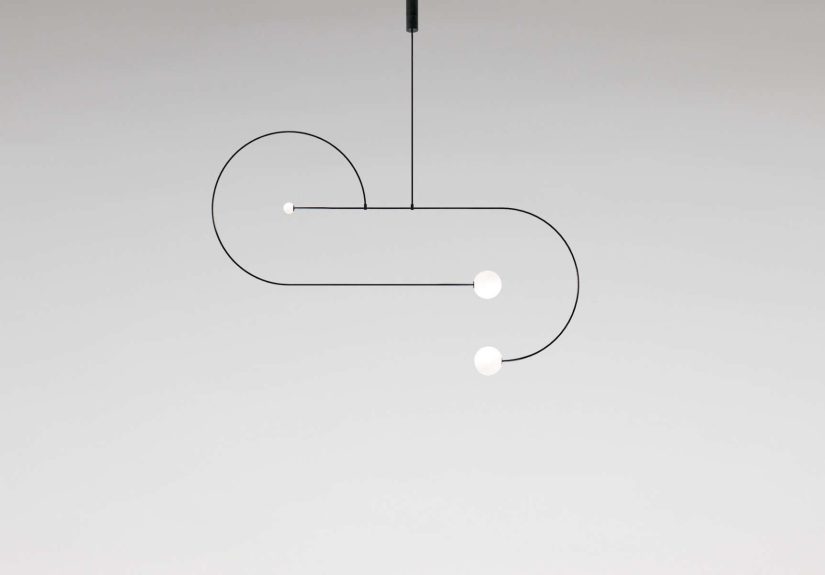
Designed by the London-based Cypriot designer Michael Anastassiades, the Mobile Chandelier 13 is not a traditional chandelier in the crystal-and-candelabra sense. It is a suspended composition of black patinated brass, mouth-blown opaline glass spheres, linear arms, curves, counterweights, and measured silence. It looks less like a light fixture and more like a drawing made in spaceexcept this drawing glows.
First produced in 2017, Mobile Chandelier 13 belongs to Anastassiades’ celebrated Mobile Chandelier family, a series that grew from the designer’s long fascination with balance, geometry, material honesty, and light as a sculptural presence. It is a luxury lighting piece, yes, but it is also a study in restraint. In other words, it is what happens when a chandelier goes to architecture school, studies poetry on the side, and graduates with honors.
Who Is Michael Anastassiades?
Michael Anastassiades is one of the most influential names in contemporary lighting design. Born in Cyprus and based in London, he trained as a civil engineer before earning a master’s degree in industrial design at the Royal College of Art. That background matters. His work often feels like a conversation between engineering precision and artistic intuition: one part mathematics, one part moonlight.
He founded his London studio in 1994 and later established his eponymous brand in 2007 to make his signature lighting, furniture, objects, and design pieces more widely available. His designs are known for clean lines, distilled forms, fine materials, and a kind of emotional minimalism. They are not minimal in the cold, empty sense. They are minimal in the “every millimeter has been invited for a reason” sense.
Anastassiades’ work is held in major cultural collections, including the Museum of Modern Art in New York. He is also widely recognized for his collaborations with brands such as Flos, where collections like IC Lights and String Lights helped bring his poetic lighting language into contemporary interiors around the world. But the Mobile Chandelier series remains especially powerful because it captures so many of his design obsessions in one floating gesture: balance, movement, craft, shadow, proportion, and the mystery of a glowing sphere.
What Makes Mobile Chandelier 13 Special?
The Mobile Chandelier 13 by Michael Anastassiades is a suspended lighting fixture made from black patinated brass and mouth-blown opaline glass spheres. It features a long, branching armature with glowing globes placed in carefully balanced positions. The result is airy but not fragile, sculptural but not decorative in the usual sense, and dramatic without needing to raise its voice.
The word “mobile” is important here. The chandelier draws from the principles of suspended mobiles, where different elements are held in visual and physical equilibrium. The design is associated with movement, but this is not a ceiling fan’s excitable cousin. Once installed and positioned, the fixture is intended to remain stable, with joints adjusted by hand so the composition holds its balance.
In practical terms, Mobile Chandelier 13 is a large-scale statement piece. Product listings typically describe it at roughly 75 inches wide, with a height around 47 inches for the fixture body, plus a custom pendant rod drop. The globes vary in size, commonly listed around 2.4 inches for the smaller sphere and about 6 inches for the larger ones. Its scale makes it best suited for generous rooms: dining spaces, double-height living rooms, galleries, boutique hospitality interiors, and architectural homes where the ceiling is allowed to participate in the design conversation.
Design Language: Minimalism with a Pulse
Minimalist lighting can sometimes feel like it was designed by someone allergic to joy. Mobile Chandelier 13 avoids that trap. It is spare, but it is not sterile. Its black patinated brass gives the piece depth and tactility, while the opaline glass globes soften the geometry. The result is a chandelier that feels both technical and human.
The form is built around contrast: dark metal and glowing white glass, straight rods and rounded globes, engineered balance and visual delicacy. The chandelier occupies space without clogging it. This is a crucial advantage in high-end interiors where the goal is often to create a focal point without blocking views, overwhelming furniture, or making the ceiling look like it is wearing too much jewelry.
There is also a beautiful tension between stillness and potential motion. Even when fixed in place, the chandelier seems capable of shifting. It suggests orbit, pause, gravity, and choreography. In a dining room, it can feel like a constellation hovering over the table. In a gallery-like living room, it reads as a suspended sculpture. In a hotel lobby, it can create instant atmosphere without resorting to the usual “giant shiny thing above reception” routine.
Materials: Black Patinated Brass and Mouth-Blown Opaline Glass
One reason the Michael Anastassiades Mobile Chandelier 13 has such presence is its material palette. Black patinated brass is not merely black metal. Patination gives the surface nuance, depth, and a crafted character. It can look soft, matte, and quietly aged, helping the chandelier feel timeless rather than trendy.
The glass spheres are mouth-blown opaline glass, a material choice that does two things beautifully. First, it diffuses light into a calm, warm glow. Second, because mouth-blown glass naturally varies in tiny ways, each globe carries subtle individuality. This matters in a chandelier based on balance. Each piece must be adjusted with care because even small differences in weight and size affect the final equilibrium.
This is where the design becomes more than an object. It becomes a process. The Mobile Chandelier series is known for its careful hand assembly and balancing. The fixture is not simply stamped out and tossed into a box with the emotional warmth of a toaster manual. It is tuned. It is adjusted. It is persuaded into harmony.
Lighting Performance: Warm, Architectural, and Atmospheric
Mobile Chandelier 13 is not designed to blast a room with harsh light. Its strength is atmosphere. The opaline globes create a diffused glow, often specified around a warm 2700K color temperature in product listings. That warmth matters because it flatters interiors, wood tones, stone, textiles, skin, and dinner guests who have not slept enough but still want to look fabulous.
As a chandelier, it works best as part of a layered lighting plan. In a dining room, Mobile Chandelier 13 can provide the central emotional note while recessed lights, wall washers, or discreet lamps handle broader illumination. In a living room, it can anchor the seating area while floor lamps add task lighting. In a commercial interior, it can define a zone, guide the eye, and create a sense of luxury without shouting “luxury” in capital letters.
Where to Use Mobile Chandelier 13
Dining Rooms
A long dining table is one of the most natural settings for Mobile Chandelier 13. Its horizontal span complements rectangular tables, while the glowing globes create a soft rhythm across the room. The fixture looks especially striking above stone, dark wood, or minimalist dining furniture. Because the rod length is made to order, the drop can be tailored to the ceiling height and table proportions.
Living Rooms
In a living room, the chandelier becomes a sculptural anchor. It works beautifully in spaces with restrained furniture, natural materials, and open sightlines. Place it where it can be seen from multiple angles. This is not the kind of fixture you hide in a corner. That would be like hiring a concert pianist and asking them to play behind a curtain in the laundry room.
Entryways and Stairwells
With sufficient ceiling height, Mobile Chandelier 13 can be spectacular in an entry or stairwell. Its suspended geometry brings elegance to vertical space and creates a memorable first impression. However, because the fixture is wide and visually precise, it needs breathing room. Crowding it with heavy trim, oversized art, or busy wallpaper may dilute its effect.
Hospitality and Gallery Spaces
Hotels, restaurants, private galleries, and high-end retail interiors can use Mobile Chandelier 13 as a signature design moment. It has the benefit of being recognizable to design lovers while still feeling refined to everyone else. It photographs beautifully, but it does not depend on photography to make sense. In person, its scale, finish, and soft glow do the real work.
How to Style Mobile Chandelier 13
The best styling approach is restraint. Mobile Chandelier 13 already brings line, rhythm, curve, glow, and visual tension. The surrounding room should support those qualities rather than compete with them.
Pair it with materials that have quiet richness: travertine, limestone, walnut, oak, plaster, linen, wool, leather, and brushed metal. Avoid overly shiny finishes nearby unless you want the room to feel like it is trying too hard. The chandelier’s black patinated brass already has enough character; it does not need a chorus line of chrome accessories doing jazz hands below it.
Color palettes that work especially well include warm neutrals, soft whites, clay tones, muted greens, deep browns, charcoal, and black accents. The opaline globes stand out beautifully against darker ceilings or plaster walls, while the black brass frame becomes crisp and graphic against pale backgrounds.
Buying Considerations Before You Commit
Mobile Chandelier 13 is a serious design investment, so it should be approached with planning rather than impulse. Before ordering, confirm ceiling height, total drop, room proportions, junction box placement, dimming requirements, and installation needs. The pendant rod length is typically made to order, which is excellent for customization but less excellent if measurements are guessed by someone standing on a chair with a tape measure and heroic confidence.
Professional installation is strongly recommended. This fixture is large, valuable, and designed around precision. A qualified electrician and an experienced installer can help ensure that the chandelier is mounted securely, wired correctly, and positioned as intended. Designers and architects should also confirm whether the project requires a specific voltage configuration, dimming system, or junction box cover solution.
Care and Maintenance
Because Mobile Chandelier 13 uses patinated brass and opaline glass, care should be gentle. Avoid abrasive cleaners, harsh chemicals, and enthusiastic scrubbing. A soft damp cloth and careful handling are usually the safest approach for the glass, while the metal finish should be treated with respect. Think of it less as cleaning a household fixture and more as caring for a functional artwork.
Always turn off power before cleaning. If globes need to be removed, follow manufacturer or installer guidance. The fixture’s beauty comes from balance, so casual disassembly is not a hobby to take up after coffee.
Why Designers Love It
Interior designers are drawn to Mobile Chandelier 13 because it solves a difficult problem: how to create a major focal point without visual heaviness. Many large chandeliers dominate a room through mass. This one dominates through proportion and balance. It is dramatic because of what it removes, not because of what it adds.
It also bridges multiple styles. In a minimalist home, it feels perfectly at ease. In a warm modern interior, it adds refinement. In a historic space, it can create contrast without disrespecting the architecture. In a commercial setting, it communicates taste without looking like a trend that will expire by next Tuesday.
Mobile Chandelier 13 Compared with Traditional Chandeliers
A traditional chandelier often relies on repetition: arms, bulbs, crystals, tiers, and symmetry. Mobile Chandelier 13 relies on asymmetry, balance, and spatial tension. It does not hang like a crown. It hovers like an idea.
This difference changes how the room feels. Traditional chandeliers often emphasize formality. Mobile Chandelier 13 emphasizes atmosphere and architecture. It is less about grandeur and more about presence. It suits people who want luxury, but not the kind that arrives wearing a velvet cape.
Experience Notes: Living with Michael Anastassiades – Mobile Chandelier 13
Spending time with a piece like Mobile Chandelier 13 changes how you think about lighting. At first, you notice the obvious: the long black lines, the glowing glass spheres, the strange and satisfying balance. It has immediate visual impact. Guests look up. Someone says, “Wow.” Someone else asks if it moves. A third person pretends they already knew the designer. This is normal chandelier behavior at the high-design end of the food chain.
But the longer you live with it, the more subtle the experience becomes. In the morning, when daylight enters the room, the chandelier may not even be switched on, yet it still performs. Its black patinated brass reads as a fine line drawing against the air. The opaline globes become quiet white punctuation marks. It gives the ceiling a role without making the room feel decorated to death.
In the evening, everything changes. The glass spheres warm up, shadows soften, and the fixture begins to feel almost celestial. It is not merely illuminating a table or seating area; it is setting a mood. Dinner feels slower. Conversations feel a little more intentional. Even takeout feels upgraded, though sadly the chandelier cannot improve cold fries. Some miracles remain outside the scope of design.
One of the most interesting experiences is viewing the chandelier from different positions. From one angle, it may look perfectly linear and controlled. From another, the curves become more visible. From below, the globes feel like small planets. From across the room, the whole object becomes a graphic silhouette. This ability to change without actually changing is one of the reasons the design remains compelling.
There is also a psychological effect. Mobile Chandelier 13 makes a room feel considered. It suggests that someone cared about proportion, not just price. It works best in interiors where space has been edited thoughtfully. Too much clutter below it can weaken the effect, while calm furniture and natural textures allow the chandelier to breathe. The piece rewards restraint, which is inconvenient for anyone emotionally attached to twelve throw pillows and a decorative bowl collection, but excellent for the room.
For homeowners, the practical experience begins before installation. Measuring the drop is crucial. The chandelier needs to feel connected to the room, not stranded near the ceiling or threatening to shake hands with dinner guests. Over a dining table, the height must allow conversation and sightlines. In a living room, it must relate to seating, circulation, and ceiling volume. In a stairwell, it must be dramatic without becoming an obstacle course for tall relatives.
The installation experience also reinforces that this is not an ordinary fixture. It is a crafted object, and it should be handled like one. The balance, finish, and glass components deserve patience. Once installed properly, however, the reward is daily. The chandelier does not need constant attention. It simply exists with confidence.
Perhaps the best thing about Mobile Chandelier 13 is that it does not feel like a trend piece. It belongs to contemporary design, but it does not chase novelty. Its appeal comes from older, deeper ideas: gravity, balance, craft, geometry, and the emotional power of warm light. Those ideas do not expire. They just keep floating above the table, quietly making everyone in the room look like they have better taste than they probably do.
Conclusion
Michael Anastassiades – Mobile Chandelier 13 is more than a luxury chandelier. It is a suspended composition of engineering, craft, and poetic restraint. With black patinated brass, mouth-blown opaline glass, warm diffused light, and a carefully balanced mobile-inspired structure, it brings sculptural sophistication to interiors that deserve more than ordinary lighting.
For homeowners, designers, architects, and collectors, Mobile Chandelier 13 offers a rare combination: visual drama without excess, minimalism without coldness, and craftsmanship without nostalgia. It is modern, but not trendy. It is functional, but not merely practical. It is the kind of design object that makes a room feel complete while still leaving space for life to happen underneath it.