Table of Contents >> Show >> Hide
- What Is a National Public Seating Stool?
- Why National Public Seating Stools Are Popular
- Popular National Public Seating Stool Types
- How to Choose the Right National Public Seating Stool
- Best Uses for a National Public Seating Stool
- Advantages of National Public Seating Stools
- Possible Drawbacks to Consider
- Buying Tips Before You Order
- Experience Section: What It Is Like to Use a National Public Seating Stool
- Conclusion
- SEO Tags
A good stool rarely gets a standing ovation, mostly because everyone is sitting on it. Still, in classrooms, science labs, art studios, makerspaces, training rooms, cafeterias, and industrial work areas, the right stool can quietly become the MVP of the room. That is where the National Public Seating Stool earns its reputation: it is simple, sturdy, practical, and built for spaces where furniture does not get pampered.
National Public Seating, often shortened to NPS, is known for institutional-grade seating and tables designed for schools, public facilities, offices, churches, labs, event venues, and commercial environments. Its stool lineup is especially popular because it focuses on the things buyers actually care about: durable steel frames, easy-to-clean seats, useful height options, optional backrests, reliable foot rings, and designs that can survive daily use without acting dramatic about it.
This guide breaks down what makes a National Public Seating stool worth considering, which models fit different spaces, how to choose the right height, and what real-life users should know before buying one for a classroom, studio, lab, workshop, or multipurpose room.
What Is a National Public Seating Stool?
A National Public Seating stool is a commercial-grade stool designed for high-use environments. Unlike decorative kitchen stools that look lovely until someone actually uses them, NPS stools are built around function. They are common in science labs, STEM classrooms, art rooms, drafting spaces, home economics rooms, shop classrooms, music rooms, commercial kitchens, offices, and other places where people need flexible seating that is tough, compact, and easy to move.
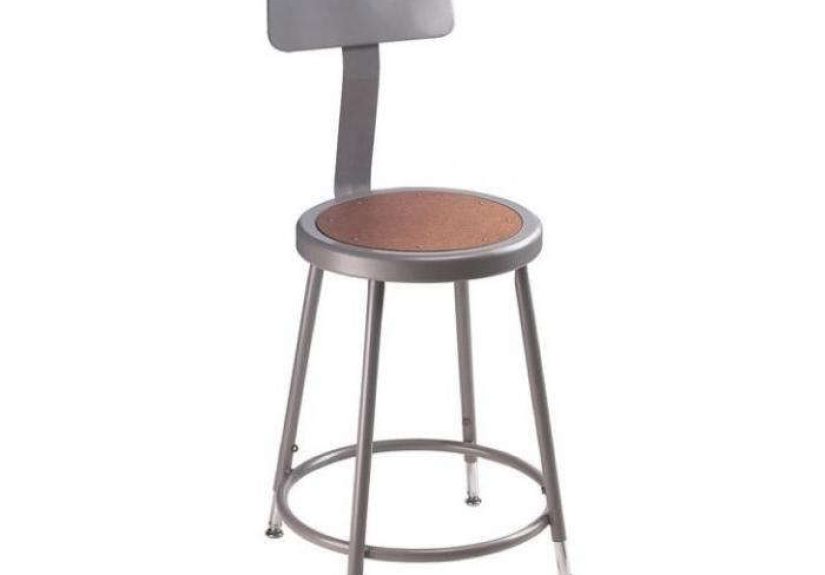
The classic NPS stool is the 6200 Series heavy-duty steel stool. It typically features a round hardboard or Masonite-style seat, a steel frame, a welded foot ring, and fixed or adjustable height options. Other lines add square seats, vinyl padding, designer styling, swivel functions, polypropylene seats, or upholstered comfort. In other words, NPS did not reinvent the stool; it simply made the kind that can survive a room full of teenagers, glue sticks, beakers, laptops, and one mysterious stain no one wants to discuss.
Why National Public Seating Stools Are Popular
They Are Built for Real Daily Use
The biggest reason people search for a National Public Seating Stool is durability. These stools are not designed for quiet corners where furniture goes to retire. They are meant for active rooms where students slide in and out, teachers rearrange layouts, staff stack or move furniture, and surfaces get bumped by backpacks, toolboxes, binders, and lab equipment.
Many NPS steel stools use heavy-gauge tubular steel frames. The popular round lab stool designs are often described with 18-gauge steel tubing and a seat pan that supports a hardboard or Masonite seat insert. This matters because school and institutional furniture has to resist wobbling, bending, and cracking over time. In a classroom, a flimsy stool becomes a distraction. In a lab, it can become a safety problem. With NPS, the design goal is clearly “sit down and get to work,” not “please admire my fragile personality.”
They Fit Many Room Types
Another advantage is flexibility. A National Public Seating lab stool can work under a standard-height science table, beside a workbench, at a counter, or around a demonstration station. Art teachers like stools because students can turn, reach, sketch, and stand back without dragging a full chair around the room. Science teachers like them because they tuck away neatly and leave more room for lab movement. Facilities managers like them because one stool model can often serve multiple rooms.
For office or commercial use, NPS stools also make sense in mailrooms, breakrooms, training areas, makerspaces, technical rooms, retail backrooms, and production areas. They are not pretending to be luxury lounge furniture. They are the seating equivalent of a dependable pickup truck: maybe not flashy, but it shows up every day and does the job.
Popular National Public Seating Stool Types
6200 Series Round Hardboard Lab Stool
The 6200 Series is one of the best-known NPS stool lines. It is commonly used in school labs, art classrooms, STEM rooms, home economics spaces, and shop areas. The classic version has a round hardboard or Masonite-style seat and a steel frame. Many versions are available in fixed heights, such as 18-inch, 24-inch, and 30-inch models, along with adjustable-height versions for more flexible spaces.
This is the stool people picture when they think of a traditional science lab stool: round seat, metal frame, foot ring, no nonsense. It does not ask for compliments. It simply waits under the table until someone needs it.
6300 Series Square Seat Stool
The 6300 Series offers a square-seat alternative. A square seat can feel a little more stable to some users and may suit classrooms where students spend longer periods sitting. Like the round version, this type is designed for heavy use and is often found in science, art, vocational, and technical settings. Some models include optional backrests for added support.
The square seat also gives the stool a slightly more “workstation” feel. If the round stool is the classic lab partner, the square stool is the practical friend who brought a clipboard and extra pencils.
6400 Series Padded Stool
The 6400 Series is a smart choice when comfort matters more. These padded stools usually include a vinyl-covered seat, which can be helpful in art rooms, medical training rooms, drafting areas, and classrooms where users sit for longer sessions. Vinyl padding gives students or staff a softer surface while still being easier to clean than fabric upholstery.
A padded NPS stool can be a good middle ground: more comfortable than a hardboard stool, but still practical enough for high-traffic environments. For rooms where people sit for more than a quick lab demonstration, padding is not a luxury; it is a peace treaty between the furniture budget and everyone’s backside.
6800 Series Designer Stool
The 6800 Series brings a more contemporary look to the NPS stool family. It is often marketed for labs, classrooms, and institutional spaces that want a more modern design. Depending on the configuration, users may find curved steel legs, swivel functions, and padded or styled seat options. This is the stool for spaces that still need durability but do not want the room to look like it was designed during a fire drill in 1987.
For upgraded STEM labs, modern art studios, flexible learning spaces, and collaborative classrooms, the 6800 Series can offer a more polished appearance while keeping the practical DNA of National Public Seating furniture.
How to Choose the Right National Public Seating Stool
Start with Seat Height
Seat height is the first thing to consider. A great stool at the wrong height is just a very confident mistake. For standard classroom or lab tables around 30 inches high, an 18-inch stool is usually the most common match. For counter-height surfaces, a 24-inch stool often makes more sense. For taller workbenches, demonstration counters, or drafting-style work surfaces, a 30-inch stool may be the better fit.
If your room includes tables of different heights, adjustable-height stools can reduce the headache. Adjustable models are especially useful in art rooms, maker labs, and multi-age learning spaces. They also help if the same furniture moves between rooms throughout the year.
Decide Between Fixed and Adjustable Height
Fixed-height stools are simple, stable, and usually more budget-friendly. They are ideal when all tables in the room are the same height. Adjustable-height stools are better for mixed-use spaces, shared studios, or labs where people of different sizes use the same workstations.
The tradeoff is straightforward. Fixed stools are easier to manage and have fewer moving parts. Adjustable stools offer more flexibility but may cost more and require users to set the height correctly. In a room full of students, “correctly” can sometimes mean “close enough, please stop spinning that.”
Choose the Right Seat Material
Hardboard or Masonite-style seats are common on traditional NPS lab stools. They are firm, durable, and easy to wipe down. They are well suited for science labs, art rooms, and shop settings where spills, dust, or residue may happen.
Vinyl padded seats are more comfortable and still relatively easy to clean. They are better for longer sitting periods, teacher stations, administrative work areas, or training rooms. Polypropylene or steel seat options may be found in some modern or specialty models and can be useful when the priority is moisture resistance, quick cleaning, or a more contemporary look.
Think About Backrests
Many National Public Seating stools are available with or without backrests. Backless stools save space, tuck neatly under tables, and encourage quick movement. They are excellent for labs and art rooms where users frequently sit, stand, and move around.
Stools with backrests offer more support, which can matter during longer classes or work sessions. If students are expected to sit for extended periods, backrests may help comfort and posture. If the space is tight, however, backrests can make the stools harder to store neatly. The best choice depends on whether the room needs maximum flexibility or longer-session comfort.
Best Uses for a National Public Seating Stool
Science Labs and STEM Classrooms
Science labs are the natural habitat of the National Public Seating science lab stool. The stools are compact, easy to clean, and designed for workstations where students need to face experiments, notes, screens, or partners. A backless 18-inch or 24-inch stool can fit neatly under lab tables and keep walkways clearer.
For STEM classrooms, adjustable stools are especially useful. One day the room may host robotics, the next day engineering models, and by Friday someone is building a bridge out of craft sticks and optimism. Flexible seating makes those shifts easier.
Art Rooms and Studios
In an art room, seating needs to be movable, durable, and forgiving. Paint happens. Clay happens. Glitter happens, and then continues happening for approximately seven years. Hardboard and vinyl seat options are practical because they can be wiped down more easily than fabric chairs.
Backless stools also let students turn toward easels, tables, supply carts, or demonstration areas. For drawing, painting, ceramics, and mixed media work, the stool’s compact footprint gives the room more usable space.
Workshops and Makerspaces
A makerspace needs furniture that can handle energy. Students or staff might be soldering, measuring, assembling, coding, cutting cardboard, testing prototypes, or arguing with a 3D printer that has chosen chaos. NPS stools work well because they are sturdy, space-saving, and practical around workbenches.
For taller benches, 24-inch or 30-inch stools may be appropriate. Adjustable stools are worth considering when the same space serves multiple projects or age groups.
Commercial and Institutional Spaces
National Public Seating stools are not only for schools. They can also fit churches, event venues, training centers, laboratories, commercial kitchens, warehouses, offices, healthcare training areas, and public facilities. Their institutional look may not be right for a formal dining room, but in practical environments, they make a lot of sense.
When the furniture will be used by many people rather than one careful owner, durability becomes more important than delicate design. NPS stools understand the assignment.
Advantages of National Public Seating Stools
Space Efficiency
Stools take up less visual and physical space than standard chairs. Backless models can slide under tables, making rooms easier to clean and rearrange. This is especially valuable in schools, where one room may need to transform from lecture mode to lab mode to group-work mode before lunch.
Durability and Long-Term Value
Commercial-grade stools may cost more than bargain furniture, but they are often better long-term purchases. Replacing cheap stools every year can become more expensive than buying sturdier seating once. NPS stools are widely used because they are designed with repeated public use in mind.
Simple Maintenance
Most NPS stools are easy to maintain. Hard seats can be wiped clean, steel frames resist everyday wear, and the lack of complicated upholstery helps reduce cleaning concerns. For schools and facilities, easy maintenance is not a minor feature. It is the difference between “quick reset” and “why is this chair sticky?”
Multiple Configurations
With fixed-height, adjustable-height, padded, hardboard, round, square, backless, and backrest options, National Public Seating gives buyers plenty of choices. This makes it easier to match stools to actual room needs rather than forcing one style into every environment.
Possible Drawbacks to Consider
No product is perfect, and National Public Seating stools are no exception. Hardboard seats are durable, but they are not plush. For long sitting periods, users may prefer padded stools or models with backrests. Backless stools are space-efficient, but they do not provide lumbar support. Adjustable stools are flexible, but they may require occasional checking to ensure settings remain secure.
The institutional look may also be too plain for certain design-focused interiors. A classic NPS lab stool looks right at home in a science room, but it may not be the first choice for a boutique café that serves espresso in cups smaller than your patience. For design-heavy spaces, the 6800 Series or café-style NPS options may be more visually appealing.
Buying Tips Before You Order
Measure the Table or Counter First
Before choosing a stool, measure the work surface height. Do not guess. Furniture guesses have a way of turning into return labels. Make sure users will have enough legroom and that the stool height allows comfortable writing, drawing, typing, or lab work.
Check Weight Capacity and Certifications
For schools and public facilities, look for information about weight capacity, ANSI/BIFMA compliance, MAS Certified Green status, and warranty coverage. These details help confirm that the stool is suitable for institutional use. Requirements vary by organization, so buyers should match product specs to district, facility, or purchasing standards.
Plan for Quantity and Storage
Think about how many stools the room needs, where they will go when not in use, and whether backrests will affect storage. Backless stools are easier to tuck under tables. Stools with backrests provide more support but take up more space.
Choose Comfort Based on Session Length
If students or staff sit for short activities, hardboard seats may be perfectly fine. If they sit for full class periods, padded seats or backrests may be worth the upgrade. Comfort affects attention, and attention affects everything else. Nobody does their best thinking while silently negotiating with an uncomfortable stool.
Experience Section: What It Is Like to Use a National Public Seating Stool
Using a National Public Seating stool is a refreshingly practical experience. It is not trying to impress you with unnecessary levers, dramatic curves, or a marketing name that sounds like a spaceship. It is a stool. You sit on it. It holds you. It does not make a fuss. In classrooms and labs, that simplicity is part of the appeal.
In a science room, the stool feels especially appropriate. Students can slide it under the bench, pull it out quickly, and move between sitting and standing without wrestling with chair arms. During a lab activity, that matters. A bulky chair can block movement, catch on table legs, or turn a crowded lab into a furniture obstacle course. A compact NPS stool keeps the room more open and allows students to face their work instead of constantly adjusting their seating.
In an art room, the experience is different but equally useful. A backless stool gives the user freedom to rotate toward a canvas, table, supply shelf, or teacher demonstration. The firm seat encourages an upright posture for drawing or painting, and the steel frame gives the stool a grounded feeling. It is not luxurious, but art rooms are rarely looking for luxury. They need furniture that can survive charcoal dust, wet brushes, dried glue, and the occasional student who believes every object is also a drum.
For teachers and facility managers, the best part may be how little attention these stools require. They are easy to line up, easy to move, and easy to clean. When a room must reset quickly between classes, furniture that behaves itself is a blessing. The foot ring also makes a noticeable difference. Without a place to rest the feet, taller stools can become uncomfortable quickly. With the ring, users have better support and less dangling-leg awkwardness.
The main comfort lesson is simple: match the stool to the time spent sitting. A hardboard seat is excellent for active rooms where people sit briefly and move often. For longer work sessions, a padded NPS stool feels more forgiving. If the stool will be used by adults for administrative work, long demonstrations, or extended studio sessions, a backrest may also be worth considering.
Another real-world observation is that stool height can make or break the experience. An 18-inch stool at a standard table feels natural. A 24-inch stool at a counter feels useful. A 30-inch stool at the wrong table feels like you accidentally joined a circus act. Measuring first prevents frustration later.
Overall, the National Public Seating stool experience is dependable, practical, and pleasantly unglamorous. It is the kind of furniture you appreciate more after months of use than on the first day. It does not need to be the star of the room. It just needs to support learning, work, creativity, and the occasional person who says, “I’ll only sit for a second,” then stays there for an entire project.
Conclusion
The National Public Seating Stool is a smart choice for schools, labs, studios, makerspaces, offices, and commercial environments that need durable, practical, easy-to-maintain seating. From the classic 6200 Series round hardboard lab stool to padded, square-seat, adjustable, and designer options, NPS offers enough variety to fit many room types and budgets.
The key is choosing the right configuration. Match the seat height to the work surface, decide whether users need padding or back support, consider how the stools will be stored, and prioritize durability for high-traffic spaces. When chosen correctly, an NPS stool can serve for years as quiet, reliable seating that supports daily work without demanding attention.
It may not be glamorous, but it is dependable. And in a busy classroom or lab, dependable furniture is worth its weight in dry-erase markers.