Table of Contents >> Show >> Hide
- What Is a Repurposed Junk Love Sign?
- Why Repurposed Décor Is Having a Moment
- Materials You Can Use for a Junk Love Sign
- How to Make a Repurposed Junk Love Sign
- Design Ideas for Different Styles
- Where to Find Junk Worth Repurposing
- Practical Tips for a Better Finished Sign
- Common Mistakes to Avoid
- How to Style a Repurposed Junk Love Sign at Home
- Why This Project Makes a Meaningful Gift
- Experience Notes: What Making a Repurposed Junk Love Sign Teaches You
- Conclusion
Some home décor arrives in a box with assembly instructions, foam corners, and a tiny Allen wrench that immediately rolls under the sofa. Other décor begins life as a forgotten drawer pull, a bent key, a scrap of trim, a rusty washer, or a piece of sheet music that has been waiting patiently for its second act. A repurposed junk love sign belongs proudly in the second category. It is part wall art, part memory keeper, part budget-friendly craft, and part proof that the “junk drawer” may have been an art supply cabinet all along.
The beauty of this project is not perfection. In fact, perfection would be a little suspicious here. A love sign made from repurposed junk works because it has texture, age, character, and a story. The little dents, mismatched finishes, chipped paint, tarnished metal, and oddball pieces are the whole point. Instead of buying a shiny mass-produced sign that looks like it has never had an interesting thought, you create a one-of-a-kind piece that feels warm, personal, and delightfully human.
Whether you are decorating for Valentine’s Day, updating a farmhouse wall, styling a cozy bedroom, adding charm to a gallery wall, or making a handmade gift, this kind of upcycled love sign gives old materials a meaningful new purpose. It is affordable, eco-conscious, flexible, and surprisingly forgiving. If a piece looks crooked, call it rustic. If the colors do not match, call it eclectic. If someone asks where you bought it, smile mysteriously and say, “Oh, this old thing? I made it from junk.”
What Is a Repurposed Junk Love Sign?
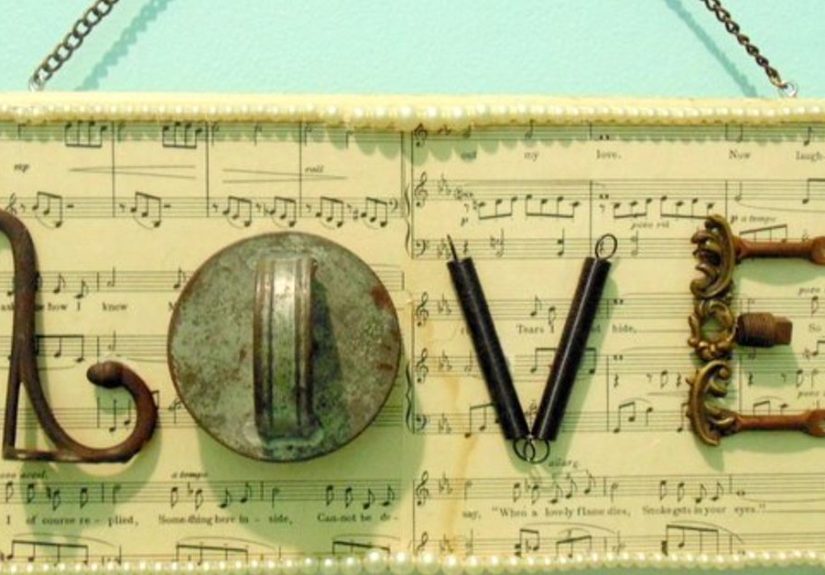
A repurposed junk love sign is a decorative sign that spells or represents the word “LOVE” using salvaged, thrifted, recycled, or forgotten materials. The base might be an old wooden board, a discarded cabinet door, a thrift store plaque, a scrap of barn wood, a picture frame, or even a piece of metal. The letters can be painted, stenciled, collaged, or assembled from found objects such as keys, buttons, hinges, bottle caps, drawer pulls, washers, vintage jewelry, clock parts, game pieces, or bits of hardware.
At its simplest, the project can be a wooden sign covered with paper and decorated with junky letters. At its most elaborate, it can become mixed-media wall art with layers of paint, typography, metal, fabric, music pages, lace, trim, and meaningful keepsakes. The style can lean farmhouse, cottagecore, industrial, bohemian, romantic, shabby chic, vintage, modern rustic, or “my garage had a very emotional cleanout.”
The Heart of the Project: Creative Reuse
The idea behind the sign is creative reuse: taking something that might otherwise be tossed and giving it a new function. In home décor, upcycling often works best when the original material still shows a bit of its past. Old wood adds warmth. A vintage hinge brings history. Sheet music adds softness and rhythm. A rusty washer suddenly looks charming when it becomes the “O” in LOVE. This is the magic of repurposed décor: context changes everything.
Why Repurposed Décor Is Having a Moment
Repurposed home décor has become popular for several good reasons. First, it helps reduce waste by extending the life of objects that still have decorative or practical value. Second, it is budget-friendly, especially if you already have supplies hiding in drawers, toolboxes, closets, or that mysterious bin in the garage labeled “miscellaneous.” Third, it creates homes that feel more personal and less like a showroom where nobody is allowed to sit.
Design trends also keep moving toward pieces with character. People want rooms that feel collected, not copied. A repurposed junk love sign fits beautifully into that shift because it combines sustainability with storytelling. Instead of simply hanging a word on the wall, you are building the word from fragments of real life.
It Is Sustainable Without Being Boring
Sustainable decorating sometimes gets unfairly imagined as beige, serious, and slightly judgmental. A junk love sign proves otherwise. It is playful. It is colorful if you want it to be. It can be romantic, funny, sentimental, or wonderfully weird. Best of all, it uses materials you may already own. Reusing a cabinet door, old sign, scrap lumber, or thrifted frame keeps useful materials in circulation and reduces the need to buy something new.
It Makes Handmade Gifts Feel Personal
A handmade love sign is also a thoughtful gift. You can customize it for a wedding, anniversary, housewarming, nursery, craft room, or Valentine’s Day present. Add music from a couple’s favorite song, use keys from an old home, include buttons from a family sewing tin, or choose colors that match the recipient’s space. The result feels far more meaningful than a generic store-bought sign because the materials carry a little emotional weight.
Materials You Can Use for a Junk Love Sign
The best part of this project is that there is no single required supply list. The materials depend on what you already have, what you can thrift, and what mood you want the finished piece to have. Think of the following list as a treasure map rather than a shopping list.
Possible Sign Bases
Start with a sturdy foundation. Good options include reclaimed wood boards, old cabinet doors, thrifted wall plaques, drawer fronts, picture frames, pallet wood, wood trays, fence pickets, cutting boards, canvas panels, or metal signs. If the base already has an outdated stencil or design, even better. You can paint over it, collage it, sand it back, or let a little of the old pattern peek through for extra texture.
Found Objects for Letters
Look for objects with strong shapes. A horseshoe, washer, embroidery hoop, round brooch, or small wreath can become the “O.” Old rulers, keys, hinges, handles, and trim scraps can form straight letters like “L,” “V,” and “E.” Buttons, beads, broken jewelry, bottle caps, dominoes, Scrabble tiles, small gears, and drawer pulls can add personality. The trick is to gather more pieces than you think you need, then audition them like tiny actors competing for a role in a romantic comedy.
Surface and Background Materials
For the background, consider vintage sheet music, book pages, wrapping paper, scrapbook paper, maps, fabric scraps, lace, burlap, wallpaper remnants, paint, stain, or decoupage. Sheet music is especially lovely because it adds a romantic, nostalgic layer without shouting for attention. Book pages create a literary look. Maps are perfect for a travel-loving couple. Fabric softens the design and works well in cottage or shabby chic rooms.
How to Make a Repurposed Junk Love Sign
There are many ways to build this sign, but the following method gives you a flexible, beginner-friendly process. It is simple enough for a weekend craft session and creative enough to make the finished piece feel special.
Step 1: Choose and Prepare the Base
Select a base that feels solid and appropriately sized for the wall, shelf, or mantel where the sign will live. Wipe away dust and grime. If the surface is glossy, lightly sand it so paint or glue can grip. If the wood is rough, sand only enough to prevent splinters while preserving character. A few scuffs and marks are welcome; nobody invited a sterile conference table to this party.
If the base has an old design, decide whether to cover it completely or use it as part of the layered look. A faded border, worn paint, or ghosted lettering can make the finished sign feel richer and more authentic.
Step 2: Create the Background
Paint the base, stain it, or cover it with paper or fabric. For a romantic vintage look, apply sheet music or book pages with decoupage medium. Place the paper where you want it, press along the edges to mark the size, trim it, and adhere it smoothly. Do not panic over tiny wrinkles. In mixed-media projects, small wrinkles often look like intentional texture, which is craft language for “the glue had opinions.”
For a cleaner farmhouse style, paint the base white, cream, charcoal, soft gray, dusty blue, or muted green. Then distress the edges with sandpaper after the paint dries. For an industrial version, leave wood raw and use metal pieces for the letters.
Step 3: Plan the Word “LOVE”
Before gluing anything down, arrange your letters. Try different combinations of objects. Maybe a key becomes the “L,” a washer becomes the “O,” two rulers form the “V,” and old house numbers become part of the “E.” You can mix found-object letters with painted or stenciled letters if that looks better. The goal is balance, not strict matching.
Take a quick photo of your layout before moving anything. This tiny step saves future you from standing over the table muttering, “Wait, where did the cute rusty thing go?”
Step 4: Attach the Pieces Securely
Use the right adhesive for your materials. Hot glue can work for lightweight pieces, but stronger craft glue, wood glue, small nails, screws, or construction adhesive may be better for heavier metal objects. If the sign will hang on a wall, make sure everything is firmly attached. Romance is lovely; falling hardware is less lovely.
For added dimension, layer pieces. A small button on top of a metal washer, a bit of lace under a key, or a painted wooden letter behind a vintage knob can make the sign more interesting. Keep stepping back to view the whole piece. Close-up crafting can trick your eyes into obsessing over one corner while the rest of the sign quietly becomes fabulous.
Step 5: Add Finishing Details
Once the letters are attached, add final touches. Dry-brush paint over raised areas, add a border, stencil small hearts, attach a ribbon hanger, or seal the surface with a clear protective finish. If the sign includes paper, a light sealant can help protect it from dust and handling. For a rustic display, attach sawtooth hardware or a wire hanger to the back.
Design Ideas for Different Styles
A repurposed junk love sign can fit almost any design style. The materials, color palette, and spacing determine the mood.
Farmhouse Love Sign
Use a whitewashed board, black or galvanized metal letters, burlap ribbon, and a simple layout. Add a small wreath or metal ring for the “O.” Keep the color palette neutral and the edges distressed. This version works well in entryways, kitchens, mudrooms, and above a mantel.
Vintage Romantic Love Sign
Start with sheet music, old book pages, lace, pearls, buttons, and faded pink or cream paint. Use a brooch, embroidery hoop, or paper flower for the “O.” This style is perfect for bedrooms, wedding displays, craft rooms, or Valentine’s Day décor that does not look like it was attacked by a glitter cannon.
Industrial Junk Love Sign
Use reclaimed wood, dark stain, metal gears, washers, hinges, screws, and salvaged hardware. Keep the background simple so the metal pieces stand out. This version looks great in lofts, workshops, home offices, and masculine rustic spaces.
Colorful Eclectic Love Sign
Paint the base in a bold color and use mismatched objects for every letter. Add bottle caps, game tiles, vintage toy pieces, beads, and painted scraps. This approach is cheerful, casual, and great for kids’ rooms, playrooms, art studios, or anyone whose decorating philosophy is “more personality, please.”
Where to Find Junk Worth Repurposing
You probably already own more usable materials than you think. Start at home before buying anything. Check junk drawers, toolboxes, sewing kits, craft bins, broken jewelry boxes, old picture frames, leftover renovation materials, and the garage. Look for items with interesting shapes, textures, or sentimental value.
Thrift stores, flea markets, estate sales, architectural salvage shops, Habitat ReStores, yard sales, and online local marketplaces can also be excellent sources. Focus on small, inexpensive objects: drawer pulls, hinges, knobs, frames, trays, old signs, cabinet doors, and hardware lots. Sometimes the best piece is the thing nobody else wants because they cannot imagine what it could become. That is where your imagination gets to strut in wearing a tiny cape.
Practical Tips for a Better Finished Sign
Good junk art still benefits from a little planning. First, choose a clear focal point. If every object is loud, the sign may feel chaotic. Let one or two pieces shine and allow the rest to support the design. Second, repeat at least one element, such as color, metal finish, shape, or material. Repetition makes mismatched items feel intentional.
Third, consider scale. Tiny objects can disappear on a large board, while bulky items may overwhelm a small plaque. Fourth, test your layout vertically if the sign will hang vertically. Gravity changes how some objects look, especially dangling pieces. Finally, make sure the back is wall-safe. Add felt pads if the sign has screws or hardware that could scratch paint.
Common Mistakes to Avoid
The most common mistake is using too many pieces. It is tempting to attach every charming washer, button, and key in your collection, but restraint helps the word read clearly. Another mistake is skipping surface prep. Dust, grease, and glossy finishes can weaken adhesion. Clean and lightly sand when needed.
Also, be careful with weight. Heavy objects need strong attachment methods. If you are using old metal, check for sharp edges and file them smooth. If you are repurposing very old painted materials, avoid sanding unknown paint indoors, especially if there is any chance it could contain lead. When in doubt, seal rather than sand, work safely, and keep the project suitable for its intended location.
How to Style a Repurposed Junk Love Sign at Home
A love sign does not have to be limited to Valentine’s Day. It can be displayed year-round if the design fits your home. Place it on a mantel with candles and greenery, lean it on a shelf beside framed photos, hang it in a bedroom, add it to a gallery wall, or place it near an entryway as a warm welcome. Smaller versions work beautifully on tiered trays, bookcases, or bedside tables.
For seasonal styling, pair it with fresh flowers in spring, seashells in summer, dried leaves in fall, or evergreen branches in winter. A neutral sign can shift easily from season to season. A colorful sign can become the cheerful accent that makes a room feel less like it is taking itself too seriously.
Why This Project Makes a Meaningful Gift
A repurposed junk love sign is a strong gift because it can be personalized without being expensive. For newlyweds, use a piece of map from a meaningful place or sheet music from a first-dance song. For parents, include buttons from old clothing or small objects connected to family memories. For a friend, use colors and textures that match their home.
Handmade gifts are memorable when they feel specific. The word “LOVE” is universal, but the materials can make it personal. That combination gives the sign emotional staying power. It says, “I made this for you,” not “I panic-bought this near the checkout line.”
Experience Notes: What Making a Repurposed Junk Love Sign Teaches You
One of the best experiences related to making a repurposed junk love sign is the shift in how you see ordinary objects. Before the project, a bent spoon is a bent spoon. After the project, it is a possible letter, a decorative flourish, or the start of a future masterpiece. The same thing happens with keys, knobs, buttons, broken frames, and little metal bits that used to look like clutter. Suddenly, your eyes become trained to notice shape, patina, balance, and possibility.
The first lesson is that creativity often begins with limitation. When you decide to work with what you have, you stop chasing perfect supplies and start solving visual puzzles. Maybe you do not have a wooden “O,” but you do have a rusty curtain ring. Maybe the board is too dark, so you add pale paper. Maybe the letters look flat, so you layer metal over fabric. The project becomes a conversation between your idea and your materials, and sometimes the materials have better ideas than you do.
The second lesson is patience. Laying out found objects can take longer than expected. You move a key half an inch to the left, swap a washer for a button, try a hinge upside down, and then realize the first version was better. This is normal. The design process is not wasted time; it is where the sign gains personality. Taking a photo of each layout helps you compare options without relying on memory, which is useful because craft tables have a way of becoming tiny weather systems.
The third lesson is that imperfections make the piece warmer. A store-bought sign often tries to look flawless, but a handmade junk sign looks alive because it carries marks of use. A scratched key, a chipped board, or a faded music page can make the finished sign feel more authentic. The trick is to distinguish charming wear from distracting damage. A little rust can be beautiful; a jagged edge that catches fabric is less charming and should be smoothed.
The fourth lesson is emotional. Repurposed projects can turn forgotten objects into reminders of people, places, and seasons of life. A button from a grandmother’s sewing box, a knob from a childhood dresser, or a scrap of wood from a first apartment can become part of a sign that means more than décor. The word “LOVE” becomes literal and material at the same time. It is not just painted on; it is built from pieces that have lived.
The final lesson is confidence. Once you make one repurposed junk love sign, it becomes easier to imagine other projects. A cabinet door can become a message board. A drawer front can become a shelf. A frame can become a jewelry organizer. The project teaches you to trust your eye and enjoy the process. And if the final piece is a little quirky? Good. Quirky is often where the charm lives.
Conclusion
A repurposed junk love sign is more than a cute DIY project. It is a small act of creativity, sustainability, and personal storytelling. By combining salvaged materials, old hardware, thrifted finds, paper, paint, and imagination, you can create wall art that feels original and meaningful. The project is affordable, flexible, beginner-friendly, and endlessly customizable. It can be rustic, romantic, industrial, colorful, sentimental, or funny. Most importantly, it proves that beautiful décor does not always begin in a store. Sometimes it begins in a junk drawer, waiting for someone to notice that love was hiding there all along.