Table of Contents >> Show >> Hide
- What Does “De-Crufting” a Hydroelectric Generator Mean?
- Why Micro-Hydropower Is Still a Big Deal
- How a Small Hydroelectric Generator Works
- The Rural Hacker Mindset: Repair Before Replace
- Inside the Rebuild: From Rust Bucket to Renewable Workhorse
- Why Old Hydroelectric Equipment Is Worth Saving
- Real-World Challenges: Water, Weather, and Paperwork
- Safety: The Part That Keeps the Story Funny
- What This Rebuild Teaches About Renewable Energy
- Examples of Practical Uses for a Rebuilt Micro-Hydro Generator
- The Beauty of Simple Tools
- Field Experience: Lessons From Rebuilding a Rural Hydroelectric Generator
- Conclusion
There are two kinds of people in the world: those who see a rusty hydroelectric generator and say, “That belongs in the scrap pile,” and those who squint at it, grab an angle grinder, and say, “Give me a weekend.” The story behind a rural hacker de-crufting and rebuilding a hydroelectric generator sits firmly in the second camp. It is part repair adventure, part renewable energy lesson, and part love letter to the kind of hands-on problem solving that keeps farms, workshops, villages, and off-grid homes running when the nearest service technician is three valleys away.
At first glance, the machine looks like something dragged from a creek after losing a long argument with mud, rust, and neglect. But beneath the grime is a simple, brilliant idea: flowing water spins a turbine, the turbine spins a generator, and the generator turns motion into usable electricity. That is hydropower in its most charmingly stubborn form. No glossy showroom. No touchscreen app. Just water, metal, copper windings, magnets, bearings, patience, and the occasional shower of sparks.
This article explores what makes a rural hydroelectric generator rebuild so fascinating, how micro-hydropower systems work, why “de-crufting” matters, and what everyday makers can learn from a project that proves renewable energy does not always arrive in a neat cardboard box with foam inserts.
What Does “De-Crufting” a Hydroelectric Generator Mean?
“Cruft” is the affectionate hacker word for the ugly accumulation of old mistakes, grime, unused parts, broken assumptions, and mechanical nonsense that builds up over time. In a hydroelectric generator, cruft can be literal: rust, silt, corroded fasteners, burnt coils, cracked insulation, seized bearings, mineral deposits, mystery sludge, and the kind of wiring that makes electricians stare silently into the middle distance.
To de-cruft a hydroelectric generator is to strip away everything that prevents the machine from doing its job. That means cleaning the housing, removing damaged windings, inspecting the turbine runner, replacing worn bearings, fabricating missing brackets, rewinding copper coils, aligning rotating parts, sealing vulnerable surfaces, and testing output before putting the machine back near water. In other words, it is less like fixing a lamp and more like performing surgery on a small mechanical dragon.
The most impressive part is not that the generator can be rebuilt. Machines are built to be repaired, at least in a more sensible universe. The impressive part is doing it with limited tools, local materials, and enough improvisation to make a hardware store manager nervous.
Why Micro-Hydropower Is Still a Big Deal
Hydropower is one of the oldest renewable energy sources humans have used. Long before electrical grids, people used water wheels to mill grain, saw timber, and power small workshops. Modern hydropower follows the same basic principle: capture the energy of moving water and convert it into mechanical rotation, then electricity.
Large hydroelectric dams get most of the attention because they are dramatic, expensive, and excellent at appearing in documentaries with swelling orchestral music. But micro-hydropower is often more interesting at the human scale. A small system on a farm, mountain property, irrigation channel, or rural homestead may generate enough electricity for lights, refrigeration, tools, battery charging, or even an entire home depending on site conditions.
Unlike solar panels, which sleep at night like sensible creatures, a well-sited micro-hydro system can generate power day and night as long as water keeps flowing. Unlike wind turbines, it does not care whether the breeze has decided to take a personal day. This steady output is why micro-hydropower has such an enduring appeal in rural places where reliability matters more than trendiness.
How a Small Hydroelectric Generator Works
A basic micro-hydropower setup has five main parts: water conveyance, a turbine or waterwheel, a generator or alternator, a controller or regulator, and wiring to carry electricity where it is needed. The water conveyance system may be a channel, pipe, flume, or penstock. The turbine converts water energy into spinning motion. The generator converts that rotation into electricity. The controller keeps voltage and load under control, because electricity behaves better when supervised.
Head and Flow: The Two Magic Words
Every small hydro project begins with two questions: how far does the water fall, and how much water flows? The vertical drop is called “head.” The quantity of water moving through the system is called “flow.” More head and more flow generally mean more available power. A skinny mountain stream with a steep drop may outperform a wide, lazy creek that barely descends. Water has a sense of humor that way.
A common rough estimate for micro-hydro output is based on net head and flow after accounting for real-world losses from pipe friction, turbulence, and imperfect equipment. The simplified idea is easy to grasp: falling water contains potential energy, and the machine’s job is to lose as little of that energy as possible while turning it into electricity.
Turbines: Pelton, Turgo, Crossflow, and Friends
The turbine type depends on the site. High-head, low-flow systems often use impulse turbines such as Pelton wheels or Turgo wheels. These use high-speed jets of water to strike cups or blades on a runner. Lower-head sites may use crossflow, propeller, Kaplan-style, or waterwheel designs. Choosing the wrong turbine is like wearing ski boots to a wedding: technically possible, visually memorable, and not recommended.
In many rural rebuilds, the goal is not to design the world’s most efficient turbine from scratch. The goal is to revive an existing machine, understand what it was designed to do, and return it to safe, reliable service. That makes inspection and measurement just as important as enthusiasm.
The Rural Hacker Mindset: Repair Before Replace
The phrase “rural hacker” does not mean someone in a dark room attacking computers. In this context, it means a practical builder who can look at a broken machine and see a path forward. Rural hacking is the art of making useful things work again with the tools you have, the parts you can obtain, and the confidence to fabricate what is missing.
This mindset matters because rural infrastructure often lives far from convenience. A broken generator is not just an inconvenience if it powers lights, irrigation controls, workshop tools, or battery banks. Waiting weeks for replacement parts may not be realistic. The ability to diagnose, repair, adapt, and rebuild becomes a form of independence.
A rural hydroelectric generator rebuild usually begins with cleaning. That sounds boring until you realize cleaning is how the machine starts telling the truth. Rust can hide cracks. Dirt can hide missing fasteners. Burnt insulation can reveal overheated coils. A seized bearing can explain why a winding failed. Every layer removed reveals the next decision.
Inside the Rebuild: From Rust Bucket to Renewable Workhorse
A typical restoration starts with disassembly. The generator housing is opened, the rotor and stator are inspected, and the turbine side is separated from the electrical side. If the unit has been sitting for years, expect bolts to object loudly. Penetrating oil, heat, patience, and occasional polite threats are common members of the tool team.
Cleaning the Housing
Old hydro equipment often carries mineral buildup, corrosion, paint failure, and biological residue. The housing may be wire-brushed, sandblasted, scraped, washed, and repainted. Cleaning is not cosmetic fluff. A clean housing improves inspection, reduces contamination, and helps new coatings protect the metal. It also makes the project look less like it was recovered from a shipwreck, which is morale-boosting.
Rewinding the Generator
Generator windings are the copper coils that help produce electricity when magnetic fields move through them. If the old windings are burned, broken, shorted, or corroded, they may need to be removed and rewound. This is delicate work. Coil count, wire gauge, winding direction, insulation, slot placement, and connection pattern all affect voltage, current, heat, and efficiency.
Hand-winding coils is slow, repetitive, and weirdly beautiful. It is also a reminder that electricity is not magic; it is physics wrapped around iron with copper wire and held together by careful insulation. Get the winding wrong and the generator may underperform, overheat, vibrate, or produce output as disappointing as a flashlight with emotional issues.
Fabricating Missing Parts
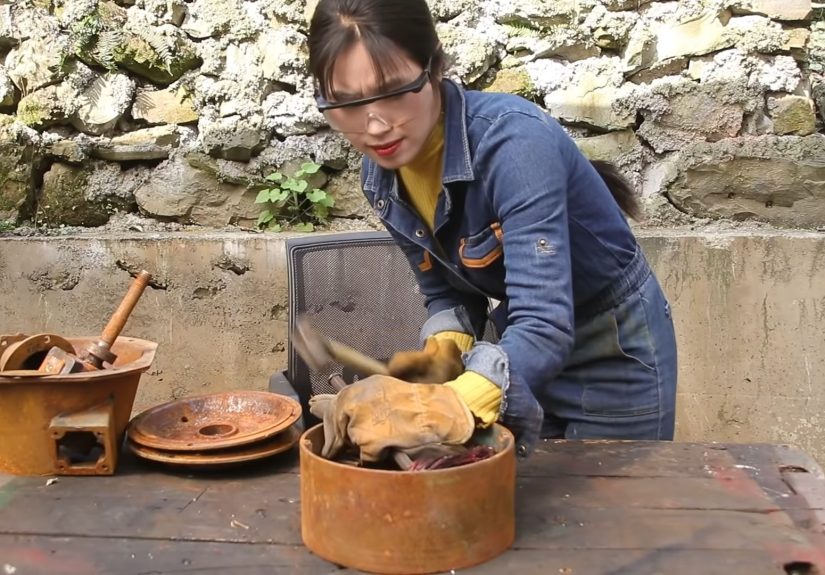
Rural rebuilds often involve making parts that cannot be bought locally. A bracket, cover plate, spacer, shaft collar, screen, or mounting foot may be fabricated from scrap steel. This is where the angle grinder becomes the unofficial national bird of the workshop. A simple stick welder may replace more sophisticated TIG or MIG equipment. The finished part may not win an industrial design award, but if it is strong, aligned, and safe, it has earned its keep.
Bearings, Alignment, and Balance
Spinning machines punish sloppiness. Bearings must turn smoothly. Shafts must align. Rotors must clear stators. Turbine runners must avoid wobble. Even a small misalignment can create vibration, heat, noise, and premature failure. In a hydro system, those problems do not politely wait for business hours. They announce themselves at midnight in the rain.
Good rebuild practice includes replacing suspect bearings, checking seals, ensuring the shaft spins freely, and testing the machine gradually. A hydroelectric generator is happiest when water, rotation, magnetism, and load all agree to cooperate.
Why Old Hydroelectric Equipment Is Worth Saving
There is a strong environmental argument for rebuilding instead of replacing. Copper, steel, magnets, cast housings, and machined shafts all require energy and materials to produce. Extending the life of existing equipment reduces waste and preserves embodied value. In plain English: if the old beast can be repaired safely, do not throw it away just because it looks like it lost a wrestling match with a swamp.
There is also a knowledge argument. Rebuilding teaches what buying cannot. A person who rewinds a generator learns how coil geometry affects output. A person who repairs a turbine learns how water quality, grit, and cavitation can wear metal. A person who aligns a shaft learns why “close enough” is not always close enough. These lessons turn owners into operators, and operators into better stewards of their equipment.
Real-World Challenges: Water, Weather, and Paperwork
Micro-hydropower sounds wonderfully simple until reality arrives wearing muddy boots. Water levels change by season. Leaves, sticks, grit, and sediment clog intakes. Freezing conditions can damage pipes. Floods can move rocks that previously seemed committed to staying put. Drought can reduce output just when backup power is most needed.
Then there is permitting. In the United States, hydropower projects may involve federal, state, local, and environmental rules depending on location, water rights, stream impacts, land ownership, and whether the project connects to the grid. Some small conduit or low-impact projects can qualify for simpler pathways, especially when using existing irrigation canals, pipelines, or non-powered water infrastructure. But “small” does not automatically mean “unregulated.” Fish passage, water diversion, wetlands, neighbors, and downstream users all matter.
For off-grid hobby systems, the smartest move is to research local rules before buying equipment or digging trenches. Nothing ruins a renewable energy dream faster than discovering the legal part after the concrete has cured.
Safety: The Part That Keeps the Story Funny
Hydroelectric generators combine water, rotating machinery, electricity, slippery terrain, and sometimes improvised metalwork. That is enough hazard variety to keep a safety inspector busy and mildly caffeinated. Anyone rebuilding or installing such a system should treat it as serious machinery, not a backyard toy.
Important safety practices include locking out energy sources before maintenance, guarding rotating shafts and belts, using proper grounding and overcurrent protection, keeping electrical enclosures dry, installing disconnects, and involving qualified electricians for grid connection or household wiring. Water intakes should be screened, pipes should be secured, and turbines should never be serviced while they can unexpectedly spin.
The rural hacker spirit is admirable. The “let’s see what happens when I touch this live conductor” spirit is not. That one should be escorted firmly from the premises.
What This Rebuild Teaches About Renewable Energy
The most valuable lesson from a rural hydroelectric generator rebuild is that renewable energy is not only about new technology. It is also about maintenance, repair, adaptation, and local skill. Solar panels, wind turbines, batteries, inverters, and hydro generators all need people who understand them after the sales brochure has been recycled.
A rebuilt hydro generator also shows why small renewable systems must be site-specific. A micro-hydro turbine that works beautifully on a steep mountain stream may be useless on flat land. A generator designed for a certain speed may not perform well if the turbine turns too slowly. A penstock that is too narrow may waste head through friction. A battery bank that is too small may dump useful energy. Every component has to match the water resource and the electrical load.
That is the difference between assembling parts and building a system. The rural hacker does not simply bolt things together. She observes, measures, cuts, welds, rewinds, tests, adjusts, and repeats until the machine behaves.
Examples of Practical Uses for a Rebuilt Micro-Hydro Generator
A small hydroelectric generator can be useful in several rural settings. On a homestead with a year-round creek, it may charge batteries continuously for lighting, refrigeration, internet equipment, and efficient appliances. On a farm, it may support sensors, pumps, workshop tools, or electric fencing. In a remote cabin, it may reduce dependence on gasoline generators. In a village setting, multiple small systems can support shared lighting, communications, or charging stations.
Hydro can also pair nicely with solar. Solar often peaks in summer daylight, while hydro may perform better during wet seasons or snowmelt periods. Batteries and controllers can blend these sources into a steadier supply. The result is not glamorous in the celebrity sense, but it is glamorous in the “the freezer stayed cold and the lights stayed on” sense, which is the better kind.
The Beauty of Simple Tools
One of the most charming aspects of a rural generator rebuild is the use of simple tools. A stick welder, angle grinder, hand tools, clamps, measuring devices, and homemade jigs can accomplish a surprising amount in skilled hands. Modern workshops are wonderful, but they can accidentally teach people that progress requires expensive equipment. Rural repair culture pushes back. It says skill, patience, and judgment still matter.
That does not mean crude work is automatically good work. A bad weld is still a bad weld. A crooked shaft is still a future failure. But simple tools can produce excellent results when guided by experience. The lesson is not “tools do not matter.” The lesson is “tools are not a substitute for thinking.”
Field Experience: Lessons From Rebuilding a Rural Hydroelectric Generator
Anyone who has spent time around old rural machinery knows the first rule: the machine is always worse than it looks, and somehow also more repairable than expected. A hydroelectric generator that appears hopeless may still have a sound casting, usable shaft, salvageable turbine runner, or enough original geometry to guide a rebuild. The trick is to avoid judging too early. Rust is dramatic, but rust is not always fatal.
The first experience-based lesson is to document everything before disassembly. Take photos from every angle. Mark wire positions. Count turns if removing coils. Measure shaft protrusion, bearing seat dimensions, bolt spacing, air gaps, and nozzle positions. Old machines rarely come with friendly manuals tucked under the cover. Once parts are scattered across the bench, memory becomes a liar with excellent confidence.
The second lesson is to clean before diagnosing. Dirt makes fools of everyone. A bearing may seem destroyed until grit is removed. A crack may be invisible until paint is stripped. A coil may look acceptable until insulation flakes off under gentle handling. Cleaning is not the low-skill part of the job; it is the investigation phase. The machine is giving testimony, and grime is interrupting the witness.
The third lesson is to respect water as much as electricity. In small hydro projects, people often focus on the generator because copper and magnets feel technical. But the water side decides whether the generator has a pleasant life or a short, noisy career. A poorly screened intake sends leaves and grit into the turbine. A badly sized penstock wastes pressure. A loose pipe becomes a battering ram during high flow. A careless tailrace can erode soil and create a muddy mess that future you will deeply resent.
The fourth lesson is that testing should be gradual. Spin the rotor by hand. Then test without load. Then test with a small load. Watch temperature. Listen for rubbing. Feel for vibration from a safe position. Check voltage stability. Inspect fasteners after initial operation. Machines often whisper before they shout. A careful operator hears the whisper and tightens the bolt before it becomes a flying object with ambition.
The fifth lesson is to plan for maintenance from the beginning. A rural hydro system should not require heroic disassembly every time leaves clog the intake or a bearing needs inspection. Build access panels. Leave room around the generator. Label wires. Use hardware that can be removed without inventing new curse words. Keep spare bearings, belts, fuses, grease, sealant, and basic electrical components on hand. The best repair is the one that takes one calm hour instead of two panicked days.
Finally, rebuilding a hydroelectric generator teaches humility. Water does not care about your schedule. Rust does not care about your optimism. Electricity does not care about your bravery. But when the turbine finally spins smoothly and the meter shows clean output, the satisfaction is enormous. You have not merely fixed a machine. You have turned a neglected lump of metal back into a source of useful power. That is rural hacking at its finest: practical, stubborn, inventive, and just a little bit magical.
Conclusion
The story of a rural hacker de-crufting and rebuilding a hydroelectric generator is more than a fun repair tale. It is a reminder that renewable energy depends on people as much as technology. A micro-hydro generator is not just a product; it is a relationship between landscape, water, machinery, wiring, maintenance, and human judgment.
In an age obsessed with the newest device, there is something refreshing about watching an old machine earn a second life. The rebuild celebrates repair culture, rural ingenuity, clean energy, and the deeply satisfying moment when rust becomes rotation and rotation becomes electricity. It also proves that sometimes the smartest energy solution is not buying something new, but understanding something old well enough to make it work again.
Note: This article is synthesized from publicly available information on micro-hydropower, hydropower basics, small hydro regulation, generator safety, rural repair practices, and real-world hydroelectric generator rebuilding examples. It is written for educational publishing purposes and should not replace professional engineering, electrical, environmental, or permitting advice.