Table of Contents >> Show >> Hide
- What Is a Squatting Birth?
- Why Some People Choose Squatting Birth
- Benefits of Squatting Birth
- Drawbacks and Risks of Squatting Birth
- Who May Be a Good Candidate for Squatting Birth?
- How to Prepare for a Squatting Birth
- Squatting Birth With an Epidural: Is It Possible?
- Practical Tips for Using Squatting During Labor
- Common Myths About Squatting Birth
- Experience Section: What Squatting Birth Can Feel Like in Real Life
- Conclusion: Is Squatting Birth Right for You?
- SEO Tags
Squatting birth sounds wonderfully simple: bend the knees, let gravity join the group project, and welcome the baby from a more upright position. In reality, like most things in labor, it is both beautifully natural and slightly more complicated than a motivational poster. A squatting birth can be empowering, efficient, and comfortable for some people. For others, it may be tiring, impractical, or medically unsuitable.
The good news is that squatting does not have to be an all-or-nothing plan. Many people use squatting during part of labor, shift into a supported squat for pushing, or use a “throne” position in bed that mimics the benefits of being upright. The goal is not to win a flexibility contest in the delivery room. The goal is to help the body work with labor, while keeping parent and baby safe.
This guide explains what a squatting birth is, the possible benefits, the drawbacks, how to prepare, and what real-life experiences often teach: your best birth position may be the one that works in the moment, not the one that looked perfect on your birth plan.
What Is a Squatting Birth?
A squatting birth is a childbirth position where the birthing person is upright with knees bent and hips lowered, usually with the feet apart. It may look like a deep yoga squat, a supported squat using a squat bar, or a modified squat while leaning on a partner, bed, stool, or chair.
Some people squat directly on the floor or bed. Others use a birthing stool, squat bar, or raised hospital bed. In many hospital rooms, the back of the bed can be lifted high while the lower section is lowered, creating a semi-sitting “throne” position. This is not a full squat, but it can offer some upright support without demanding Olympic-level thigh endurance.
Squatting During Labor vs. Squatting During Birth
There is an important difference between squatting during labor and actually giving birth in a squat. During early and active labor, squatting may help open the pelvis, ease pressure, or encourage the baby to move downward. During the pushing stage, a squat may help some people feel more powerful and aligned with contractions.
However, many people change positions several times. You might squat during contractions, rest on your side between them, move to hands and knees for back labor, then deliver in a semi-upright position. Birth is less like a choreographed dance and more like jazz with medical charts.
Why Some People Choose Squatting Birth
Squatting is popular because it works with gravity and allows the pelvis to move more freely than lying flat on the back. Upright birth positions, including squatting, sitting, standing, and kneeling, have been associated in research with shorter labor in some cases, fewer episiotomies, and fewer assisted vaginal births for people without epidural anesthesia.
That does not mean squatting guarantees an easy delivery. Babies have opinions. Cervixes have timelines. Pelvic floors have boundaries. But for a low-risk labor with a supportive team, squatting can be a useful tool.
Benefits of Squatting Birth
1. Gravity Helps Baby Move Down
One of the biggest benefits of squatting birth is simple physics. When the body is upright, gravity can help guide the baby downward through the birth canal. This may make contractions feel more productive for some people.
Think of it as giving labor a helpful assistant. Gravity will not do the whole job, but it may reduce the sense that your body is pushing uphill. For some birthing people, that makes squatting feel more instinctive than lying flat.
2. Squatting May Open the Pelvis
Squatting can widen certain pelvic dimensions, especially when the knees are apart and the body is well supported. This may give the baby more room to descend and rotate. Position changes can be especially helpful when the baby needs a little encouragement to find a better angle.
Support matters here. A relaxed, supported squat can allow the pelvic floor to lengthen. A tense, unsupported squat may do the opposite. If you are gripping every muscle like you are trying not to fall into a volcano, the position is probably not helping as much as it could.
3. It Can Make Pushing Feel More Natural
Many people find that squatting makes pushing feel more intuitive. The body is already in a position associated with bearing down, and the upright posture may help some people direct effort more effectively.
This does not mean everyone should push hard or continuously. Modern labor guidance often encourages listening to the body, resting between contractions, and following the care team’s instructions. In some cases, controlled pushing or slowing down may protect the perineum as the baby crowns.
4. It May Reduce Certain Interventions
Research on upright birth positions suggests potential reductions in episiotomy and assisted vaginal delivery for some low-risk births without epidural anesthesia. This is one reason many childbirth educators encourage people to learn several labor positions instead of assuming that lying on the back is the only option.
Still, the evidence is not a magic stamp that says “squat equals perfect birth.” Outcomes depend on many factors, including fetal position, labor progress, pain medication, provider training, and maternal energy.
5. It Can Increase a Sense of Control
Birth can feel intense, unpredictable, and deeply personal. Choosing positions may help the birthing person feel more involved instead of simply being placed somewhere and told to stay there. For some, squatting feels active and empowering.
That emotional benefit matters. A birth experience is not only measured in minutes and centimeters. Feeling heard, supported, and able to move can shape how someone remembers labor long after the hospital bracelets are gone.
Drawbacks and Risks of Squatting Birth
1. Squatting Can Be Exhausting
A deep squat is hard work even when you are not having contractions. Add labor, sweat, adrenaline, and a baby making a dramatic entrance, and the position can become tiring fast. Many people cannot hold a squat for long periods, especially without practice or support.
This is why supported squatting is usually more realistic. A squat bar, partner, doula, bed, stool, or sheet can help reduce the strain. Even then, most people benefit from taking breaks and rotating positions.
2. It May Not Work Well With an Epidural
An epidural can reduce pain, but it may also reduce leg strength, balance, and mobility. A full standing squat may be unsafe if the legs feel numb or weak. Some hospitals may allow supported positions with an epidural, such as side-lying, semi-sitting, hands-and-knees with help, or a supported squat bar position in bed.
If you plan to use an epidural and still want upright options, discuss this before labor. Ask whether the hospital has squat bars, peanut balls, adjustable beds, and nurses experienced with position changes.
3. It May Increase Perineal Strain for Some
Squatting can speed descent for some babies, which may be helpful, but a very fast birth can also increase strain on the perineum. Some evidence on upright positions suggests possible increases in second-degree tearing or blood loss in certain groups.
This does not mean squatting is dangerous for everyone. It means the position should be used thoughtfully. Warm compresses, controlled pushing, perineal support, and slowing the final moments of birth may be recommended by the care team.
4. It Is Not Ideal for Every Baby Position
Baby’s position matters. If the baby is breech, facing an unusual direction, showing signs of distress, or not descending well, the provider may recommend another position or intervention. Squatting is one tool, not a stubborn rule.
Sometimes hands and knees, side-lying, lunging, or semi-reclining may be more useful depending on the baby’s station and rotation. In birth, flexibility beats loyalty to a Pinterest board every time.
5. Hospital Policy and Provider Comfort Vary
Not every hospital or birth team is equally comfortable assisting a squatting birth. Some providers are trained mainly in semi-reclined or lithotomy positions. Others welcome upright pushing and have equipment ready.
This is why preparation matters. The middle of transition labor is not the ideal moment to discover that the hospital’s squat bar is “somewhere in storage, probably next to the fax machine.” Ask early.
Who May Be a Good Candidate for Squatting Birth?
A squatting birth may be an option for someone with a low-risk pregnancy, good mobility, stable blood pressure, reassuring fetal monitoring, and a baby in a favorable position. It may also work best for people who have practiced supported squats and feel comfortable changing positions.
It may not be recommended for people with certain medical complications, significant knee, hip, ankle, or pelvic pain, heavy bleeding, fetal distress, a high-risk pregnancy, or a need for continuous monitoring that limits movement. The safest answer is always individual: ask your OB-GYN, midwife, or labor team.
How to Prepare for a Squatting Birth
Talk to Your Provider Early
Bring up squatting birth during prenatal visits, not while someone is adjusting the fetal monitor during active labor. Ask direct questions: “Can I push in a supported squat if labor is low-risk?” “Do you have squat bars?” “What positions are possible with an epidural?” “How do you support upright birth?”
A supportive provider does not have to promise that squatting will happen no matter what. A good provider should explain when it is appropriate, when it is not, and what alternatives are available.
Practice Supported Squats
If your provider approves, practice gentle squats during pregnancy. Focus on comfort, breath, and support rather than depth. A wall, chair, partner, or yoga block can help. Prenatal yoga, pelvic floor physical therapy, or childbirth classes may also teach safer movement patterns.
Do not force a deep squat if it causes pain. Pregnancy is not the season for proving your knees are heroic. The goal is to learn what your body tolerates.
Build a Position Toolkit
Instead of planning only one birth position, prepare several. Useful options include supported squat, side-lying, hands and knees, kneeling, standing lean, sitting on a birth ball, lunging, and semi-upright “throne” position.
This gives you choices if labor changes. For example, if squatting feels too intense, side-lying may help you rest. If back labor appears, hands and knees may feel better. If an epidural limits mobility, a peanut ball or supported side position may be safer.
Include Your Support Person
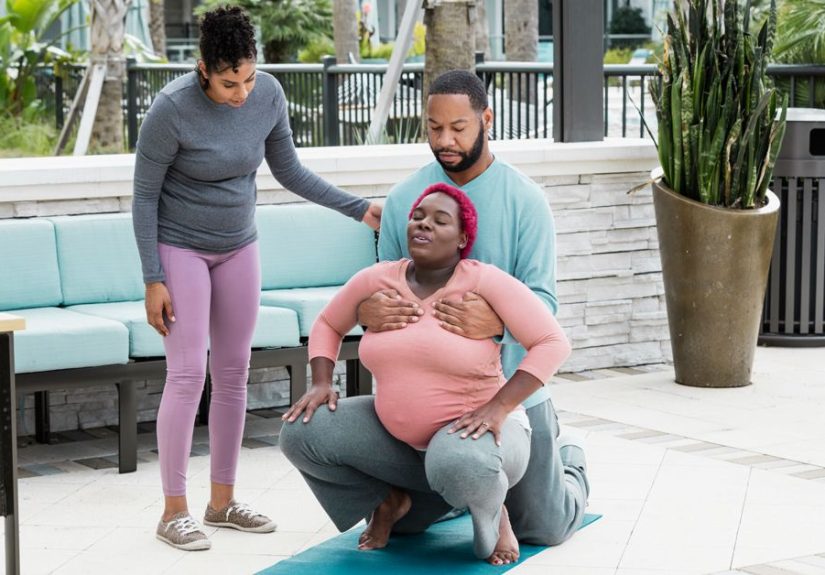
A partner, doula, or trusted support person can help you remember options when labor becomes intense. They can ask the nurse about the squat bar, help support your upper body, remind you to relax your jaw and shoulders, and advocate for position changes when appropriate.
They can also perform the sacred duty of not saying, “Wow, this looks easy.” That sentence should be illegal in all 50 states.
Ask About Equipment
Common tools for squatting birth include a squat bar, birthing stool, adjustable bed, birth ball, rebozo or sheet, floor mat, and partner support. Not every facility offers every item, so ask what is available.
If you are planning a birth center or home birth, ask the midwife what equipment they bring and how they support upright positions. If you are planning a hospital birth, ask during a tour or prenatal appointment.
Squatting Birth With an Epidural: Is It Possible?
Sometimes, but it depends. A full unsupported squat after an epidural is usually not safe because of reduced balance and leg control. However, a modified supported squat may be possible in some settings, especially using a squat bar attached to the bed while nurses support the legs and body.
Other epidural-friendly alternatives include side-lying with a peanut ball, semi-sitting, throne position, or supported hands and knees if the care team approves. The key is safety: no one should be standing or bearing weight on numb legs without proper support.
Practical Tips for Using Squatting During Labor
Use Squatting in Short Bursts
You do not need to squat for the entire labor. Try it during contractions, then rest between them. Short bursts can provide the pelvic-opening benefits without draining every ounce of energy before pushing.
Keep the Body Supported
Use a bar, partner, chair, or bed. Let the support carry some of your weight. Relax your shoulders, unclench your jaw, and avoid holding your breath too long unless directed during pushing.
Change Positions When Needed
If squatting stops feeling helpful, change. Labor positions are tools, not wedding vows. Side-lying, kneeling, leaning forward, or sitting may be better at different points.
Listen to the Care Team
If fetal monitoring shows concern, bleeding increases, the baby needs assistance, or the provider needs better access, another position may be safer. A flexible birth plan is not a failed birth plan. It is a smart one.
Common Myths About Squatting Birth
Myth: Squatting Always Makes Birth Faster
Squatting may help some labors progress, but it does not guarantee a quick delivery. Labor length depends on dilation, contractions, baby position, pelvic shape, previous births, pain relief, and many other factors.
Myth: Lying on Your Back Is Always Bad
Back-lying is not automatically wrong. Some people prefer it, some need it for medical reasons, and some deliver safely that way. The concern is not that one position is evil; it is that people should know they may have options.
Myth: You Must Be Very Flexible to Squat in Labor
You do not need to be a yoga influencer with glowing skin and suspiciously clean white leggings. Supported squatting, partial squatting, and throne positioning can offer benefits without requiring extreme flexibility.
Experience Section: What Squatting Birth Can Feel Like in Real Life
In real birth stories, squatting often shows up as a position people either love briefly or abandon quickly. That is not failure; that is labor being honest. One person may describe a supported squat as the moment everything “clicked,” because the pressure finally felt productive. Another may try the same position and immediately think, “Absolutely not, who approved this?” Both experiences are valid.
A common experience is that squatting feels powerful during contractions but exhausting between them. The legs may shake, the hips may feel intense pressure, and the upper body may need serious support. This is why many people use the squat bar like a lifeline. Holding the bar can allow the body to lower during a contraction, then rise or rest afterward. A partner or doula may stand behind or beside the birthing person for extra stability.
Some people find that squatting gives them a stronger sense of control. Instead of feeling like labor is happening to them, they feel involved in the process. The position can make pushing feel less abstract. The pressure is direct, gravity is obvious, and the body may seem to understand what to do. For people hoping for an unmedicated birth, this can be encouraging.
Others discover that squatting is better for labor than for actual delivery. They may squat during early pushing, then switch to side-lying or hands and knees when the baby crowns. This can happen because the care team wants slower, more controlled delivery of the head, or because the birthing person instinctively wants less pressure. In many cases, the final position is not the one written on the birth plan. It is the one that feels safest and most manageable at the time.
People with epidurals often report a different experience. They may want to squat, but numbness makes full squatting unrealistic. Instead, nurses may help them into a supported semi-squat using the bed and squat bar. Some describe this as helpful because it creates the feeling of being upright without requiring full leg strength. Others prefer side-lying with a peanut ball because it feels more stable.
Another real-life lesson is that provider support matters enormously. A birthing person may feel confident trying a squat when nurses calmly adjust the bed, offer the bar, and explain what to do. The same person may feel discouraged if the team seems rushed or unfamiliar with upright birth. This is why prenatal conversations are so valuable. Asking ahead of time can reveal whether the birth setting truly supports movement or merely says “sure” in a brochure.
Preparation also changes the experience. People who practiced supported squats during pregnancy often know whether their ankles, knees, hips, and pelvic floor tolerate the position. They may also understand that a productive squat is not about dropping as low as possible. It is about support, relaxation, and timing. A slightly higher supported squat may work better than a dramatic deep squat that turns the thighs into overcooked noodles.
Finally, many birth experiences show that squatting is best treated as an option, not a promise. The body may love it. The baby may rotate beautifully. Or the position may feel wrong after ten seconds. A successful birth is not defined by whether someone squats, kneels, lies down, or uses every pillow in the hospital. It is defined by safety, support, informed choices, and being able to adapt when labor changes the script.
Conclusion: Is Squatting Birth Right for You?
Squatting birth can be a helpful, empowering option for some people, especially during low-risk labor with good support and freedom of movement. Its possible benefits include using gravity, opening the pelvis, making pushing feel more natural, and reducing certain interventions in some situations.
However, squatting is not perfect for everyone. It can be tiring, difficult with an epidural, unsuitable for certain medical situations, and dependent on provider support. The smartest approach is to prepare for squatting while staying flexible. Talk with your care team, practice safely, learn several positions, and remember that changing your mind during labor is not only allowedit is practically a birth tradition.
Important note: This article is for educational purposes only and is not a substitute for medical advice. Always discuss labor positions, including squatting birth, with your OB-GYN, midwife, or qualified healthcare professional.