Table of Contents >> Show >> Hide
- What Is a Vetinari Clock?
- Why the Vetinari Clock Feels So Annoying
- The Discworld Joke Behind the Madness
- How Makers Build a Real Vetinari Clock
- Why “Almost Predictable” Is Worse Than Random
- Is the Vetinari Clock Actually Useful?
- Where You Should Never Put a Vetinari Clock
- Why Fans Love It Anyway
- How to Survive Listening to One
- Experience Section: Living With a Vetinari Clock Will Drive You Insane
- Conclusion
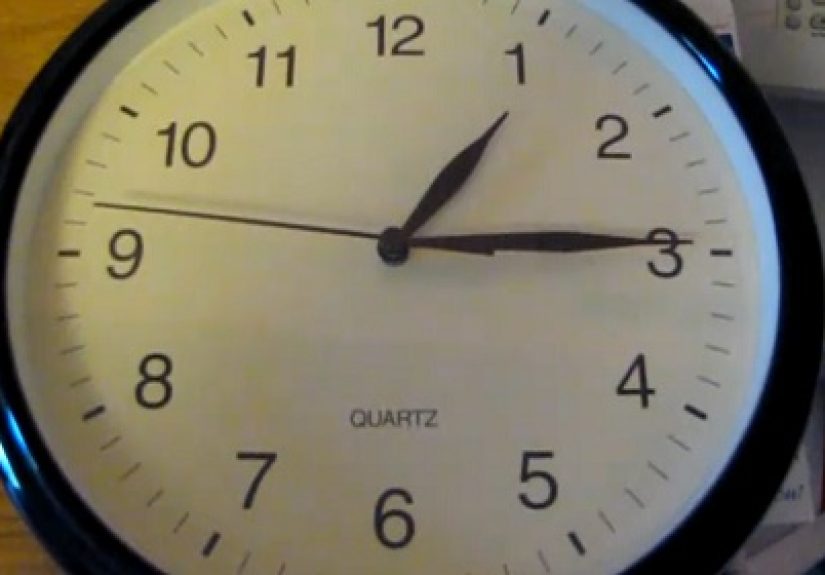
The Vetinari Clock looks innocent at first. It hangs on a wall, wears a normal clock face, and promises the comforting little ritual of tick, tock, tick, tock. Then it betrays you. One tick arrives early. The next tock takes a tiny vacation. A second hand hesitates like it has suddenly remembered an unpaid parking ticket. Somehow, the clock still keeps accurate time, which makes the whole thing worse. If it were broken, you could forgive it. But no. It is precise, deliberate, and psychologically rude.
The phrase “Vetinari Clock” comes from Terry Pratchett’s Discworld novels and refers to the unnerving clock associated with Lord Havelock Vetinari, the Patrician of Ankh-Morpork. Vetinari is not the kind of ruler who needs to shout. He prefers systems, pressure, implication, and the terrifying silence of someone who has already thought twelve moves ahead. Naturally, his waiting room features a clock that ticks irregularly enough to make visitors uneasy before the meeting even begins.
In the real world, fans, hackers, programmers, and electronics hobbyists have turned that fictional nuisance into a functioning object. A Vetinari Clock can be built from a standard quartz wall clock, a microcontroller, a custom pulse pattern, and a mischievous willingness to annoy everyone within earshot. The result is part literary tribute, part engineering puzzle, and part household psychological experiment.
What Is a Vetinari Clock?
A Vetinari Clock is a clock that ticks at irregular intervals while still keeping correct time overall. It may pause for a fraction of a second, tick twice close together, or delay just long enough for your brain to notice. The magic is not that the clock is inaccurate. The magic is that it feels inaccurate while secretly behaving itself.
Most analog quartz clocks use a small motor that advances the second hand once per second. A modified Vetinari-style clock interrupts that predictable rhythm. Instead of sending one perfectly spaced pulse every second, a controller sends pulses in a deliberately uneven pattern. Over a longer period, the correct number of pulses still occurs, so the minute hand advances normally. Your wall clock remains honest. Your nervous system does not.
Why the Vetinari Clock Feels So Annoying
Humans are pattern-hungry creatures. We predict footsteps in a hallway, the beat of a song, the next syllable in a sentence, and the tiny mechanical heartbeat of a clock. Once the brain locks onto a rhythm, it starts preparing for the next sound before it happens. That is usually helpful. It lets us process speech, music, traffic, and daily noise without consciously analyzing every vibration in the air.
The Vetinari Clock weaponizes that habit. A normal clock fades into the background because its sound is predictable. A completely random noise might be irritating, but it often becomes meaningless. The Vetinari Clock lives in the wicked middle. It is almost regular. It gives your brain just enough pattern to make a prediction, then ruins that prediction by being slightly early, slightly late, or suspiciously absent.
This is why the clock can feel more distracting than a louder but steadier sound. The problem is not volume alone. It is timing. Each tiny violation says, “Pay attention, something is wrong,” even when nothing important is happening. After a few minutes, your mind begins to hover around the next tick. After ten minutes, you may find yourself bargaining with furniture.
The Discworld Joke Behind the Madness
Lord Vetinari is one of Pratchett’s great comic inventions: a tyrant who understands administration, psychology, civic order, and the usefulness of making people uncomfortable without appearing to do anything at all. A normal villain might install spikes. Vetinari installs a clock.
That is the joke. The Vetinari Clock is not dramatic. It does not explode. It does not glow green or speak prophecies in Latin. It simply ticks wrong. The cruelty is elegant because it is small. Visitors in the waiting room are not attacked; they are gently, steadily dismantled by anticipation.
Pratchett’s brilliance lies in making the device feel both absurd and believable. Anyone who has been trapped near a dripping faucet, squeaky fan, buzzing fluorescent light, or neighbor’s bass speaker understands the idea immediately. The Vetinari Clock is fantasy, but the irritation is painfully real.
How Makers Build a Real Vetinari Clock
Real Vetinari Clock projects usually begin with an ordinary quartz wall clock. The builder opens the case, bypasses or replaces the stock timing circuit, and connects the movement’s coil to a microcontroller. That controller decides when to energize the coil and advance the second hand.
Some designs use a fixed irregular sequence. For example, the controller may check several times per second whether it should move the hand. Sometimes it moves. Sometimes it waits. Over a set cycle, the hand advances the correct number of times, but the spacing between movements feels unstable. Other versions use pseudo-random number generators, real-time clock modules, or more exotic sources of randomness.
The basic challenge is simple to describe and surprisingly fussy to execute: make the clock sound wrong without letting the time become wrong. Too little irregularity, and nobody notices. Too much, and it stops feeling like a clock and becomes a broken metronome with opinions. The best Vetinari Clock is subtle enough to seem accidental at first and precise enough to become horrifying later.
Common Components
A typical build may include a quartz clock movement, a small microcontroller such as a PIC, ATtiny, Arduino-compatible board, or similar chip, a low-frequency timing crystal, resistors, diodes for protecting the circuit from voltage spikes, batteries, wiring, and a board or kit to hold everything together. Some hobbyists use off-the-shelf kits; others enjoy the noble tradition of taking apart a cheap wall clock and discovering that cheap plastic does not appreciate soldering.
The Accuracy Trick
The core trick is averaging. The clock does not need to tick exactly once every second. It needs to produce the right total number of ticks over time. If it advances 32 times over 32 seconds, or 64 times over 64 seconds, it can preserve accurate time while making the path between those seconds feel deeply suspicious.
Why “Almost Predictable” Is Worse Than Random
The Vetinari Clock is a lesson in near-patterns. A steady rhythm becomes wallpaper. A chaotic rhythm becomes noise. But a near-rhythm becomes a trap. Your brain keeps trying to solve it. Is there a pattern? Was that tick late? Did it skip? Is the clock broken? Am I broken? Why am I arguing with a wall?
This is similar to why a dripping faucet can be worse than rain. Rain creates a broad sound field. A single drip creates expectation. You wait for the next one. If it comes too soon, you notice. If it comes too late, you notice harder. The Vetinari Clock does the same thing with the cultural authority of timekeeping behind it.
That authority matters. We expect clocks to be stable. Clocks symbolize order, schedule, deadlines, meetings, trains, school bells, and the general machinery of adult life. When a clock behaves oddly but remains correct, it creates a small philosophical insult. It says time is still working, but your confidence in it is optional.
Is the Vetinari Clock Actually Useful?
Useful is a flexible word. As a practical household clock, the Vetinari Clock is questionable unless your hobby is losing friends slowly. As a conversation piece, it is excellent. As a maker project, it teaches timing, motor control, microcontroller programming, soldering discipline, power management, and the importance of testing before applying hot glue with the enthusiasm of a medieval mason.
It is also a clever demonstration of human perception. The clock proves that annoyance can come from tiny deviations, not just loudness. A faint, irregular tick may capture attention more effectively than a louder, predictable one. In offices, bedrooms, workshops, classrooms, and waiting rooms, the difference between tolerable and maddening is often not the sound itself but whether the brain can safely ignore it.
Where You Should Never Put a Vetinari Clock
Do not put one in a bedroom unless you enjoy waking up at 3:17 a.m. convinced the clock is timing your thoughts. Do not put one in a study if you need to write, code, read, meditate, or do taxes. Do not put one in a therapist’s office unless the therapist specializes in fictional tyrants and mild acoustic warfare.
The worst possible location is a quiet waiting room, which is exactly why the fictional version works so beautifully. In a noisy kitchen, the irregular tick may vanish. In a quiet room, it becomes the main character. The less there is to distract you, the more the clock expands. Soon it is not on the wall; it is in the room with you, wearing tiny boots and walking across your patience.
Why Fans Love It Anyway
The Vetinari Clock endures because it sits at the crossroads of fandom, humor, and engineering. Discworld fans recognize the literary reference. Makers enjoy the technical puzzle. Everyone else enjoys the moment of realization when a normal-looking clock starts behaving like it has been trained by a bureaucrat with a grudge.
It is also wonderfully Pratchett-like. The joke begins as a gag about an irregular clock and expands into a commentary on power, perception, control, and the absurd fragility of human composure. A sword threatens the body. A bad law threatens freedom. A Vetinari Clock threatens the part of the brain that believes the next tick should arrive on time.
How to Survive Listening to One
If you encounter a Vetinari Clock in the wild, do not stare at it. That only gives it social permission. Add background sound, such as music, a fan, or conversation. Move farther away if possible. If it is your own clock, install a switch so you can disable the sound when sanity becomes a priority. If it belongs to a friend, compliment the craftsmanship while slowly backing toward the exit.
For builders, subtlety is everything. The goal is not to create a clownish clock that lurches around like a caffeinated spider. The best version is barely wrong. It should take a few minutes before someone says, “Is that clock ticking strangely?” At that moment, the project has succeeded. You may now offer tea, sympathy, and no explanation.
Experience Section: Living With a Vetinari Clock Will Drive You Insane
Imagine installing a Vetinari Clock in a quiet room “just to test it.” That phrase is how many disasters begin. At first, it seems harmless. The clock hangs above the desk. The second hand moves. The room remains peaceful. You feel clever, literary, and technically accomplished. You have brought Discworld into your home, and nothing has gone wrong except perhaps your future.
Then the first odd pause happens. It is small, barely a hiccup. You look up. The clock continues as if innocent. A few seconds later, two ticks arrive close together, like the clock has sprinted to catch a bus. You smile. This is the whole point. Delightful. Charming. Slightly evil. You return to your work.
Five minutes later, the charm has changed texture. You are no longer hearing a clock. You are hearing a question. Every tick asks whether you predicted it correctly. Every pause becomes a little cliff. Your attention, which once belonged to an email, a book, or a spreadsheet, now belongs to a plastic circle on the wall. You realize the clock is not loud. That is the worst part. A loud clock could be condemned. This one is whispering chaos politely.
After twenty minutes, you begin inventing theories. Maybe the pattern repeats every half minute. Maybe it clusters ticks near the end of each cycle. Maybe the builder programmed a sequence based on prime numbers, dice rolls, or the emotional weather of Ankh-Morpork. You try counting. The clock punishes this by behaving almost regularly, then swerving at the exact moment your confidence returns.
At night, the experience becomes more personal. Darkness removes visual distractions. The house settles. The refrigerator clicks off. Somewhere outside, a car passes and fades. Then the Vetinari Clock resumes its tiny campaign. Tick. Tock. Pause. Tick-tick. Tock. A normal clock can become soothing at bedtime because it blends into expectation. This clock does not blend. It taps gently on the inside of anticipation.
The strangest part is that the clock can still be accurate the next morning. That feels unfair. You want evidence of wrongdoing. You want to point at the wall and say, “Aha! You are three minutes late, you fraud.” Instead, the hands show the correct time. The clock has not failed. You have. It has turned timekeeping into a psychological mirror, and the reflection looks tired.
Yet there is affection in the madness. A Vetinari Clock is funny because it reveals how easily the mind can be nudged. It does not need danger, volume, or drama. It needs only a familiar pattern and the courage to be slightly wrong. Living with one is like sharing a room with a joke that refuses to finish. You may eventually remove the batteries, but you will remember the sound. Worse, when you hear a normal clock later, you may wait for it to misbehave.
Conclusion
The Vetinari Clock is more than a quirky Discworld reference. It is a perfect little machine for demonstrating how rhythm, expectation, and irritation work together. By keeping accurate time while ticking irregularly, it exposes the brain’s dependence on predictable patterns. That is why it can be funny, brilliant, educational, and absolutely maddening all at once.
For fans of Terry Pratchett, it is a tribute to one of fantasy’s most elegant tyrants. For electronics hobbyists, it is a satisfying clock hack. For everyone forced to sit near one, it is proof that insanity does not always arrive with thunder. Sometimes it arrives as tick, tock, tick… wait… tock.