Table of Contents >> Show >> Hide
- Why These “Obvious” Explanations Happen in Relationships
- 45 Things Women Often Have To Explain To Partners
- 1. Periods Cannot Be “Held In” Like Urine
- 2. A Period Does Not Always Arrive On The Same Day
- 3. Pads Stick To Underwear, Not The Body
- 4. Vaginal Discharge Is Usually Normal
- 5. Urine Does Not Come From The Vagina
- 6. PMS Is Not A Personality Flaw
- 7. Pregnancy Usually Takes More Than “One Try”
- 8. Not Every Woman Orgasms From Penetration Alone
- 9. Sex Toys Are Not Competition
- 10. Peeing After Sex Can Help Reduce UTI Risk
- 11. Catcalling Is Real Even If Men Do Not See It
- 12. Women Often Take Safety Precautions Automatically
- 13. “Smile More” Is Not A Compliment
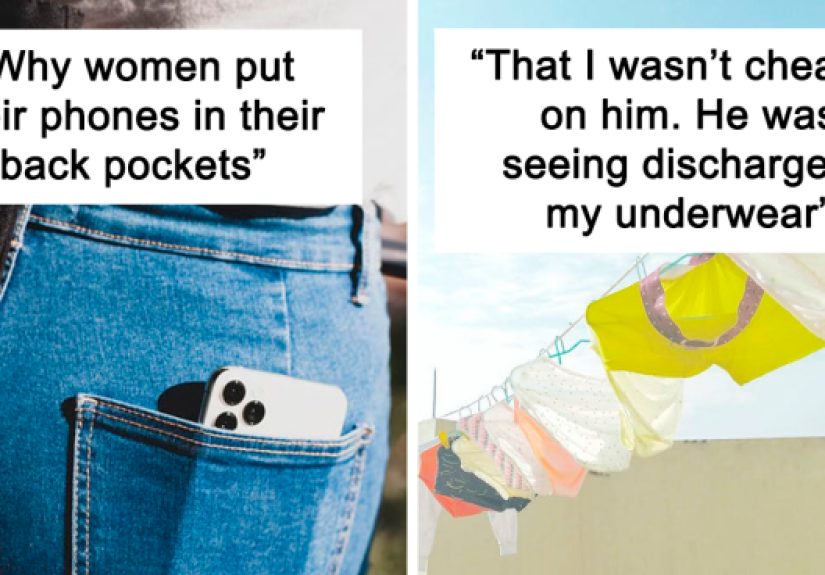
- 14. Women’s Clothing Pockets Are Often Ridiculously Small
- 15. Leggings Are Not An Invitation
- 16. Makeup Can Be For The Woman Wearing It
- 17. “Natural Look” Makeup May Still Be Makeup
- 18. Bras Are Not All The Same
- 19. Hair Ties Disappear Because Life Is Cruel
- 20. Shampoo, Conditioner, And Body Wash Are Different
- 21. Household Mess Does Not Clean Itself
- 22. Asking “What Should I Do?” Can Still Be Work For Her
- 23. The Mental Load Is Real
- 24. Gift Giving Usually Requires Thought
- 25. “Helping” With Your Own Home Is Not Helping
- 26. Leaving Pee On The Bathroom Floor Is Not Normal
- 27. Towels Need To Dry
- 28. Kitchen Sponges Should Not Live In Dirty Water
- 29. Cooked Meat Still Needs Refrigeration
- 30. Eggs Are Not Dairy
- 31. Meatballs, Burgers, And Ground Meat Are Related
- 32. Chocolate Truffles Are Not The Same As Mushroom Truffles
- 33. Boba Pearls Are Not Fish Eggs
- 34. Libraries Are Supposed To Share Books
- 35. Babies Are Usually Born With Their Eyes Open
- 36. Pregnant Women Do Not Need Comments About Size
- 37. Women Are Not “Better” At Chores By Nature
- 38. A Woman Saying “I’m Tired” May Mean Emotionally Tired
- 39. “Fine” Is Sometimes Not Fine
- 40. Apologizing Means More Than Saying “Sorry You Feel That Way”
- 41. Women Can Be Funny Without “Trying To Be One Of The Guys”
- 42. Being Nice Is Not Flirting
- 43. “No” Does Not Require A Court Brief
- 44. A Partner Is Not A Personal Assistant
- 45. Asking Questions Is Good; Refusing To Learn Is The Problem
- What These Stories Reveal About Modern Relationships
- How Partners Can Respond Better When They Do Not Know Something
- Additional Experiences: Why Women Remember These Moments So Clearly
- Conclusion
Every relationship has a “wait… you didn’t know that?” moment. Sometimes it is adorable, like explaining that ponies are not baby horses. Sometimes it is mildly alarming, like discovering your partner thinks cooked meat can sit on the counter until the next lunar eclipse. And sometimes it opens a larger conversation about women’s bodies, safety, household labor, communication, and the invisible lessons many women learn early while many men are never taught at all.
The topic “Women Share The Times They Had To Explain Something They Thought Was Well-Known To Their Partner” is funny because the examples are so specific. But it is also revealing. A lot of these misunderstandings are not about intelligence. They are about life experience, social conditioning, uneven sex education, and the fact that women are often expected to be the unofficial help desk for everything from periods to pocket depth.
Below is an original, SEO-friendly look at 45 common “I can’t believe I had to explain this” moments women have shared or recognized in relationships, with practical analysis, humor, and a few gentle reminders for partners everywhere: curiosity is attractive; willful cluelessness is not.
Why These “Obvious” Explanations Happen in Relationships
Many couples discover that they grew up with completely different instruction manuals for life. One partner may have learned how to separate laundry, schedule doctor appointments, monitor expiration dates, track family birthdays, and avoid dark parking lots by age 15. The other may have learned that “cleaning” means moving a hoodie from the chair to the bed. Congratulations, it is now domestic archaeology.
Research on household labor and time use continues to show gender gaps in domestic responsibilities. The U.S. Bureau of Labor Statistics reported that women were more likely than men to spend time on household activities on an average day, and Pew Research Center has also highlighted that wives often spend more time on caregiving and housework even when earnings are similar. That does not mean every couple follows the same pattern, but it helps explain why many women feel they are not just doing tasks; they are explaining the existence of tasks.
Psychologists and relationship experts often recommend open communication, shared responsibility, and curiosity instead of defensiveness. In other words, when your partner says, “Please do not put the cast iron skillet in the dishwasher,” the ideal response is not a courtroom argument. It is, “Got it. Why?” Growth begins where ego takes a snack break.
45 Things Women Often Have To Explain To Partners
1. Periods Cannot Be “Held In” Like Urine
Many women have had to explain that menstrual blood is not released through voluntary control. A period is part of the menstrual cycle, when the uterine lining sheds and leaves the body through the vagina. It is not a faucet. There is no “pause” button, no calendar obedience setting, and sadly no customer support department.
2. A Period Does Not Always Arrive On The Same Day
Cycles vary from person to person and can change because of stress, health conditions, age, medications, travel, and many other factors. A partner who expects a period to arrive with FedEx-level tracking accuracy may need a short health-class refresher.
3. Pads Stick To Underwear, Not The Body
Yes, some partners genuinely think menstrual pads attach directly to the skin. They do not. Most pads have adhesive strips that attach to underwear. This is basic information, but if someone never used or bought period products, the confusion can happen.
4. Vaginal Discharge Is Usually Normal
Some men mistake everyday vaginal discharge for evidence of cheating, poor hygiene, or illness. In reality, discharge can be a normal part of vaginal health. Changes in smell, color, itching, or pain may need medical attention, but ordinary discharge is not a scandal. It is biology doing its paperwork.
5. Urine Does Not Come From The Vagina
Another surprisingly common misconception: women pee from the vagina. They do not. Urine leaves through the urethra, while menstrual blood leaves through the vagina. The anatomy is close together, but “nearby” does not mean “same door.”
6. PMS Is Not A Personality Flaw
PMS can include fatigue, cramps, bloating, mood changes, food cravings, breast tenderness, and irritability. Not every menstruating person experiences it the same way, and symptoms can range from mild to disruptive. Saying “you’re just PMSing” is not communication; it is a fast pass to the couch.
7. Pregnancy Usually Takes More Than “One Try”
Some partners assume pregnancy happens instantly once a couple decides to try. Fertility depends on timing, ovulation, age, health, sperm quality, and chance. “But we tried once” is not a medical argument; it is optimism wearing roller skates.
8. Not Every Woman Orgasms From Penetration Alone
Many women have had to explain that pleasure is not one-size-fits-all. Communication, anatomy, comfort, trust, and stimulation matter. A good partner does not treat this as an insult; they treat it as useful information.
9. Sex Toys Are Not Competition
Some partners feel threatened by sex toys, as if a battery-operated object is planning a hostile takeover. In healthy relationships, toys can be part of communication, comfort, and pleasure. Confidence is sexier than insecurity with a charging cable.
10. Peeing After Sex Can Help Reduce UTI Risk
Women are often more prone to urinary tract infections because of anatomy. Urinating after sex may help flush bacteria from the urethra. It is not a magic shield, but it is a common preventive habit many women learn early.
11. Catcalling Is Real Even If Men Do Not See It
Some men assume street harassment is rare because it does not happen in front of them. Women often explain that harassers change behavior when another man is present. Not witnessing something is not proof it does not exist; it may simply mean you are accidentally functioning as a human security camera.
12. Women Often Take Safety Precautions Automatically
Checking the back seat, holding keys ready, sharing locations, parking under lights, avoiding headphones at night, and pretending to be on a call are common safety habits for many women. Partners may be shocked by the mental checklist women carry just to walk to a car.
13. “Smile More” Is Not A Compliment
Many women have to explain that being ordered to smile by strangers feels controlling, not charming. A woman’s face is not public property, and her neutral expression is not an emergency.
14. Women’s Clothing Pockets Are Often Ridiculously Small
If a woman puts her phone in her back pocket, it may be because the front pocket is decorative nonsense. Some women’s jeans pockets can barely hold a breath mint. This is not a style choice; it is textile betrayal.
15. Leggings Are Not An Invitation
Comfortable clothing is not coded flirtation. A woman may wear leggings because they stretch, move, and do not attack her ribs after lunch. Fashion is not always a message to men.
16. Makeup Can Be For The Woman Wearing It
Many partners assume makeup is worn to impress someone else. Often, it is creativity, routine, confidence, professionalism, or simply fun. Glitter eyeliner does not always have a secret agenda.
17. “Natural Look” Makeup May Still Be Makeup
Some men praise women for “not wearing makeup” while looking at foundation, concealer, mascara, brow gel, blush, and setting spray. The no-makeup makeup look is basically a magic trick with better lighting.
18. Bras Are Not All The Same
Sports bras, underwire bras, wireless bras, nursing bras, strapless bras, and bralettes serve different purposes. A partner who says, “Just wear any bra” has clearly never fought a strapless bra at a wedding.
19. Hair Ties Disappear Because Life Is Cruel
Partners sometimes ask why women buy so many hair ties. The answer: they vanish into the same dimension as missing socks, lip balm, and motivation on Monday morning.
20. Shampoo, Conditioner, And Body Wash Are Different
Some partners believe one bottle can do it all. Technically, one bottle can try. But hair texture, scalp needs, skin sensitivity, and styling habits make products different. A three-in-one product may be efficient, but so is eating cereal with a fork if you are committed to chaos.
21. Household Mess Does Not Clean Itself
Many women have to explain that crumbs, laundry, dishes, and bathroom grime are not seasonal decorations. If one partner “doesn’t see” the mess, the other may become the household manager by default.
22. Asking “What Should I Do?” Can Still Be Work For Her
When a partner asks for instructions every time, the other person becomes the project manager. Sharing chores fairly means noticing, planning, doing, and following throughnot waiting to be assigned side quests.
23. The Mental Load Is Real
The mental load includes remembering appointments, groceries, school forms, pet medication, family events, and whether the house has toilet paper. It is invisible until it fails, which is when everyone suddenly discovers the woman was the operating system.
24. Gift Giving Usually Requires Thought
Some partners need help understanding that birthdays and holidays are not surprise deadlines invented by women. A thoughtful gift does not have to be expensive; it just has to prove the giver paid attention at least once since spring.
25. “Helping” With Your Own Home Is Not Helping
If both people live in the home, cleaning is not a favor. It is participation. Saying “I helped with the dishes” can sound like a tenant thanking himself for paying rent.
26. Leaving Pee On The Bathroom Floor Is Not Normal
Women should not have to explain that if urine misses the toilet, it must be cleaned. Immediately. With actual cleaning supplies. Not with the hopeful belief that evaporation is a maid service.
27. Towels Need To Dry
A wet towel left in a pile becomes a damp science experiment. Hanging it up prevents mildew smells and keeps the bathroom from developing swamp energy.
28. Kitchen Sponges Should Not Live In Dirty Water
Sponges can harbor bacteria, especially when left wet and full of food residue. Rinsing, wringing, drying, and replacing sponges regularly is not “being picky”; it is avoiding a tiny kitchen horror film.
29. Cooked Meat Still Needs Refrigeration
Cooked meat is not magically immortal. USDA food-safety guidance warns that perishable foods should not sit at room temperature for more than two hours, or one hour in hot conditions. “It’s cooked” is not a force field.
30. Eggs Are Not Dairy
Eggs are often sold near milk and cheese, but that does not make them dairy. Dairy comes from milk. Eggs come from birds. Grocery store geography is not biology.
31. Meatballs, Burgers, And Ground Meat Are Related
Some food misunderstandings are harmless and hilarious. A person can dislike “ground meat” and love meatballs until someone explains that the meatball did not arrive on Earth as a separate species.
32. Chocolate Truffles Are Not The Same As Mushroom Truffles
One is a luxury fungus; the other is a chocolate confection. Both can be expensive, but only one belongs in dessert without causing dinner guests to ask questions.
33. Boba Pearls Are Not Fish Eggs
Tapioca pearls are usually made from cassava starch. They are chewy, sweet, and not caviar. If your partner thought bubble tea contained fish eggs, please be kindbut maybe label the pantry.
34. Libraries Are Supposed To Share Books
A library book has been touched by other people. That is the concept. It is also why libraries are one of civilization’s greatest ideas: shared knowledge, free access, and only occasional mystery stains.
35. Babies Are Usually Born With Their Eyes Open
Human babies are not puppies or kittens. They may open their eyes soon after birth, though their vision is still developing. This is one of those facts that feels obvious to some people and brand-new to others.
36. Pregnant Women Do Not Need Comments About Size
Calling a pregnant woman “huge” is not medical observation; it is a social risk with shoes on. A safer option is: “You look great. Can I get you water?”
37. Women Are Not “Better” At Chores By Nature
Many women have been trained, expected, or pressured to learn domestic tasks earlier. Skill is not destiny. If someone can operate a fantasy football app, assemble gaming equipment, or troubleshoot Wi-Fi, they can learn how to clean a bathroom.
38. A Woman Saying “I’m Tired” May Mean Emotionally Tired
Fatigue can come from work, caregiving, planning, social pressure, hormonal symptoms, safety vigilance, and household labor. Sometimes “I’m tired” means “I have been carrying seven invisible tabs open all day.”
39. “Fine” Is Sometimes Not Fine
This is not because women speak in riddles. It is often because a conversation has already happened repeatedly, and the speaker is exhausted. The solution is not decoding; it is listening earlier.
40. Apologizing Means More Than Saying “Sorry You Feel That Way”
A real apology takes responsibility, names the behavior, and shows change. “Sorry you feel that way” is not an apology; it is a smoke machine wearing a blazer.
41. Women Can Be Funny Without “Trying To Be One Of The Guys”
Humor is not a male membership club. Women can be sarcastic, silly, dry, dark, goofy, brilliant, and ridiculous without needing permission or applause from the group chat council.
42. Being Nice Is Not Flirting
Politeness, customer service, friendliness, and basic human warmth are not automatic romantic signals. Sometimes a woman smiles because she is kind. Sometimes she smiles because she wants the conversation to end safely.
43. “No” Does Not Require A Court Brief
Women often have to explain that declining intimacy, a date, a chore arrangement, or a social event does not require a 12-page defense. Respecting a boundary is Relationship 101.
44. A Partner Is Not A Personal Assistant
Remembering your own appointments, family birthdays, medication refills, and laundry schedule is adulthood. Love can be supportive without becoming unpaid administration.
45. Asking Questions Is Good; Refusing To Learn Is The Problem
Most women are not upset that a partner does not know something. Everyone has gaps. The frustration begins when one person keeps expecting the other to explain, remind, organize, and soften every lesson forever.
What These Stories Reveal About Modern Relationships
The funniest examples are easy to laugh at: eggs are not dairy, boba is not caviar, and no, a pony is not simply a horse waiting for a growth spurt. But the deeper theme is uneven knowledge. Many women are socialized to understand their bodies, monitor social cues, prevent danger, manage homes, and anticipate other people’s needs. Many men are socialized to believe that if they do not know something, someone else will eventually explain it.
That dynamic can become exhausting. A partner who does not understand periods can learn. A partner who does not understand the mental load can learn. A partner who does not know how to clean a bathroom can absolutely learn, unless he is physically trapped in a 1998 sitcom. The issue is not ignorance; the issue is making ignorance someone else’s permanent job.
Healthy couples turn these moments into teamwork. Instead of laughing at a partner forever for thinking eggs are dairy, you laugh once, explain it, and move on. Instead of getting defensive when your partner says she feels unsafe walking alone at night, you listen. Instead of saying, “Just tell me what to do,” you start noticing what needs doing. That shiftfrom being managed to being engagedis where relationships become more equal, less resentful, and a lot more attractive.
How Partners Can Respond Better When They Do Not Know Something
Stay Curious Instead Of Defensive
Being corrected can sting, especially when the topic seems basic. But defensiveness turns a simple fact into a fight. A better response is: “I didn’t know that. Tell me more.” Those six words can save a couple from a 45-minute argument about laundry detergent.
Do Your Own Research
If your partner explains a health issue, safety concern, or household task, use that as a starting pointnot the entire curriculum. Look up credible sources. Read instructions. Ask a doctor when appropriate. Watch a tutorial. The internet contains more than sports scores and videos of raccoons stealing cat food.
Share The Planning, Not Just The Task
Doing the dishes matters. Noticing the sink is full, checking whether dish soap is low, running the dishwasher before bed, and putting everything away also matter. Shared labor includes the thinking part.
Believe Women About Their Own Experiences
If a woman says catcalling happens, periods hurt, pockets are tiny, or she feels unsafe in a certain situation, believe her. She is not giving a TED Talk for entertainment. She is describing lived experience.
Additional Experiences: Why Women Remember These Moments So Clearly
Women often remember these conversations not because the facts were strange, but because the emotional labor around them was heavy. Explaining that periods are involuntary is one thing. Explaining it to someone who argues with you about your own body is another. Teaching a partner that towels need to dry can be mildly annoying. Teaching it every week for three years can make a person consider moving to a cabin with only paper towels and peace.
One common experience is the “I thought everyone knew this” pause. It happens when a woman realizes that something she has organized her life aroundperiod supplies, safety planning, household hygiene, social expectations, or medical symptomshas never entered her partner’s mind. That pause can be funny, but it can also feel lonely. It reveals how differently two people may move through the same world.
For example, a woman may automatically text a friend when she gets home safely. Her partner may see that as excessive until she explains the years of warnings, news stories, personal experiences, and uncomfortable encounters behind the habit. Another woman may keep pain relievers, backup pads, stain remover, and extra underwear in her bag. Her partner may think she is overprepared until he learns that a period can arrive early, late, heavy, light, or with cramps that feel like a tiny construction crew is remodeling the uterus without permits.
Household examples can carry the same emotional charge. A woman may not mind teaching someone how to sort laundry once. But if she must repeatedly explain why whites and reds should not become one tragic pink family, she starts to feel like a parent instead of a partner. The same goes for cleaning the toilet, replacing empty containers, planning meals, remembering pet appointments, buying gifts, or noticing that the trash is not a decorative tower.
Food safety is another surprisingly common category. Many women report explaining that cooked chicken still spoils, leftovers need refrigeration, and the sniff test is not a legally recognized laboratory method. These moments are funny until someone gets sick. Then the joke becomes a cautionary tale with ginger ale.
The most meaningful experiences, though, often involve being believed. A partner who says, “Wow, I didn’t realize you had to think about that,” can make a woman feel seen. A partner who says, “That doesn’t happen,” or “You’re exaggerating,” turns a knowledge gap into a trust gap. The difference is huge.
In the best relationships, these explanations become bridges instead of burdens. One person learns more about the other’s body, fears, routines, humor, and needs. The other person feels respected rather than dismissed. Couples do not have to know the same things on day one. They do, however, need to be willing to learn without making every lesson a debate tournament.
So yes, laugh at the partner who thought boba pearls were caviar. Smile at the person who needed clarification on chocolate truffles. Gently side-eye the adult who did not know eggs are not dairy. But beneath the comedy is a useful reminder: love is not just grand gestures and anniversary dinners. Sometimes love is learning where urine comes from, hanging up the towel, believing your partner about catcalling, and never again asking whether a period can be rescheduled for next Tuesday.
Conclusion
The stories behind “Women Share The Times They Had To Explain Something They Thought Was Well-Known To Their Partner” are funny, awkward, and sometimes painfully familiar. They show how relationships can expose knowledge gaps in anatomy, safety, cleaning, food, clothing, communication, and emotional labor. More importantly, they show that being a good partner is not about knowing everything. It is about caring enough to learn.
A healthy relationship leaves room for silly misunderstandings and serious conversations. Partners can laugh together, correct each other kindly, and build a shared life where no one person becomes the permanent teacher, manager, nurse, calendar, safety consultant, and sponge-drying supervisor. Curiosity keeps love light. Respect keeps it strong. And knowing that eggs are not dairy? That is just a bonus.