Table of Contents >> Show >> Hide
- What Is a Sculptural Studio?
- The Beauty of Adaptive Reuse
- Industrial Details That Feel Warm, Not Cold
- Open Space, Clear Purpose
- Light as a Design Material
- Storage That Deserves Applause
- Metal Walls, Magnet Boards, and a Little Drama
- Why Humor Belongs in Serious Design
- Design Lessons From House Crashing a Sculptural Studio
- How to Create a Sculptural Studio at Home
- Experience Section: What It Feels Like to Spend Time in a Sculptural Studio
- Conclusion
Some studios politely introduce themselves. Others kick open a giant custom door, wink at you with exposed brick, and say, “Yes, I used to be a garage. Try to act normal.” House Crashing: A Sculptural Studio is about that second kind of space: the kind that does not hide its history, sand down its weirdness, or apologize for having concrete floors with a past life.
Inspired by the transformed Marvin Lang design studio in Richmond, this article explores what makes a sculptural studio feel so magnetic. It is not just a room where work happens. It is a layered environment where architecture, material memory, daylight, vintage furniture, reclaimed wood, metal surfaces, and creative workflow all shake hands. The result is part office, part gallery, part workshop, and part “how did they make an old garage look this cool?”
At its best, a sculptural studio does more than look photogenic. It supports ideas. It gives clients a reason to lean forward. It makes storage beautiful, surfaces useful, and imperfections charming. In a world full of beige boxes and sad fluorescent lighting, a studio like this reminds us that a workspace can have a pulse.
What Is a Sculptural Studio?
A sculptural studio is a creative workspace designed with shape, texture, proportion, and material presence in mind. Unlike a generic office, it is not built only around desks and deadlines. It is built around experience. The walls, floors, furniture, lighting, and storage all contribute to a strong visual identity.
The word “sculptural” does not mean everything has to be expensive, impractical, or shaped like a mysterious museum object that nobody is allowed to sit on. It means the space has dimension. It uses contrast: rough and smooth, heavy and light, old and new, polished and imperfect. It respects form as much as function.
In the Marvin Lang studio, the sculptural quality comes from the honest bones of the building. The structure began as a late-19th-century garage, and instead of covering every trace of that past, the renovation kept the industrial character alive. Rough plaster, brick walls, sealed concrete floors, exposed ceiling beams, and salvaged details all became part of the design language.
The Beauty of Adaptive Reuse
One of the strongest ideas behind this kind of studio is adaptive reuse. Rather than demolishing an old structure and starting from scratch, adaptive reuse transforms an existing building for a new purpose. In this case, a former garage became a modern design studio. That shift is practical, sustainable, and emotionally satisfying.
Old buildings bring something new construction often struggles to fake: authenticity. A chain embedded in concrete, a scar on a wall, or an oversized garage opening can tell a better story than a dozen decorative accessories bought in a panic on a Saturday afternoon. These details are not flaws. They are the space’s biography.
Adaptive reuse also supports smarter material choices. Preserving an existing structure reduces the need for new construction materials and keeps valuable resources in use. When designers salvage wood from the building itself and turn it into shelving, they are not just being eco-conscious. They are giving the studio a memory loop: the building literally becomes part of its own furniture.
Industrial Details That Feel Warm, Not Cold
Industrial design can sometimes go wrong. Add too much metal, concrete, and exposed hardware, and suddenly the room feels less like a creative studio and more like a place where a villain explains his plan. The trick is balance.
The Marvin Lang studio gets that balance right by pairing raw architectural features with inviting furniture and warm textures. A client lounge filled with vintage pieces and Danish modern furniture softens the rough plaster and brick. The concrete floor feels grounded rather than harsh because light moves across it, rugs and seating break it up, and the rest of the room has enough human-scale comfort.
This is an important lesson for anyone designing a modern studio: hard materials need soft moments. Brick needs upholstery. Concrete needs wood. Metal needs humor. A giant open room needs a place where someone can sit down without feeling like they accidentally wandered into a loading dock.
Open Space, Clear Purpose
One of the most compelling features of the studio is its open and airy layout. Because the original space had no traditional dividing walls, the designers had to create zones without chopping the room into tiny boxes. They built closets and a spacious bathroom, but left the main work area open enough for light, movement, and flexibility.
Open studios work best when each area has a clear job. A lounge welcomes clients. A pinboard displays prints and posters. Shelving holds supplies and visual references. A kitchen corner supports long workdays and casual conversations. None of these zones needs a dramatic wall to announce itself. Materials, furniture placement, lighting, and workflow can do that quietly.
This kind of planning is especially useful for small creative offices, home studios, art spaces, and converted garages. Instead of asking, “How many rooms can we squeeze in?” ask, “What activities need to happen here, and how can the space support them without losing its personality?”
Light as a Design Material
Natural light is one of the most valuable ingredients in any creative workspace. In a sculptural studio, it does more than help people see. It reveals texture, shifts mood, highlights surfaces, and makes the room feel alive throughout the day.
In the Marvin Lang studio, light streams through the open space and bounces across exposed beams and sealed concrete floors. That movement matters. Brick looks different in morning light than it does under evening lamps. Metal walls can gleam or recede. A white wall can become a working surface, a reflector, or a quiet backdrop for art.
For artists, designers, and makers, good lighting is not a luxury. It affects color judgment, visual comfort, energy, and focus. The best studios often combine generous daylight with flexible task lighting so the space works during late nights, cloudy afternoons, and deadline emergenciesthe glamorous part of creativity that nobody puts on the mood board.
Storage That Deserves Applause
Storage is where many studios lose the plot. Creative spaces collect samples, paper, tools, cords, mockups, books, prototypes, coffee mugs, and at least one mysterious box labeled “misc.” Without a plan, the room becomes a stylish avalanche.
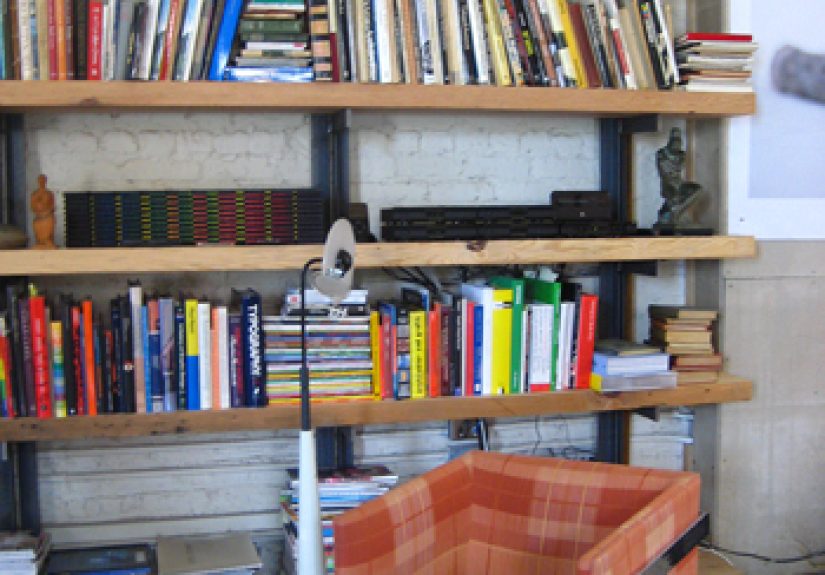
The sculptural studio approach turns storage into architecture. Reclaimed wood shelving in the Marvin Lang space is both practical and expressive. It gives supplies a home while reinforcing the studio’s material story. The wood was salvaged from the building, so the shelves feel integrated rather than added as an afterthought.
The homasote pinboard is another clever move. A large display wall gives prints, posters, sketches, and references a flexible place to land. This is much better than stacking inspiration on a desk until the desk files a formal complaint. A pinboard also keeps the creative process visible, which can make the studio feel active and alive.
Metal Walls, Magnet Boards, and a Little Drama
One of the standout choices in the studio is the use of metal walls. They are striking, but they also work hard. In the bathroom area, metal surfaces double as enormous magnet boards, proving that dramatic materials can still be useful.
This is the secret sauce of sculptural design: the boldest elements should earn their keep. A metal wall should not exist only to look cool in photos, though that is a nice side hustle. It can support presentations, hold notes, display samples, or protect surfaces in high-use areas.
The kitchen corner continues the idea with metal used as an easy-wipe backsplash. Paired with a thick marble counter, undermount sink, and wall-mounted faucet, the result feels polished without losing the industrial edge. It is the design equivalent of wearing boots with a tailored jacket.
Why Humor Belongs in Serious Design
A studio can be beautiful and still feel stiff. Humor prevents that. In the Marvin Lang space, signage adds personality and reminds visitors that creativity is not a solemn ceremony. A clever sign near a bathroom or above a counter can do what a perfect chair cannot: make people smile.
Humor also makes a workplace more memorable. Clients may forget the exact dimensions of a conference table, but they will remember a witty graphic, an unexpected sign, or the moment they noticed old chains preserved in the concrete floor. Those details create emotional hooks.
For creative businesses, personality is not decoration. It is branding. A sculptural studio tells clients what kind of thinkers work there: observant, resourceful, playful, and unafraid of texture.
Design Lessons From House Crashing a Sculptural Studio
1. Keep the Best Parts of the Past
Do not rush to erase age. Old brick, worn concrete, exposed beams, original openings, and salvaged objects can become the strongest features in a studio. The goal is not to preserve everything blindly, but to identify what gives the building character and build around it.
2. Let Materials Do the Talking
A sculptural studio does not need clutter to feel interesting. Brick, metal, wood, plaster, concrete, marble, and fabric can create enough visual richness when they are used with intention. Choose fewer materials and let them appear in meaningful ways.
3. Build Flexibility Into the Layout
Creative work changes. A studio may need to host clients one day, pin up a campaign the next, and become a production zone after that. Open layouts, movable furniture, large display surfaces, and smart storage help the room adapt without losing order.
4. Make Utility Beautiful
Closets, shelves, counters, pinboards, lighting, and even bathroom walls can contribute to the design. In a sculptural studio, function is not hidden in shame. It is shaped, finished, and celebrated.
5. Add One Detail People Will Talk About
Every memorable studio needs a conversation piece. It might be a custom door, a salvaged chain in the floor, a magnetic wall, a vintage lounge chair, or a dramatic pinboard. The detail should feel connected to the story of the place, not dropped in from a catalog with commitment issues.
How to Create a Sculptural Studio at Home
You do not need a late-19th-century garage to borrow ideas from this studio. A spare bedroom, basement, backyard shed, loft, or one-car garage can become a sculptural workspace if you focus on the right principles.
Start with the shell. What is already interesting? Maybe there is a concrete floor, a high ceiling, an old window, a strange niche, exposed rafters, or a wall that catches afternoon light beautifully. Highlight those elements instead of fighting them.
Next, choose a material palette. A good studio palette often includes one raw surface, one warm material, one smooth surface, and one soft element. For example: concrete, oak, painted drywall, and a wool rug. Or brick, plywood, metal, and canvas curtains. The mix should feel layered but not chaotic.
Then plan the workflow. Where will you think, make, meet, store, photograph, write, sketch, or build? A beautiful studio that does not support actual work is just a very expensive background for procrastination. Give every activity a zone, even if the zones overlap.
Finally, add personality. Display tools. Frame process sketches. Use signage. Keep one odd object that makes you happy. The best creative studios feel like their owners have been in conversation with the room, not just shopping for it.
Experience Section: What It Feels Like to Spend Time in a Sculptural Studio
Walking into a sculptural studio feels different from entering a standard office. You notice it before anyone says hello. The door has weight. The floor has texture. The room does not flatten itself into corporate politeness. Instead, it gives you something to look at, something to wonder about, and something to touchthough preferably not with paint-covered hands unless you own the place.
The first experience is usually spatial. A converted garage or industrial studio often has a generous openness that changes how people behave. Visitors slow down. They look up at beams, across the floor, toward the light. In a conventional office, the furniture tells you where to go. In a sculptural studio, the architecture invites you to explore.
The second experience is emotional. Raw materials make a room feel honest. Concrete does not pretend to be delicate. Brick does not beg for approval. Reclaimed wood carries dents and grain that suggest use, not perfection. That honesty can be surprisingly calming. It tells the people inside the room that work does not have to arrive fully polished. Ideas can begin rough. Sketches can be pinned up. Prototypes can be awkward. The room can handle it.
The third experience is creative. A studio with visible processpinboards, samples, shelves, models, posters, toolskeeps the mind moving. You might glance at a wall of printed references and suddenly understand the direction of a project. You might sit in the lounge and see how metal, marble, wood, and fabric can coexist without arguing. You might realize that storage can be inspiring when it is designed as part of the room rather than shoved behind a curtain like a family secret.
There is also a social experience. Client meetings in a sculptural studio feel less transactional. People do not simply sit across a table and exchange polished sentences. They react to the space. They ask questions. They point at details. The preserved chains in the concrete floor or the custom doors built for an old garage opening become conversation starters. Those moments loosen the mood and make collaboration feel more natural.
For the people who work there every day, the benefits are practical too. Durable floors reduce anxiety. Large display surfaces keep projects visible. Open space allows teams to gather without rearranging the universe. A small kitchen makes long days easier. Natural light helps the room feel less like a deadline cave. Even the humorous signs matter because they remind everyone that good work can be serious without becoming joyless.
The most lasting experience, though, is the sense that the studio has a point of view. It does not look assembled from random trends. It feels edited. It respects history while making room for modern work. It understands that beauty is not separate from usefulness. That is why sculptural studios linger in memory. They are not just places where creative work happens. They are creative work, built at architectural scale.
Conclusion
House Crashing: A Sculptural Studio proves that great design often begins with listening to what a building already wants to be. The Marvin Lang studio works because it does not disguise its garage origins. It refines them. The brick, plaster, concrete, metal, reclaimed wood, custom doors, and salvaged details all become part of a larger story about creativity, sustainability, and personality.
For anyone dreaming of a better workspace, the lesson is clear: do not chase perfection so hard that you erase character. Keep the texture. Use the light. Make storage beautiful. Let practical surfaces earn their applause. Add humor. And when an old building offers you a weird, wonderful detail, think twice before covering it up. That detail might be the soul of the whole studio.