Table of Contents >> Show >> Hide
- Why Woodpeckers Peck on Houses
- 10 Ways to Get Rid of Woodpeckers Humanely
- 1. Act at the First Tap
- 2. Install Bird Netting Where Damage Is Happening
- 3. Hang Reflective Streamers, Mylar Tape, or Shiny Objects
- 4. Cover Damaged Areas With Metal, Plastic, or Hardware Cloth
- 5. Repair Holes Quickly After Activity Stops
- 6. Check for Insects and Rot
- 7. Remove or Relocate Nearby Attractants
- 8. Try Motion, Noise, and Predator-Style Deterrents Carefully
- 9. Offer a Better Natural Option Away From the House
- 10. Call a Wildlife Professional When Damage Continues
- What Not to Do When Trying to Get Rid of Woodpeckers
- How to Identify the Type of Woodpecker Damage
- Best Woodpecker Deterrent Strategy for Most Homes
- Seasonal Tips for Preventing Woodpecker Damage
- Real-World Homeowner Experiences and Practical Lessons
- Conclusion
Woodpeckers are charming when they are tapping away in a forest, doing important bird business and looking like tiny feathered contractors. They are less charming at 6:12 a.m. when your bedroom wall becomes their personal percussion instrument. If you have ever heard a woodpecker drilling into siding, fascia, trim, gutters, chimney flashing, or a perfectly innocent cedar shake, you already know one thing: these birds do not believe in “indoor voices.”
The good news is that you can get rid of woodpeckers from your house without harming them, breaking wildlife laws, or turning your home into a haunted scarecrow museum. The most effective strategy is not one magic product. It is a smart combination of early action, physical barriers, visual deterrents, repairs, insect control, and habitat tweaks that make your home less exciting than a dead tree in the woods.
Before you begin, remember this important point: most native birds in the United States, including woodpeckers, their nests, and their eggs, are protected by federal law. That means you should focus on legal, humane woodpecker deterrentsnot trapping, poisoning, harming, or removing active nests. If the bird has already created an active nest with eggs or young, wait until the young have left permanently before sealing the cavity.
This guide explains how to keep woodpeckers away, how to stop woodpecker damage before it spreads, and how to make your home a lot less attractive to these noisy little carpenters.
Why Woodpeckers Peck on Houses
Woodpeckers do not attack homes because they hold a personal grudge against vinyl trim or because your house insulted their mother. They usually peck for one of four reasons: drumming, feeding, nesting, or roosting.
Drumming
Drumming is not the same as drilling. It is a communication behavior, often used to claim territory or attract a mate. Metal gutters, downspouts, chimney caps, flashing, and siding can create a loud, satisfying sound. To a woodpecker, your gutter may seem like the world’s best dating app.
Feeding
Sometimes woodpeckers are hunting insects hiding in or behind siding, trim, fascia boards, or damaged wood. Carpenter bees, wood-boring insects, ants, and larvae can attract them. If a bird keeps returning to the same area and pecking in rows or clusters, inspect the wood for insect activity.
Nesting or Roosting
Woodpeckers naturally excavate cavities in dead or decaying trees. In neighborhoods where dead trees have been removed, soft wood siding, cedar trim, or synthetic stucco can become a tempting substitute. Large round or oval holes may indicate a bird is trying to make a roosting or nesting cavity.
Food Storage
In some regions, especially where acorn woodpeckers live, birds may drill many small holes to store acorns. If your siding looks like someone attacked it with a tiny hole puncher and a mission, food storage may be part of the problem.
10 Ways to Get Rid of Woodpeckers Humanely
1. Act at the First Tap
The best time to stop woodpecker damage is the moment you first hear tapping. Woodpeckers can become attached to a successful drumming or drilling site. Once a bird decides your house is useful, it may keep returning, especially during spring breeding season or fall roosting season.
Walk around your home and identify the exact location of the sound. Look for fresh chips, small dents, rows of holes, larger cavities, or marks near trim and eaves. Pay special attention to cedar siding, redwood siding, stained wood, grooved plywood, fascia boards, and areas under rooflines.
Early action also reduces repair costs. A small hole is annoying. A large cavity that lets in rain, insects, or other wildlife is a tiny real estate disaster. Cover the damaged area temporarily, install deterrents nearby, and begin repairs as soon as you are sure no bird is inside.
2. Install Bird Netting Where Damage Is Happening
Physical exclusion is one of the most reliable ways to keep woodpeckers away from siding. Lightweight bird netting creates a barrier between the bird and the surface it wants to peck. When installed correctly, it prevents the bird from reaching the wood without hurting it.
Use netting designed for birds, and hang it from the outer edge of the eave down over the damaged section. Leave about three inches of space between the netting and the wall so the bird cannot simply cling to the mesh and peck through it. Secure the sides and bottom so the bird cannot sneak behind the netting like a tiny burglar in a feather jacket.
Netting works especially well on repeat trouble spots such as upper siding, chimney chases, gables, cedar panels, and second-story trim. Choose a color that blends with the house if appearance matters. Check it regularly for tears, sagging, or gaps.
3. Hang Reflective Streamers, Mylar Tape, or Shiny Objects
Reflective streamers are among the more practical visual woodpecker deterrents because they combine movement and flashing light. The goal is to make the pecking area feel unpredictable. Birds prefer safe, repeatable routines. A shiny strip flapping in the breeze says, “This wall is weird now. Try somewhere else.”
Hang reflective tape, Mylar strips, aluminum foil strips, shiny ribbon, or bird scare tape near the damaged area. Let the strips move freely in the wind. For best results, place them close to the exact pecking site, not twenty feet away where they become decorative party streamers for nobody.
You can also hang aluminum pie tins, reflective pinwheels, or shiny windsocks. Move them every few days if the bird appears to be getting used to them. Visual deterrents usually work best when combined with repairs or barriers.
4. Cover Damaged Areas With Metal, Plastic, or Hardware Cloth
If a woodpecker is focusing on a specific section of siding or trim, cover that spot with a physical shield. Hardware cloth, sheet metal, metal flashing, or durable plastic sheeting can prevent further drilling. This is especially helpful when the bird has already made a hole and keeps coming back to “finish the project.”
For a neater look, paint the covering to match your siding or trim. Some homeowners use simulated wood-grain panels or color-matched metal flashing. The point is to protect the surface until the bird gives up and moves on.
Do not permanently seal a deep cavity until you confirm there are no birds inside. Watch the area during the day. If you see a bird entering and leaving a hole, it may be a roosting or nesting cavity. If there are eggs or young, wait until the nest is inactive before closing it.
5. Repair Holes Quickly After Activity Stops
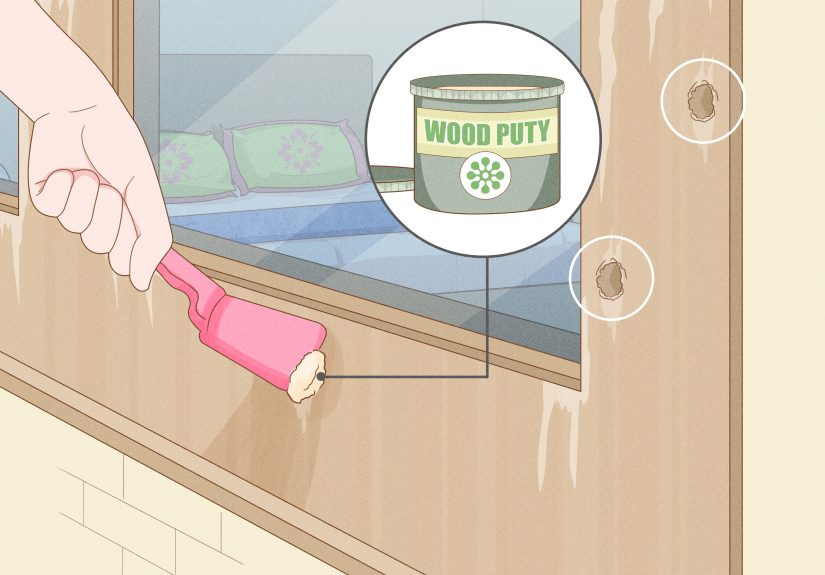
Woodpecker holes are not just cosmetic. They can let in moisture, insects, drafts, and other wildlife. Once you are sure the bird is gone and the cavity is empty, repair the damage promptly.
Small dents and shallow holes can often be filled with exterior wood filler or epoxy, then sanded and painted. Larger holes may require replacement boards, trim repair, or professional carpentry. If the damaged area is near a roofline, chimney chase, or upper story, consider hiring someone who can work safely on ladders.
Painting or staining the repaired area helps protect the wood and makes the patch less noticeable. However, do not rely on paint alone as a woodpecker repellent. Paint may improve the surface condition, but it is not a guaranteed deterrent. Repair plus exclusion plus scare tactics is much stronger than repair alone.
6. Check for Insects and Rot
A woodpecker may be doing you an accidental favor by revealing a hidden insect or moisture problem. If the bird is pecking repeatedly in one area, inspect the siding, fascia, soffits, trim, and nearby wood for signs of carpenter bees, ants, beetle larvae, soft spots, or rot.
Look for sawdust-like material, small round bee holes, water stains, cracked caulk, loose boards, or softened wood. Carpenter bee activity is especially common around fascia boards, trim, decks, and unfinished or weathered wood. Woodpeckers may enlarge bee tunnels to reach larvae inside.
If you find insects, treat the pest issue appropriately or contact a licensed pest professional. Seal cracks and gaps, replace rotted wood, and keep exterior wood in good condition. A sound, well-maintained building is usually less interesting to a hungry woodpecker than a bug buffet hiding behind loose siding.
7. Remove or Relocate Nearby Attractants
If you are trying to discourage woodpeckers from your house, do not accidentally invite them to brunch three feet away. Suet feeders, peanut feeders, sunflower seed feeders, and dead limbs near the house can attract woodpeckers. That does not mean you can never enjoy backyard birds. It means you should think strategically.
Temporarily remove suet or high-fat feeders while damage control is underway. If you keep bird feeders, place them farther from the house, ideally near trees or natural cover where woodpeckers can feed without investigating your siding. Clean up spilled seed that may attract insects or other wildlife.
Trim branches that touch or nearly touch the house. Branches can give birds easier access to siding and trim. Also remove loose bark, rotting wood scraps, or insect-infested firewood stacked against the home. Firewood should be stored away from siding, not parked against the house like a welcome sign for every insect in the county.
8. Try Motion, Noise, and Predator-Style Deterrents Carefully
Fake owls, hawk silhouettes, balloons with large eyes, motion-activated sprinklers, and sound devices can sometimes help. They are not always reliable because woodpeckers are clever enough to realize that a plastic owl has not moved, blinked, eaten, or paid property taxes in three weeks.
These deterrents work best when they move, appear suddenly, or are changed often. A stationary owl placed on the same railing for a month becomes lawn decor. A moving hawk mobile, reflective balloon, or motion-triggered device near fresh damage may be more effective.
Noise deterrents such as clapping boards, distress-call devices, or sudden sounds may help in the short term. However, repeated noise can annoy neighbors and may lose effectiveness if birds learn there is no real threat. Use sound as a support tactic, not your entire plan.
9. Offer a Better Natural Option Away From the House
Sometimes the best way to get rid of woodpeckers from siding is to make a more appropriate location available elsewhere. Woodpeckers naturally use dead trees, snags, and cavities for nesting and roosting. Where safe and practical, leaving a dead limb or snag away from structures may give them a better option.
You can also install a woodpecker nest box or a dedicated drumming board away from the house. This strategy is not always the first choice because diversion does not guarantee the bird will abandon your siding. Still, it can be useful when combined with barriers on the damaged area.
If your neighborhood has very few mature or dead trees, woodpeckers may view houses as substitute habitat. Creating safe, natural alternatives away from your home can reduce pressure over time while still supporting wildlife.
10. Call a Wildlife Professional When Damage Continues
If the damage keeps spreading, the bird is reaching difficult areas, or you suspect an active nest, contact a wildlife professional, state wildlife agency, local extension office, or U.S. Fish & Wildlife Service regional contact for guidance. This is especially important if you are dealing with protected or endangered species, major structural damage, or repeated nesting attempts.
A qualified professional can help identify the species, determine whether the activity is drumming, feeding, nesting, or roosting, and recommend legal next steps. In rare cases involving serious damage, property owners may be able to apply for special permits, but non-lethal methods usually must be tried first.
Do not hire anyone who casually suggests killing, poisoning, or trapping woodpeckers without proper authorization. That can create legal trouble and unnecessary harm. The goal is to solve the problem, not turn a bird conflict into a courtroom episode.
What Not to Do When Trying to Get Rid of Woodpeckers
Some ideas sound convenient but can cause harm, fail quickly, or create legal problems. Avoid sticky repellents on siding, trees, or perches. These products can get on feathers, interfere with flight, trap small animals, stain surfaces, and create messy cleanup problems.
Do not seal a hole if there is any chance a bird is inside. Watch for entry and exit activity first. Do not remove active nests with eggs or young. Do not use poison, glue traps, firearms, or homemade harmful devices. Besides being inhumane, these methods can violate wildlife laws.
Also avoid relying on one plastic owl as your entire plan. A fake predator may scare a bird for a day or two, but woodpeckers often adapt. Think in layers: block access, repair damage, remove attractants, use moving visual deterrents, and address insects or rotting wood.
How to Identify the Type of Woodpecker Damage
Small Rows of Holes
Rows of small holes may be caused by sapsuckers, which drill to access sap. This pattern is often seen on trees, but similar-looking damage can occur on wood surfaces.
Large Round or Oval Holes
Large holes may suggest nesting or roosting behavior. These holes often appear in upper areas of walls, gables, trim, or chimney chases.
Random Shallow Dents
Shallow marks can be exploratory pecking or drumming. If the surface is metal, the bird may simply enjoy the amplified sound.
Pecking Near Bee Holes
If damage appears around fascia boards, eaves, or trim with small round insect holes, carpenter bees or other insects may be attracting the bird.
Best Woodpecker Deterrent Strategy for Most Homes
For most homeowners, the most practical plan is simple: identify the active spot, hang reflective moving deterrents immediately, cover the area with netting or sheathing, inspect for insects, and repair holes once the bird is gone. This combination addresses both the bird’s behavior and the reason the site was attractive in the first place.
If you only hang a shiny ribbon but leave a large open cavity, the bird may return. If you only patch the hole but ignore carpenter bees, the buffet remains open. If you only put up a fake owl, the bird may file it under “harmless plastic nonsense” and continue drilling. A layered approach works better because it changes the bird’s experience from rewarding to inconvenient.
Seasonal Tips for Preventing Woodpecker Damage
Spring
Spring is a peak season for drumming, territory defense, mate attraction, and nesting behavior. Listen for new tapping early in the morning and late afternoon. Install deterrents quickly.
Summer
Summer is a good time to repair old damage, treat insect issues, paint exposed wood, and improve caulking. If there was an active nest, wait until it is fully inactive before sealing holes.
Fall
Some woodpeckers search for winter roosting sites in fall. Inspect gables, trim, and chimney chases before cold weather. Close gaps and protect soft wood.
Winter
Keep an eye on roosting holes and exposed wood. If you feed birds, place feeders away from the house and avoid encouraging woodpeckers right beside vulnerable siding.
Real-World Homeowner Experiences and Practical Lessons
Homeowners who deal with woodpeckers often learn the same lesson the hard way: waiting usually makes the problem louder, larger, and more expensive. A single early-morning tapping session may seem harmless, but repeated visits can turn one tiny dent into a repaired-board situation. The most successful experiences usually come from people who respond right away instead of hoping the bird gets bored and enrolls in a quieter hobby.
One common experience involves cedar siding. Cedar looks beautiful, smells wonderful, and apparently sends some woodpeckers a message that says, “Luxury drilling available here.” Owners of cedar-sided homes often report damage near corners, upper walls, and gables. In these cases, lightweight netting or temporary sheathing over the favorite pecking zone tends to work better than a single scare device. Reflective streamers help, but they need to be close to the damaged area and allowed to move freely. A shiny strip tucked neatly against the wall does not scare much of anything; it just looks like the house is wearing a sad ribbon.
Another frequent story involves metal gutters or downspouts. The bird is not trying to eat the metal. It is using the loud surface to drum. Homeowners sometimes search for insect damage and find none because the issue is communication, not food. For this type of problem, the best response is to interrupt the drumming site with moving visual deterrents, foam padding in limited non-damaging locations, or temporary covers that reduce resonance. The goal is to make the spot less satisfying.
Carpenter bees create another classic scenario. A homeowner notices a few round bee holes under fascia boards in spring. Later, a woodpecker arrives and starts enlarging the area like a tiny demolition crew with wings. In that case, chasing the bird away without addressing the bee problem is only half a solution. Treating or sealing the bee tunnels after activity stops, repairing the wood, and repainting or protecting the area can prevent repeat visits.
Some people also discover that fake owls are not the mighty guardians they hoped for. A plastic owl may work briefly, especially if it moves or is relocated often. But if it sits in the same place every day, birds may ignore it. Homeowners get better results when they rotate deterrents: reflective tape this week, a moving hawk silhouette next week, netting over the hot spot, and quick repairs once the bird stops visiting.
The biggest practical lesson is that woodpecker control is not about declaring war on birds. It is about changing the conditions. Remove the reward, block the surface, repair the damage, and make natural alternatives more appealing. When homeowners use that approach, they usually protect the house while still respecting the bird’s role in the ecosystem. And yes, they also get their mornings back, which is no small victory when your gutter has been hosting a sunrise drum solo.
Conclusion
Getting rid of woodpeckers does not mean harming them. It means persuading them that your home is not a good place to drum, drill, nest, roost, or hunt insects. Start early, use physical exclusion when possible, hang moving reflective deterrents, repair damage quickly, inspect for insects, and avoid illegal or harmful methods. If the problem continues, ask a wildlife professional or agency for help.
Woodpeckers are valuable birds, but your siding does not need to become their next renovation project. With the right plan, you can protect your house, stay within the law, and finally enjoy a morning that does not sound like someone tap-dancing on a downspout.