Table of Contents >> Show >> Hide
- The Tube Bar: The Real-Life Place Behind the Legend
- Why the Calls Became Underground Comedy Gold
- Enter Moe Szyslak: Red Deutsch Reimagined for Springfield
- How Bart’s Prank Calls Work So Well
- From Filthy Tapes to Family TV
- The Pre-Internet Viral Machine
- Why Moe Was the Perfect Target
- The Difference Between Inspiration and Copying
- Specific Examples That Show the Influence
- What the Prank Calls Say About The Simpsons’ Comedy
- Experience Section: Why This Topic Still Feels So Funny
- Conclusion
Before Moe Szyslak became television’s most reliably humiliated bartender, before Bart Simpson weaponized fake names like a fourth-grade Shakespeare of nonsense, there was a real bar, a real phone, and a real man with a temper hot enough to toast a pretzel from across the room. The beloved prank calls to Moe’s Tavern in The Simpsons did not appear out of nowhere. They were shaped by a strange slice of American comedy folklore: the Tube Bar prank calls.
The short version is simple: in the mid-1970s, two young men repeatedly called the Tube Bar in Jersey City, New Jersey, asking the bartender to page imaginary customers whose names sounded innocent until said aloud. The bartender, Louis “Red” Deutsch, often fell for it, then exploded when he realized what had happened. Recordings of those calls spread through bootleg tapes, comedy circles, sports locker rooms, and eventually pop culture history. Years later, America met Moe, Bart dialed the phone, and a running gag was born.
The longer version is much funnier, weirder, and more complicated. It is a story about analog-era viral media, prank comedy, working-class bar culture, and how The Simpsons polished a very adult underground joke into something that could air on prime-time television without making network executives faint into their clipboards.
The Tube Bar: The Real-Life Place Behind the Legend
The Tube Bar was located in Jersey City’s Journal Square area, near the PATH station. It was not a glossy sitcom set with perfect lighting and lovable regulars. It was a neighborhood bar: practical, loud, and rooted in the everyday rhythm of commuters, locals, and regular drinkers. Its owner, Louis “Red” Deutsch, was a former heavyweight boxer, which is an important detail because it makes his furious phone reactions feel less like theater and more like a man auditioning to fight the telephone itself.
In the mid-1970s, pranksters John Elmo and Jim Davidson began calling the Tube Bar. Their setup was painfully simple. They would ask Red if a certain person was in the bar. The name sounded like an ordinary customer name when broken apart, but once Red shouted it across the room, the joke landed. Think “Al Coholic,” a name later echoed by The Simpsons, or other pun-based names that leaned far more adult than anything Bart could safely say on Fox.
That was the engine of the joke: the bartender unknowingly became the performer. The pranksters did not need elaborate scripts, costumes, or a laugh track. They needed a phone, a straight face, and a man willing to yell a ridiculous name into a crowded bar. Comedy, as always, is 90 percent timing and 10 percent someone realizing too late that they have just been tricked.
Why the Calls Became Underground Comedy Gold
Today, a prank call can become a clip, a meme, a reaction video, and a dozen remixes before lunch. In the 1970s and 1980s, viral comedy moved more slowly, usually by cassette tape. The Tube Bar tapes were copied, shared, mislabeled, re-copied, and passed around like forbidden comedy treasure. They became part of an underground audio culture long before “content creator” was a job title and long before anyone was asking people to smash the like button.
The appeal was obvious. Red’s reactions were huge. He was not mildly annoyed. He was volcanic. When he caught on, he responded with anger, profanity, and threats that were far too harsh for family television. That intensity made the tapes feel dangerous, almost like listeners were hearing something they were not supposed to hear. The calls had the messy thrill of real life: no punch-up room, no studio polish, no safety net.
But that rawness is also why the Tube Bar calls needed translation before they could influence mainstream comedy. The Simpsons did not simply copy the tapes and drop them into Springfield. The show transformed the concept. It kept the structure: caller asks for fake name, bartender says it aloud, crowd laughs, bartender explodes. Then it softened the edges, sharpened the rhythm, and replaced underground nastiness with cartoon chaos.
Enter Moe Szyslak: Red Deutsch Reimagined for Springfield
Moe Szyslak is not a one-to-one copy of Red Deutsch. He is a fictional character built from many comic ingredients: the grumpy bartender, the lonely neighborhood fixture, the man who is somehow both threatening and pathetic, the guy who owns a business but seems surprised every day that customers enter it. Still, the connection between Red and Moe is hard to miss.
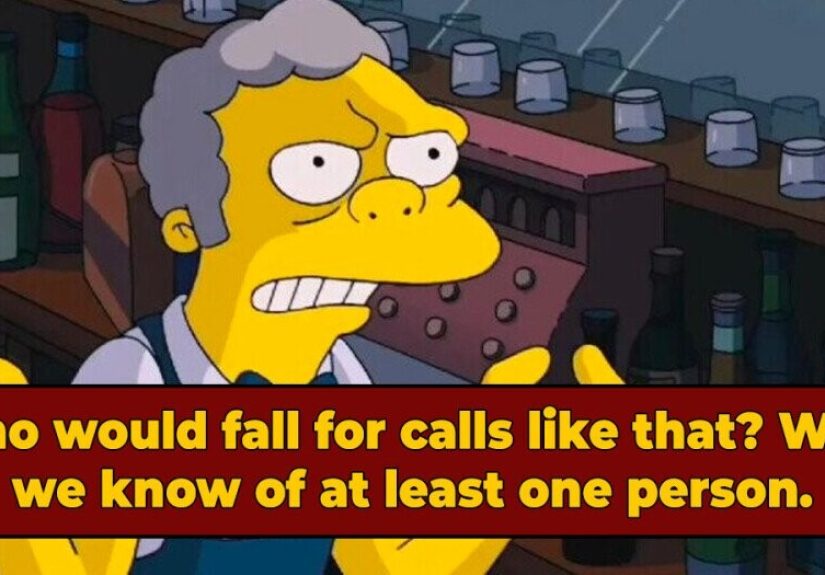
Like Red, Moe answers the phone at a bar. Like Red, he is tricked into calling out joke names. Like Red, he does not immediately recognize the trap. And like Red, once the laughter begins, he shifts from confusion to fury at impressive speed. Moe’s rage is one of the great cartoon overreactions: he threatens Bart in wildly exaggerated ways, while Bart giggles safely on the other end of the line.
The genius of The Simpsons is that Moe’s anger is scary only in theory. He is a bartender with the soul of a thundercloud, but the show makes him strangely lovable. He is not just a victim of Bart’s jokes; he is part of the ritual. Fans know the pattern, enjoy the setup, and wait for the explosion. Moe loses, the bar laughs, Bart hangs up, and Springfield resets for another day of emotional property damage.
How Bart’s Prank Calls Work So Well
Bart Simpson’s prank calls are built on a classic comedy formula: repetition with variation. The audience understands the mechanism almost immediately. Bart calls Moe’s Tavern. He asks for someone with a fake name. Moe repeats the name. The bar hears the double meaning. Everyone laughs. Moe realizes he has been fooled and threatens revenge. The joke ends before consequences arrive, because Bart is protected by distance, childhood, and the laws of sitcom physics.
Some of the most memorable examples include names like “I.P. Freely,” “Amanda Huggenkiss,” “Hugh Jass,” “Al Coholic,” and “Ivana Tinkle.” These jokes are childish, yes, but that is exactly why they fit Bart. He is ten years old. His comedy should sound like something invented by a kid who has just discovered homophones and has chosen to use this power irresponsibly.
The show also benefits from Moe’s voice performance. Hank Azaria gives Moe a gravelly desperation that makes every prank call feel personal. Moe sounds like a man who has been defeated by life, the health department, and now a child with a telephone. That emotional texture turns a simple pun into character comedy.
From Filthy Tapes to Family TV
The Tube Bar calls were far filthier than The Simpsons version. The original recordings used adult language, harsher insults, and a level of aggression that would never work in a family sitcom. What the show borrowed was not the explicit content but the comic architecture. It took a real underground prank format and made it broadcast-safe.
This is one reason the gag has lasted. The Simpsons understood that suggestion is often funnier than full exposure. Viewers do not need the nastiest version of the joke. They need just enough mischief to feel like they are getting away with something. The names are silly, the setup is clear, and Moe’s reaction supplies the fireworks.
That transformation is also a small lesson in adaptation. Raw material is not automatically good television. The Tube Bar tapes were chaotic, uneven, and sometimes uncomfortable. The Simpsons turned that chaos into a repeatable, character-driven joke. It found the comedy inside the structure and left the ugliest parts outside the tavern door.
The Pre-Internet Viral Machine
The Tube Bar story also reminds us that viral culture did not begin with social media. Before TikTok, YouTube, Reddit, or group chats, people still found ways to share strange entertainment. They dubbed tapes. They mailed copies. They played recordings in dorm rooms, tour buses, offices, and locker rooms. Every generation has its own way of saying, “You have to hear this.”
The Tube Bar tapes spread because they felt authentic. Listeners were not hearing actors perform a polished sketch. They were hearing real people caught in an absurd loop. That sense of reality gave the recordings their charge. It also made them ethically murky. Prank comedy often lives in that uncomfortable space between cleverness and cruelty.
The Simpsons solved that problem by changing the power balance. Bart is a fictional kid. Moe is a fictional bartender. Nobody is truly harmed, and the show’s cartoon world absorbs the insult like a sponge absorbs spilled Duff Beer. The audience can laugh without feeling like it is eavesdropping on an actual person’s humiliation.
Why Moe Was the Perfect Target
Moe works as the target because he is both vulnerable and ridiculous. He is angry, but not powerful. He is threatening, but rarely effective. He wants respect, but his own bar regularly betrays him with laughter. That combination makes him ideal for a prank-call gag.
If Bart called a calm, emotionally balanced bartender, the joke would die immediately. “Sorry, no one by that name here” is not comedy; it is customer service. Moe gives the joke oxygen. He commits. He yells the name. He takes the bait. Then he detonates. Without Moe’s personality, Bart’s prank calls would be little more than a list of puns.
There is also a sadness under the surface. Moe wants to be taken seriously. He wants friendship, romance, dignity, and maybe a bar that does not look like it smells permanently of peanuts and regret. Bart’s calls puncture that dignity again and again. The joke is funny because Moe overreacts, but it works because Moe is human enough to care.
The Difference Between Inspiration and Copying
When people say the Tube Bar calls “inspired” Moe’s prank-call scenes, that word matters. Inspiration does not mean every detail was copied. The real recordings involved Red Deutsch, a Jersey City bar, adult pranksters, and cassette-era circulation. The Simpsons created Moe Szyslak, Springfield, Bart Simpson, and a sitcom rhythm that turned the premise into a recurring television bit.
The difference is craft. The Tube Bar tapes were accidental folk comedy. The Simpsons version was scripted comedy built around character, timing, and escalation. In the real calls, the fun came from unpredictability. In the cartoon, the fun comes from knowing exactly what will happen and still enjoying it every time.
That is why Bart’s calls became iconic. The audience is not surprised by the structure after the first few times. Instead, viewers listen for the name, wait for Moe’s realization, and enjoy the tiny variations. It is comfort food for troublemakers, served with a side of cranky bartender.
Specific Examples That Show the Influence
The clearest example is “Al Coholic,” a joke name closely associated with both the Tube Bar style and Bart’s calls to Moe. It captures the basic formula perfectly: innocent first name, suspicious last name, embarrassing result when shouted aloud. The gag is simple enough for a child to understand and strong enough for adults to recognize as part of a much older prank tradition.
“I.P. Freely” is another classic because it shows how The Simpsons leaned into juvenile wordplay without crossing too far into the original tapes’ harsher territory. The joke is naughty, not nasty. It feels like something Bart would proudly write in the margins of a school worksheet while pretending to learn fractions.
“Amanda Huggenkiss” adds a slightly different flavor. The punchline depends not only on the sound of the name but also on Moe’s lonely delivery. When Moe says it aloud, the line becomes accidentally pathetic, and the bar’s reaction makes the embarrassment worse. The joke is not just “Moe said a funny name.” It is “Moe accidentally revealed something sad while trying to answer the phone.” That is advanced nonsense.
What the Prank Calls Say About The Simpsons’ Comedy
The Moe prank calls are a tiny example of what made early The Simpsons so sharp. The show had a gift for taking pieces of American lifebars, schools, churches, local news, family dinners, cranky neighborsand bending them into satire. A neighborhood bar phone became a comedy trap. A bartender became a mythic fool. A child became a tiny chaos agent with access to a landline.
The gag also reflects the show’s layered humor. Kids could laugh at the silly names. Adults could recognize the older prank tradition. Comedy fans could appreciate the timing. Viewers familiar with the Tube Bar tapes could spot the deeper reference. That layering helped The Simpsons become more than a cartoon. It became a cultural filing cabinet stuffed with references, jokes, and weird American leftovers.
Experience Section: Why This Topic Still Feels So Funny
Part of the reason this story remains fascinating is that nearly everyone understands the tiny thrill of a prank call, even if they have never made one. The phone creates distance. Distance creates boldness. Boldness creates bad decisions. In Bart’s case, the bad decision becomes a weekly art form. He is not trying to win money, expose corruption, or change the world. He just wants Moe to say something embarrassing in front of customers. It is low-stakes mischief, which is exactly the kind that tends to survive in pop culture.
Watching those scenes today feels like opening a time capsule from the landline era. A prank call required patience. You had to dial. You had to hope the right person answered. You had to keep your voice steady. There was no mute button safety dance, no caller ID confidence, no instant block list. The risk was part of the fun. Bart’s calls preserve that old telephone tension, but in cartoon form, where consequences arrive only when the writers want them to.
The Tube Bar background adds another layer because it shows how comedy travels. A crude local joke became a bootleg recording. A bootleg recording became an underground legend. That legend influenced writers and performers. Then a cleaned-up version reached millions of viewers through one of the most famous animated shows ever made. It is like watching a joke put on a little suit, comb its hair, and sneak into network television while still hiding a whoopee cushion in its pocket.
There is also something oddly human about Moe’s repeated failure. Every time he answers the phone, part of us wants him to catch Bart immediately. Another part of us absolutely does not. Moe’s confusion is the ceremony. The bar’s laughter is the chorus. Bart’s giggle is the curtain drop. The joke works because the audience is in on it from the start, and Moe is always three seconds behind.
At the same time, modern viewers may notice the ethical difference between laughing at a fictional character and laughing at a real person being baited. The Tube Bar calls are historically important to comedy culture, but they are also rough, invasive, and sometimes mean. The Simpsons improved the formula by making it fictional. Moe can be humiliated forever because Moe is ink, voice acting, and timing. Red Deutsch was a real person. That distinction matters.
That may be the biggest reason the Simpsons version aged better. It kept the rhythm of the prank but removed the real-world target. It turned discomfort into character comedy. Moe’s Tavern became a safe little laboratory for bad names and big reactions. Bart could be naughty, Moe could be furious, and viewers could laugh without needing to pretend that cruelty is the same thing as wit. In the end, the prank calls are not just about a fake name shouted in a bar. They are about how comedy gets refined, recycled, and reimagined until a dirty cassette-era joke becomes a prime-time classic.
Conclusion
The real prank calls that inspired Moe’s Tavern are a perfect example of how pop culture digests strange material. The Tube Bar tapes were messy, adult, and underground. The Simpsons took the bones of that idea and rebuilt it into something brighter, tighter, and funnier for a mass audience. Red Deutsch’s real-life fury helped shape the comic DNA of Moe Szyslak, but Moe became his own character: sad, angry, foolish, oddly lovable, and forever doomed to answer the phone.
Bart’s prank calls endure because they are simple, repeatable, and character-based. They combine childish wordplay with adult comic timing. They also remind us that some of television’s most famous jokes have surprisingly weird roots. Behind Moe’s cracked voice and Bart’s giggles sits an old Jersey City bar, a ringing phone, and a prank that traveled farther than anyone could have expected.