Table of Contents >> Show >> Hide
When summer containers start looking tired, stretched, and just a little emotionally unavailable, most gardeners reach for flowers. That works. But if you want a container that looks good longer, asks for less fuss, and still turns heads on the porch, foliage plants are the real fall heroes. They do not need constant deadheading, they hold their shape beautifully, and many actually look better as temperatures cool down. In other words, foliage is the overachiever of autumn.
Fall containers also benefit from something flowers sometimes cannot deliver on their own: staying power. A great autumn planter is not just colorful for one weekend while the pumpkins are fresh and the cider is photogenic. It should still look rich, layered, and lively weeks later. That is where colorful foliage plants shine. They bring texture, movement, contrast, and color that can last through chilly nights and, in many climates, well into early winter.
If you want porch pots, patio planters, window boxes, or front-door containers that keep working after summer annuals call it a season, here are 11 colorful foliage plants for long-lasting fall containers. Some bring deep burgundy drama, some bring silver shimmer, and some spill over the rim like they are trying to escape and become famous.
Why Foliage Plants Work So Well in Fall Containers
Fall container gardening is all about durability and contrast. Cooler weather often intensifies leaf color, especially in plants like ornamental kale and cabbage, while grasses and sedges add the kind of movement that makes a planter feel alive even on windy, gray days. Foliage also lets you build containers that look layered instead of flat: one plant can provide height, another can mound, and another can spill over the edge in a soft cascade.
Another big perk is flexibility. You can create bold combinations with just foliage, or you can mix leafy plants with a few cool-season bloomers like pansies or violas. That means your containers do not have to become a mum-only reunion. You can create modern, moody, cheerful, rustic, or elegant looks just by changing the leaf color palette and texture.
11 Colorful Foliage Plants for Long-Lasting Fall Containers
1. Coleus
Coleus is one of the easiest ways to cheat your way into a great-looking fall container. Its leaves come in combinations of chartreuse, burgundy, copper, plum, near-black, lime, and pink, so it can play almost any role in a planter. Want a bright centerpiece? There is a coleus for that. Need something to bridge purple kale and silver foliage without making the container look confused? Coleus has your back.
What makes coleus especially useful is its range. Some varieties thrive in shade, while others handle more sun, so it is easy to match it to your container location. In early fall, it often still looks lush while summer flowers are fading out. It works beautifully in mixed containers with ornamental grasses, coral bells, or trailing plants, and it gives you a lot of color without relying on blooms.
2. Purple Fountaingrass
If your container needs height, movement, and a little swagger, purple fountaingrass is the answer. Its burgundy foliage and airy plumes instantly make a planter look designed instead of merely planted. It is the classic “thriller” in a thriller-filler-spiller combination, and it earns the title.
This plant is especially effective in large fall containers by entryways, where its fountain-like shape softens hard edges and catches the light beautifully. Pair it with orange pansies, silver dusty miller, or burgundy ornamental kale and it practically announces, “Yes, I do know what I’m doing.” It prefers full sun and good drainage, and in colder climates it is often treated as a seasonal showpiece.
3. Hakone Grass
Hakone grass is the graceful one in the group. While some fall foliage plants shout, this one glows. Its golden leaves spill over the edges of containers in soft arcs, making it perfect for shady porches, woodland-style planters, or elegant mixed pots that need motion without drama overload.
The gold forms are especially beautiful in fall because they lighten darker plant combinations. Use hakone grass with black mondo grass, dark heuchera, or plum-toned coleus and you get a container that looks thoughtful and layered instead of heavy. It prefers consistent moisture and shade to part shade, which makes it a strong choice for spots where sun-loving fall planters would just sulk.
4. Purple Millet
Purple millet is bold, upright, and impossible to ignore. Its dark foliage and prominent seed heads bring a strong vertical accent to autumn containers, especially when you want a more architectural look. Think of it as the plant equivalent of a great leather jacket: structured, confident, and surprisingly easy to style.
It works best as a focal point in larger containers where it has room to stretch. Surround it with lower mounding plants like dusty miller, ornamental kale, or coral bells, and the whole arrangement instantly looks fuller and more layered. Purple millet also brings wildlife interest, since birds appreciate the seed heads, which is always a nice bonus for containers near patios or windows.
5. Cranberry Hibiscus
Cranberry hibiscus brings rich burgundy foliage with a maple-like look that feels custom-made for autumn. The leaves are serrated, dramatic, and saturated with color, which makes the plant look almost too pretty to be real. Almost. It is real, and it is excellent in fall containers.
This is a strong choice when you want leaf color that reads as elegant rather than busy. One plant can anchor a container all by itself, especially in a sleek pot with a minimal design. It also mixes well with grasses and silver foliage. Give it full sun, and be ready to pinch or prune if it starts taking over the container like an ambitious houseguest.
6. Sedge
Sedge, especially bronze or copper-toned selections, is one of the best texture plants for fall planters. It brings thin, arching foliage that contrasts beautifully with broader leaves like kale, cabbage, or coral bells. Some varieties are bright and grassy, while others lean bronzy and moody, which makes them incredibly flexible in container design.
Sedges are especially handy for softening structured arrangements. If a pot feels too stiff or formal, tuck in a sedge and suddenly it loosens up in the best way. Use it near the rim or toward the center depending on the cultivar. Just check the plant label before planting, because care can vary by type. In general, sedges are a designer’s secret weapon for texture.
7. Ornamental Kale
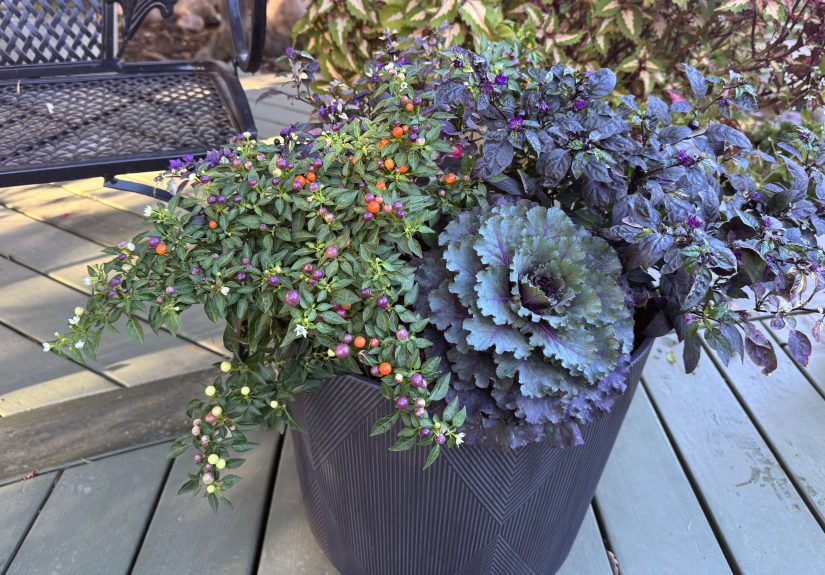
Ornamental kale is one of fall container gardening’s greatest hits for a reason. It comes in tight rosettes, frilly leaves, and shades of cream, green, pink, purple, and white. As temperatures cool, the colors intensify, which means your container may actually improve as the season goes on. That is not a bad quality in a plant.
It can be the star of a container or a supporting player, depending on the variety. A single giant rosette can create a sculptural, almost floral effect, while frilly types weave texture through a mixed planting. Kale combines especially well with pansies, coral bells, rosemary, mustard, and ornamental grasses. It handles cool weather beautifully and is a top pick when you want color that lasts beyond the first light frost.
8. Rosemary
Rosemary earns its place in fall containers because it does three jobs at once: it adds structure, it brings evergreen texture, and it smells fantastic when you brush past it. That is a lot of value from one plant. Its upright or trailing forms fit different container styles, from classic porch urns to herb-heavy patio planters.
Rosemary also makes a fall container feel practical instead of purely decorative. You can snip it for roasted vegetables, bread, chicken, or cocktails while it keeps your planter looking sharp. It likes full sun and sharply drained soil, so do not pair it with moisture-loving plants that want to stay consistently damp. It is the sort of plant that appreciates good drainage and resents soggy roots with Mediterranean intensity.
9. Coral Bells
Coral bells, also called heuchera, are container gold. Their leaves come in caramel, amber, plum, burgundy, silver, lime, peach, and nearly black tones, so they can fit warm, cool, or dramatic fall color schemes with ease. Smaller varieties make excellent fillers, forming tidy mounds that sit beautifully between taller grasses and trailing accents.
Coral bells are especially valuable in shaded fall containers, where bold flower color can be harder to maintain. A mix of coral bells with hakone grass, ivy, and a few violas can look polished for weeks. Many varieties also transition easily from container to garden bed, so once the season ends, you may be able to plant them out and enjoy them again next year.
10. Dusty Miller
Every good fall container needs contrast, and dusty miller delivers it in silver. Its felted, pale leaves brighten dark combinations, cool down warm palettes, and add a soft shimmer that is especially effective in afternoon light. If your container is full of burgundy, purple, copper, and orange, dusty miller keeps it from feeling visually heavy.
It is also wonderfully low-maintenance, especially in sunny containers with good drainage. Use it with ornamental kale, pansies, purple fountain grass, or coral bells for immediate contrast. It is one of those plants that quietly makes everything around it look better, which is a useful trait in gardening and in life.
11. Black Mondo Grass
Black mondo grass is the moodiest plant on this list, and that is exactly why people love it. Its narrow, dark foliage reads as nearly black, which makes it fantastic for sophisticated containers, Halloween-inspired pots, and high-contrast combinations. It gives containers a clean, modern edge without looking stiff.
Because its texture is fine and tufted, black mondo grass works well as a filler around bolder focal plants. Try it with orange pansies, gold hakone grass, silver dusty miller, or burgundy coleus for a striking color story. It prefers evenly moist, well-drained soil and is especially useful when you want a container that feels more dramatic than cheerful.
How to Build a Fall Container That Lasts
Choose the Right Container and Soil
Big pots generally perform better than tiny ones in fall because they hold moisture more evenly and buffer roots from temperature swings. Use a container with drainage holes and fresh, high-quality potting mix. Fall plants may not be growing as explosively as summer annuals, but they still need loose, well-drained soil to settle in and look good for the long haul.
Think in Layers
A long-lasting autumn planter usually has at least three visual jobs happening: height, body, and spill. Purple fountain grass or millet can provide height. Coral bells, kale, or coleus can fill the middle. Hakone grass or a low sedge can soften the edges. Layering like this makes a container feel lush even if it has only a few plants in it.
Match Plants With Similar Needs
This is the step gardeners skip when they get excited at the nursery and start acting like they are on a game show. Rosemary wants sharper drainage than hakone grass. Shade-loving coral bells may not love blazing afternoon sun. Black mondo grass and dusty miller are not looking for the exact same conditions. The prettiest planter is not actually the best one unless the plants want similar light and moisture levels.
Refresh Summer Pots Instead of Starting Over
You do not always need to dump the whole container and start from scratch. Sometimes removing tired annuals and adding a few foliage stars is enough. Swap out faded petunias for ornamental kale, tuck in a bronze sedge, add dusty miller for contrast, and suddenly your summer pot has a second act. A very glamorous second act, too.
Experience: What Really Happens When You Plant Fall Foliage Containers
In real-life gardening, fall containers are often more satisfying than summer ones. Summer pots can be needy. They drink constantly, flop dramatically in heat, and punish you if you miss watering by six minutes. Fall containers, especially those built around foliage plants, tend to be calmer and better behaved. That does not mean they are effortless, but they are much more forgiving, which is a lovely quality when life gets busy and the porch is not your full-time job.
One of the best lessons gardeners learn from fall foliage containers is that color does not have to come from flowers. The first time you build a pot with coral bells, ornamental kale, a bronze sedge, and black mondo grass, it feels almost suspiciously simple. Then the weather cools, the kale gets brighter, the heuchera keeps its rich color, and the grasses start moving in the breeze. Suddenly the container looks dynamic in a way a flat mass of flowers never quite did. It becomes more about texture, shape, and contrast, which often reads as more sophisticated.
Another common experience is discovering just how important leaf texture is. A container full of broad leaves can look heavy. A container full of fine foliage can look thin. But mix ruffled kale, soft hakone grass, upright rosemary, and velvety coleus together, and everything clicks. Even people who cannot name a single plant will notice that the arrangement looks balanced. They may not say, “What excellent textural interplay,” because that would be a very specific porch conversation, but they will notice.
Gardeners also learn quickly that placement matters as much as plant choice. A pot by a warm brick wall may stay attractive much longer than one out in the open. A shady porch can make coral bells and hakone grass look luxurious, while a sunny front step is a better stage for dusty miller, rosemary, and purple grasses. The same plants can feel completely different depending on the light. That is why experienced container gardeners often build planters for the location first and the color palette second.
There is also a practical pleasure in using plants that can pull double duty. Rosemary can move from container to kitchen. Coral bells may go into the garden later. Coleus can sometimes be overwintered indoors if you are motivated and own enough windows. Even ornamental kale, while mostly grown for looks, brings that edible-garden energy that makes fall containers feel connected to the season.
Most of all, fall foliage planters teach restraint. You do not need twelve different colors, three pumpkins, a hay bale, two lanterns, and a decorative crow with a suspicious expression. Sometimes the best container is just one bold grass, one mounding foliage plant, and one trailing accent. Simple combinations often age better through the season because they do not feel cluttered as plants grow and settle in. Fall already gives you drama with changing weather, slanting light, and colorful leaves outdoors. Your container just needs to join the conversation, not yell over it.
Final Thoughts
The best fall containers do not rely on flowers alone. They use colorful foliage plants to create layers, contrast, texture, and staying power. Whether you love the glowing gold of hakone grass, the moody punch of black mondo grass, the silver softness of dusty miller, or the cool-weather swagger of ornamental kale, these plants can keep your outdoor containers looking fresh long after summer bows out.
So the next time your summer planters start looking a little worn out, do not panic and do not buy mums out of guilt. Build with foliage instead. Your porch will look richer, your containers will last longer, and your fall decorating will feel a whole lot smarter.