Table of Contents >> Show >> Hide
- Before You Start: What Hiding a Scar Really Means
- 1. Use Clothing and Accessories That Look Intentional
- 2. Use Cosmetic Camouflage on Healed Skin
- 3. Reduce the Contrast So the Scar Blends In Naturally
- Common Mistakes That Make Arm Scars More Noticeable
- How to Choose the Best Method for Your Situation
- When to See a Dermatologist
- Final Thoughts
- Experiences Related to “3 Simple Ways to Hide Scars on Your Arms”
- SEO Tags
Note: This guide is about fully healed scars only. If a scar is new, open, irritated, painful, rapidly changing, or looks infected, skip the makeup experiments and get medical advice first.
Arm scars can come from surgery, sports, kitchen mishaps, childhood adventures, or one very dramatic encounter with a rose bush. Whatever the backstory, the question is often the same: How do I make this less noticeable without turning my morning routine into a Broadway costume change?
The good news is that you usually do not need a 14-step ritual, a drawer full of products, or the blending skills of a movie makeup artist. In most cases, the simplest options work best. A smart sleeve, a little cosmetic camouflage, and a few scar-care habits can go a long way toward softening the look of healed scars on your arms.
Also worth saying out loud: you do not owe anyone scar-free skin. Not at work, not on a date, not at a family barbecue where someone is already asking why you are “still single.” Hiding a scar is a personal style choice, not a moral duty. But if you want your scars to blend in more on certain days, these three simple strategies can help.
Before You Start: What Hiding a Scar Really Means
Let us set expectations like grown-ups who have read the fine print. A scar usually does not disappear completely. The goal is to make it less noticeable by reducing contrast, smoothing the surface visually, or drawing the eye somewhere else. Think “blend,” not “vanish into another dimension.”
The best approach depends on what kind of scar you have. Flat scars that are lighter or darker than your skin tone are usually the easiest to disguise. Red scars often respond well to color-correcting makeup and good sun protection. Raised scars, including hypertrophic scars and keloids, may need a little more than cosmetic coverage if you want to improve how they look over time. And if a scar is itchy, painful, growing, or crossing beyond the original wound area, it is smart to check in with a dermatologist.
1. Use Clothing and Accessories That Look Intentional
The easiest way to hide scars on your arms is also the least fussy: cover the area with something that looks like part of the outfit, not a last-minute panic decision. This sounds obvious, but there is a huge difference between “I am stylishly layered” and “I grabbed the nearest cardigan because my arm made me nervous.”
Choose sleeves with comfort in mind
Long sleeves work, of course, but fabric matters. If your scar is sensitive, raised, or gets irritated easily, scratchy material can make it more noticeable by causing redness and friction. Lightweight cotton, modal, bamboo blends, or soft performance fabrics are usually more forgiving than stiff synthetics. A loose linen shirt in warm weather can cover the arm without making you feel like a baked potato.
Three sleeve styles that tend to work well are:
- Lightweight long-sleeve button-downs for everyday wear
- Three-quarter sleeves that cover part of the arm while still feeling airy
- UPF or sun-protective sleeves for outdoor days when you also want to limit darkening from sun exposure
Use layers that create visual balance
A denim shirt worn open over a tank, a breezy kimono, a soft cardigan, or a utility jacket can make coverage look effortless. The trick is to choose pieces that suit the setting. At the office, a lightweight blazer can do the job. On weekends, an oversized shirt or sporty zip-up feels more relaxed. At the beach, a rash guard or swim cover-up is your best friend and asks zero questions.
Let accessories do some of the work
Accessories can help break up what the eye notices first. A watch, stacked bracelets, a cuff, or even a scrunchie worn at the wrist can draw attention downward if the scar is closer to the forearm. If the scar sits near the upper arm, looser sleeves with shape or texture can be more effective than jewelry. Just avoid anything that rubs directly against a tender or raised scar for long periods.
This method is not glamorous, but it is practical. It is fast, affordable, and does not melt off in humid weather. Sometimes the best beauty hack is, in fact, a shirt.
2. Use Cosmetic Camouflage on Healed Skin
If you want your arms bare but would still like the scar to blend in more, makeup can be surprisingly effective. Not dainty little face makeup that disappears by lunch, but body-friendly camouflage products made to cover discoloration and stay put.
Start with skin prep
Before applying anything, make sure the scar is fully healed. The area should not be open, scabbed, draining, or actively irritated. Clean, dry skin helps products adhere better, but a tiny amount of lightweight moisturizer can help if the scar is dry or flaky. Just do not overdo it, or your concealer will slide around like it has somewhere better to be.
Use color correction when needed
If the scar is red or pink, a green-tinted corrector can help neutralize that redness before you apply concealer. If the area looks uneven or slightly discolored rather than bright red, a yellow-toned concealer can help soften the contrast. This step matters more than people think. Without correction, many people pile on product and end up with a cakey patch that says, “Hello, I am makeup.”
Pick the right kind of coverage
For body scars, look for transfer-resistant or waterproof camouflage makeup rather than sheer tinted moisturizer. A small amount of full-coverage body foundation or concealer is often enough. Apply it in thin layers, pressing it into the skin rather than rubbing it around. A damp sponge works well for blending the edges so the coverage fades naturally into the surrounding skin.
If the scar is lighter than your natural skin tone, a self-tanner can sometimes help reduce contrast for a few days at a time. This can be useful for flat, pale scars that do not need full makeup every day. Go slowly, patch test first, and avoid products with heavy fragrance if your skin is sensitive.
Lock it in so it lasts
Once the coverage looks even, set it with a light dusting of powder or a setting spray, especially if you are wearing sleeveless clothing. This helps prevent smudging onto shirts, furniture, handbags, and anyone you hug with enthusiasm. On hot days, waterproof formulas are worth the extra effort.
A simple routine might look like this:
- Clean and dry healed skin
- Apply a small amount of moisturizer if needed
- Add green or yellow corrector if the color stands out
- Tap on body concealer in thin layers
- Blend edges carefully
- Set with powder or setting spray
The goal is not to erase your arm. The goal is to make the scar less obvious from conversational distance. If it looks natural from a few feet away, you have won.
3. Reduce the Contrast So the Scar Blends In Naturally
This third method is less about “covering” and more about making the scar easier to ignore over time. A lot of scars stand out because they are darker, redder, shinier, or more raised than the surrounding skin. When you reduce those differences, the scar often becomes much less noticeable, even without sleeves or makeup.
Protect the scar from the sun
Sun exposure can make scars darker and more obvious. That is why consistent sun protection matters, especially on arms, which tend to get a lot of casual sunlight from driving, walking, patio lunches, and that one outdoor brunch that somehow lasts five hours. Use broad-spectrum SPF 30 or higher on exposed healed scars, and reapply when needed. Clothing coverage helps too.
Try silicone gel or silicone sheets
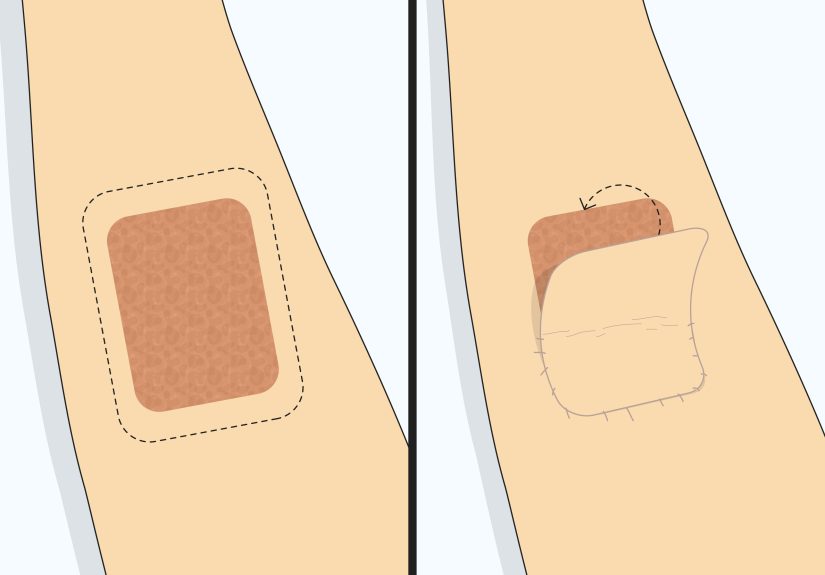
For healed raised scars, silicone gel or silicone sheets are common dermatologist-recommended options. They are not magic, but they may help flatten, soften, and improve the appearance of some scars over time. The key word is time. You usually need consistent use, not two hopeful applications followed by emotional disappointment.
Keep the skin calm
Dryness can make scars look rougher and more textured. A bland, fragrance-free moisturizer can help the area look smoother. If you notice that perfumes, harsh scrubs, or aggressive exfoliation make the scar redder, back off. Skin rarely responds well to being bullied.
Consider professional treatment when needed
If your scar is thick, itchy, tight, raised, painful, or limiting movement, home camouflage may not be enough. A dermatologist may suggest treatments such as steroid injections, laser therapy, microneedling, or other scar-revision options depending on the scar type and your skin tone. Important detail: treatment can often make a scar less noticeable, but no ethical professional should promise that it will vanish completely.
Common Mistakes That Make Arm Scars More Noticeable
- Applying makeup to unhealed skin: this can irritate the area and make things worse
- Skipping sunscreen: darkened scars are often harder to camouflage later
- Using too much product: thick makeup can highlight texture instead of hiding it
- Wearing rough fabric over sensitive scars: friction can trigger redness and discomfort
- Ignoring changes: a scar that grows, hurts, or behaves oddly deserves medical attention
How to Choose the Best Method for Your Situation
Still deciding? Here is a quick cheat sheet:
- For hot weather or everyday errands: lightweight sleeves or a breezy overshirt
- For events, photos, or sleeveless outfits: camouflage makeup on healed skin
- For long-term improvement: sun protection, silicone, and dermatologist-guided care
- For sensitive or raised scars: focus on comfort first, coverage second
- For pale flat scars: self-tanner may help reduce contrast temporarily
Many people use a combination. For example, you might use silicone gel regularly, sunscreen every day, and body concealer only for special occasions. That is often the most realistic plan because real life is busy and nobody wants a scar strategy that requires a project manager.
When to See a Dermatologist
Make an appointment if your scar:
- Feels itchy, painful, or tender for no clear reason
- Seems to grow or become more raised over time
- Extends beyond the original wound area
- Changes color dramatically or looks unusual
- Limits movement near your elbow, wrist, or shoulder
- Bothers you enough that you want more than home care can offer
There is no medal for suffering through a scar that is physically or emotionally bothering you. Dermatology exists for a reason.
Final Thoughts
If you want to hide scars on your arms, the simplest strategies are usually the smartest ones: wear clothing that covers comfortably, use cosmetic camouflage on fully healed skin, and protect the scar so it blends in better over time. You do not need to do all three every day. You just need the mix that fits your life, your skin, and your level of effort on any given Tuesday.
And if some days you cover your scars and other days you do not, that is fine too. Skin tells stories. You get to decide when those stories are public, when they are private, and when they are nobody’s business but your own.
Experiences Related to “3 Simple Ways to Hide Scars on Your Arms”
People’s experiences with arm scars are rarely just about skin. They are usually about timing, confidence, weather, clothing, and the strange social fact that other humans can be way too interested in body details that are not on the group project. Someone with a surgical scar may feel fine most days, then suddenly panic before a wedding because the outfit is sleeveless and every photo will live online forever. Another person may have an old childhood scar they never think about until summer arrives and every shirt gets shorter. The scar did not change, but the context did.
One common experience is trial and error with clothing. A person might start by reaching for heavy long sleeves, then realize they are miserable in the heat and look uncomfortable all day. Eventually they find a better solution: a lightweight overshirt, a linen blouse, a sporty UV sleeve, or a loose cardigan that feels normal instead of strategic. That shift matters. When the coverage feels intentional, people often stop fidgeting, tugging, and checking whether the scar is showing. In other words, comfort becomes part of confidence.
Another common experience is discovering that makeup is both more helpful and more annoying than expected. The first attempt is often dramatic in the wrong way: too much product, poor color match, and transfer onto clothing like a crime scene. But after a little practice, many people learn that less product works better. A thin layer, a good blend around the edges, and proper setting can make a scar fade into the background instead of becoming the star of the arm. People who find the right formula often save it for specific situations, like interviews, parties, dates, reunions, or professional photos.
There is also the long-game experience. Some people realize the scar looks more obvious not because of its shape, but because it keeps getting darker in the sun or staying red from irritation. Once they start using sunscreen consistently and treating the area more gently, the scar gradually becomes less dramatic. This is not a movie montage transformation. It is slower than that. More “quiet improvement over months” than “ta-da by Friday.” But for many people, that is exactly what works.
Emotionally, reactions vary. Some people want full coverage because they do not like questions. Others are comfortable with the scar itself but dislike the stares. Some do not mind strangers, but dread comments from relatives who turn a cookout into a press conference. Many people move back and forth over time. They may cover their scars in one season of life and stop caring in another. That does not make them inconsistent. It makes them human.
A surprisingly important part of the experience is having options. When people know they can cover a scar if they want to, they often feel less trapped by it. The sleeve in the closet, the concealer in the drawer, the sunscreen in the bag, the dermatologist appointment on the calendar, all of that can create a sense of control. And control matters. Not because scars are shameful, but because choice is calming.
In the end, most real-life experiences with hiding arm scars come down to balance. People want methods that are effective, but also comfortable, affordable, and easy enough to repeat. They want to feel like themselves, not like they are preparing for a special-effects role in a streaming series. That is why the simple methods tend to last: a smart outfit, a little camouflage, steady scar care, and the growing realization that your skin does not need to be flawless to be seen as normal.