Table of Contents >> Show >> Hide
- Why the 2015 Awards Mattered
- The 2015 Winners at a Glance
- Kitchens That Proved Smart Beats Showy
- Living and Dining Spaces With Genuine Staying Power
- Bathrooms That Refused to Be Boring
- What the Judges Really Rewarded
- Why These Winners Still Feel Fresh
- What Award-Worthy Design Feels Like in Real Life
- Conclusion
- SEO Tags
The 2015 Remodelista Considered Design Awards delivered exactly what great design competitions should: inspiration, strong opinions, a little bit of envy, and the comforting realization that brilliant rooms do not always require a palace, a trust fund, or a marble quarry in the backyard. In its third annual edition, the awards celebrated spaces that felt deeply considered rather than merely expensive. That distinction matters. Plenty of rooms know how to pose for a camera. Fewer know how to live well on a Monday morning.
That is what made the 2015 winners so memorable. Across kitchens, baths, and living/dining spaces, both amateur and professional winners showed a sharp eye for proportion, restraint, utility, and character. Some rooms succeeded by squeezing every inch out of a tight footprint. Others won by honoring old architecture while nudging it gently into the present. None of them felt like a showroom had exploded. Instead, they looked lived in, intelligently edited, and oddly calming in a world that often treats design as a shouting contest.
In other words, these winners were considered in the truest sense: thoughtful, practical, and beautiful enough to make you briefly reconsider every lighting decision you have ever made.
Why the 2015 Awards Mattered
The 2015 program stood out because it captured a moment when home design was shifting away from flashy excess and toward meaningful function. Remodelista and its sister site Gardenista turned the competition into a democratic design event. More than 800 projects were submitted, readers cast more than 60,000 votes, and the finalists came from a range of homes and budgets. That mix gave the awards credibility. This was not an insiders-only pat on the back. It was a public conversation about what good design actually looks like.
Even better, the judging reflected a healthy range of tastes. John Derian brought a collector’s eye and a love of soulfulness. Estee Stanley leaned toward rooms with warmth, elegance, and a relaxed edge. Will Taylor, known for his fearless approach to color, gravitated toward spaces that used personality without descending into chaos. For the amateur categories, Remodelista editor in chief Julie Carlson consistently favored rooms that balanced clarity, comfort, and architectural respect. Put them together, and you got a set of winners that felt broad in style but united in quality.
The result was an awards roundup that still feels relevant today because the core values behind it have aged well: better storage, better light, better material choices, and a refusal to mistake clutter for charm or emptiness for sophistication.
The 2015 Winners at a Glance
Amateur Winners
- Best Amateur Kitchen: Jo Flavell, Market Harborough, UK
- Best Amateur Living/Dining Space: Brigitte Gfeller, Hudson, New York
- Best Amateur Bath: Zachary Leung, Toronto, Ontario
Professional Winners
- Best Professional Kitchen: General Assembly, Brooklyn
- Best Professional Living/Dining Space: CWB Architects, Brooklyn
- Best Professional Bath: Daleet Spector Design, Los Angeles
Kitchens That Proved Smart Beats Showy
Best Amateur Kitchen: Jo Flavell
Jo Flavell’s winning kitchen had the kind of backstory designers love and homeowners understand instantly: it transformed an unused double garage into an open-plan kitchen and dining area full of height, light, old wood, and handmade furniture. That premise alone says a lot about why it won. The room was not trying to erase its past; it was trying to build on it. Salvaged wood flooring added texture, the blue-and-white palette kept the room crisp, and the central prep zone turned cooking into a social activity rather than a solitary punishment near the sink.
What makes this kitchen especially compelling is how contemporary it feels without becoming sterile. Design publications continue to praise warm woods, layered neutrals, and rooms that can handle actual life. Jo Flavell’s project delivered all three. It had openness without emptiness, rustic notes without faux-farmhouse theatrics, and just enough polish to feel intentional. It is the kind of kitchen that whispers, “Come in, stay awhile,” instead of screaming, “Please admire my imported stone.”
Best Professional Kitchen: General Assembly
General Assembly’s winning kitchen attacked one of the oldest urban design villains: the tiny, awkward New York kitchen. Rather than expanding the footprint, the team doubled down on intelligence. Custom millwork, built-in appliances, hidden storage, and strategic use of color turned a tight room into a compact triumph. The kitchen became what the designers described as a jewel box, and that is exactly the right phrase. It felt concentrated rather than cramped.
This win also anticipated a design principle that many U.S. interiors publications still emphasize: the best small kitchens are not simply reduced versions of big kitchens. They are specialized machines. Every inch earns its keep. The winning project used beams, columns, corners, and depth changes as opportunities instead of obstacles. The dark grout, graphic backsplash, and color accents gave it personality, while the integrated elements kept visual noise low. It is a reminder that when space is limited, editing becomes a superpower.
Living and Dining Spaces With Genuine Staying Power
Best Amateur Living/Dining Space: Brigitte Gfeller
Brigitte Gfeller’s winning room in Hudson, New York, showed that serenity is not the same as blandness. Set inside a carefully renovated 1800s Italianate Victorian, the space layered old woodwork, waxed oak floors, a woodstove, and new windows into a room that felt both rooted and refreshed. The palette stayed calm, the wood elements repeated gently, and the room managed that elusive design trick of feeling deeply personal without becoming overly decorated.
That balance is one reason this living/dining space still reads beautifully. Many rooms chase drama by adding more of everything: more color, more furniture, more objects, more look-at-me lighting. Gfeller’s room did the opposite. It trusted rhythm, restraint, and material consistency. Better Homes & Gardens, ELLE Decor, and similar publications often return to the same truth: warm neutrals and natural elements create calm because they give the eye a place to rest. This room understood that long before it became a headline again.
Best Professional Living/Dining Space: CWB Architects
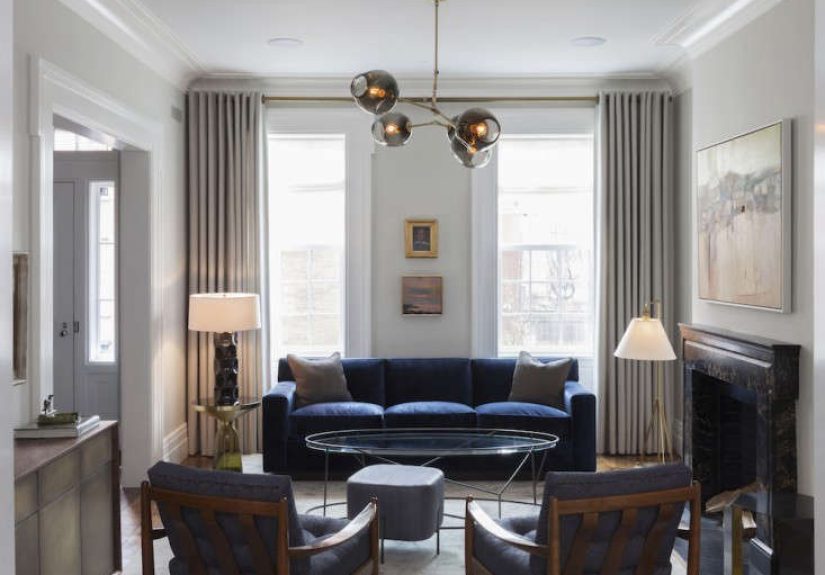
CWB Architects won with a Brooklyn project that blended tradition and modernity in a way that felt effortless. The room earned praise for being warm, homey, elegant, and just a bit edgy. That combination sounds easy until you try to achieve it and end up with a sofa that costs too much and a room that somehow still feels emotionally unavailable.
The winning project succeeded because it focused on lived experience. The firm talked about comfort, entertaining, family life, and visual connection to the garden. A two-story bay window, an opened parlor floor, and a generous custom banquette turned the architecture into part of the daily routine. That matters. Great living rooms are not composed like still-life paintings; they are built around motion, conversation, and changing light. By physically and visually linking the public rooms to the outdoors, CWB Architects created a house that breathed.
This is where the project aligns with a broader American design conversation. From Architectural Digest to Sunset, indoor-outdoor flow remains one of the most admired qualities in residential design. It adds ease, natural light, and a sense of expansiveness even in urban settings. CWB’s winning room used that principle not as a gimmick, but as structure.
Bathrooms That Refused to Be Boring
Best Amateur Bath: Zachary Leung
Zachary Leung’s bathroom remodel is catnip for anyone who loves a clever before-and-after. Working within the constraints of a typical 1890 Toronto row house and a limited budget, he opened up a tight bathroom with glass, mirror, natural light, and white walls. Those choices may sound simple, but simplicity is often where the real skill lives. Small bathrooms are unforgiving. They expose every bad proportion, every bulky vanity, every impulsive tile decision you made while hungry.
This room worked because it understood visual expansion. Dwell, House Beautiful, and Better Homes & Gardens continue to recommend the same toolbox for compact baths: reflective surfaces, lighter finishes, and smart use of light. Leung’s project used those strategies while preserving a blend of modern and traditional details that respected the age of the home. It felt fresh, not generic. That is a surprisingly rare achievement in bathroom design, a category where too many remodels aim for “spa” and end up somewhere closer to “premium airport lounge.”
Best Professional Bath: Daleet Spector Design
Daleet Spector Design’s winning bath in Los Angeles proved that family-friendly does not have to mean design-free. Created for two young boys, the room was enlarged to accommodate a separate tub, shower, and double vanity. Functionally, it solved a real household problem. Aesthetically, it had nerve. The standout cement floor tile introduced graphic energy, while the wooden vanity softened the blue-and-white scheme and kept the room from feeling cold.
This is a great example of why the 2015 winners hold up so well. The room was practical, but it still had joy. It used pattern with control, color with discipline, and storage with purpose. Current design coverage from American shelter publications often praises bathrooms that feel calm but not lifeless. Daleet Spector’s project got there years ago by combining strong geometry with warmth. It is a room that understands children exist, mess exists, and beauty can still survive both.
What the Judges Really Rewarded
Looking across all six winners, a pattern emerges. The judges were not chasing one style. They were rewarding a mindset. Rooms won because they solved problems elegantly, not because they followed a trend report like it was holy scripture. John Derian’s favored spaces had soul, coherence, and a collector’s logic. Estee Stanley responded to rooms that balanced comfort with polish. Will Taylor appreciated color and warmth used with restraint. Julie Carlson consistently backed rooms that respected architecture and made smart, humane decisions.
Together, those preferences reveal the deeper logic of the awards. The best projects were not the most expensive. They were the most resolved. They knew what they were trying to do, and they did not waste your time with unnecessary drama. They also recognized something many homeowners learn the hard way: the rooms you love longest are usually the ones that make daily life easier while quietly looking terrific in the background.
Why These Winners Still Feel Fresh
A decade later, the 2015 Remodelista Considered Design Awards still feel remarkably current because the winning rooms embraced timeless priorities. Warm wood remains desirable. Integrated storage remains essential. White walls and natural light still do heroic work in small spaces. Graphic tile still punches above its weight when used carefully. And the link between architecture and mood still matters more than whatever social media decides is “the moment” this week.
There is also a lesson here for anyone planning a remodel now. Award-worthy design is not about copying a room down to the faucet finish. It is about understanding the problem a room is solving. Need more light? Open the sight lines. Need more storage? Customize intelligently. Need more warmth? Add wood, texture, and restraint before adding random accessories shaped like lemons. The 2015 winners are excellent because they begin with how people actually live, then make that life look better.
That is why these rooms continue to inspire. They were not built for applause alone. They were built to endure.
What Award-Worthy Design Feels Like in Real Life
Here is the part that design awards rarely show: the human experience behind a beautiful room. Long before a project becomes a winner, it usually begins with someone standing in a frustrating space muttering, “There has to be a better way.” Maybe it is a kitchen where two cabinet doors cannot open at the same time without starting a domestic incident. Maybe it is a bathroom so narrow that drying off feels like a strategic exercise. Maybe it is a living room that looks charming in theory but somehow seats exactly one confident adult and a morally supportive lamp.
That is why the 2015 Remodelista winners resonate beyond their photographs. They feel familiar. Jo Flavell’s kitchen captures the joy of reclaiming forgotten square footage and turning it into the social center of the home. General Assembly’s compact kitchen speaks to anyone who has ever lived in a city apartment and wondered whether an oven, a pantry, and personal dignity can coexist in the same six feet. Zachary Leung’s bath understands the optimism required to walk into a tiny dated room and imagine light, clarity, and calm instead of chaos. CWB Architects’ living space reflects a dream many people share, even if they do not say it out loud: a home that feels comfortable when the family is piled in on a Tuesday night and elegant when friends come over on Saturday.
There is also a psychological thrill in rooms like these. Good design reduces friction. Suddenly, the coffee mugs are where you need them. The morning light reaches farther into the room. The bench by the window becomes the spot where everyone ends up talking longer than planned. Storage stops being a shame closet and starts behaving like a thoughtful system. Even cleaning feels a little less insulting when the room itself makes sense.
And then there is the emotional part, the part professionals understand and homeowners discover mid-project: design is really about permission. Permission to cook more because the kitchen invites you in. Permission to linger because the dining banquette is actually comfortable. Permission to exhale because the bathroom no longer feels like a fluorescent punishment chamber. Permission to keep things simpler, better edited, and more reflective of who you are.
That may be the most lasting lesson from the 2015 awards. The winning rooms do not just look good; they change behavior. They make daily rituals easier, gatherings more natural, and the home more legible. They prove that beautiful design is not some elite language spoken only by architects and magazine editors. It shows up whenever a space works so well that you stop fighting it. And honestly, that might be the highest honor any room can receive. A trophy is nice. A kitchen that does not annoy you every morning? That is true glory.
Conclusion
The winners of the 2015 Remodelista Considered Design Awards deserve the attention they received because they captured something bigger than stylish surfaces. They showed how thoughtful design can rescue tight spaces, respect old architecture, invite light, improve storage, and create rooms that feel both useful and deeply personal. Whether amateur or professional, each winning project demonstrated that the most memorable interiors are not just visually appealing. They are coherent, livable, and quietly confident.
If there is one takeaway from the 2015 winners, it is this: the best spaces do not beg for attention. They earn it by making life smoother, warmer, brighter, and just a little more beautiful every day.