Table of Contents >> Show >> Hide
- Why Britney Spears’ Boat Video Went Viral
- The Pink Bikini Moment: Style, Symbolism, and Social Media Noise
- Fan Concern Around Britney Spears Is Not New
- Britney’s Post-Conservatorship Image: Freedom Under a Microscope
- What Fans Are Actually Worried About
- The Media’s Role: Reporting Without Turning Concern Into Clickbait
- Why Britney Spears Still Commands So Much Attention
- How to Talk About Britney Spears Without Losing the Plot
- What This Moment Says About Celebrity Culture
- Experiences Related to the Britney Spears Boat Video Conversation
- Conclusion: A Viral Video, a Bigger Conversation
- SEO Tags
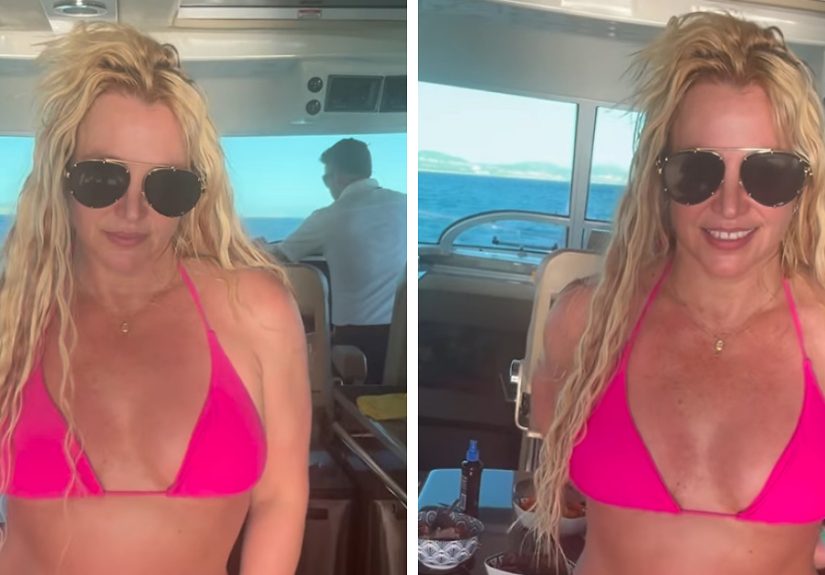
Britney Spears is once again at the center of a noisy online conversation after a boat video from her Mexico getaway drew both fascination and concern from fans. The clip, shared during a sun-soaked yacht trip, showed the pop icon enjoying herself in a pink bikini while briefly loosening her top, and the moment quickly became social-media rocket fuel.
But as with almost everything involving Britney, the reaction was not just about a celebrity vacation video. It was about freedom, public scrutiny, fan loyalty, privacy, internet judgment, and the strange way a short Instagram clip can become a full-blown cultural committee meeting before anyone has finished their morning coffee.
Why Britney Spears’ Boat Video Went Viral
The video gained attention because it mixed several things the internet cannot resist: a major pop star, a luxury boat, a bold fashion moment, and a caption that left people asking questions. Spears reportedly posted the video during a Mexico yacht getaway around her 44th birthday celebration. In the caption, she mentioned that she had hurt herself after doing a flip off the boat, which immediately shifted the mood from “vacation vibes” to “is everything okay?”
For casual viewers, the clip looked like another spontaneous Britney post: playful, unfiltered, and very much in her own style. For longtime fans, however, it landed in a much bigger context. Spears has spent years reclaiming her voice after a conservatorship that controlled major parts of her life for nearly 14 years. Because of that history, every public move she makes is often read through two competing lenses: celebration of her freedom and concern for her well-being.
That tension is exactly why the boat video spread so quickly. Some fans cheered it as Britney being Britneyunapologetic, expressive, and done performing respectability for strangers. Others worried that the injury caption, the revealing styling, and the broader pattern of unpredictable social-media posts suggested she might need support.
The Pink Bikini Moment: Style, Symbolism, and Social Media Noise
The phrase “Britney Spears pink bikini” has a way of pulling the internet into a time machine. Fans remember her highly styled music-video looks, red-carpet moments, stage costumes, and the early-2000s pop era when she was photographed relentlessly. The boat video taps into that same visual memory, but the setting is different now. This is not a music video directed by a studio team. It is a personal social-media post from a woman who has repeatedly said she wants control over her image.
That is where the debate gets complicated. On one hand, adult celebrities are allowed to post playful or revealing vacation content without the public turning into a neighborhood watch group. On the other hand, Spears’ caption about hurting herself gave fans a concrete reason to worry. The concern was not only about the bikini top. It was about the sense that something vulnerable might be happening in real time.
In other words, the boat video became less about swimwear and more about interpretation. Was it a carefree post? A cry for attention? A harmless vacation clip? A sign of emotional stress? The honest answer is that the public cannot know from one video. And that is the part the internet is famously bad at accepting. Online culture loves instant certainty, even when the situation calls for patience, humility, and maybe closing the app for five minutes.
Fan Concern Around Britney Spears Is Not New
Concern for Britney Spears has been part of pop culture for decades. During her early fame, tabloids tracked her every move with the intensity of a national security agency investigating a missing sandwich. Later, the #FreeBritney movement brought serious attention to her conservatorship, which officially ended in November 2021. That legal victory was celebrated by supporters who believed Spears had been denied basic autonomy for far too long.
Since then, however, fans have struggled with a difficult question: What does support look like when a celebrity finally has freedom, but the public still feels worried? Some fans think the healthiest response is to respect her choices, even when her posts are unconventional. Others feel that visible changes in her online behavior should not be ignored.
The problem is that “concern” can quickly become control wearing a nicer jacket. Saying “I hope she is safe” is one thing. Demanding explanations, diagnosing her from clips, or treating her Instagram like a courtroom exhibit is another. Britney’s history makes the conversation emotionally charged because fans do not want to repeat the past, but they also do not want to look away if she seems distressed.
Britney’s Post-Conservatorship Image: Freedom Under a Microscope
Spears’ post-conservatorship years have been defined by a public tug-of-war. Many supporters want her to enjoy complete independence after years of outside control. Yet the same public that says “let Britney live” often reacts intensely when she lives in a way that feels messy, confusing, or outside the polished celebrity script.
Her memoir, The Woman in Me, added another layer to that conversation. The book offered her perspective on fame, family, control, relationships, and the emotional cost of being treated like a public property instead of a person. It reminded readers that the Britney Spears story is not just about pop hits and viral videos. It is about what happens when a human being becomes an industry.
That context matters when discussing the boat video. A less famous person posting a playful vacation clip might be forgotten by dinner. Britney posts one, and suddenly it becomes a referendum on her mental state, family relationships, social-media boundaries, and legacy. That is a lot of weight for one yacht video to carry. Even a luxury boat has limits.
What Fans Are Actually Worried About
Fan concern appears to come from several overlapping issues. First, the caption about being hurt after a flip off the boat made people wonder whether she had received proper care or whether the injury was more serious than she suggested. Second, some viewers connected the clip to previous posts that they found erratic or emotionally unusual. Third, reports about family concern and communication gaps added fuel to the conversation.
There is also the ongoing discomfort of watching someone famous share very personal moments without a clear filter. Some people see that as authenticity. Others see it as vulnerability. The truth may be somewhere in the middle. Britney’s online presence often feels spontaneous, and that spontaneity is part of why fans keep watching. But it is also why people sometimes worry.
Still, it is important not to confuse worry with proof. A social-media clip is not a medical file. A caption is not a full explanation. A celebrity’s unusual post is not permission for strangers to declare what is happening behind closed doors. Responsible discussion means acknowledging concern without turning speculation into a sport.
The Media’s Role: Reporting Without Turning Concern Into Clickbait
Celebrity media has a tricky job here. Britney Spears is undeniably newsworthy. Her posts attract millions of views, and public interest in her life remains high. But coverage can easily slide from reporting into spectacle, especially when the headline emphasizes shock, exposure, or crisis.
A better approach is to report the facts clearly: Spears posted a boat video, the clip drew attention, the caption mentioned an injury, and fans expressed concern. From there, the analysis should stay careful. It is fair to discuss public reaction, the history of fan concern, and the broader issue of celebrity privacy. It is not fair to turn a brief video into a diagnosis or a moral trial.
In Britney’s case, media coverage also carries historical baggage. She has been mocked, chased, judged, defended, and mythologized for more than two decades. Every new story lands on top of that history. The internet may have changed platformsfrom tabloids to TikTok-style feedsbut the appetite for dissecting her has not disappeared.
Why Britney Spears Still Commands So Much Attention
Britney Spears remains one of the defining pop stars of modern American entertainment. Her early singles helped shape late-1990s and early-2000s pop, and her performances influenced a generation of artists. Even people who have never bought a Britney album can recognize her cultural footprint. That level of fame does not fade easily.
But the attention around her today is not only musical. Britney has become a symbol of celebrity exploitation, personal freedom, media cruelty, and fan activism. To many supporters, she represents what can happen when the entertainment machine keeps demanding more from a person who has already given the public nearly everything.
That is why a boat video becomes bigger than a boat video. Fans are not just reacting to a bikini clip. They are reacting to a long public story filled with control, rebellion, vulnerability, and survival. Every new post feels like another chapter, even when it may simply be a woman on vacation trying to have fun.
How to Talk About Britney Spears Without Losing the Plot
The healthiest way to discuss the video is to separate facts from assumptions. Fact: Spears shared vacation footage from a boat. Fact: the video included a bold bikini moment. Fact: she mentioned hurting herself after a boat flip. Fact: fans reacted with a mix of support, curiosity, and concern. Assumption: everything else that strangers claim to know about her emotional state from a short clip.
That distinction matters. Public figures deserve coverage, but they also deserve basic fairness. It is possible to say, “This post worried some fans,” without saying, “Here is exactly what is wrong.” It is possible to discuss her behavior without stripping away her agency. It is possible to care without becoming controlling.
For fans, the challenge is emotional discipline. Support does not always mean decoding every post like a secret message. Sometimes support means refusing to feed cruel commentary. Sometimes it means remembering that Britney Spears is not a nostalgia product or a public puzzle. She is a person whose life has already been overanalyzed more than most people could survive.
What This Moment Says About Celebrity Culture
The reaction to Britney’s boat video says as much about the audience as it does about the star. Social media has trained people to treat every post as both entertainment and evidence. A vacation clip becomes a think piece. A caption becomes a clue. A wardrobe choice becomes a debate. The result is a culture where famous people can never simply be awkward, playful, impulsive, or human.
Britney Spears sits at the center of that contradiction. Many fans want her to be free, but freedom can look uncomfortable when it is not edited for public approval. Real freedom includes making choices others do not understand. It includes being goofy, messy, glamorous, emotional, quiet, loud, and occasionally confusing. In short, it includes being human, which is apparently the one thing celebrity culture finds most shocking.
The boat video may fade from headlines, but the larger question will remain: Can the public allow Britney Spears to exist without turning every post into a crisis? That does not mean ignoring genuine concern. It means responding with care instead of consumption.
Experiences Related to the Britney Spears Boat Video Conversation
Anyone who has ever posted something online and immediately regretted checking the comments can understand a tiny slice of what this moment represents. Most people have shared a vacation photo, a silly video, or a dramatic caption without expecting it to become a public referendum on their life choices. Maybe the lighting was bad. Maybe the joke did not land. Maybe someone zoomed in on the wrong detail. Suddenly, the post stops being a memory and becomes a group project nobody asked for.
That experience is multiplied beyond imagination for someone like Britney Spears. A regular person might get a few raised eyebrows from friends. Britney gets headlines, fan theories, reaction videos, and strangers debating whether her joy is real. The scale is different, but the emotional issue is familiar: people want to be seen, but not dissected.
There is also a relatable tension between freedom and judgment. After a difficult chapter in life, many people want to reclaim their personality. They dress differently, travel more, post more, dance in the kitchen, cut their hair, change their style, or act a little louder than before. Sometimes that new freedom looks inspiring. Sometimes it looks chaotic. Often, it is both. Growth is rarely as neat as a motivational quote printed on a beige coffee mug.
For Britney, the yacht video may have been a vacation memory, a playful performance, or simply a moment she felt like sharing. For fans, it became a mirror reflecting their hopes and fears for her. Some saw confidence. Some saw warning signs. Some saw a woman refusing to shrink herself. Others saw someone they wanted to protect. The same video produced many reactions because people bring their own emotional history to what they watch.
The experience also teaches a practical lesson about consuming celebrity content: slow down. Before reposting, mocking, diagnosing, or declaring a crisis, it helps to ask what is actually known. Did the person say they were in danger? Is there verified information? Are we reacting to facts or to the emotional residue of past headlines? That pause may not be glamorous, but it is useful. Think of it as sunscreen for the brain: not exciting, but it prevents burns.
Britney Spears’ boat video is ultimately a reminder that online life collapses distance. Fans feel close to celebrities because they see casual clips, captions, kitchens, vacations, pets, and late-night thoughts. But closeness is not the same as full knowledge. We can care about Britney, appreciate her legacy, and hope she is supported without pretending we know everything about her private world.
Conclusion: A Viral Video, a Bigger Conversation
Britney Spears’ boat video removing her pink bikini top became a viral moment because it combined celebrity glamour, social-media spontaneity, and genuine fan concern. But the deeper story is not just about a swimsuit or a yacht. It is about how the public talks about a woman whose life has been watched, judged, and controlled for far too long.
The fairest takeaway is simple: Britney Spears deserves safety, support, and privacy, just as she deserves freedom, fun, and self-expression. Fans can care without speculating wildly. Media outlets can report without sensationalizing. And the rest of the internet can remember that not every viral clip needs to become a diagnosis, a debate, or a digital courtroom.
Sometimes a boat video is a boat video. Sometimes it reveals something larger about fame, freedom, and the way people consume celebrity vulnerability. In Britney’s case, it may be both.