Table of Contents >> Show >> Hide
- What Are Coltello Steak Knives?
- Why the Blade Edge Matters
- Italian Craftsmanship at the Table
- Performance: How Coltello Steak Knives Cut
- Design and Comfort
- Coltello Steak Knives vs. Ordinary Steak Knives
- How to Choose the Right Steak Knife Set
- How to Care for Coltello Steak Knives
- Sharpening and Maintenance
- Best Uses for Coltello Steak Knives
- Who Should Buy Coltello Steak Knives?
- Common Mistakes to Avoid
- Coltello Steak Knives and the Modern Dinner Table
- Experience Notes: Living With Coltello Steak Knives at the Table
- Conclusion
There are two kinds of steak dinners. The first kind involves a perfectly cooked ribeye, a proud cook, and a knife that saws through the meat like it is negotiating a difficult contract. The second kind involves a clean, graceful slice, a quiet nod from the table, and a steak knife that does its job so well nobody has to talk about it. Coltello Steak Knives belong firmly in the second category.
The phrase “Coltello Steak Knives” points to a refined style of Italian table knife associated with Berti craftsmanship and sold through luxury tableware retailers such as MATCH. “Coltello” simply means “knife” in Italian, but in the dining room it suggests more than a tool. It suggests ceremony, balance, handwork, and the small but powerful pleasure of cutting a steak without bruising, tearing, or wrestling it into submission.
For anyone building a thoughtful dinner table, Coltello steak knives are not just accessories. They sit at the intersection of performance and presentation. A good steak knife should be sharp enough for a thick New York strip, elegant enough for a formal table, comfortable enough for a long meal, and durable enough to survive years of Sunday roasts, grilled pork chops, chicken cutlets, tomato tarts, and the occasional “I just need a knife for this sandwich” moment.
What Are Coltello Steak Knives?
Coltello Steak Knives are best understood as premium Italian dining knives designed to bring kitchen-knife cutting efficiency to the table. Unlike basic serrated steak knives that often rip their way through meat, the Coltello style emphasizes a smooth cutting edge, refined materials, and a design that feels elegant without becoming fussy.
The most recognized Coltello steak knife set is connected with Berti, an Italian knife maker with roots going back to 1895. Berti is known for handmade knives produced through traditional artisan methods in Italy. That background matters because steak knives are often treated as disposable tableware in many homes. Coltello knives push in the opposite direction: they are made to be kept, used, maintained, and admired.
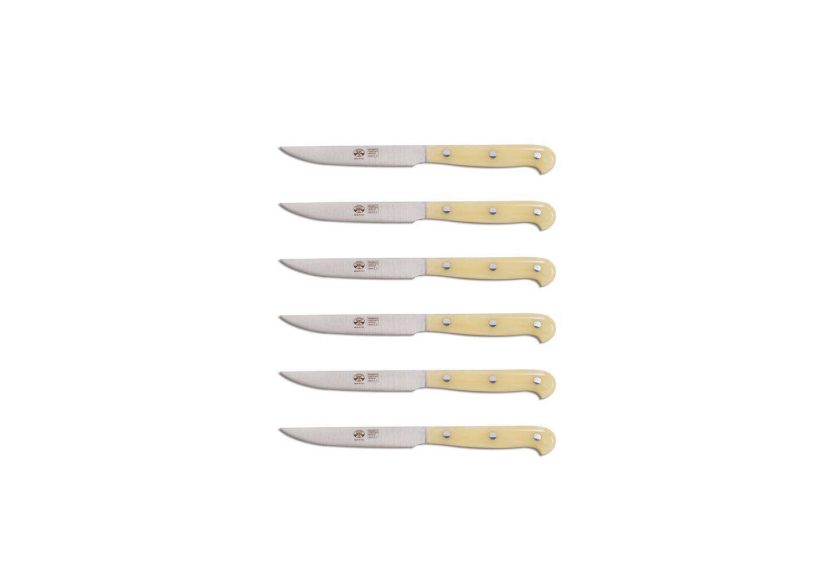
A typical Coltello steak knife set includes six knives, making it ideal for a dinner party, a family table, or a gift for someone who thinks “medium rare” is a personality trait. The blades are stainless steel, and the cutting edge is generally smooth rather than aggressively serrated. That detail affects how the knife behaves on the plate. Instead of shredding meat fibers, a smooth edge can produce a cleaner cut when kept sharp.
Why the Blade Edge Matters
The biggest debate in the steak knife world is simple: serrated or straight edge? Serrated knives have tiny teeth that grip and saw through food. They can remain usable for a long time because only the points of the serrations contact the plate. They are common in restaurants because they are forgiving, rugged, and relatively low maintenance.
Straight-edge steak knives, including the Coltello style, are different. They behave more like miniature kitchen knives. When sharp, they glide through steak with a cleaner motion and leave a smoother surface on the meat. That is not just a visual improvement. A clean cut helps preserve texture and juices, especially with tender cuts such as filet mignon, ribeye, strip steak, lamb chops, and seared duck breast.
The tradeoff is maintenance. A smooth edge needs occasional honing or sharpening to stay at its best. That may sound like a chore, but for people who appreciate good knives, it is part of the pleasure. A straight-edge steak knife is honest: treat it well, and it rewards you every time the plate arrives.
Italian Craftsmanship at the Table
Italian knife making has a long tradition, and Coltello steak knives carry that old-world feeling without looking like museum pieces. The design is purposeful: a dining knife must cut well, feel stable in the hand, and complement the table setting. It cannot look like it wandered in from a butcher block by mistake.
Berti’s artisan approach is central to the appeal. Handmade knives often show subtle variations that make them feel personal. The handle, blade line, balance point, and finish all contribute to the experience. A mass-produced knife may cut adequately, but a handcrafted knife often feels more intentional. It has personality. It also has a way of making Tuesday dinner feel like someone remembered to light the candles.
Coltello Steak Knives are especially attractive for people who care about table design. They pair naturally with linen napkins, ceramic plates, pewter serving pieces, wooden boards, and classic flatware. Yet they are not so formal that they must wait for holidays. Their best use is regular use. A beautiful tool locked in a drawer is basically a very expensive secret.
Performance: How Coltello Steak Knives Cut
The performance promise of Coltello steak knives is clean, controlled slicing. A well-made smooth-edge knife should move through meat without requiring an awkward sawing motion. That makes the dining experience more graceful. It also keeps the plate quieter, which is a strangely underrated luxury. Nobody wants their dinner soundtrack to be “knife scraping ceramic for five minutes.”
On a tender steak, the blade should enter easily and separate fibers with minimal pressure. On a crusted cut, such as a cast-iron ribeye or grilled porterhouse, the knife must break through the browned exterior without crushing the interior. On poultry or pork, it should slice rather than mash. On vegetables, it should work neatly on roasted carrots, stuffed peppers, eggplant, and thick tomato slices.
This versatility matters because the best steak knives are rarely used only for steak. In real homes, they become table knives for hearty dinners. They cut sausages, grilled mushrooms, baked potatoes, crispy chicken thighs, sandwiches, flatbreads, and fruit. A good set earns its drawer space by being useful more often than expected.
Design and Comfort
A steak knife may be small, but comfort still matters. During a meal, diners hold the knife at different angles and apply different levels of pressure. A good handle should feel secure without forcing the hand into an unnatural position. It should not be too slippery, too thin, or too heavy at the back.
Coltello steak knives are designed for the table, so their proportions are generally more refined than heavy-duty kitchen knives. The blade is practical, but the silhouette is elegant. The handle materials may vary depending on the specific retailer or finish, but the key idea remains the same: the knife should look polished beside formal flatware while still behaving like a real cutting tool.
Balance is another quiet detail. A knife that feels blade-heavy can be tiring. A knife that feels handle-heavy can seem clumsy. The ideal table knife has enough weight to feel substantial but not so much that it turns dinner into wrist day at the gym.
Coltello Steak Knives vs. Ordinary Steak Knives
Cut Quality
Ordinary serrated steak knives often depend on sawing. They work, but they can tear meat fibers, especially when dull. Coltello steak knives are designed for smoother slicing, which gives a cleaner presentation and a better mouthfeel.
Table Presence
Budget steak knives are often treated like utility items. Coltello knives feel more like part of the table setting. They add visual weight and intention, especially during dinner parties, holiday meals, anniversaries, and steakhouse-style nights at home.
Longevity
A quality smooth-edge steak knife can be sharpened more easily than many serrated knives. That gives it a longer practical life, provided it is cared for properly. Cheap knives may be replaced when dull. Better knives are maintained.
Gift Value
Coltello steak knives make sense as a wedding gift, housewarming gift, Father’s Day gift, or host gift for someone who cooks seriously. They are useful, beautiful, and unlikely to be duplicated by a random kitchen gadget that ends up in the cabinet of forgotten ambitions.
How to Choose the Right Steak Knife Set
Before buying Coltello Steak Knives or any premium steak knife set, consider how you actually eat. Do you host often? Do you grill frequently? Do you prefer formal table settings or relaxed family meals? Do you enjoy maintaining sharp knives, or do you want something nearly maintenance-free?
If you love clean cuts and appreciate craftsmanship, a smooth-edge Italian set is a strong choice. If your household tosses everything into the dishwasher and treats knives like spoons with attitude, you may want to rethink your care habits before investing. Premium steak knives are not fragile, but they are not invincible.
Look for stainless steel blades, comfortable handles, good balance, and a blade length that feels practical at the table. Most steak knives fall around four to five inches of blade length, which is enough for thick cuts without looking oversized beside a dinner plate. A set of six is the most flexible size for small gatherings, while larger households may prefer eight or twelve.
How to Care for Coltello Steak Knives
Proper care is simple, but it is not optional. Hand wash Coltello steak knives with mild dish soap and warm water. Use a soft sponge or cloth, rinse thoroughly, and dry immediately. Do not soak them in the sink. Do not leave them under a pile of plates. Do not let them rattle around in the dishwasher like tiny gladiators in a metal arena.
Dishwashers are hard on quality knives. Heat, harsh detergent, moisture, and impact can dull edges, stain blades, loosen handles, or damage finishes. Even stainless steel is stain-resistant, not magic. If a knife has a fine edge and a handsome handle, give it the five-star spa treatment: wash, dry, store.
Storage also matters. A drawer insert, knife roll, fitted box, or protective sleeve helps prevent blade damage and protects hands from surprise encounters. If the knives arrive in a presentation box, use it. It keeps the set together and makes the knives feel special each time they come out.
Sharpening and Maintenance
Smooth-edge steak knives can be sharpened, which is one of their biggest advantages. Depending on use, they may need periodic honing or professional sharpening. If they are used only for special dinners, maintenance will be minimal. If they become everyday table knives, they will need more attention.
A honing rod can help realign the edge between sharpenings, but it does not replace sharpening forever. When the knife starts dragging through meat instead of slicing cleanly, it is time to refresh the edge. A professional sharpener is often the safest option for premium knives, especially if you are not confident with whetstones.
The goal is not to make them terrifyingly sharp for dramatic effect. The goal is controlled sharpness: enough bite to cut cleanly, enough refinement to feel smooth, and enough safety that dinner guests do not need a waiver.
Best Uses for Coltello Steak Knives
Coltello steak knives shine with steak, naturally, but their usefulness goes far beyond beef. They are excellent for lamb chops, pork tenderloin, grilled chicken, seared tuna, roasted squash, stuffed portobello mushrooms, crusty sandwiches, and firm cheeses. Their clean slicing ability makes them especially helpful when presentation matters.
They are also ideal for steakhouse-style meals at home. Picture a cast-iron ribeye, roasted asparagus, crispy potatoes, compound butter, and a glass of red wine. Now imagine cutting that steak with a dull bargain knife. Tragic. Not national-emergency tragic, but emotionally inconvenient. A proper knife finishes the experience.
For vegetarian or flexitarian tables, steak knives still have a role. Roasted cabbage steaks, cauliflower slabs, grilled eggplant, thick tomato galettes, and hearty mushroom dishes all benefit from a sharp table knife. The name says “steak,” but the function says “anything substantial on a plate.”
Who Should Buy Coltello Steak Knives?
Coltello Steak Knives are best for buyers who appreciate craftsmanship, host dinners, enjoy quality tableware, and are willing to care for their tools. They are not the cheapest option, and that is not the point. They are for people who see dining as an experience, not just a calorie delivery system.
They are especially suitable for home cooks who already own good cookware, sharp kitchen knives, or beautiful serving pieces. If you have invested in cast iron, stainless pans, handmade ceramics, or linen napkins, premium steak knives fit naturally into that world. They complete the table in a practical way.
They may not be ideal for households that need dishwasher-safe, kid-proof, ultra-low-maintenance cutlery. In those cases, a durable serrated set may be more realistic. The best knife is not always the fanciest knife. It is the knife that matches your habits.
Common Mistakes to Avoid
Using Them on Hard Surfaces
Steak knives are meant for plates and cutting food, not for opening boxes, prying lids, trimming flower stems, or performing heroic countertop surgery. Use the right tool for the job.
Putting Them in the Dishwasher
This is the fastest way to shorten the life of a premium steak knife. Hand washing takes less than a minute and preserves the blade, handle, and finish.
Letting Them Go Dull
A dull smooth-edge knife loses its advantage. If you notice tearing, dragging, or extra pressure, schedule sharpening.
Saving Them Only for Guests
Special tools become more meaningful with use. Bring them out for ordinary dinners too. Tuesday deserves dignity.
Coltello Steak Knives and the Modern Dinner Table
The modern dinner table is changing. People want pieces that are beautiful but functional, traditional but not stiff, durable but not industrial-looking. Coltello steak knives fit that movement well. They are elegant without shouting. They suggest heritage without feeling dusty. They make a meal feel more deliberate.
In an age of quick meals and disposable everything, a handmade knife offers a different rhythm. It asks you to slow down for a second. Set the table. Slice cleanly. Notice the texture. Enjoy the meal. That may sound dramatic for a steak knife, but small rituals are often what make home dining memorable.
Experience Notes: Living With Coltello Steak Knives at the Table
The first thing you notice about a quality steak knife is not always the sharpness. Sometimes it is the silence. A cheap knife announces itself with scraping, sawing, and mild frustration. A better knife simply moves. With Coltello Steak Knives, the experience is less about force and more about confidence. You set the blade on the steak, apply gentle pressure, and the cut begins without drama. That small difference changes the mood of the meal.
Imagine serving a thick ribeye after letting it rest properly. The crust is crisp, the center is juicy, and everyone at the table is pretending not to stare too hard. A smooth-edge Coltello knife lets each diner cut a bite cleanly, keeping the steak’s structure intact. Instead of ragged edges and puddles of juice caused by rough sawing, the slice looks composed. It feels closer to what you get in a serious steakhouse, except nobody is charging you extra for creamed spinach.
The knives also make hosting easier. When the table is set with matching steak knives, the meal feels intentional before the food even arrives. Guests notice the weight, the finish, and the fact that the knife is not the same tired serrated piece they have met at every backyard cookout since 2009. It becomes a conversation starter, but not in a loud way. Someone usually picks one up and says, “These are nice,” which is dinner-party language for “I am impressed, but I am trying to remain casual.”
Another real-world advantage is versatility. After the steak night ends, the knives keep earning their place. They work beautifully for roasted chicken, pork chops, grilled sausages, and hearty vegetable dishes. They are useful for cutting a thick sandwich at lunch or slicing a firm peach on a summer plate. Once people get used to a good table knife, they tend to reach for it more often than expected.
Care becomes part of the rhythm. After dinner, you wash each knife by hand, dry it immediately, and put it away. It takes very little time, but it creates a sense of ownership. These are not anonymous utensils dumped into a basket. They are tools with a place and a purpose. That feeling is part of their value.
The only caution is that premium smooth-edge steak knives expose bad habits. If someone scrapes them hard across plates, throws them into the sink, or uses them to cut directly on stoneware with unnecessary pressure, they will dull faster. But that is not a flaw. It is a reminder that good tools deserve reasonable treatment. In return, Coltello steak knives bring elegance, precision, and a little Italian confidence to the table every time they appear.
Conclusion
Coltello Steak Knives are for diners who believe the final cut matters. They combine Italian craftsmanship, smooth-edge cutting performance, and refined table presence in a way that makes meals feel more polished. Their strength is not gimmickry. It is balance: sharp enough for serious steak, elegant enough for formal dining, and practical enough for everyday hearty meals when properly maintained.
They are not the right choice for everyone. If you want toss-in-the-dishwasher convenience, a cheaper serrated set may suit your routine better. But if you appreciate handmade objects, clean cuts, and tableware that quietly improves the dining experience, Coltello steak knives are worth serious consideration. A great steak deserves more than a battle. It deserves a clean slice, a steady hand, and a knife that understands the assignment.