Table of Contents >> Show >> Hide
- What “Cracked” Means in Modern B2B Leadership
- What “Slower Roll” Really Means
- Why the 40-Hour Executive Is Under Pressure
- AI Has Changed the Executive Job Description
- Is There Any Room Left for the 40-Hour B2B Executive?
- How B2B Executives Can Choose Their Lane
- A Practical Operating Model for the Modern B2B Executive
- Experience-Based Reflections: What the 40-Hour B2B Executive Looks Like in Real Life
- Conclusion
The old executive dream had a clean, attractive shape: lead a fast-growing B2B company, build a respected brand, answer email before dinner, protect weekends, and still have enough brainpower left to remember where you parked. For a while, especially during the frothy software years around 2021, that dream did not feel completely ridiculous. Demand was high, money was cheaper, buyers were experimenting, and many B2B products looked like improved versions of what already existed.
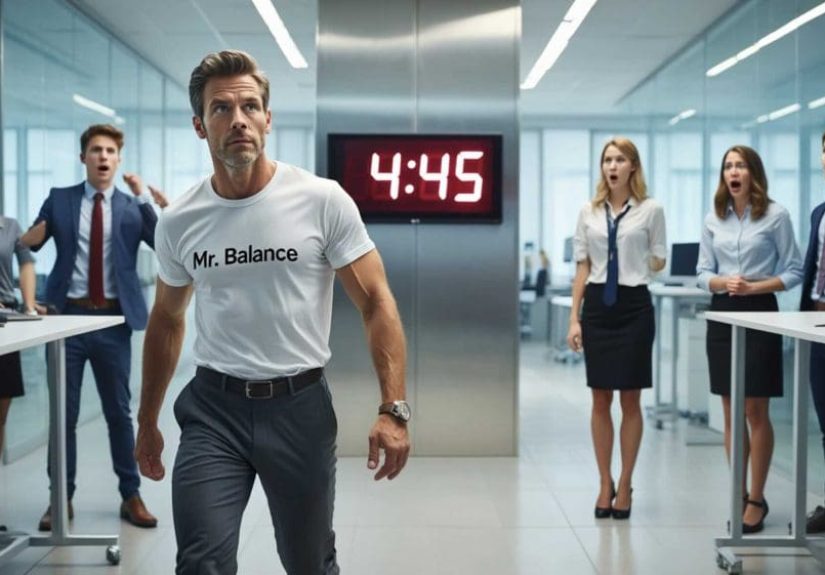
Then the pace changed. Artificial intelligence accelerated product cycles. Buyers became more educated and more skeptical. Investors started asking harder questions. Sales teams were expected to do more with fewer people. Executives found themselves in a strange new contest: not only company versus company, but human attention versus machine speed. Suddenly, the 40-hour B2B executive began to look less like a modern professional ideal and more like a luxury itemnice, rare, and possibly discontinued.
That is where the “cracked vs. slower roll” debate begins. The “cracked” executive is all-in: intense, available, customer-obsessed, AI-native, and probably reviewing pipeline notes while the rest of the household watches a movie. The “slower roll” executive is deliberate: focused on sustainability, boundaries, clear systems, and long-term judgment. The real question is not which one sounds cooler on LinkedIn. The question is whether a 40-hour B2B executive can still compete in a market where speed, signal, and stamina all matter.
What “Cracked” Means in Modern B2B Leadership
In startup and B2B software circles, “cracked” does not simply mean working hard. Plenty of people work hard and still spend half the day rearranging calendar invitations like digital furniture. A cracked executive combines urgency, technical fluency, customer proximity, and unusually high personal output. They are not waiting for the quarterly strategy retreat to decide whether AI should change the sales motion. They are testing prompts, calling customers, reviewing churn patterns, and asking why the product roadmap still looks like it was built for 2022.
The cracked executive is often most visible in AI-first companies, category-creating SaaS startups, high-growth infrastructure businesses, and competitive B2B markets where a six-month delay can turn a promising product into a museum exhibit. These leaders believe the current environment rewards intensity. If competitors are using AI to speed up research, outbound personalization, product design, customer support, and internal reporting, then “business as usual” becomes a polite way to lose slowly.
The upside of being cracked
The advantage is obvious: speed. Cracked leaders compress learning cycles. They notice when a new buyer objection appears. They sit close enough to sales calls, customer complaints, product usage data, and market shifts to connect dots before the weekly dashboard catches up. In B2B, this matters because deals are rarely won by vibes alone. They are won through timing, trust, product fit, proof, and relentless follow-through.
A cracked CRO may redesign the enterprise sales process after seeing that AI-generated account research improves preparation time. A cracked CMO may rebuild content operations around buyer intent instead of generic thought leadership. A cracked CEO may personally join late-stage customer calls because one strategic logo can shift investor confidence, internal morale, and market perception. Yes, this can look extreme. But in a market where buyers expect more relevance and faster answers, extreme responsiveness can become a competitive weapon.
The danger of being cracked
The danger is that cracked can become cracked-open. Long hours are not automatically productive hours. Research on working time has repeatedly shown diminishing returns when people push far beyond normal limits. Burnout is not just “I need a nap.” The World Health Organization describes burnout as an occupational phenomenon tied to unmanaged chronic workplace stress, often involving exhaustion, mental distance from work, and reduced effectiveness.
That matters because executive burnout does not stay politely contained inside the executive. It leaks into hiring, strategy, decision quality, communication, and culture. A tired leader may call it “high standards” when it is actually impatience wearing a blazer. A burned-out executive may mistake every thoughtful objection for resistance. Worse, teams often copy what leaders reward, not what leaders say in the all-hands. If the CEO praises balance but sends “quick thoughts” at 1:13 a.m., the culture hears the timestamp.
What “Slower Roll” Really Means
The phrase “slower roll” can sound like a soft landing zone for executives who want big titles without big sacrifice. That interpretation is too simple. A slower-roll executive is not necessarily lazy, checked out, or allergic to urgency. The best version of slower roll is disciplined focus. It means the leader refuses to confuse motion with progress, refuses to worship meetings, and refuses to build a company that depends on heroic exhaustion as its operating system.
In B2B, slower roll can be powerful when the business is mature, the market is stable, the product is established, and the company needs operational excellence more than existential reinvention. A leader at a profitable vertical SaaS company, for example, may not need to live on 80-hour weeks. They may need to tighten onboarding, improve gross retention, simplify pricing, reduce internal drag, and make fewer but better strategic bets.
The upside of slower roll
Slower-roll executives can protect judgment. That is not a small thing. The higher someone rises in a B2B organization, the more their job becomes a series of expensive decisions made with incomplete information. Should the company enter a new segment? Replace the CRM? Move upmarket? Cut a product line? Hire a VP from a competitor? Build an AI feature or partner for it? These are not decisions improved by sleep deprivation and a third cold brew.
Slower-roll leadership also encourages systems. Instead of being the human router for every urgent question, the executive builds dashboards, decision rights, customer feedback loops, and management rhythms that reduce dependency on any one person. In healthy B2B organizations, speed does not come only from executives sprinting. It comes from teams knowing what matters, where information lives, who decides, and what “good” looks like.
The risk of slower roll
The risk is complacency disguised as wisdom. In fast-moving B2B markets, a leader can easily call themselves strategic when they are simply late. AI is changing buyer research, sales enablement, support automation, software development, analytics, and procurement expectations. Buyers do not care that your roadmap was carefully aligned during a two-day offsite if a competitor solves their problem next week.
Slower roll becomes dangerous when it avoids hard customer conversations, delays uncomfortable product decisions, or treats AI as a side project for “innovation people.” In that case, balance becomes a lovely word for drift. And drift, in B2B, is expensive. It shows up as longer sales cycles, weaker win rates, declining expansion, and a sales team that starts using the phrase “market conditions” with the haunted look of people who have seen the pipeline.
Why the 40-Hour Executive Is Under Pressure
The 40-hour workweek has deep historical roots in American labor reform, but it was never designed around the life of a modern B2B executive responsible for global customers, distributed teams, investor expectations, AI disruption, and a Slack channel that behaves like a toddler with a cymbal. The legal and cultural idea of 40 hours helped protect workers from exploitation. It remains important. But executive work has always lived in a different reality.
Studies of CEO time have found that top leaders often work far beyond 40 hours, including weekends and travel days. That does not mean every executive should do the same, but it does explain why the 40-hour executive feels like an outlier in high-stakes environments. Leadership work spills across time zones, customer emergencies, board preparation, hiring, strategy, and the quiet thinking that rarely fits into a neat calendar block.
The “infinite workday” problem
The bigger issue is not merely hours. It is fragmentation. Modern executives are buried in pings, meetings, dashboards, messages, documents, and urgent-but-not-important requests. Microsoft’s workplace research has described the rise of an “infinite workday,” where employees face constant interruptions, after-hours messages, ad hoc meetings, and cross-time-zone collaboration. For executives, this can create a brutal paradox: they work longer while doing less deep work.
That is why a 40-hour executive can still fail even with perfect boundaries. If those 40 hours are consumed by shallow updates, political meetings, unclear priorities, and notification confetti, the leader is not balanced. They are just efficiently distracted. On the other hand, a 55-hour executive with ruthless prioritization, strong delegation, and AI-enabled workflows may produce more strategic value without living in permanent chaos.
AI Has Changed the Executive Job Description
AI did not simply add another tool to the B2B stack. It changed the expected speed of learning. A sales leader can analyze call transcripts faster. A marketing team can test messaging angles faster. Product teams can prototype faster. Customer success teams can identify risk signals faster. Finance teams can model scenarios faster. The executive who does not understand these possibilities may not be “balanced”; they may be managing yesterday’s company.
McKinsey and other business research organizations have pointed to generative AI’s potential across the B2B deal cycle, from account research and next-best actions to sales productivity and internal process improvement. But AI only helps when leaders redesign workflows around it. Buying software and declaring victory is not transformation. That is procurement with confetti.
The new executive advantage: leverage per hour
This is where the debate becomes more interesting. Maybe the future is not 40 hours versus 80 hours. Maybe the real question is leverage per hour. A B2B executive who uses AI well can reduce time spent on low-value synthesis, first-draft communication, call review, competitive research, board prep, and internal knowledge retrieval. That does not automatically create a four-day executive paradise, but it can create more room for the work humans still do best: judgment, trust, negotiation, taste, courage, and context.
The cracked executive may use AI to do even more. The slower-roll executive may use AI to protect focus. Both can win, but only if they treat AI as an operating model shift rather than a shiny intern who never sleeps.
Is There Any Room Left for the 40-Hour B2B Executive?
Yes, but the room is smaller, more specific, and less forgiving than many people want to admit.
There is room for a 40-hour B2B executive in a company with strong systems, clear strategy, experienced teams, manageable growth expectations, and a business model that does not require constant reinvention. There is room in advisory roles, fractional leadership, mature companies, post-product-market-fit operations, and businesses where the executive’s value comes from precision rather than constant presence.
There is much less room for a strict 40-hour executive in a venture-backed AI startup trying to create a category, a struggling SaaS company fighting churn, a sales-led business rebuilding go-to-market, or a company where the executive team is still searching for product-market fit. In those environments, the market does not care about your preferred calendar philosophy. It cares whether customers buy, renew, expand, and advocate.
The better question: what kind of 40 hours?
A 40-hour executive can survive only if those hours are unusually high quality. That means fewer ceremonial meetings, less internal theater, stronger delegation, faster decision loops, and brutal clarity about priorities. It means the executive cannot spend Tuesday approving button colors, Wednesday mediating avoidable cross-functional confusion, and Thursday wondering why the strategic plan is behind.
The 40-hour executive needs a company designed for executive focus. That includes clean metrics, empowered leaders, documented processes, strong customer intelligence, and an AI stack that reduces information hunting. Without those systems, 40 hours becomes a fantasy budget for a job with enterprise-level expenses.
How B2B Executives Can Choose Their Lane
The cracked path and the slower-roll path are not moral categories. One is not heroic and the other cowardly. They are strategic choices with trade-offs. The problem begins when executives choose one path but expect the rewards of the other.
If you choose cracked, be honest about the cost. Protect your health like a business asset, because it is one. Build recovery into the system. Do not confuse adrenaline with strategy. Hire leaders who can challenge you. Use AI and delegation to reduce unnecessary load, not just to increase the number of fires you can personally inspect.
If you choose slower roll, be honest about the ceiling. You may build a healthier life and a durable company, but you may not outpace the most intense players in a winner-take-most market. That is not failure. It is fit. The key is to align ambition, capital, market, and lifestyle. A bootstrapped B2B services firm and a venture-backed AI infrastructure company should not have the same executive operating rhythm. Forcing them into the same mold is how leaders end up resentful, exhausted, and weirdly passionate about calendar software.
A Practical Operating Model for the Modern B2B Executive
The best answer may be neither cracked nor slower roll. It may be “seasonal intensity.” Great B2B executives do not work at the same pace all year. They surge during fundraising, category shifts, major launches, executive hiring, strategic customer moments, and turnaround periods. They slow down during operating stretches where systems should carry more weight.
This model is more realistic than pretending every week can be calm or every week should be war. It also respects the truth that B2B leadership has seasons. A product launch week is not a normal week. A board meeting week is not a normal week. A quarter-end enterprise deal sprint is not a normal week. The mistake is letting every week become an emergency week because no one has the courage to define what actually matters.
Five rules for sustainable executive intensity
First, define the company’s current game. Are you searching, scaling, fixing, or defending? A search-stage company needs more founder and executive intensity. A scaling company needs systems. A fixing-stage company needs decisive prioritization. A defending company needs operational discipline and customer trust.
Second, put AI inside workflows, not beside them. AI should help with customer research, meeting summaries, sales coaching, support triage, competitive monitoring, and internal knowledge access. If AI creates more tabs, more dashboards, and more confusion, congratulationsyou invented digital clutter with better branding.
Third, protect deep work like revenue. Strategy, hiring, product judgment, and customer insight require uninterrupted thinking. A leader with no thinking time becomes a highly paid notification processor.
Fourth, measure outcomes, not executive suffering. Hours can indicate commitment, but they are a terrible standalone performance metric. Revenue quality, retention, product velocity, customer satisfaction, employee engagement, and decision speed tell a better story.
Finally, make recovery explicit. Burnout prevention is not scented candles in the break room. It is workload design, clear priorities, manager quality, autonomy, and the ability to disconnect without career penalties.
Experience-Based Reflections: What the 40-Hour B2B Executive Looks Like in Real Life
In real B2B environments, the 40-hour executive rarely fails because they leave at 5:30. They fail because their operating model cannot survive their boundaries. Imagine a VP of Sales at a mid-market SaaS company who insists on a protected schedule. That can work beautifully if the pipeline is clean, managers coach effectively, account executives know the ideal customer profile, marketing is generating qualified demand, and customer success is feeding expansion insights back into sales. In that environment, the VP’s job is not to be everywhere. It is to inspect the system, improve the managers, remove friction, and make the few decisions only they can make.
Now imagine the same VP in a company with messy CRM data, unclear territories, weak enablement, inconsistent pricing, and a CEO who changes the target customer every other Tuesday. A 40-hour boundary will not create focus there. It will reveal dysfunction. The executive will spend those 40 hours reacting, apologizing, chasing forecasts, and trying to decode why every deal is somehow both “committed” and “waiting on legal.” The issue is not the number of hours. The issue is that the business has no operating spine.
The same pattern appears in marketing. A slower-roll CMO can be extremely effective when brand positioning is clear, content strategy maps to buyer needs, attribution is understood, and sales trusts marketing’s contribution. But in a noisy AI-era market, a CMO who refuses to move quickly on messaging tests, buyer research, competitive shifts, and distribution experiments may become a bottleneck. Buyers are changing how they learn. They compare vendors before talking to sales. They expect useful content, not fluffy “future of innovation” essays that could apply to software, soup, or space travel. A 40-hour marketing executive must therefore be sharp, not sleepy.
For CEOs, the challenge is even more personal. The CEO’s calendar becomes the company’s nervous system. If everything depends on the CEO, the company is fragile. If nothing important reaches the CEO, the company is blind. The best CEOs create a rhythm where strategic issues rise quickly, routine decisions happen without drama, and customer reality stays close. Some weeks require late nights. A major renewal, acquisition discussion, security incident, funding process, or executive departure does not politely wait for Monday morning. But if every week feels like a security incident, the company does not have urgency. It has design debt.
One useful experience-based test is the “vacation simulation.” If a B2B executive disappeared for one weeknot forever, just long enough to find a beach and remember fruit existswhat would break? If the answer is “nothing important,” the executive may have built a strong system. If the answer is “forecasting, approvals, hiring, customer escalations, product prioritization, and possibly the coffee machine,” then the leader is not indispensable in a good way. They are a single point of failure with a calendar invite addiction.
Another practical lesson: intensity is easier to respect when it is tied to a mission. Teams can rally for a launch, a turnaround, a strategic customer push, or a competitive threat. They become cynical when everything is urgent because leadership cannot prioritize. The cracked executive who says “this month will be intense because these three outcomes matter” creates focus. The cracked executive who treats every Slack message like a meteor headed for Earth creates burnout theater.
So, is there room left for the 40-hour B2B executive? Yesbut not for the casual one. There is room for the executive with clean systems, high trust, strong managers, clear metrics, AI leverage, and the courage to say no. There is room for leaders who understand that balance is not the opposite of ambition; unmanaged chaos is. But there is less room than before for executives who want high-growth rewards with low-intensity habits. In the AI era, the market is faster, buyers are sharper, and competitors are less patient. The 40-hour executive can still exist, but only if those 40 hours are exceptionally focused, intelligently leveraged, and pointed at the few things that truly move the business.
Conclusion
The cracked vs. slower-roll debate is really a debate about ambition, pace, leverage, and honesty. Some B2B executives are built for all-consuming company-building seasons. Others do their best work through sustainable systems and disciplined focus. Both models can work, but neither works when it is based on denial.
The future probably does not belong to the executive who simply works the most hours. It belongs to the executive who learns the fastest, builds the clearest systems, uses AI intelligently, stays close to customers, and knows when intensity is necessary versus when it is just noise in a Patagonia vest. The 40-hour B2B executive is not dead. But in high-growth markets, that executive must be extraordinarily focused, unusually leveraged, and brutally honest about the kind of race they are running.
Note: This article is intended for business strategy and workplace productivity discussion. It is not medical, legal, or financial advice.