Table of Contents >> Show >> Hide
- OpenAI Did Not Build Customer Success Like a Traditional SaaS Company
- The Real Shift: Customer Success Is Now About Time-to-Value
- Vanessa Gatihi’s Playbook, Decoded
- What OpenAI’s Customer Stories Reveal About the Playbook
- The AI-Powered CS Operating Model
- How to Steal This Playbook Without Needing OpenAI’s Headcount
- Why This Playbook Works
- Field Notes From the Front Lines of AI-Powered Customer Success
- Conclusion
- SEO Metadata
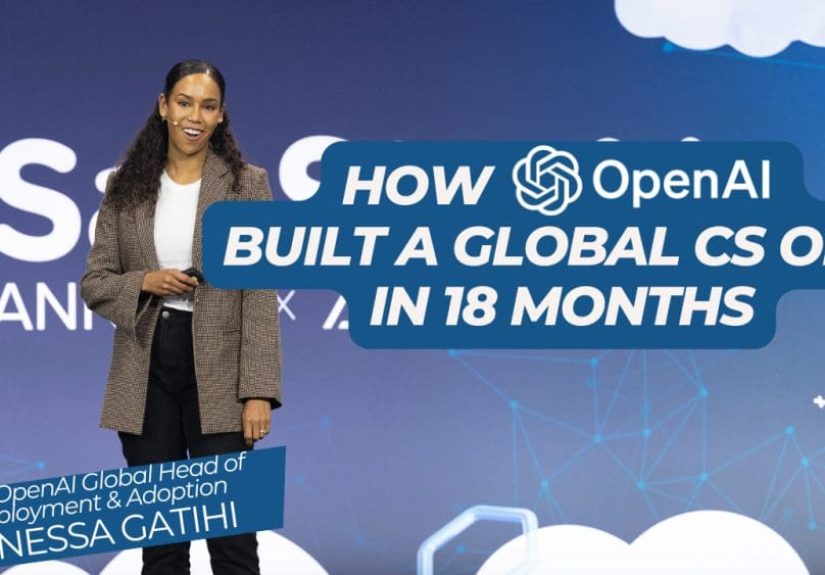
If traditional customer success was once about quarterly business reviews, polite follow-up emails, and the occasional dashboard screenshot dressed up as “strategic insight,” the AI era has officially ended that sleepy little routine. Vanessa Gatihi’s work at OpenAI shows why. In roughly 18 months, OpenAI went from having its first customer success hire to operating a global customer-facing adoption engine built for speed, experimentation, personalization, and measurable business outcomes.
That matters because AI is not ordinary software. It does not politely sit in the corner waiting for annual renewals. It barges into workflows, changes how teams think, shortens the distance between idea and execution, and raises customer expectations almost overnight. In that environment, customer success cannot behave like a post-sale help desk with nicer branding. It has to become part strategist, part deployment partner, part change-management coach, part voice-of-customer machine, and part business translator.
That is what makes Gatihi’s playbook so compelling. It is not just a story about scaling a team fast. It is a story about redefining what customer success looks like when the product itself keeps evolving, the customer journey changes in real time, and the difference between “adopted” and “abandoned” often comes down to how quickly customers get real value.
OpenAI Did Not Build Customer Success Like a Traditional SaaS Company
The first lesson is simple: OpenAI’s customer success model appears to have been built around deployment and adoption, not around old-school account babysitting. That distinction is huge. In ordinary SaaS, a CS team may focus on training, usage nudges, renewals, and executive alignment. In AI, that is merely the warm-up act.
OpenAI’s broader enterprise approach has emphasized iterative deployment, rapid feedback loops, and deep partnership with customers as they move from experiments into production. In other words, the work does not stop when a deal closes. That is when the interesting chaos begins. Customers need help identifying use cases, validating them, measuring them, governing them, and scaling them without turning their internal processes into a flaming pile of pilot projects.
This is why Gatihi’s organization is so interesting. By the time her playbook was described publicly, she had reportedly gone from being OpenAI’s first customer success hire to leading a global AI Deployment & Adoption team spanning major hubs across North America, Europe, and Asia. That is not a regional support squad. That is an operating model built for a worldwide customer base moving fast and expecting results even faster.
The Real Shift: Customer Success Is Now About Time-to-Value
If there is one phrase that captures the entire playbook, it is this: stop obsessing over feature adoption and start racing to ROI. That sounds obvious, but lots of teams still measure the wrong things because the wrong things are easier to count. Button clicks are easy. Business outcomes are harder. Guess which one actually matters.
In the AI era, executives do not want a report showing that 63% of users opened a tool three times this month. They want to know whether onboarding became faster, support volume dropped, resolution quality improved, output quality increased, sales cycles moved quicker, or employees saved meaningful time. AI does not earn its seat by being novel. It earns its seat by being useful.
This is where OpenAI’s approach lines up with broader enterprise research. The companies seeing the strongest AI impact are not treating AI as a toy, a side quest, or a shiny layer on top of broken workflows. They are redesigning work, choosing high-value domains, and measuring success in terms of transformation, not just activity. That is a fancy way of saying: if the business is still the same after your AI rollout, your AI rollout may just be an expensive screensaver.
Why the Stakes Got So High, So Fast
OpenAI’s business momentum helps explain why customer success had to scale quickly. As OpenAI expanded its business offerings and enterprise adoption surged, the company moved into a world where large organizations were no longer merely “curious about AI.” They were buying seats, deploying models, building internal tools, and expecting practical value. By late 2025, OpenAI said more than one million business customers were using its tools directly. That kind of scale does not leave much room for hand-wavy onboarding.
At the same time, products like ChatGPT Team, now called ChatGPT Business, made collaborative AI usage easier for work teams, with shared workspaces, admin controls, data protections, and customizable GPTs. Suddenly, customer success was not just helping a single champion succeed. It was helping organizations operationalize a new way of working.
Vanessa Gatihi’s Playbook, Decoded
1. Turn Every CSM Into a Mini Biz-Ops Analyst
One of the sharpest ideas in Gatihi’s playbook is that every person on the team can now function more like a business operations analyst when AI is connected to the right data. That is a big departure from the old world, where customer-facing teams often waited days or weeks for analysts to answer basic questions about usage patterns, risk indicators, regional trends, or retention drivers.
With AI layered into internal systems, CSMs can move from “I have a hunch” to “I have evidence” much faster. They can ask which behaviors correlate with expansion, which onboarding steps stall out, which accounts show signs of low adoption, or which regions respond best to certain enablement assets. That compresses decision-making time dramatically.
The benefit is not just speed. It is ownership. A stronger CS organization does not merely escalate questions upward and outward. It develops frontline teams that can spot patterns, create hypotheses, test interventions, and feed smarter decisions back into the business.
2. Map the Customer Journey and Attack the Top Three Friction Points
This is delightfully practical. Instead of trying to “AI everything” all at once, Gatihi’s advice centers on mapping the customer journey and identifying the top three friction points. Not thirty. Three. Because maturity is knowing your roadmap is not a buffet.
The smartest version of this exercise separates the journey into at least three views: the end-user journey, the admin journey, and the account-level journey. That distinction matters because the people using a product, configuring it, and signing off on its business value are often not the same people. Confuse those journeys and you will build elegant solutions to the wrong headaches.
Once the friction points are identified, AI can be applied where it actually helps: automating repetitive setup work, reducing time-to-launch, generating account-specific success plans, surfacing relevant best practices, personalizing outreach, or synthesizing customer signals from scattered systems. The idea is not to replace human contact. It is to remove the dumb parts that slow human contact down.
3. Build Prompt Libraries, Not Dusty Playbooks
This may be the most modern idea in the entire framework. Traditional playbooks tend to age like lettuce in a hot car. They are written with great intentions, opened once during onboarding, and then gently abandoned in a shared folder where outdated strategy documents go to reflect on their mortality.
Prompt libraries are different. They are living operational assets. They help teams produce consistent, high-quality work across recurring motions such as executive prep, launch planning, risk reviews, value summaries, objection handling, and voice-of-customer synthesis. They also make best practices portable. Instead of hoping a top performer eventually explains how they think, you can codify useful reasoning patterns into reusable prompts, internal GPTs, and structured workflows.
That is not just more efficient. It is more scalable. When a CS team grows globally, operational rigor cannot depend on tribal knowledge and Slack osmosis.
4. Choose Tiger Team Members for Trust, Not Just Technical Firepower
One of the more refreshing parts of the playbook is the reminder that the best early adopters are not always the most technical people in the room. In fact, some of the most effective builders of adoption are the medium-technical, highly curious, highly relational operators who can bridge customers, internal teams, and messy real-world workflows.
That makes sense. AI adoption is not purely a technical challenge. It is a trust challenge, a behavior challenge, and a translation challenge. Someone has to explain what the tool can do, what it cannot do, how to use it responsibly, how to measure value, and how to change habits without making people feel like the robots have already filed the paperwork to take their desk.
Research from Deloitte, Bain, and Accenture points in the same direction: the organizations getting real returns pair technology with change management, AI fluency, and redesigned human workflows. The winners do not just ship tools. They build belief.
5. Make Voice of Customer Continuous, Not Ceremonial
Another smart move in Gatihi’s framework is treating voice of customer work as an always-on system rather than a quarterly presentation with too many pie charts. Modern AI makes it far easier to synthesize patterns across call transcripts, support tickets, community posts, onboarding notes, and usage signals.
That matters because customer success sits on some of the richest operational truth in the company. It hears what customers want, where they stall, what they love, what they misunderstand, and which promises sound fantastic in a sales deck but become suspiciously fragile on a Tuesday afternoon during rollout.
When AI helps surface those patterns in a structured way, CS becomes more valuable to product, sales, marketing, support, and leadership. It stops being seen as the team that “owns relationships” and starts being seen as the team that sees reality first.
What OpenAI’s Customer Stories Reveal About the Playbook
The broader OpenAI customer ecosystem helps make the playbook concrete. Morgan Stanley’s internal assistant shows what trusted knowledge access and strong evaluation discipline can look like in a regulated environment. Lowe’s shows how AI can deliver guided expertise to both customers and frontline employees, turning confusion into confidence. Klarna demonstrates how AI-assisted support can compress resolution times and automate a large share of customer conversations while maintaining customer satisfaction. Indeed shows how AI can support personalized matching and revenue-positive product experiences.
These are different industries and different use cases, but they point to the same truth: successful AI-powered customer success is not just about training users on a tool. It is about helping them redesign outcomes. Better resolution. Faster activation. Stronger confidence. More personalized assistance. More scalable expertise. More value created per minute of customer attention.
The AI-Powered CS Operating Model
If you strip away the headlines and buzzwords, OpenAI’s apparent model suggests that a modern customer success organization needs five muscles:
- Adoption architecture: clear customer journeys, measurable milestones, and time-to-value design.
- Workflow intelligence: AI connected to the systems that reveal usage, friction, sentiment, and risk.
- Prompt and playbook operations: reusable prompt libraries, packaged GPTs, and standardized success workflows.
- Deployment partnership: hands-on help moving use cases from prototype to production.
- Human trust and governance: change management, executive alignment, guardrails, and escalation paths.
Miss one of those, and the whole machine gets wobbly. A team with strong prompts but weak data will sound polished while missing the point. A team with strong analytics but weak human adoption will build dashboards nobody uses. A team with great pilots but no path to production will become world-class at attending innovation meetings.
How to Steal This Playbook Without Needing OpenAI’s Headcount
The good news is that you do not need a global footprint to borrow the core ideas. You need discipline. Start by picking one onboarding metric, one support metric, and one expansion or retention metric that genuinely matter to the business. Then map the user, admin, and executive journeys. Find the top three friction points. Build five reusable prompts or internal GPTs that support those moments. Connect your AI workflows to the systems that actually contain customer truth. Finally, designate a small cross-functional tiger team to test, measure, and refine the motion every week.
Do not start with twenty AI use cases and a motivational all-hands deck. Start with a few painful moments your team already hates. That is where ROI likes to hide.
Why This Playbook Works
At its core, Gatihi’s approach works because it respects two realities at the same time. First, AI can dramatically improve speed, consistency, personalization, and operational leverage. Second, customers still need confidence, context, trust, and outcomes. The playbook does not choose between automation and relationships. It uses automation to make relationships more relevant.
That is the future of customer success. Not fewer humans. Better humans, equipped with better systems, moving faster on the work that actually matters.
Field Notes From the Front Lines of AI-Powered Customer Success
What do teams actually experience when they start applying a playbook like this? Usually, the first thing is not magic. It is mess. The customer data is scattered. The call notes are inconsistent. Half the onboarding process lives in someone’s head. The best CSM on the team has a “special way” of doing executive readouts that nobody else can quite replicate. In other words, AI does not create disorder. It simply shines a stadium light on the disorder that was already there.
Then comes the second experience: surprise. Teams realize that the fastest wins are often embarrassingly practical. A launch plan that used to take two hours can be drafted in two minutes. A weekly account summary that once required ten tabs and a prayer can be generated from usage data, support trends, and meeting notes almost instantly. A manager can spot risk patterns across accounts before renewal panic sets in. Nobody throws a parade for this kind of operational improvement, but they should. It is the stuff that makes scale possible.
The third experience is emotional, not technical. People begin by worrying that AI will flatten their judgment. What often happens instead is the opposite. Good CSMs become more strategic because they spend less time copying, summarizing, formatting, and hunting for scattered information. The role gets sharper. More pattern recognition. More executive storytelling. More proactive intervention. Less digital housekeeping.
There is also a very predictable trap. Once teams see a few wins, they try to do too much at once. Suddenly every process becomes an “AI initiative,” every meeting becomes a brainstorming session, and every rough idea gets treated like a roadmap commitment. This is where disciplined leaders separate signal from caffeine. The best teams keep returning to a few questions: What friction are we removing? For whom? How will we know it worked? What gets faster, better, cheaper, or more personalized because of this?
Perhaps the most powerful experience, though, is cultural. When AI is used well inside customer success, the team starts speaking a different language. Instead of saying, “We support the account,” they say, “We reduced time-to-value.” Instead of saying, “Customers liked the training,” they say, “Admins completed setup faster and end-user adoption improved.” Instead of saying, “We need more bandwidth,” they say, “Here is what should stay human, here is what should be automated, and here is where capacity unlocks growth.” That is a very different level of conversation.
And that may be the deepest lesson in Vanessa Gatihi’s playbook. AI-powered customer success is not just about doing old work faster. It is about upgrading the ambition of the function itself. When CS becomes a deployment engine, a value engine, and a learning engine all at once, the organization stops being reactive. It starts shaping how customers win.
Conclusion
OpenAI’s rapid customer success buildout under Vanessa Gatihi offers a sharp preview of where the function is heading. The old model of CS as a friendly, reactive post-sale layer is fading fast. In its place is a more ambitious version: global, data-driven, AI-enabled, deeply cross-functional, and relentlessly focused on outcomes. The playbook is clear. Turn frontline teams into insight engines. Prioritize the biggest friction points. Replace stale playbooks with living prompt libraries. Measure ROI, not vanity adoption. Build trust as aggressively as you build tooling.
That is not just a smarter way to run customer success in the AI era. It may be the only way that still works.