Table of Contents >> Show >> Hide
- What Is a Georgia Weapons Carry License?
- Do You Need a Gun License to Buy a Gun in Georgia?
- Who Can Apply for a Weapons Carry License in Georgia?
- Where to Apply for a Gun License in Georgia
- What Documents Do You Need?
- Step-by-Step: How to Get a Gun License in Georgia
- How Long Does It Take to Get a Georgia Weapons Carry License?
- How to Renew a Georgia Weapons Carry License
- Where Can You Carry with a Georgia WCL?
- Does Georgia Recognize Other States’ Gun Licenses?
- Common Mistakes That Delay or Derail Applications
- Safety, Training, and Responsibility
- Practical Experiences and Real-World Lessons for Georgia Applicants
- Conclusion
Getting a gun license in Georgia sounds like it should involve a mysterious office, a mountain of paperwork, and maybe a clerk who stamps forms with the seriousness of a movie judge. Thankfully, the real process is much more ordinary. In Georgia, the document most people are talking about is called a Georgia Weapons Carry License, often shortened to WCL. It is sometimes casually called a firearms license, gun permit, or concealed carry permit, but the official name matters when you are searching your county probate court website.
Here is the first big surprise: Georgia does not currently require a Weapons Carry License to purchase a firearm or to carry a firearm within Georgia if you are otherwise legally eligible. Since Georgia’s permitless carry law took effect in 2022, many lawful weapons carriers can carry without first getting a WCL. So why apply at all? Good question. A WCL can still be useful for carrying in other states that recognize Georgia licenses, showing formal documentation of your eligibility, simplifying certain travel situations, and keeping life tidy if you prefer paperwork with your peace of mind.
This guide explains who qualifies, what documents to bring, where to apply, what happens after fingerprinting, how renewals work, and what common mistakes to avoid. It is written for everyday Georgia residents who want a clear, practical, no-drama explanation. Legal rules can change, so always confirm details with your county probate court before applying.
What Is a Georgia Weapons Carry License?
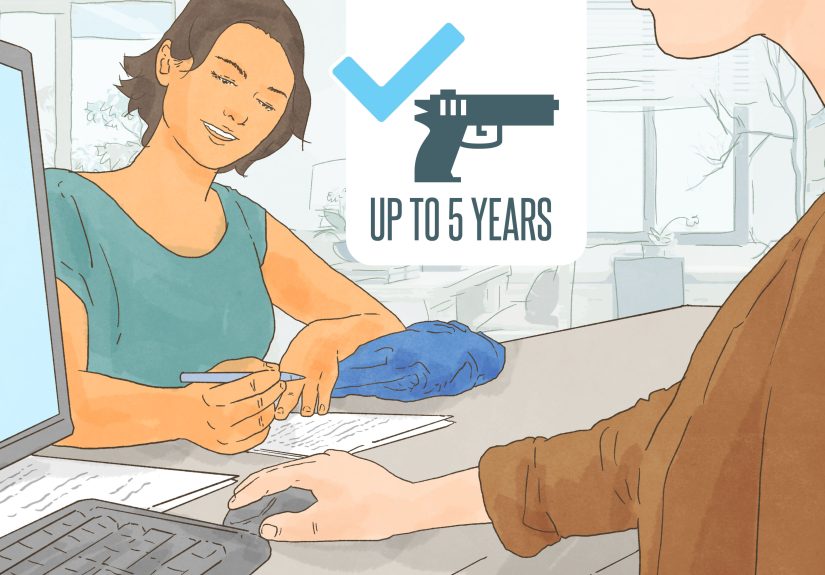
A Georgia Weapons Carry License is a county-issued license processed through the probate court in the county where you live. It is valid for five years unless revoked. The license may help Georgia residents legally carry in states that honor Georgia’s firearms permit reciprocity, but it does not erase the need to follow each state’s own carry rules. Think of it like a driver’s license on a road trip: another state may recognize it, but that does not mean you can ignore the speed limit, parking signs, or the giant “Do Not Enter” sign blinking at you like a lighthouse.
The WCL is not the same as a Federal Firearms License. An FFL is for people or businesses engaged in firearm sales, manufacturing, or importing. A Georgia WCL is for an eligible individual who wants a state weapons carry license.
Do You Need a Gun License to Buy a Gun in Georgia?
No state weapons carry license is required to buy a firearm in Georgia. However, if you buy from a federally licensed firearms dealer, the dealer generally runs a federal background check through the National Instant Criminal Background Check System, commonly called NICS. You will also need to comply with federal law, state law, age requirements, and any rules that apply to the type of firearm being purchased.
Private sales and dealer sales are not the same thing, and federal restrictions still matter. A person who is legally prohibited from possessing firearms cannot bypass that problem by skipping the license application. If a felony conviction, domestic violence issue, protective order, pending criminal case, drug-related conviction, or mental health adjudication may affect you, speak with a qualified Georgia attorney before applying or attempting to purchase.
Who Can Apply for a Weapons Carry License in Georgia?
To apply for a Georgia WCL, you generally must meet several eligibility requirements. Most applicants must be at least 21 years old. Applicants who are 18 to 20 may qualify only if they have completed basic training in the U.S. armed forces and can prove they are actively serving or have been honorably discharged.
You must also be a Georgia resident and apply in your county of residence. That means if you live in Cobb County, you do not apply in Fulton just because the parking looks friendlier. County probate courts process applications for their own residents.
Basic eligibility usually includes:
- Being at least 21, unless qualifying through military service between ages 18 and 20
- Being a Georgia resident
- Being a U.S. citizen or lawful resident
- Having proof of identity and residency
- Not being prohibited from firearm possession under state or federal law
- Not having disqualifying felony, drug, weapons, or domestic violence-related convictions
- Not having pending felony proceedings
- Not being a fugitive from justice
- Meeting applicable mental health and substance treatment-related eligibility rules
Georgia law contains detailed disqualification rules, so do not rely only on a quick checklist. A situation that looks simple online may be more complicated in real life. For example, an old drug-related misdemeanor, a sealed case, a pardon, or a past hospitalization may require closer review.
Where to Apply for a Gun License in Georgia
You apply through the probate court in your county of residence. Many Georgia counties now use online pre-applications, appointment systems, or digital forms. Others may still require more in-person steps. The process is similar across the state because it is based on Georgia law, but the practical details can vary by county.
Before you go, search for your county probate court’s Weapons Carry License page. Look for appointment rules, payment methods, current fees, fingerprinting instructions, and whether you need to complete an online form before arriving. Some courts process walk-ins. Others are appointment-only. A five-minute check can save you from driving across town just to learn that “walk-in” is not part of the day’s menu.
What Documents Do You Need?
The exact document list can vary slightly by county, but most applicants should prepare the following before visiting probate court:
- A valid government-issued photo ID, such as a Georgia driver’s license or Georgia ID card
- Proof of current county residency if your ID does not show your current address
- Proof of U.S. citizenship or lawful presence, such as a birth certificate, U.S. passport, naturalization document, or immigration number when applicable
- Payment for the application fee
- A self-addressed stamped envelope if the court mails licenses and requests one
- Military documentation if applying under the 18-to-20 military eligibility provision
- Your current WCL if applying for a renewal
Fees vary by county. Many first-time applications fall around the $70 to $80 range, but you should confirm the current fee with your local probate court. Payment methods also differ. Some courts accept cash, cards, money orders, or checks; others are more specific. County government offices are not famous for loving surprises, so bring exactly what they ask for.
Step-by-Step: How to Get a Gun License in Georgia
Step 1: Confirm that you are eligible
Start with eligibility. Make sure your age, residency, citizenship or lawful status, and criminal history do not block approval. If anything in your background is uncertain, do not guess. A short legal consultation may prevent a denied application, lost fee, or worse.
Step 2: Find your county probate court
Go to the website for your county probate court and look for “Weapons Carry License,” “Firearms License,” or “WCL.” Confirm whether you need an appointment. If the court uses an online application portal, complete it before going in. Some counties store the online application temporarily, so do not complete it months before you plan to appear.
Step 3: Gather your documents
Bring proof of identity, proof of residency, proof of citizenship or lawful presence, payment, and any special documentation. If your driver’s license still shows your old address, bring a utility bill, lease, bank statement, or other acceptable proof listed by your county. The goal is to make the clerk’s job easy. When the clerk is happy, paperwork moves.
Step 4: Submit the application at probate court
At the probate court, you will complete or confirm your application, take an oath, provide a specimen signature, and usually have a photo taken. This is not a training test or marksmanship exam. It is an administrative application focused on identity, eligibility, and background review.
Step 5: Provide fingerprints
Fingerprinting is a key part of the first-time application process. Depending on the county, fingerprints may be taken at probate court or at a law enforcement agency. Georgia guidance generally requires fingerprinting within five days of submitting the application. Missing that window can lead to administrative dismissal, meaning you may have to start over and pay again. That is the bureaucratic equivalent of dropping your sandwich in the driveway.
Step 6: Wait for the background check
After you apply, the probate judge requests the required criminal history and background checks. The process may take about 30 days, though timing can vary. If no disqualifying information appears and you meet the qualifications, the court can issue the license. Some counties mail it; others may require pickup.
Step 7: Keep the license safe
Once issued, your Georgia Weapons Carry License is valid for five years unless revoked. Keep it in a secure place and carry it when useful, especially if traveling to states that recognize Georgia’s license. If you lose it, contact the issuing probate court for replacement instructions.
How Long Does It Take to Get a Georgia Weapons Carry License?
Many applicants should expect the process to take several weeks from application to issuance. The state guidance often references around 30 days for law enforcement background review, but local workload, fingerprint processing, holidays, incomplete documents, or name-match delays can affect timing.
If your license is not arriving as expected, contact your probate court politely and have your application information ready. A calm tone works better than sounding like you are cross-examining a witness on a courtroom television show.
How to Renew a Georgia Weapons Carry License
A Georgia WCL lasts five years. Many counties allow a renewal application during a window that begins 90 days before expiration and continues for 30 days after expiration. Renewing within the proper window may reduce fees and simplify the process. If your license has been expired too long, you may have to apply as a new applicant instead of a renewal applicant.
For renewal, bring your current or recently expired WCL, photo ID, proof of current county residency, and payment. Some counties use an online renewal application. Others require in-person processing. Even if you renewed before, check the current county instructions. Government procedures have a charming habit of changing right after you think you have memorized them.
Where Can You Carry with a Georgia WCL?
A Georgia WCL does not give unlimited carry rights everywhere. Georgia law still restricts weapons in certain locations. Examples may include courthouses, jails, prisons, certain government buildings with security screening, state mental health facilities, nuclear power facilities, and school safety zones except under specific legal exceptions. Private property owners may also restrict weapons on their property.
Places of worship, campuses, government buildings, school-related areas, airports, and polling places can involve special rules. Before carrying into any sensitive location, verify the current law. A license is not a magic key; it is more like a permission slip with footnotes.
Does Georgia Recognize Other States’ Gun Licenses?
Georgia recognizes firearms licenses from many other states, and many states recognize Georgia licenses. However, reciprocity lists can change, and some states recognize only Georgia licenses issued to people 21 or older. Travelers should check the Georgia Department of Public Safety and the destination state before carrying across state lines.
Also remember that reciprocity does not make Georgia law travel with you. If you carry in another state, you must follow that state’s rules on prohibited places, vehicle carry, notification duties, magazine restrictions, storage, and interactions with law enforcement.
Common Mistakes That Delay or Derail Applications
Applying in the wrong county
You must apply in your county of residence. If you recently moved, update your address and bring proof. Courts generally need to see that you actually live in the county where you are applying.
Forgetting proof of lawful status
Some applicants bring a driver’s license but forget proof of citizenship or lawful presence when required. Check your county list carefully.
Missing the fingerprint deadline
If your county sends you elsewhere for fingerprints, do it quickly. The five-day window is not something to treat like a vague suggestion from a fortune cookie.
Assuming permitless carry means “no rules”
Permitless carry applies only to people who are lawful weapons carriers. It does not remove prohibited-person laws, restricted-location laws, or federal rules.
Ignoring renewal dates
Put your expiration date on your calendar months ahead of time. Renewing late can cost more and may force you through a new application process.
Safety, Training, and Responsibility
Georgia does not require a state training course for a standard WCL, but responsible firearm ownership should not stop at the minimum legal requirement. A quality safety course can teach safe handling, storage, transportation, conflict avoidance, and the legal consequences of defensive force. Even experienced gun owners benefit from refreshers. Confidence is good; overconfidence is how people end up on cautionary posters.
Secure storage is especially important. Use a lockbox, safe, or other secure storage method, particularly in homes with children, guests, roommates, or anyone who should not access firearms. Learn safe loading and unloading procedures, keep your finger off the trigger until ready to fire in a lawful setting, and treat every firearm as loaded. Those are not just range slogans; they are habits that prevent tragedy.
Practical Experiences and Real-World Lessons for Georgia Applicants
Most people who apply for a Georgia Weapons Carry License describe the process as straightforward, but not always fast. The smoothest applicants tend to do three things before leaving home: they verify the county probate court’s current instructions, gather more proof than they think they need, and schedule fingerprinting immediately. In other words, they treat the application like a small project instead of a casual errand squeezed between lunch and a tire rotation.
A common experience is address confusion. Someone may live in Cherokee County, work in Fulton County, and still have a driver’s license showing an old apartment in DeKalb County. That person may feel like they belong to half the metro Atlanta map, but the probate court needs a clear county of residence. Applicants who bring a current lease, utility bill, or updated Georgia ID usually have an easier time proving residency. Applicants who bring only a confident smile may be invited to return with actual documents.
Another frequent lesson is that county procedures are not identical. One Georgia county may require an online application before the appointment. Another may allow paper forms. One may take fingerprints in the same building. Another may send the applicant to a law enforcement location. This is why reading the county page matters. “My cousin did it differently in Gwinnett” is not a legal strategy in Chatham, Muscogee, DeKalb, or anywhere else.
Applicants also learn that the waiting period feels longer when they check the mailbox every morning like it owes them money. Background checks take time, and a delay does not automatically mean denial. Sometimes the system simply needs to confirm identity or process fingerprints. If there is a real eligibility issue, the court will handle it through the proper process. Patience, accurate paperwork, and polite follow-up are the applicant’s best tools.
Renewal applicants often have the easiest experience when they act early. The best habit is to set two reminders: one six months before expiration and another at the 90-day mark. That gives plenty of time to check county instructions, gather the current license, update identification, and avoid the “I thought it expired next year” moment. Spoiler: calendars do not negotiate.
People who travel frequently often find the WCL worthwhile even though Georgia itself does not require the license for eligible in-state carry. Reciprocity is the main reason. A Georgia resident who drives through several states may prefer having a recognized license, while still checking each state’s laws before crossing the line. The responsible traveler knows that a state border can change the rules faster than a weather app changes its mind.
The most important experience-related lesson is simple: getting the license is only the beginning. Responsible carry requires judgment, restraint, safe storage, and ongoing education. The license may fit in a wallet, but the responsibility is much larger. A good applicant thinks beyond approval and asks better questions: Where am I legally allowed to carry? How do I store safely at home? What should I do if a private business prohibits weapons? What are my duties if stopped by law enforcement? How do I avoid conflict instead of escalating it?
That mindset separates a paperwork-only applicant from a genuinely responsible gun owner. Georgia makes the application process accessible, but the serious part is what happens afterward: learning the law, respecting property rights, protecting children and guests from unauthorized access, and remembering that safe decisions matter every single day.
Conclusion
Getting a gun license in Georgia is not complicated when you understand the system. The official license is the Georgia Weapons Carry License, and it is handled by your county probate court. You generally need to be a Georgia resident, meet age and legal eligibility requirements, provide identity and residency documents, submit an application, pay the fee, complete fingerprinting, and pass the required background review.
Although Georgia does not require a WCL for eligible people to purchase or carry within the state, the license can still be valuable for reciprocity, documentation, and peace of mind. The smartest approach is to check your county’s current instructions, prepare your documents carefully, and treat firearm ownership as a long-term responsibility rather than a one-time form.
In short: apply in the right county, bring the right paperwork, respect the deadlines, learn the restricted locations, renew early, and keep safety at the center of every decision. That is how to get a gun license in Georgia without turning a simple process into a paperwork rodeo.