Table of Contents >> Show >> Hide
- The Mystery That Made Everyone Squint at a Table Photo
- Why Chuck Close and This Table Make Sense Together
- The Joe D’Urso Theory: Why It Keeps Coming Up
- How Design Sleuthing Actually Works
- Why This Kind of Table Still Feels Current
- What the Mystery Table Really Reveals
- If You Love the Look, Borrow the Logic
- Experience Notes: What It Feels Like to Chase a Design Mystery
- Conclusion
Some design mysteries begin with a dusty estate sale. Others start with a glamorous auction catalog. This one begins the modern way: with a slightly desperate message, a highly specific photo, and the unmistakable energy of someone who has already lost a good chunk of the afternoon to internet sleuthing.
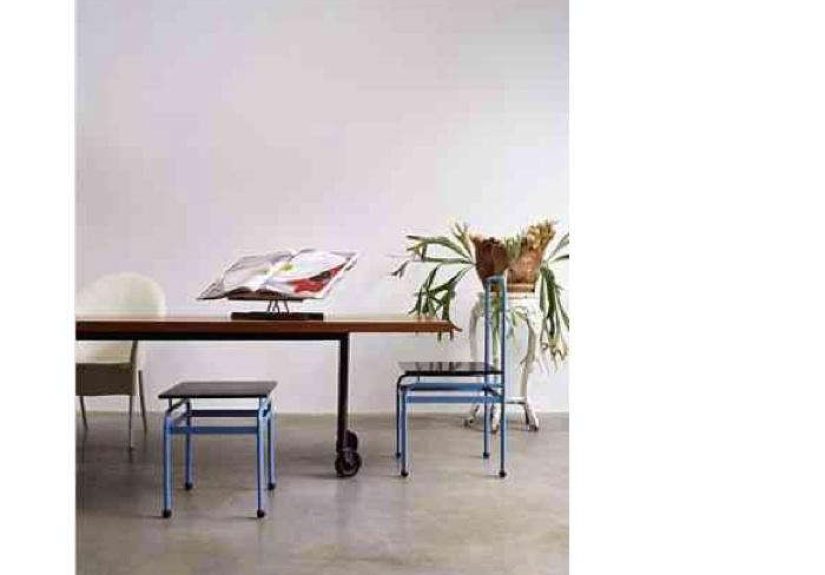
The question was deliciously simple: can anyone identify a table that artist Chuck Close reportedly loved? The object in question looked cool, controlled, and vaguely industrial in that very New York way that makes a piece of furniture seem less like décor and more like a personal manifesto. The first hunch was that it might be by designer Joe D’Urso. That guess alone tells you a lot, because D’Urso’s name is practically shorthand for a certain kind of high-tech minimalism: steel, glass, precision, restraint, and just enough attitude to make a coffee table feel like it has opinions.
And honestly, what a perfect reader question. It is specific enough to be interesting, mysterious enough to be fun, and nerdy enough to send design people happily spiraling into a rabbit hole of old catalogs, archived interiors, and “wait, is that safety glass?” discussions. In other words, this is not just a story about one table. It is a story about how design obsession works, why some objects become legends, and what a piece of furniture can reveal about the people who love it.
The Mystery That Made Everyone Squint at a Table Photo
The charm of the original question is that it sounds small, but it opens into a much larger world. An architect was trying to identify a table for Chuck Close, and the suspected designer was Joe D’Urso. That single detail matters because both names come loaded with visual meaning. Chuck Close is associated with rigor, scale, structure, and the patient transformation of visual information into something monumental. Joe D’Urso is associated with stripped-down interiors, industrial materials, and a kind of disciplined elegance that looks effortless only because somebody else did the hard thinking first.
When a table gets linked to D’Urso, you immediately begin looking for the clues: polished steel or enameled metal, a glass top, exposed structure, maybe casters, maybe open storage, maybe that uncanny ability to look simultaneously expensive and as if it rolled out of a very stylish lab. D’Urso’s furniture often has that engineered clarity. It does not beg for attention, but it absolutely expects respect.
That is why this reader question has staying power. The object was not some overdecorated conversation piece with twelve lion paws and a carved cherub. It was a disciplined, modern table. The kind that whispers, “I am useful,” and somehow makes that sound incredibly chic.
Why Chuck Close and This Table Make Sense Together
Chuck Close became famous for monumental, photo-based portraits that turned the human face into an event. Up close, his work could feel almost abstract, all units and marks and systems. Step back, and the image snapped into focus with astonishing clarity. That tension between grid and image, system and presence, is part of what made his work so compelling.
Now, to be clear, a table is not a portrait. A table does not stare into your soul unless you had far too much coffee. But certain pieces of furniture operate with a similar logic. They reduce form to essentials. They trust structure. They embrace repetition, proportion, and material honesty. They are cool-headed, but not cold. That is part of what makes the D’Urso theory feel plausible in spirit, even if the exact identification of the original table remains a design-world whodunit.
It is not hard to imagine why a major artist would fixate on a table like this. Creative people often obsess over objects that do more than function. They like tools, surfaces, supports, and frames that help thinking happen. A good table is never just “somewhere to set a drink.” It is a stage, a workstation, a landing pad for books and sketches and prototypes and arguments. In studios, offices, and serious homes, tables are where ideas take off and where takeout containers go to die.
So yes, Chuck Close wanting to know about a table feels entirely believable. Great artists notice things. Great artists notice how things are made. And great artists are often drawn to objects that solve problems beautifully without turning into melodrama. That is basically the design version of having excellent manners.
The Joe D’Urso Theory: Why It Keeps Coming Up
He Turned High-Tech Minimalism Into a Lifestyle
Joe D’Urso built his reputation on interiors and furniture that embraced functional materials and precise forms. He became closely associated with the high-tech movement that flourished in the 1970s and 1980s, especially in New York loft culture and fashion-adjacent spaces. Think white walls, open plans, exposed systems, industrial surfaces, and just a few very deliberate pieces doing a lot of visual work.
This aesthetic was never about clutter. It was about control. A D’Urso-inspired room does not say, “I bought everything in one weekend.” It says, “I edited this down until only the strong survived.” That is why his interiors still feel influential. They are not merely minimal. They are selective.
The Furniture Signatures Are Easy to Love
D’Urso furniture for Knoll is especially relevant here because many of those pieces check the exact boxes that design sleuths start hunting for in mystery photos. Stainless steel? Check. Glass? Often. Casters? Frequently. A low, floating profile? Very much his lane. The overall effect is industrial, but polished; rational, but elegant. It is furniture that looks like it understands floor plans.
That combination is why so many tables in his orbit feel instantly collectible. They are not flashy in the usual sense. They are cool because they seem engineered rather than decorated. In a world full of furniture trying very hard to have a personality, D’Urso’s pieces often win by acting like competence is the highest form of charisma.
How Design Sleuthing Actually Works
Anyone trying to identify a mystery piece should resist the urge to type “glass metal table wheels designer maybe famous?” into a search bar and hope for divine intervention. That path leads to chaos. Better to think like a detective with excellent taste.
Start With Materials
Materials narrow the field fast. Polished stainless steel suggests one cluster of designers and manufacturers. Painted steel points elsewhere. Safety glass, wire glass, and thick clear tops each tell slightly different stories. A table with industrial casters is a different animal from one with discreet hidden wheels. That is not trivia; it is evidence.
Look at the Construction, Not Just the Vibe
A lot of modern furniture shares the same general mood. Clean lines alone will not solve the case. What matters is how the table is put together. Are the sides open or boxed? Is the top flush or raised? Does the base create storage? Are the wheels exposed like a feature or tucked in like an apology? These details often point more reliably to a maker than the overall silhouette does.
Study the Era’s Habits
Furniture identification gets easier when you understand what certain periods loved. The late 1970s and 1980s were fond of metal, glass, mobility, and the language of industry brought indoors. A rolling table was not just practical; it signaled a broader shift in taste. Homes and offices began to borrow the visual confidence of studios, workshops, and commercial spaces. Suddenly, a table could look like it belonged in a drafting room and still end up in a very sophisticated living room.
Why This Kind of Table Still Feels Current
Here is the sneaky genius of the whole story: the table in question does not feel trapped in the past. Good high-tech furniture still works because its logic remains contemporary. We still love mobility. We still love materials that read as honest and durable. We still respond to furniture that gives us surface area without visual bloat. And we still appreciate pieces that look sharp in a loft, a gallery-like apartment, or a home office where someone would very much like to appear organized.
That is also why D’Urso’s influence keeps resurfacing. The design world never fully lost its appetite for furniture that is spare, architectural, and just a touch severe. In fact, when interiors become overly soft, overly beige, or overly eager to resemble a spa with Wi-Fi, a crisp steel-and-glass piece can feel wonderfully clarifying. It enters the room like the adult in the group chat.
And yet these tables are not only about visual discipline. They are useful. Many low rolling tables provide storage, flexibility, and easy movement. That practicality helps explain why they remain desirable. They are not museum pieces pretending to be furniture. They are furniture good enough to end up in museums, magazines, and homes belonging to people with exacting eyes.
What the Mystery Table Really Reveals
The most interesting part of this story is not whether the table turns out, with absolute certainty, to be a Joe D’Urso design. Of course that would be satisfying. We all enjoy a clean ending. But the deeper pleasure is in what the search reveals about design culture itself.
It reveals that taste is often built through recognition. People fall in love with an object because it reminds them of a lineage, a movement, a mood, or a whole visual era. It reveals that furniture can carry biography. A table might connect an artist to a designer, a loft to a gallery, an image in a photograph to a memory of a room you once saw and never forgot. And it reveals that the best objects are rarely mute. Even when you do not know their maker, they tend to speak in a recognizable accent.
In this case, the accent is modern, urbane, industrial, and highly edited. It is the accent of New York interiors where every object has earned its place. It is the accent of design that would rather be right than loud. And frankly, in a world where a lot of furniture is trying to become “content,” that feels refreshing.
If You Love the Look, Borrow the Logic
Suppose you are now mildly obsessed with this whole thing. Welcome. The key lesson is not that you must locate the exact mystery table or spend the next three months haunting vintage dealers with screenshot evidence. The smarter lesson is to understand what makes the look work.
Start with contrast. A steel-and-glass table looks best when it has room to breathe. Pair it with softer upholstery, books, art, or textured flooring so the room does not feel like a stylish dental office. Respect proportion. Low, strong tables need enough surrounding space to read as intentional rather than squat. Embrace function. If a piece has casters, let it move. Nothing is sadder than performance hardware being forced into permanent decorative retirement.
Most of all, edit ruthlessly. The D’Urso-adjacent sensibility depends on restraint. You do not need twenty clever objects. You need three good ones and the confidence to stop. That may be the hardest design skill of all. Anyone can buy. Not everyone can quit buying at the right moment.
Experience Notes: What It Feels Like to Chase a Design Mystery
If you have never fallen in love with an unidentified piece of furniture, let me describe the experience. First comes curiosity. You spot the object in a room photo and think, “That table looks good.” Very normal. Very healthy. Then comes the zooming. Suddenly you are enlarging a grainy image until the table legs become abstract geometry and your search history turns into a strange poem: “vintage steel low table wheels open side glass top maybe knoll maybe 1980s maybe New York.” This is how design crushes begin.
The funny thing is that the mystery becomes part of the appeal. If someone instantly told you the exact model number, manufacturer, dimensions, and original list price, the story would be useful, but it would lose a little drama. Mystery gives the object aura. It invites you to look harder. You begin noticing how the tabletop sits on the frame, how the wheels are scaled, how the whole thing seems to float even while looking heavy enough to survive a small apocalypse.
There is also a deeply human reason these searches stick with us: we are not only trying to identify an object. We are trying to identify a feeling. Maybe the table reminds us of a gallery we loved, a magazine spread we clipped years ago, or the first apartment we saw that made adulthood look stylish instead of exhausting. Sometimes what we really want is not the table. We want the confidence, order, and intelligence the table seems to promise.
That is why design questions can become oddly emotional. You tell yourself it is about furniture, and then suddenly you are talking about atmosphere, ambition, and why certain rooms make you want to become the kind of person who alphabetizes books and buys better olives. One object opens the door to an entire imagined life. That is not silliness. That is the power of design at its most persuasive.
And then there is the joy of recognition. When you finally see another piece by the same designer, or a room that uses the same vocabulary of steel, glass, white walls, and disciplined spacing, the puzzle starts to click. You realize good design teaches you how to see. After enough looking, you can begin to spot a family resemblance across decades, brands, and interiors. The eye gets sharper. Taste becomes less about vague preference and more about pattern recognition.
Even if you never solve the original mystery with courtroom-level certainty, the search still gives you something useful. You learn the visual grammar. You understand why certain proportions feel balanced, why certain materials project seriousness, and why mobility can make a room feel more alive. That is not wasted effort. That is education, just with better side tables.
So yes, I understand why a reader question about Chuck Close and an unidentified table still feels compelling. It is about curiosity, but also about standards. It is about knowing that details matter. It is about believing that a table can be more than furniture, that form can hold memory, and that a room can become memorable because one object gets the tone exactly right. Some mysteries deserve solving. Others deserve admiring. The best design questions somehow let us do both.
Conclusion
The beauty of Reader Question: Chuck Close Wants to Know… is that it turns a single design puzzle into a larger lesson about taste, authorship, and the enduring appeal of high-tech minimalism. Whether the mystery table is definitively Joe D’Urso or simply D’Urso-adjacent in spirit, the obsession makes perfect sense. Chuck Close’s world was one of close looking, structure, and transformation. D’Urso’s world was one of disciplined form, industrial clarity, and furniture that works as hard as it looks. Put those two worlds in the same sentence, and of course design people perk up.
That is why this little reader question still resonates. It reminds us that the best objects are never just objects. They are clues, signatures, and mood setters. They connect art to interiors, biography to materials, and everyday use to lasting style. And when a table can do all that while rolling quietly across the floor on casters? Well, that is not just furniture. That is theater with a very good engineering degree.