Table of Contents >> Show >> Hide
- What Does “Zero Balance” Actually Mean?
- The Short Answer: Does a Zero Balance Help or Hurt?
- Why a Zero Balance Can Improve Your Credit Score
- Why a Zero Balance Does Not Always Mean a Higher Score
- Open Credit Card With $0 vs. Closed Credit Card With $0
- Does Having All Cards Report $0 Hurt Your Credit?
- Statement Balance vs. Current Balance: The Part That Trips People Up
- Real-World Examples of How Zero Balances Affect Scores
- Best Practices If You Want a Strong Score and a Zero Balance
- Mistakes to Avoid
- Bottom Line
- Experiences People Commonly Have With Zero Balances
- SEO Tags
Here is the good news your wallet has been waiting to hear: in most cases, having a zero balance is not bad for your credit score. In fact, it is often a sign that you are managing credit responsibly, keeping debt low, and avoiding the kind of revolving balance that can quietly eat your budget alive like a raccoon in a pantry. But credit scoring is a little more nuanced than “zero is always perfect,” and that is where people get confused.
If you have ever paid off your credit card, checked your score, and thought, “Wait, why did my number not shoot into the stratosphere?” you are not alone. Credit scores are built from several moving parts, including payment history, utilization, age of accounts, new credit, and credit mix. A zero balance can help some of those factors, leave others unchanged, and occasionally create a small temporary surprise depending on what kind of account hit zero and how it was reported.
This article breaks down exactly how having a zero balance affects your credit score, when it helps, when it may not change much, and the smartest way to use low balances to your advantage without paying a penny in unnecessary interest.
What Does “Zero Balance” Actually Mean?
Before we go any further, let’s clear up a common misunderstanding. A “zero balance” can mean different things depending on the account:
- Credit card zero balance: You currently owe nothing on the card, or your issuer reported a $0 statement balance to the credit bureaus.
- Loan zero balance: You paid off an installment account such as a car loan, personal loan, or student loan.
- Closed account with zero balance: You paid it off and then closed it, or the lender closed it after payoff.
Those situations do not affect your credit score in exactly the same way. A zero balance on an open credit card is usually different from a paid-off loan, and both are different from closing a card that once helped your utilization.
The Short Answer: Does a Zero Balance Help or Hurt?
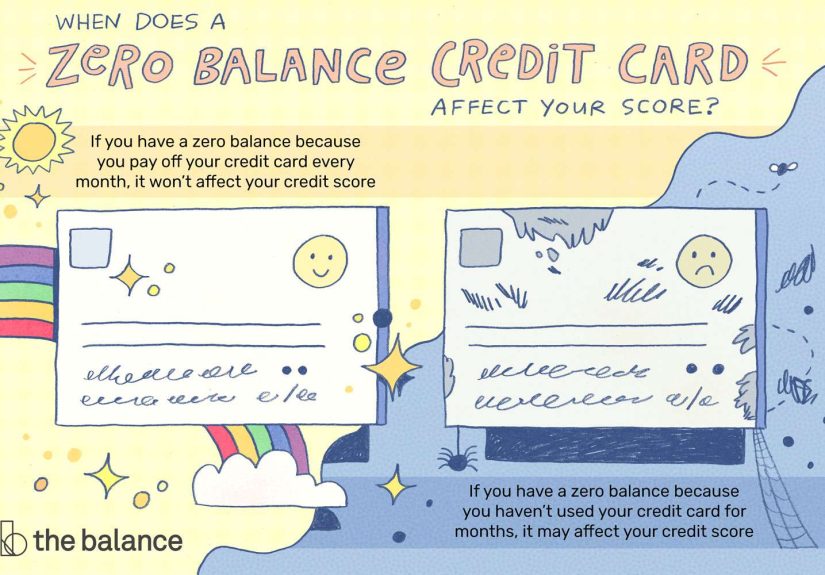
Usually, a zero balance helps more than it hurts. If the zero balance is on a credit card that remains open, it often lowers your credit utilization ratio, which is one of the most important parts of your score. Lower utilization generally signals that you are not overextended and are using credit conservatively.
That said, a zero balance is not always a magic score booster. If every revolving account reports a $0 balance, some scoring models may not reward you more than they would for very low utilization. In plain English, credit scoring tends to like low usage better than high usage, but it does not hand out extra gold stars forever just because you pushed everything to absolute zero.
Also, if your zero balance comes from closing a credit card, your score could fall because you lose available credit and raise your utilization on the cards that remain open. So the zero itself is not the villain. The account changes around it are usually the bigger deal.
Why a Zero Balance Can Improve Your Credit Score
1. It Lowers Your Credit Utilization
Credit utilization is the percentage of your available revolving credit that you are using. If you have a total credit limit of $10,000 and your reported balances add up to $1,000, your utilization is 10%.
Now imagine you pay those balances down to $0. Your utilization falls to 0%, which usually looks better than 10%, 30%, or 70%. This matters because credit scoring models pay close attention to how much of your available revolving credit you use.
Example:
- Total credit limit: $12,000
- Current reported balances: $3,600
- Utilization: 30%
If you pay that down to $600 before the statement closes, your utilization drops to 5%. That kind of change can help your score much more than almost any “credit hack” people pass around online.
2. It Shows You Are Not Relying Heavily on Debt
A zero or very low balance tells lenders that you are using credit but not leaning on it like a crutch. That can make you appear less risky than someone who keeps cards maxed out or close to the limit.
Think of it this way: a card with a $0 balance says, “I have access to credit, but I am not in a wrestling match with it.” Lenders tend to like that sentence.
3. It Helps You Avoid Interest While Protecting Your Score
One of the biggest myths in personal finance is that you need to carry a balance and pay interest to build credit. You do not. That myth needs to be launched into the sun.
You can use your credit cards, let a small statement balance report if you want activity to show, and then pay the statement balance in full by the due date. That approach can help you avoid interest while still demonstrating responsible use of revolving credit.
Why a Zero Balance Does Not Always Mean a Higher Score
1. Zero Is Good, but “Very Low” Can Sometimes Look Just as Good
Many people assume 0% utilization must be the absolute best utilization. Not always. In practice, very low utilization often performs extremely well, and 0% does not necessarily create extra scoring advantage over a tiny reported balance.
That is why some people notice that their score looks great when one card reports a small balance and the rest report zero. They are not carrying debt in a harmful way. They are simply allowing recent revolving activity to appear on the report.
2. Your Score Might Not Change Right Away
Credit card issuers do not usually update your report the instant you make a payment. Most report on a monthly cycle, often around the statement closing date. So if you pay a balance off today and check your score tomorrow, your report may still show the older balance.
This is where people start side-eyeing their credit app. The app is not necessarily wrong. The reporting just has not caught up yet.
3. A Paid-Off Loan Can Shift Your Credit Mix
If your zero balance comes from paying off an installment loan, the outcome can be more mixed. Paying off the debt is financially excellent, but your score may not jump as dramatically as expected. In some cases, it may even dip slightly for a while if that loan was helping your credit mix or your active installment profile.
That does not mean paying off the loan was a mistake. It means your finances and your score are related, but they are not twins wearing matching jackets.
Open Credit Card With $0 vs. Closed Credit Card With $0
This distinction matters a lot.
Open Card, Zero Balance
This is usually the most score-friendly version. You keep the account age, keep the available credit, and enjoy lower utilization.
Closed Card, Zero Balance
This can hurt your score if closing the card reduces your total available credit and causes the utilization on your remaining cards to rise. It may also matter if the closed account was one of your older accounts.
Example:
- Card A limit: $8,000, balance: $1,000
- Card B limit: $2,000, balance: $0
- Total limit before closing: $10,000
- Utilization before closing: 10%
If you close Card B, your total limit falls to $8,000. That same $1,000 balance now equals 12.5% utilization. Nothing got more expensive. Nothing exploded. But your ratio worsened, and your score may react.
Does Having All Cards Report $0 Hurt Your Credit?
Not in a dramatic, sky-is-falling way. But it may not produce the highest possible scoring outcome either.
If all your revolving accounts report zero, your file may show no recent revolving balance activity for that reporting period. That does not mean you suddenly have bad credit. It just means the scoring model has less recent usage to evaluate on those accounts.
For most people, the practical takeaway is simple:
- Do not carry interest-bearing debt just to “build credit.”
- Use your card normally for a small purchase or recurring bill.
- Pay on time and preferably in full.
- If you are optimizing before a major loan application, consider letting one card report a small balance while the others report zero.
That strategy can keep utilization low without paying unnecessary interest. It is less “gaming the system” and more “understanding how the scoreboard works.”
Statement Balance vs. Current Balance: The Part That Trips People Up
Your current balance is what you owe right now. Your statement balance is what was owed when the billing cycle closed. Credit reports often show the balance the issuer last reported, which is commonly tied to the statement cycle rather than your live account balance.
So yes, you can pay your card in full and still see a balance on your credit report for a while. That is normal.
If your goal is to have a lower reported balance, you may need to pay down the account before the statement closing date, not just before the due date. Those are two different dates, and confusing them is one of the most common reasons people think their score is ignoring their hard work.
Real-World Examples of How Zero Balances Affect Scores
Example 1: Paying Down Credit Cards
A borrower with three credit cards goes from 65% utilization to 4% utilization by paying balances nearly to zero. Their score often improves because the “amounts owed” picture becomes much healthier.
Example 2: Paying Off a Car Loan
A borrower pays off an auto loan and now has one less active installment account. Their score may stay flat, rise slightly, or dip temporarily depending on the rest of the file. Financially, they are in a better spot because the debt is gone, even if the score takes a minute to catch up or reshuffle.
Example 3: Closing an Unused Card After Paying It Off
A person pays off an old card and closes it because they are feeling tidy and powerful. Their score later slips because their total available credit shrinks. The lesson: “paid off” and “should close immediately” are not the same sentence.
Best Practices If You Want a Strong Score and a Zero Balance
- Pay on time every month. Payment history still matters more than almost anything else.
- Keep credit card utilization low. Lower is generally better, especially below common lender comfort zones.
- Do not carry a balance just to build credit. Paying interest for no scoring advantage is like tipping your credit card company for no reason.
- Leave old useful cards open when possible. A zero-balance card can still help your score if it adds age and available credit.
- Watch statement closing dates. If you want low balances reported, timing matters.
- Check your credit reports regularly. Make sure your zero balance is actually being reported correctly.
Mistakes to Avoid
- Closing a zero-balance card without considering utilization
- Assuming a paid-off balance updates instantly
- Confusing a 0% APR promo with a $0 reported balance
- Thinking zero activity is the same as strong active credit management
- Paying interest because someone on the internet swore it “helps your score”
Bottom Line
Having a zero balance usually helps your credit score most when it lowers credit card utilization and leaves your accounts open. It can be a smart sign of financial control, not a problem. The real issues tend to arise when zero balance is paired with account closures, reduced available credit, or unrealistic expectations about instant score increases.
If you want the healthiest long-term approach, focus less on chasing a perfect-looking screenshot and more on the habits that scores actually reward: on-time payments, low utilization, older well-managed accounts, and no unnecessary interest. A zero balance is often a great tool. It is just not the entire toolbox.
Experiences People Commonly Have With Zero Balances
The experiences below are representative, real-world scenarios based on common credit-reporting patterns people run into when managing balances and monitoring their scores.
One of the most common experiences is paying a credit card down to zero and then feeling slightly betrayed when the score does not move right away. Someone makes a big payment on Friday, opens a credit monitoring app on Saturday, and expects confetti. Instead, the app still shows the old balance. This happens because the issuer usually reports on a monthly cycle, not in real time. The emotional arc is predictable: confidence, confusion, a little panic, then relief once the next statement reports and the score catches up.
Another common experience happens when someone proudly gets every single card to report $0. On paper, this seems like peak financial virtue. And it is financially strong, especially if it means the person is avoiding interest. But some borrowers notice that their score is not meaningfully higher than when one card reported a tiny balance. That can feel unfair at first. The practical lesson is that low utilization matters a lot, but absolute zero is not always dramatically better than very low usage. The person is still doing well; the score just is not giving extra fireworks.
Then there is the “I paid it off, so I closed it” experience. This one is especially common with older cards people no longer use. They pay the balance to zero, close the account, and assume the credit profile is now cleaner and stronger. A month later, the score drops. Why? Because the closure removed available credit and sometimes shortened the helpful structure of the person’s active accounts. This is the personal finance equivalent of cleaning out a closet and accidentally donating your winter coat in November.
People also experience a weird moment after paying off a car loan or another installment loan. They expect their score to jump because the debt is gone, and financially they are absolutely better off. But the score may rise only a little or even dip briefly. That does not mean the payoff was bad. It usually means the scoring model is recalculating the person’s mix of active accounts. Many borrowers find this frustrating until they realize that being debt-free and having the highest possible score on the same exact day are not always the same event.
Finally, many people settle into a routine that works beautifully: they use one or two cards for groceries, streaming bills, gas, or lunch; keep spending modest; pay on time every month; and avoid carrying interest. Over time, they notice their scores become steadier, their reports look cleaner, and credit stops feeling mysterious. That is probably the most valuable experience of all. A zero balance is helpful, but the real win is learning how reporting works well enough that your score stops feeling like a moody weather forecast and starts looking more like a predictable result of solid habits.