Table of Contents >> Show >> Hide
- Why hand feeding a squirrel is not the best idea
- How to help a squirrel safely: 11 steps
- Step 1: Start by observing from a distance
- Step 2: Figure out whether you are seeing normal behavior or a real problem
- Step 3: Never try to make a wild squirrel eat from your hand
- Step 4: If the squirrel is healthy, help the habitat instead of the squirrel’s manners
- Step 5: Do not offer random human food
- Step 6: If you find a baby squirrel, warm first and feed nothing unless a rehabilitator tells you to
- Step 7: Try reunion with the mother when appropriate
- Step 8: Contact a licensed wildlife rehabilitator for injuries, illness, or failed reunion
- Step 9: Use gloves and a towel if you must handle the animal briefly
- Step 10: Treat any bite or scratch seriously
- Step 11: Enjoy squirrels in ways that keep them wild
- Common mistakes people make with squirrels
- What to do if you really want to “help” squirrels in your neighborhood
- Real-life experiences: what people often learn when they stop trying to hand feed squirrels
- Conclusion
- SEO Tags
Note: This article replaces hand-feeding instructions with humane, safety-first advice for helping squirrels without putting yourself or the animal at risk.
Squirrels have a special talent for making humans do questionable things. One minute you are enjoying your coffee. The next, you are wondering whether you should hold out a peanut like a woodland butler and wait for a fluffy guest to climb aboard. It sounds charming. It looks adorable on social media. In real life, though, hand feeding a squirrel is usually a bad deal for both you and the squirrel.
Wild squirrels can bite, scratch, and become too comfortable around people. They can start associating humans with food, lose some of their natural caution, and get themselves into trouble near cars, pets, porches, and people who are a lot less patient than you. Even worse, if the squirrel is injured, dehydrated, or orphaned, the wrong food or too much handling can make things worse fast.
So if you came here looking for “How to Hand Feed a Squirrel: 11 Steps,” here is the kinder, smarter version: how to help a squirrel safely, responsibly, and without turning your backyard into a tiny acorn-themed emergency room. These 11 steps will help you protect wildlife, avoid common mistakes, and still enjoy the magic of seeing squirrels up close, just not that close.
Why hand feeding a squirrel is not the best idea
Before we get into the steps, let’s clear the air. Squirrels are not plush toys with parkour skills. They are wild animals. A squirrel that takes food from your hand may look friendly, but it is usually learning a risky lesson: humans equal snacks. That can lead to repeated approaches, bolder behavior, conflicts with neighbors, and a higher chance of injury.
There is also the human side of the equation. A squirrel can nip a finger, rake a hand with sharp claws, or leap in a direction that leaves everyone involved regretting the moment. If you are dealing with a baby squirrel, the stakes get even higher. Feeding the wrong food, feeding too soon, or giving water incorrectly can cause choking, digestive distress, dehydration problems, or delayed treatment.
The better goal is not “How do I make a squirrel trust my hand?” It is “How do I help squirrels safely while letting them stay wild?” That question leads to much better answers.
How to help a squirrel safely: 11 steps
Step 1: Start by observing from a distance
The first step is gloriously simple: do less. Watch the squirrel for a few minutes before deciding it needs help. Adult squirrels are busy creatures. They dart, freeze, zigzag, bury food, stare dramatically into the middle distance, and generally behave like they have seventeen appointments. Weird behavior is not always distress.
If the squirrel is moving normally, avoiding people, and climbing well, it probably does not need your intervention. Observation prevents unnecessary handling, which is often the kindest choice.
Step 2: Figure out whether you are seeing normal behavior or a real problem
A squirrel may need help if it is clearly injured, unable to move properly, being approached by flies, dragging a limb, circling repeatedly, or lying still in an exposed place. A baby squirrel may need help if it is cold, weak, has visible injuries, or remains alone for a long period with no sign of its mother.
On the other hand, a juvenile squirrel hopping around clumsily or following movement may simply be learning how to be a squirrel. They are not born with a tiny instruction manual. Sometimes awkward is just awkward.
Step 3: Never try to make a wild squirrel eat from your hand
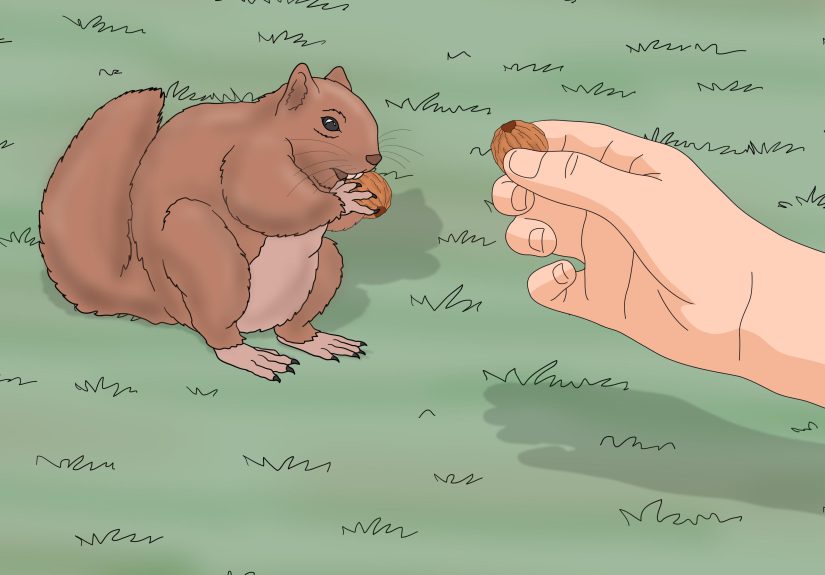
This is the heart of the matter. Do not offer food from your fingers or palm. Do not crouch down and coax. Do not try the “just one peanut” strategy. Direct hand feeding increases the chance of bites, scratches, and food-conditioning. It also teaches the squirrel to approach humans for meals, which is charming until the squirrel tries that trick with someone less enchanted.
If your real goal is connection, choose observation over contact. A squirrel staying wild is a success story, not a rejection.
Step 4: If the squirrel is healthy, help the habitat instead of the squirrel’s manners
If you simply enjoy seeing squirrels in your yard, the safest help is indirect help. Plant native trees and shrubs. Maintain natural cover. Keep clean water available in a shallow, stable dish if weather is hot and dry. Protect gardens without trapping animals into bad situations. A wildlife-friendly space supports squirrels without teaching them to beg at human knees like furry street magicians.
This approach also supports birds, pollinators, and other native species. In other words, you help the neighborhood instead of creating one very entitled squirrel.
Step 5: Do not offer random human food
Bread, crackers, chips, sugary snacks, flavored nuts, and leftovers are not gifts from the heavens. They are junk food in a tiny tail-friendly package. Even foods that seem harmless can be too salty, too sweet, or nutritionally unbalanced for wildlife.
If you choose to support backyard wildlife generally, think in terms of habitat and natural food sources rather than handouts. Wild animals do best when they are using wild instincts, not waiting for snack service.
Step 6: If you find a baby squirrel, warm first and feed nothing unless a rehabilitator tells you to
This is the step many people get backward. A cold baby squirrel should not be fed immediately. It should be kept warm first. Place the baby in a small box or container lined with soft cloth, keep it in a quiet place, and provide gentle warmth under half of the container so the baby can move away if it gets too warm.
Do not give cow’s milk. Do not squirt water into its mouth. Do not improvise a recipe from the internet and hope for the best. Tiny mammals can aspirate fluid easily, and incorrect feeding can do real harm.
Step 7: Try reunion with the mother when appropriate
In many cases, the best outcome for a baby squirrel is getting back to its mother. If the baby is uninjured and warm, placing it in a safe open container near the tree where it was found may allow the mother to retrieve it. Keep pets and people away while you monitor from a distance.
This step matters because the mother is almost always better at squirrel care than a well-meaning human with a search history full of panic.
Step 8: Contact a licensed wildlife rehabilitator for injuries, illness, or failed reunion
If the squirrel is injured, bleeding, lethargic, cold, flyblown, or orphaned after a reunion attempt, contact a licensed wildlife rehabilitator as soon as possible. This is where real expertise matters. Rehabilitators know the right formulas, feeding schedule, warming methods, and release practices. They also know when an animal needs veterinary treatment.
Trying to raise a squirrel yourself may be illegal where you live, and even when legal questions are not the issue, proper wildlife care is far more specialized than most people expect.
Step 9: Use gloves and a towel if you must handle the animal briefly
If a squirrel is in immediate danger and must be moved a short distance for safety, protect yourself. Wear thick gloves. Use a towel to gently contain the animal. Keep handling minimal and calm. Loud voices, crowding, selfies, and prolonged cuddling are not first aid. They are stress with better lighting.
A sturdy ventilated box is better than carrying a squirrel around in your hands. Quiet, darkness, and warmth often do more good than constant checking.
Step 10: Treat any bite or scratch seriously
If you are bitten or scratched, wash the area thoroughly with soap and water right away. Then contact a medical professional for advice, especially if the wound breaks the skin. It is tempting to shrug off a tiny bite and say, “Well, that was humbling.” Do the washing first and the storytelling later.
The same rule applies to pets. If your dog or cat has contact with a squirrel, call your veterinarian for guidance.
Step 11: Enjoy squirrels in ways that keep them wild
You do not need a squirrel perched on your wrist to appreciate wildlife. Watch from a window. Take photos from a distance. Learn to identify behaviors like caching, chattering, tail flicking, and nest building. Teach kids that loving wildlife does not mean touching wildlife. Honestly, that lesson travels well beyond squirrels.
The best compliment you can pay a squirrel is to let it remain excellent at being a squirrel. No handshake required.
Common mistakes people make with squirrels
Mistake 1: Assuming every baby squirrel is abandoned
Many babies are temporarily alone while the mother is gathering food or recovering from a disturbance. Picking up a healthy baby too quickly can separate it from the very parent trying to retrieve it.
Mistake 2: Feeding first, thinking later
People mean well, but rushing to feed a weak squirrel can cause more harm than good. Warmth, safety, and professional guidance come first.
Mistake 3: Treating a wild squirrel like a pet
Wild squirrels are not domesticated companions. They may appear calm one moment and panic the next. Even repeated visits to a yard do not turn wildlife into household members.
Mistake 4: Using social media as a substitute for wildlife guidance
If a video shows someone hand feeding a squirrel and both look thrilled, remember that a ten-second clip does not show what happened before, after, or the tenth time the squirrel approached a stranger expecting food.
What to do if you really want to “help” squirrels in your neighborhood
Help starts with environment. Plant native trees. Protect nesting areas when possible. Keep cats indoors. Avoid leaving trash or pet food outdoors. Use humane prevention methods if squirrels are getting into attics or sheds. Secure entry points after you are sure no young are inside. And if you encounter an injured squirrel, call a licensed wildlife rehabilitator instead of trying to become one during lunch break.
There is a big difference between kindness and interference. Wildlife usually needs more of the first and less of the second.
Real-life experiences: what people often learn when they stop trying to hand feed squirrels
One of the most common experiences people describe is surprise. They start out convinced that hand feeding is the fastest way to build trust, but once they stop chasing that idea, they notice that squirrels become easier to observe and understand. From a patio chair or kitchen window, patterns start to emerge. A squirrel may take the same route along a fence every morning, pause on the same tree limb before jumping, or return to a favorite patch of ground where it buried food earlier in the week. Suddenly the experience becomes less about making contact and more about actually paying attention.
Another common experience is learning patience. Wild animals move on their own timeline, which is deeply inconvenient for humans and therefore probably good for our character. When people stop trying to lure squirrels closer with a handout, they often become calmer observers. They learn the difference between curiosity and distress, between a squirrel that is foraging normally and one that may truly need help. That shift can prevent a lot of unnecessary “rescue missions” that do more harm than good.
People who have found baby squirrels often describe an emotional roller coaster. At first, there is panic. The baby looks tiny, helpless, and impossibly dramatic, like it just starred in a wilderness soap opera. Then comes the urge to feed it immediately. But those who follow good wildlife guidance often discover that warming the baby, attempting reunion, and calling a rehabilitator leads to a much better outcome than improvising care at home. Many later say the hardest part was doing less, not more.
Homeowners also report that indirect help works better than direct feeding. A yard with trees, fresh water, and fewer hazards attracts natural squirrel behavior without creating a line for handouts. Families with children often find this approach especially useful because it turns squirrel watching into a real nature lesson. Kids can learn to spot dreys in trees, notice seasonal behavior, and understand why wild animals should stay wild. That kind of experience lasts longer than the thrill of a squirrel grabbing a snack and sprinting off like it just robbed a tiny bank.
Even people who once loved close-up feeding often admit there is relief in setting boundaries. No more surprise lunges. No more worries about bites. No more neighborhood squirrel treating every human like a vending machine with feelings. Instead, there is a healthier relationship: respectful distance, smarter choices, and a better chance that the squirrel remains safe in the long run.
In the end, the most meaningful experiences around squirrels usually come from coexistence, not contact. Watching a mother retrieve a baby, seeing a squirrel rebuild a nest after a storm, or noticing how quickly wildlife returns to a calm, supportive habitat can be far more rewarding than a risky hand-feeding moment. The best wildlife memories are often the ones where the animal stays beautifully, unapologetically wild.
Conclusion
If you were hoping for a simple guide on how to hand feed a squirrel, the real answer is simpler and smarter: do not. Help squirrels by protecting their habitat, observing from a respectful distance, and calling a licensed wildlife rehabilitator when something is truly wrong. That approach keeps your fingers safer, keeps the squirrel healthier, and keeps the wild in wildlife where it belongs. Cute should never outrank sensible, especially when claws are involved.