Table of Contents >> Show >> Hide
- What Is a Zentangle, Exactly?
- Supplies You Need Before You Start
- How to Make a Zentangle in 11 Steps
- Step 1: Settle in and start with intention
- Step 2: Choose a small drawing surface
- Step 3: Place a dot near each corner
- Step 4: Connect the dots to make a border
- Step 5: Draw a string to divide the tile
- Step 6: Pick your first simple pattern
- Step 7: Fill one section one stroke at a time
- Step 8: Rotate the tile as you go
- Step 9: Repeat with new patterns in the remaining spaces
- Step 10: Add black fills and soft shading
- Step 11: Initial, date, and reflect on the result
- Tips to Make Your Zentangle Look Better Fast
- Common Beginner Mistakes to Avoid
- Why So Many People Find Zentangle Relaxing
- Easy Pattern Ideas for Your First Few Tiles
- Extra Reflection: What the Experience of Making a Zentangle Actually Feels Like
- Final Thoughts
If you have ever stared at a blank page and thought, “Wow, this paper is judging me,” Zentangle might be your new best friend. A Zentangle is a small, structured, abstract drawing built from repeating patterns. It looks fancy, feels calming, and has a magical way of making ordinary lines look like they went to art school. The best part is that you do not need to be “good at drawing” to make one. You just need a pen, a small piece of paper, and the willingness to trust the process one stroke at a time.
The traditional Zentangle approach is simple on purpose. You begin with a small tile, add a border, divide the space with light pencil lines, and then fill each section with repeated patterns called tangles. Because the drawing is abstract, you are not trying to make a perfect cat, realistic eye, or dramatic mountain scene that accidentally turns into a potato. You are simply building rhythm, contrast, and texture. That is why so many beginners fall in love with it almost immediately.
In this guide, you will learn how to make a Zentangle in 11 clear steps, plus practical tips for choosing patterns, shading for depth, and making your finished tile look polished without losing the fun. If you want a creative hobby that feels relaxing without being boring, this is a solid place to start.
What Is a Zentangle, Exactly?
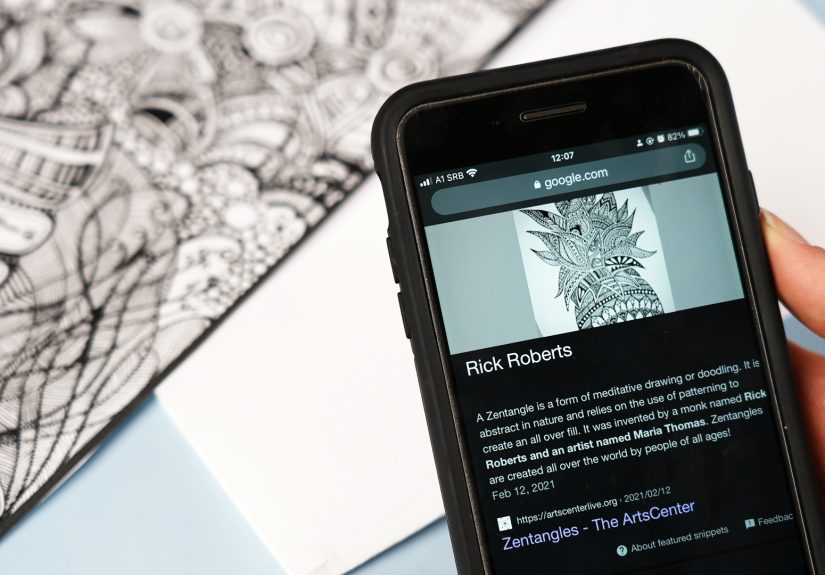
A Zentangle is an abstract drawing made from structured, repetitive patterns. Traditional Zentangle art is often created in black ink on a small square tile, which helps keep the project manageable and removes the pressure of filling a huge page. Instead of planning a detailed picture in advance, you work inside simple sections and let the design grow naturally.
That small scale matters more than people think. When the paper is compact, the process feels approachable. You can finish a tile in one sitting, experiment without panic, and focus on one line rather than the whole composition. In other words, the page stops acting like a giant performance review.
Many people also enjoy Zentangle because the repeated strokes feel meditative and focused. That does not mean every Zentangle session will transform your life before lunch, but it can create a quiet, steady rhythm that helps your brain settle down and pay attention to the moment in front of you.
Supplies You Need Before You Start
You do not need a giant art haul to begin. In fact, part of the appeal is how little equipment you need.
- Paper or tile: A small square is ideal. Traditional tiles are around 3.5 x 3.5 inches, but any small, sturdy paper works.
- Pencil: Use it for dots, borders, strings, and shading.
- Fine-tip black pen: A clean, smudge-resistant pen works best.
- Blending tool or tissue: Helpful for soft shading, though your finger can work in a pinch.
- Eraser: Optional, since many artists keep pencil lines light enough to fade into the design.
If you are brand new, start with black ink on white paper. Limiting your materials makes decisions easier, and easier decisions mean more time actually drawing. Fancy tools are nice, but confidence beats expensive pens every single time.
How to Make a Zentangle in 11 Steps
Step 1: Settle in and start with intention
Before you draw, pause for a moment. Sit comfortably, take a few slow breaths, and give yourself permission to make something imperfect. Traditional Zentangle teaching begins with gratitude and appreciation, which sounds a little poetic until you realize it genuinely helps. A quick reset shifts your attention away from stress and toward the page.
You do not need candles, a gong, or a mountain retreat. Just a calm minute and the decision to slow down.
Step 2: Choose a small drawing surface
Pick a small square of paper or a tile-sized card. A compact format is easier to manage than a full sketchbook page, especially for beginners. When the space is small, you are less likely to overthink every mark. You can complete the design faster, learn from it, and start another one without a dramatic identity crisis.
Step 3: Place a dot near each corner
With a pencil, place a small dot near each corner of your square. These do not need to be measured with mathematical precision. The dots simply give you anchor points so the blank page no longer feels intimidating. It is a tiny action, but it turns “Where do I even begin?” into “Okay, I have started.”
Step 4: Connect the dots to make a border
Lightly connect the four dots with pencil lines to create a border. Your border can be straight, gently curved, wavy, or slightly uneven. That last option is especially convenient if straight lines and you are not currently on speaking terms.
The border frames your design and gives it visual structure. It also reminds you that you do not have to fill every inch of the paper. Working inside a contained space is part of what makes the process feel focused.
Step 5: Draw a string to divide the tile
Inside the border, draw one or more light pencil lines to divide the space into sections. This is called the string. It can be a single curve, a looping path, a few intersecting arcs, or a shape that looks suspiciously like it wandered in from another planet. All are welcome.
The point of the string is not to lock you into a rigid blueprint. It is simply a gentle guide. These separate zones give you places to explore different tangles without making the whole drawing feel chaotic.
Step 6: Pick your first simple pattern
Now switch to pen and choose one easy pattern for the first section. Good beginner-friendly options include:
- Rows of lines
- Dots or orbs
- Scallops
- Leaf shapes
- Checkerboards
- Parallel curves
- Simple stripes with alternating fills
Start with patterns built from basic strokes: dots, straight lines, curves, S-curves, and circles. These are the building blocks of many Zentangle designs. You are not chasing complexity yet. You are building rhythm.
Step 7: Fill one section one stroke at a time
Work slowly and deliberately. Draw the pattern one mark at a time instead of rushing to finish the whole section. That is where the magic lives. Repetition builds texture, and texture builds interest. If you focus only on the next line, the drawing becomes more relaxing and less intimidating.
If your lines wobble a little, congratulations, you are human. Tiny variations often make the piece feel more alive. Perfectly mechanical marks can look stiff. Handmade marks have character.
Step 8: Rotate the tile as you go
One of the most helpful Zentangle habits is rotating the paper while you draw. Turn the tile so your hand stays comfortable and your strokes flow naturally. There is no permanent top or bottom in a Zentangle, so let the page move. This makes curves easier, keeps your wrist relaxed, and helps you see fresh possibilities in the design.
It also has a sneaky side benefit: when you rotate the tile, you stop obsessing over whether the drawing “looks like something.” Instead, you start noticing balance, rhythm, and pattern.
Step 9: Repeat with new patterns in the remaining spaces
Move to the next section and choose a different pattern. Continue filling each area with a unique tangle or a variation of one you already used. Contrast is your friend here. If one section is dense and dark, make the next one airy. If one area uses round shapes, try sharper lines nearby. Variety helps the finished tile look rich and balanced.
A simple formula works well: one open pattern, one medium-density pattern, one dark pattern, one playful pattern. That gives the eye somewhere to rest and somewhere to explore.
Step 10: Add black fills and soft shading
Once the pen work is done, use your pencil to add shading where forms overlap, where one pattern tucks under another, or where you want more depth. Blend gently with a tortillon, tissue, or fingertip. Even light shading can make a flat design feel dimensional and polished.
You can also fill a few areas with solid black to boost contrast. This is one of the fastest ways to make a Zentangle look more dramatic. Shading and black fills are like the seasoning in a recipe: a little can make everything better, but too much too fast can overpower the dish.
Step 11: Initial, date, and reflect on the result
Add your initials on the front and the date on the back or bottom. This small ritual matters. It marks the tile as finished and reminds you that you made it. Keep your early pieces, even the awkward ones. Especially the awkward ones. They become a record of growth, experimentation, and all the brave little lines that got you started.
Then step back and look at the tile as a whole. Notice where the eye travels, which patterns feel strong, and what you might try differently next time. A Zentangle is not just a finished picture. It is practice, discovery, and a quiet conversation between your hand and your attention.
Tips to Make Your Zentangle Look Better Fast
Keep your patterns simple at first
Beginners often assume a good Zentangle must be incredibly intricate. Not true. Clean repetition usually beats overcomplicated chaos. A simple scallop pattern, drawn carefully and shaded well, can look more impressive than a crowded section full of half-finished ideas.
Use line weight for variety
Try making some outlines slightly bolder than others. Thicker lines can define shapes, separate sections, or create emphasis. This gives the drawing more depth even before you add shading.
Leave some breathing room
Not every section needs to be packed to the edges. Open areas help the eye rest and make detailed sections stand out more. Think of it like home decorating: one interesting chair looks great in a room, but forty-seven chairs just means you have made poor life choices.
Study patterns in everyday life
Great tangle inspiration is everywhere: leaves, brick walls, woven baskets, shells, tiles, spiderwebs, fabric prints, windows, fences, and even the foam on your coffee. Once you start noticing repeating forms in the world, new pattern ideas show up constantly.
Common Beginner Mistakes to Avoid
- Pressing too hard with pencil: Keep borders and strings light so they do not compete with the ink.
- Choosing patterns that are too difficult: Start with easy shapes and repeat them well.
- Rushing the shading: Gentle, gradual shading looks better than heavy graphite all at once.
- Overfilling every space: Contrast needs light areas as well as dark ones.
- Judging the tile too early: Zentangles often look weird halfway through. Keep going.
That last point is important. Many artworks pass through an awkward middle stage. Zentangles are no exception. Do not evaluate the whole piece when only half the sections are complete. That is like reviewing a cake after mixing the batter and declaring dessert a failure.
Why So Many People Find Zentangle Relaxing
Zentangle appeals to people for several reasons. First, it breaks drawing into manageable actions. Instead of facing a giant creative task, you make one small mark, then another, then another. Second, repetitive patterns can hold attention in a steady way, which many people experience as calming and grounding. Third, because the work is abstract, there is less pressure to make it look realistic.
That said, it helps to keep the language honest. Casual Zentangle practice can be soothing and satisfying, but it is not the same thing as formal art therapy with a credentialed professional. Think of it as a creative mindfulness practice rather than a cure-all in a square. A very charming square, but still a square.
Easy Pattern Ideas for Your First Few Tiles
If you are unsure what to draw, try mixing these beginner-friendly combinations:
- Tile One: dots, stripes, scallops, checkerboard
- Tile Two: leaf shapes, waves, pebbles, black fills
- Tile Three: spirals, grids, ribbon lines, soft shading
- Tile Four: petals, nested curves, orbs, negative space
You can also repeat one pattern in multiple sections and simply change the scale, spacing, or shading. That creates cohesion without becoming boring. In fact, many polished Zentangles rely more on smart variation than on endless pattern hopping.
Extra Reflection: What the Experience of Making a Zentangle Actually Feels Like
One reason Zentangle keeps pulling people back is that the experience is oddly rewarding from the very first session. At the beginning, there is usually a little hesitation. The page is blank. The pen feels serious. The brain starts whispering things like, “What if this turns out terrible?” and “Maybe we should reorganize a drawer instead.” Then the first dot goes down, and suddenly the page does not feel so intimidating anymore. A border appears. A string curves through the tile. The task gets smaller and friendlier with every step.
Then comes the part that surprises most beginners: once the pattern starts repeating, the mind gets quieter. Not necessarily silent. This is not a magic trick. But quieter. You stop thinking in giant, stressful paragraphs and start thinking in short visual moments. One curve. One row of dots. One cluster of lines. The hand moves, the eyes follow, and the design begins to build itself in a way that feels both deliberate and slightly unexpected.
There is also a strange little confidence boost that happens halfway through a tile. At first, the drawing may look random. Maybe one section feels too dark, another too empty, and a third looks like it was invented by an overcaffeinated seashell. But once contrast appears and the sections begin talking to each other, the whole thing starts to click. That is a useful lesson far beyond drawing: not every creative project looks good in the middle. Sometimes the middle is just the messy bridge to the good part.
Another memorable part of the Zentangle experience is how physical it is. You hear the pen on paper. You feel the resistance of the surface. You rotate the tile and notice how a pattern changes depending on direction. Shading adds softness. Black fills add drama. What started as a few humble marks suddenly has depth and personality. It is a quiet kind of transformation, but it feels satisfying in a very real way.
For many people, the biggest shift is emotional rather than technical. Zentangle creates a low-pressure way to make art without needing a grand concept or special talent. You do not need to impress anyone. You do not even need to know what the final tile will look like. You just need to keep going. That can be refreshing for people who have spent years believing creativity belongs only to “real artists.” Zentangle gently argues otherwise.
And perhaps that is the best part of the whole process. A finished Zentangle is lovely, but the real value often lives in the experience of making it. You sat down. You paid attention. You made something from simple strokes and patience. You turned a blank square into a textured little world. That is no small thing. It is practice in focus, in play, in trust, and in letting a page become interesting without demanding perfection from the first line.
So if your first tile feels clumsy, keep it anyway. If your second one feels better, date it. If your third makes you smile, you are already building your own visual language. Over time, the experience becomes familiar in the best way. You learn which patterns calm you, which ones energize you, and which ones make you wonder why you thought drawing fifty-seven tiny loops was a good idea. That personal discovery is part of the fun. The Zentangle may begin as a method, but it often grows into a habit, a creative reset, and a reminder that beautiful things can come from very simple beginnings.
Final Thoughts
Learning how to make a Zentangle is less about mastering a rigid formula and more about building confidence through small, repeatable steps. Start with a small tile. Add dots, a border, and a string. Fill each section with simple patterns. Rotate the page, slow down, and shade at the end. That is the core process, and it works because it reduces overwhelm while inviting creativity.
If you are new to drawing, Zentangle is a wonderfully forgiving place to begin. If you are already artistic, it is a smart way to sharpen line control, pattern awareness, and composition. Either way, it proves that a handful of simple marks can create something surprisingly beautiful. Not bad for a square full of lines, dots, and the occasional artistic leap of faith.