Table of Contents >> Show >> Hide
- Why Pokemon Terrarium Art Works So Well
- The Inspiration Behind Drawing Pokemon As Terrariums
- What Makes a Good Pokemon Terrarium Illustration?
- Choosing Pokemon for Terrarium Art
- How Real Terrarium Design Influences the Art
- The Drawing Process: From Sketch to Tiny Ecosystem
- Why Fans Love Pokemon Terrarium Art
- Originality, Fan Art, and Respecting the Source
- Tips for Artists Who Want to Draw Pokemon As Terrariums
- Experience: What I Learned From Drawing Pokemon As Terrariums
- Conclusion
Some people see a glass jar and think, “That would look nice on a windowsill.” I see a glass jar and immediately wonder whether a tiny Bulbasaur could nap under a fern in there without being bonked by a pebble. That is the very specific, very mossy corner of imagination where my art lives: I draw Pokemon as terrariums.
The idea sounds simple at first. Take a beloved Pokemon, put it inside a miniature plant world, add sparkles, mist, stones, and maybe a tiny mushroom or two. Easy, right? Not exactly. A good Pokemon terrarium illustration is more than a cute creature in a bottle. It is character design, botanical storytelling, lighting practice, environmental design, and fan art nostalgia all squeezed into one tiny glass universe.
Pokemon has always been about habitats. Grass-types belong in meadows, Water-types near ponds, Ghost-types in spooky ruins, and Rock-types in places where you should probably wear better shoes. Terrariums work beautifully with that idea because they are small, self-contained environments. A terrarium is not just decoration; it is a tiny ecosystem. When I combine that with Pokemon fan art, every jar becomes a miniature world with its own climate, mood, and personality.
This article explores why Pokemon terrarium art is so charming, how I approach the drawing process, which Pokemon make the best tiny glass worlds, and what this style says about nostalgia, creativity, and the joy of making something delightfully unnecessary. Because honestly, not every piece of art needs to solve a global crisis. Sometimes it just needs to answer one important question: what if Squirtle lived in a dewdrop-covered aquarium orb and looked extremely pleased about it?
Why Pokemon Terrarium Art Works So Well
Pokemon designs are already deeply connected to nature. Many are inspired by animals, plants, minerals, weather, folklore, and ecosystems. Terrariums, meanwhile, are built around the idea of a world in miniature. Put the two together and the result feels almost inevitable, like peanut butter meeting jelly, or Pikachu meeting a thunderstorm and saying, “Finally, my moment.”
The magic comes from scale. A terrarium makes everything feel precious. A fern becomes a forest. A pebble becomes a mountain. A droplet of water becomes a pond. When a Pokemon is placed inside that world, the character suddenly feels both familiar and new. We are not just looking at Charmander; we are looking at a desert-glass habitat where warm stones, amber light, and hardy plants echo its fiery personality.
That is what makes this style so satisfying for both artists and viewers. It turns fan art into environmental storytelling. Instead of drawing a character floating on a blank background, the artist asks: Where does this creature live? What kind of plants grow nearby? What does the air feel like? Is the scene humid, dry, glowing, shadowy, tropical, icy, or enchanted?
The Inspiration Behind Drawing Pokemon As Terrariums
My fascination with Pokemon terrarium illustrations started with a simple visual experiment: what if a Pokemon’s personality could be expressed through the little world around it? Not just the pose, not just the color palette, but the whole habitat.
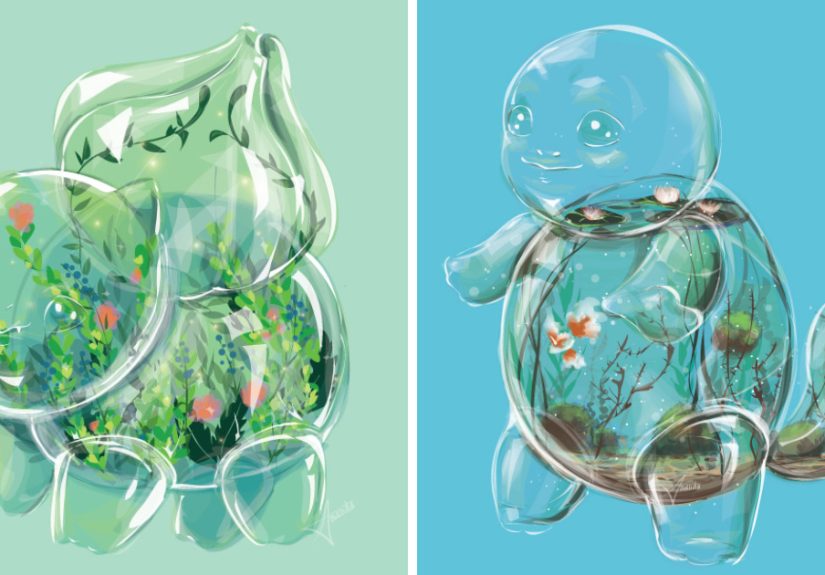
For example, Bulbasaur practically begs to become a terrarium. It already carries a plant bulb on its back, making it the unofficial mascot of tiny indoor gardening. In a terrarium drawing, Bulbasaur fits naturally among moss, miniature leaves, soft soil, and filtered green light. It does not look trapped inside the glass; it looks like the glass was built around its cozy little life.
Squirtle inspires a different setup. I imagine smooth blue stones, tiny water pools, aquatic plants, and curved reflections on the glass. Charmander needs warm sand, reddish stones, dry grasses, and careful lighting that makes the tail flame glow without turning the whole terrarium into a tiny insurance claim. Pikachu works beautifully with golden moss, bright flowers, and little lightning-shaped decorative elements that feel playful without overwhelming the design.
The goal is not to copy official Pokemon artwork. The goal is to reinterpret the feeling of each character through a miniature ecosystem. That distinction matters. Fan art is strongest when it brings a personal idea to the table rather than simply repeating what already exists.
What Makes a Good Pokemon Terrarium Illustration?
A strong Pokemon terrarium drawing needs three things: a clear character focus, a believable habitat, and a sense of wonder. If any one of those is missing, the piece can feel flat. If all three work together, the illustration becomes the kind of image people stare at for longer than expected because their brain is busy whispering, “Look at the tiny leaves. No, seriously, look at them.”
1. The Pokemon Should Match the Environment
The best terrarium concepts begin with personality. A Grass-type Pokemon usually feels right in a humid, mossy, fern-filled container. A Fire-type might need a more open terrarium with desert plants, stones, and warm light. Water-types can be imagined in aquatic or semi-aquatic glass worlds. Ice-types might live among frosted crystals, pale moss, and cool blue shadows.
The habitat does not need to be scientifically perfect, but it should feel emotionally correct. Viewers should be able to look at the illustration and think, “Yes, of course that Pokemon would live there.”
2. The Glass Should Feel Like Part of the Art
A terrarium is not just a background. The glass container is a major design feature. It creates reflections, highlights, curved edges, and a feeling of protection. When I draw a Pokemon terrarium, I pay close attention to the rim of the jar, the shine on the glass, and the way light bends around the scene.
Glass also adds mood. A round jar feels cute and soft. A tall bottle feels mysterious. A geometric glass case feels modern and decorative. A Pokeball-inspired container can add a playful nod to the franchise, but the design works best when the habitat remains the star.
3. Tiny Details Make the World Feel Alive
The small details are where Pokemon terrarium art becomes irresistible. A tiny mushroom beside Bulbasaur. A seashell near Squirtle. A glowing ember beside Charmander. A little berry tucked behind Eevee. These details reward viewers for looking closely.
Miniature art has a special kind of charm because it invites curiosity. The viewer becomes an explorer. Every leaf, stone, and sparkle suggests that the terrarium continues beyond the first glance.
Choosing Pokemon for Terrarium Art
Not every Pokemon needs the same treatment. Some are naturally suited to cozy plant worlds, while others require a more creative approach. Here are some examples of Pokemon that translate especially well into terrarium-inspired illustrations.
Bulbasaur: The Classic Mossy Terrarium
Bulbasaur is the obvious first choice, and I say that with love. It is basically a walking planter with an adorable face. A Bulbasaur terrarium can include moss, ferns, soft soil, small vines, and diffused green light. The bulb on its back can visually connect with the surrounding plants, making the whole scene feel unified.
For color, I like soft greens, teal shadows, and warm highlights. The mood should feel calm and friendly, like a tiny greenhouse that occasionally says “Bulba” and steals your heart.
Charmander: The Open Desert Terrarium
Charmander is trickier because closed humid terrariums and fire do not exactly scream “responsible home decor.” So I imagine Charmander in an open glass habitat with sand, red stones, hardy desert plants, and warm sunset lighting. The tail flame becomes the visual centerpiece.
The key is balance. Too much fire and the terrarium feels chaotic. Too little warmth and Charmander loses its identity. I like to use glowing highlights on nearby rocks to suggest heat without turning the scene into a miniature barbecue.
Squirtle: The Aquatic Glass World
Squirtle belongs in a watery terrarium with smooth stones, tiny aquatic plants, bubbles, and reflective blue light. It can sit on a small island of moss or peek from behind a glassy pool. A few ripples help the scene feel alive.
Squirtle terrarium art works especially well because the character’s round shape pairs nicely with curved glass. Everything feels bubbly, cheerful, and clean, like a spa day for a turtle with combat training.
Pikachu: The Sunny Meadow Jar
Pikachu does not need a complicated environment. Its energy is bright, simple, and instantly recognizable. I imagine a Pikachu terrarium as a sunny meadow in miniature: yellow flowers, soft grass, little stones, and maybe a few stylized sparks hidden in the design.
The challenge is avoiding visual overload. Pikachu is already bold, so the environment should support the character rather than compete with it. A clean composition helps the yellow tones shine.
Eevee: The Cozy Woodland Terrarium
Eevee is perfect for a warm woodland jar. Think curled roots, soft moss, acorns, tiny leaves, and gentle brown-and-gold lighting. Eevee’s fluffy shape makes it feel like it belongs in a snug, storybook environment.
This kind of terrarium can also hint at Eevee’s many evolutions. A small water droplet, a glowing stone, or a frosty leaf can quietly suggest possibility without crowding the artwork.
How Real Terrarium Design Influences the Art
Even though my Pokemon terrariums are illustrations, real terrarium design still matters. Actual terrariums rely on plant compatibility, moisture balance, light, and container shape. Artists can borrow those ideas to make fantasy scenes feel more believable.
Closed terrariums usually suit humidity-loving plants like mosses, ferns, and small tropical plants. Open terrariums are better for succulents, cacti, and drier arrangements. That distinction can help guide the mood of a Pokemon illustration. A Grass-type might fit a closed, misty jar. A Fire-type or Rock-type might feel better in an open glass bowl with dry textures.
Layering also matters. Many terrariums include a base layer, soil or growing medium, plants, and decorative elements. In art, those layers become a composition tool. The bottom layer grounds the scene. The middle layer holds the character. The top layer creates atmosphere through leaves, reflections, or floating particles.
The more I understand real terrariums, the better my fantasy terrariums become. Reality gives the imagination something sturdy to climb on.
The Drawing Process: From Sketch to Tiny Ecosystem
My process usually begins with a question: what is the emotional weather of this Pokemon? Not literal weather, although sometimes yes, but the overall feeling. Is this creature playful, sleepy, mysterious, elegant, chaotic, shy, or dramatic enough to require its own theme music?
Once I know the mood, I sketch the container. I decide whether the terrarium should be round, tall, wide, geometric, hanging, or shaped like a decorative capsule. Then I place the Pokemon inside, making sure the pose reads clearly even at a small size.
After that, I build the environment around the character. Large shapes come first: rocks, branches, plant clusters, water pools, or hills. Then I add medium details like leaves and stones. Finally, I add tiny accents such as sparkles, dew, mushrooms, shells, seeds, or little glowing effects.
Color comes last, and it often changes everything. A green sketch can become peaceful or eerie depending on the lighting. A blue terrarium can feel aquatic, icy, or magical. A warm orange glow can make a simple scene feel cinematic. Color is where the terrarium starts breathing.
Why Fans Love Pokemon Terrarium Art
Pokemon fan art has always thrived because fans love imagining the world beyond the games, cards, and animated episodes. Terrarium art taps into that same instinct. It asks viewers to slow down and enjoy a quieter version of Pokemon: no battles, no gyms, no dramatic rival entrances, just a small creature living peacefully in a beautiful little habitat.
There is comfort in that. A terrarium feels safe. It is enclosed, cared for, and self-contained. For many viewers, Pokemon terrarium illustrations combine childhood nostalgia with the adult joy of plants, decor, and cozy spaces. It is fan art for people who grew up and bought both a Nintendo Switch and a humidity-loving fern.
The style also photographs well, shares well, and makes people smile quickly. On social media, that matters. A Pokemon terrarium image communicates its idea instantly, but still contains enough detail to reward a longer look. That combination is gold for visual storytelling.
Originality, Fan Art, and Respecting the Source
Because Pokemon is a protected franchise, artists should be thoughtful about how they create and share fan work. Fan art is a major part of online culture, but it exists in a space where creativity and intellectual property overlap. That means artists should avoid presenting unofficial work as official, avoid using official assets as if they created them, and be careful with commercial use.
For me, the healthiest approach is to treat Pokemon terrarium art as a personal creative interpretation. I am not trying to replace official designs or claim ownership of characters I did not create. I am using illustration to celebrate the emotional connection many fans have with these creatures while adding my own environmental concept, composition, and style.
That respect matters. Good fan art should feel like a love letter, not a photocopy wearing a fake mustache.
Tips for Artists Who Want to Draw Pokemon As Terrariums
If you want to try this style, start simple. Choose one Pokemon and one clear environment. Do not attempt to draw every plant species known to science in your first jar. Your future self, your wrist, and your layer panel will thank you.
Start With a Strong Silhouette
Pokemon are designed to be recognizable. Keep that strength. Even if the terrarium is detailed, the character should still be easy to identify. A clean silhouette helps the viewer understand the image quickly.
Use Plants That Match the Personality
Soft moss creates comfort. Spiky succulents create attitude. Ferns feel ancient and lush. Vines suggest movement. Mushrooms add whimsy. Choose plant shapes that support the Pokemon’s mood.
Control the Amount of Detail
Terrarium art can become crowded fast. Leave breathing room. Empty space is not failure; it is visual oxygen. A few well-placed details are often stronger than a hundred tiny objects fighting for attention.
Think About Light
Glass, plants, and Pokemon all react differently to light. A strong light source can make the terrarium feel magical. Add highlights to the glass rim, soft shadows under the character, and reflected color from nearby objects.
Let the Scene Tell a Small Story
Maybe the Pokemon is sleeping. Maybe it is guarding a berry. Maybe it just discovered a tiny pond. A small story gives the illustration personality. Viewers remember images that feel like a moment, not just a display.
Experience: What I Learned From Drawing Pokemon As Terrariums
After spending time with this concept, I learned that drawing Pokemon as terrariums is secretly an exercise in patience. At first, I thought the hard part would be the Pokemon. It was not. The hard part was making the miniature world feel believable without burying the character under seventeen layers of leaves, rocks, sparkles, vines, and artistic overconfidence.
My first few attempts were adorable disasters. I would start with a clean sketch of a Pokemon, then add a plant, then another plant, then a tiny mushroom, then a background vine, then a decorative stone, then a second mushroom because apparently the first mushroom looked lonely. By the end, the poor Pokemon looked like it had been swallowed by a craft store. That taught me one of the biggest lessons in this style: editing is part of drawing.
I also learned that each Pokemon needs its own visual rhythm. Bulbasaur can handle a lush environment because its design already blends with plants. Squirtle needs open space and water reflections so the scene does not become too heavy. Charmander needs warmth and contrast, but the flame should not overpower the entire composition. Pikachu needs simplicity because its bright color is already doing a lot of the talking.
Another surprise was how much real plant knowledge improved the art. Once I started paying attention to terrarium basics, my drawings became more convincing. I began thinking about whether a container looked humid or dry, whether a plant shape made sense, whether the ground layer felt stable, and whether the glass had enough highlights to read as glass. Even in fantasy art, small touches of realism make the magic stronger.
The most enjoyable part has been seeing how people react to the tiny details. Viewers often notice things I almost skipped: a berry tucked behind a leaf, a little reflection on the jar, a tiny stone path, or a glow around a tail flame. Those details create a sense of discovery. They make the artwork feel personal, like the viewer has found a secret little world.
Drawing Pokemon terrariums has also changed how I think about fan art. Instead of asking, “How do I draw this character accurately?” I now ask, “What kind of world would make this character feel at home?” That shift makes the process more creative. It turns the illustration into a design challenge, not just a character study.
And yes, it has absolutely made me look at empty jars differently. A candle jar? Possible Oddish habitat. A glass ornament? Perfect for Jigglypuff floating in pastel flowers. A weirdly shaped bottle at a thrift store? Clearly a haunted terrarium for Gastly. This is the danger of having an imagination: eventually, every household object becomes a potential art project.
The biggest lesson is that small worlds can hold big feelings. A Pokemon terrarium drawing can be cute, nostalgic, peaceful, funny, and surprisingly emotional all at once. It reminds people of childhood games, favorite creatures, cozy rooms, plant shelves, and the simple joy of imagining something that does not need to exist but makes the day better because it does.
Conclusion
Drawing Pokemon as terrariums combines two lovable ideas: iconic creature design and miniature natural worlds. The result is fan art that feels cozy, imaginative, and full of personality. Each terrarium becomes a tiny habitat where the Pokemon’s traits shape the plants, colors, textures, and atmosphere around it.
Whether it is Bulbasaur resting in a mossy greenhouse, Squirtle splashing in a glassy water garden, Charmander glowing in a warm desert bowl, or Eevee curled in a woodland jar, the concept works because it gives familiar characters a fresh emotional setting. It is not just about making something cute. It is about building a small world that feels alive.
For artists, Pokemon terrarium art is a fun way to practice composition, lighting, environmental design, and storytelling. For fans, it is a comforting reminder that imagination does not have to be huge to be powerful. Sometimes the most magical world is small enough to fit inside a jar.