Table of Contents >> Show >> Hide
- The Story That Hit a Nerve Online
- Why This Story Resonates Beyond One Awful Dinner Table
- What a Farrier Actually Does And Why Job Snobbery Misses the Point
- The Real Relationship Problem: Silence Is Not Neutral
- How Couples Should Handle Disrespect From Family
- What Healthy Support Would Actually Sound Like
- Related Experiences: What People in Similar Situations Often Learn the Hard Way
- Final Thoughts
- SEO Tags
Note: This article is provided in body-only HTML format for easy copying and web publishing.
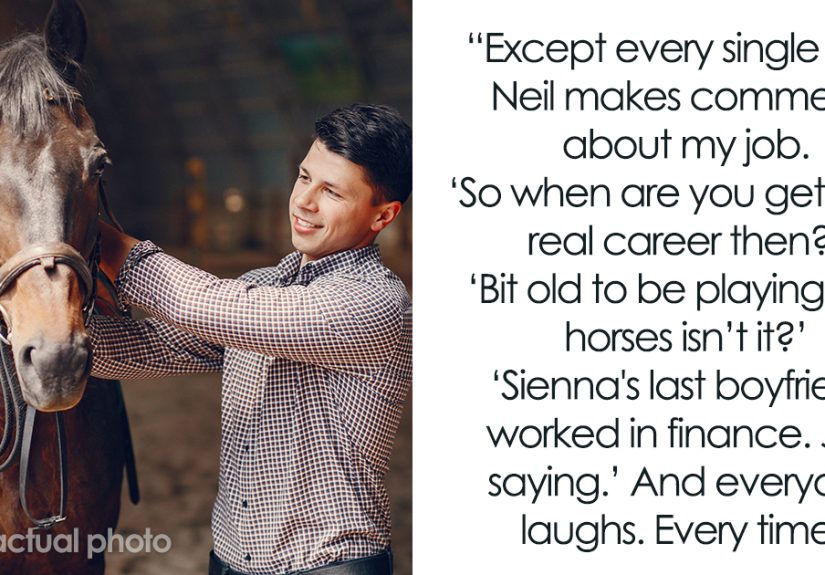
Some family dinners are warm, welcoming, and full of mashed potatoes. Others feel like a low-budget roast where one unlucky guest becomes the evening’s entertainment. The story behind “Man Keeps Mocking Daughter’s BF As He Hates His Farrier Job, BF Frustrated That GF Stays Silent” struck a nerve online because it is about far more than one rude father and one awkward meal. It is about class snobbery, job shaming, relationship loyalty, and the slow emotional damage caused by “jokes” that are not jokes at all.
At the center of the drama is a boyfriend who works as a farrier, a skilled trade that involves caring for horses’ hooves and fitting horseshoes. Instead of respecting the work, his girlfriend’s father repeatedly mocked it at family dinners, turning the man’s profession into a running punchline. Worse, the girlfriend stayed quiet while it happened. That silence became its own message, and not a comforting one. As the boyfriend grew more frustrated, the issue stopped being about a rude dad and became a much bigger question: what happens when the person who is supposed to have your back decides to keep the peace instead?
That is why this story resonates. On the surface, it sounds like internet drama with a strangely specific job title. Underneath, it is a familiar relationship problem wearing muddy boots. Anyone who has ever been belittled by a partner’s family, dismissed for working a blue-collar job, or told to “lighten up” after being insulted will recognize the pattern immediately.
The Story That Hit a Nerve Online
The viral post described a boyfriend who kept showing up to his girlfriend’s family dinners, even though her father used those gatherings as an excuse to mock his career. The digs were not subtle. They were the sort of smug comments meant to sound playful while carrying just enough poison to land. The message was clear: your job is weird, your work is lesser, and therefore you are lesser.
That sort of treatment gets old fast. The boyfriend finally reached a point where he no longer wanted to attend the dinners, which is honestly a very human response to recurring humiliation. But the conflict deepened when his girlfriend framed his decision as forcing her to choose between him and her family. She reportedly promised to speak up if it happened again. Then the next dinner arrived, the father took another swing, and she stayed silent once more.
That silence is what transformed an annoying family conflict into a relationship crisis. A rude parent is one problem. A partner who watches you get publicly belittled and says nothing is another problem entirely. One hurts your feelings. The other makes you question the structure of the relationship itself.
Why This Story Resonates Beyond One Awful Dinner Table
Mocking someone’s work is really mocking their identity
People do not leave their jobs at the door emotionally, even if they leave them physically. Work is tied to competence, independence, values, routine, and self-respect. So when someone repeatedly trashes another person’s job, they are not just making conversation. They are attacking how that person contributes to the world.
That is especially true with a trade like farriery. A farrier is not somebody randomly wandering around with a horseshoe and vibes. It is a specialized profession that blends physical labor, technical knowledge, animal care, and safety. Farriers trim hooves, balance them, fit or shape shoes, observe a horse’s gait, and help protect mobility and soundness. In other words, it is real work that requires skill, judgment, and experience. Mocking it says more about the mocker’s social attitude than the job itself.
And let’s be honest: society still has a bad habit of worshipping jobs with air-conditioning and corporate jargon while looking down on work that is practical, manual, or unfamiliar. A guy can say he is in “strategic growth solutions” and people nod like he just solved climate change. Say you are a farrier, and suddenly somebody at the table acts like you announced a hobby involving medieval cosplay. That is not wisdom. That is plain old job snobbery.
When “jokes” are really contempt in a cheaper outfit
The father in this story was not just teasing. He was establishing a pecking order. That matters because repeated sarcasm, condescension, and ridicule are classic signs of contempt. And contempt is one of the fastest ways to poison any relationship or family dynamic.
Contempt works because it disguises cruelty as humor. The target gets insulted, everyone else gets plausible deniability, and the aggressor gets to act offended if challenged. “I was kidding” becomes a magic trick that is supposed to erase the damage. It does not. If the same person keeps being humiliated, and the same people keep laughing, the joke is no longer a joke. It is a system.
That is why stories like this feel bigger than the details. A farrier today, a mechanic tomorrow, a daycare worker next week. The profession changes. The power play stays the same.
What a Farrier Actually Does And Why Job Snobbery Misses the Point
One reason this story caught attention is that many readers probably had to pause and ask, “Wait, what exactly is a farrier?” That moment of curiosity should have led to respect, not ridicule.
Farriers care for horse hooves, which is not optional maintenance. Hooves keep growing and have to be trimmed and managed regularly. A horse with poorly balanced feet can have pain, gait problems, and more serious mobility issues. Good farriers do not just nail on shoes and call it a day. They assess movement, notice abnormalities, understand hoof shape, and make careful decisions that affect the animal’s comfort and performance.
Professional farriery also involves training and industry standards. Certification pathways emphasize knowledge of anatomy, physiology, pathology, gait, and horseshoe application. So when someone mocks a farrier’s work as useless or unserious, they are revealing how little they understand about skilled trades in general.
There is also something especially absurd about mocking a job simply because it is not common in suburban small talk. Society loves to claim it values “hard work,” but the moment that hard work arrives wearing work boots instead of loafers, some people lose their minds. The father in this story did not seem offended by laziness. He seemed offended by a job he could not neatly file into his own status hierarchy.
The Real Relationship Problem: Silence Is Not Neutral
Why the girlfriend’s silence hurts more than the father’s insults
Most people can tolerate one rude relative. What they struggle to tolerate is feeling abandoned by their partner in the middle of that rudeness. The boyfriend in this story was not just getting mocked. He was getting mocked while the person closest to him sat still and let the moment pass.
That kind of silence rarely feels neutral. It usually feels like agreement, fear, avoidance, or loyalty to the wrong person. Even if the girlfriend was simply freezing up under pressure, the emotional result for her boyfriend would be similar: he is alone in the room.
Healthy adult relationships require partners to act like a team, especially when conflict involves extended family. That does not mean screaming at your dad over dinner or flipping the roast onto the lawn. It means making it unmistakably clear where you stand. A simple “That’s enough” can do a lot of work. So can “Don’t talk to him like that.” So can “We’re leaving if this continues.” Silence, by contrast, usually does the opposite. It rewards the aggressor and isolates the target.
Why resentment builds so fast in situations like this
Resentment loves repetition. One bad dinner can become a story. Ten bad dinners become a wound. The boyfriend likely was not just upset by one jab; he was worn down by the pattern. Each meal probably carried dread before he even arrived. Each comment told him he was not respected. Each moment of inaction from his girlfriend told him that his discomfort ranked below family harmony.
That is how resentment grows: not in one cinematic explosion, but in a long series of smaller moments where someone feels dismissed, unheard, or publicly reduced. Eventually, even a perfectly harmless dinner invitation starts to feel like an ambush with side dishes.
And once resentment settles in, it becomes harder to separate the problem from the person. The father becomes the obvious villain, but the partner’s silence becomes the more intimate betrayal. That is often the point where people stop asking, “How do we get through Sunday dinner?” and start asking, “Why am I in a relationship where I need to beg for basic defense?”
How Couples Should Handle Disrespect From Family
1. Name the behavior plainly
Not every insult deserves a TED Talk, but repeated public mockery should be called what it is. If a parent keeps taking shots at a partner’s job, appearance, background, or income, the family member closest to that parent should say so clearly. Not “He didn’t mean it.” Not “That’s just how he is.” Not “Try not to take it personally.” A better sentence would be: “You keep insulting him, and it needs to stop.”
2. Set a consequence, not just a wish
Boundaries are not decorative throw pillows. They need consequences. Saying “Please be nice” to someone who enjoys being rude is not a boundary. Saying “If you mock my partner again, we are leaving” is a boundary. Consequences create clarity. They also prevent the target from having to relive the same conversation every week like a cursed family sitcom.
3. The daughter should handle her father
In this kind of situation, the girlfriend is the bridge between her partner and her family. That means she is also the one best positioned to stop the behavior. It is unfair to expect the boyfriend to defend himself over and over while she stays out of it. Yes, he can speak for himself. But if she wants a mature, lasting relationship, she has to show that her loyalty is not conditional on whether her dad gets grumpy.
4. Stop confusing peacekeeping with love
Many people think silence is kindness because it avoids immediate conflict. In reality, it often just shifts the cost onto the quieter, more vulnerable person. Peacekeeping is not love when it requires one partner to absorb humiliation so everyone else can finish dessert comfortably.
5. Treat the reaction as data
If a partner repeatedly refuses to stand up for you, believe what that pattern is teaching you. Maybe they are conflict-avoidant. Maybe they are emotionally enmeshed with family. Maybe they agree more with the insults than they want to admit. Whatever the reason, repeated silence is information. Painful information, yes, but useful.
What Healthy Support Would Actually Sound Like
Sometimes people freeze because they genuinely do not know what to say. So here are a few examples of what supportive, adult behavior looks like in a moment like this:
- “Dad, stop making comments about his job.”
- “He works hard, and I’m not okay with you mocking him.”
- “We came here for dinner, not for you to turn him into a punchline.”
- “If you keep doing this, we’re leaving.”
- “You don’t have to understand his job, but you do have to respect him.”
Notice what these responses have in common. They are brief. They are calm. They are not begging. They do not overexplain. They communicate loyalty without turning the moment into a theatrical family apocalypse. Support does not always need fireworks. Often, it just needs spine.
Related Experiences: What People in Similar Situations Often Learn the Hard Way
Stories like this keep circulating online because they are painfully familiar. Maybe it is not a farrier this time. Maybe it is a plumber, a mechanic, a hairstylist, a nurse’s aide, a landscaper, or somebody building a small business that a smug parent dismisses as “not a real career.” The details change, but the emotional structure stays almost identical.
One common experience is the partner who keeps saying, “That’s just how my dad is.” It sounds harmless, even practical. In reality, it often means, “I have decided your discomfort is easier to live with than his anger.” That sentence can keep a relationship stuck for years. The mocked partner keeps attending holidays, birthdays, and Sunday dinners, hoping the family will warm up. The family keeps making the same comments because nothing ever truly interrupts the pattern. Meanwhile, the silence of the romantic partner becomes louder every time.
Another familiar experience is the slow downgrade of self-esteem. Public job shaming does not just ruin one evening. It can make a person start editing themselves in the room. They talk less. They laugh politely when they want to leave. They explain their work defensively, as if their profession needs a courtroom defense instead of basic respect. Over time, they begin to dread events that should feel ordinary. The body learns the pattern before the mind fully admits it. Your stomach tightens on the drive over. You rehearse responses in the car. You wonder whether declining an invitation will create even more drama. That is not oversensitivity. That is stress.
There is also the experience of the partner who finally realizes the real issue is not the parent at all. Many people can handle a difficult father-in-law, an opinionated mother, or a rude sibling if their partner is clearly in their corner. What breaks them is discovering they are expected to endure disrespect quietly so the family system never has to change. Once that realization lands, the relationship often looks very different. The question shifts from “How do I get them to like me?” to “Why am I begging for protection from someone who claims to love me?”
Some couples do recover from this kind of dynamic, but only when the silent partner changes behavior in a visible way. That usually means having hard conversations with family, setting rules for future gatherings, and accepting that a few people may pout about it. Growth is not glamorous. It rarely comes with a violin soundtrack. Usually it looks like one adult saying, “You don’t get to disrespect my partner anymore,” and then following through when tested.
And yes, people in these situations often feel guilty for wanting distance. They worry they are being dramatic. They wonder whether skipping dinner is petty. But distance is not always punishment. Sometimes it is simply the cost of refusing to keep auditioning for your own dignity.
Final Thoughts
The headline may spotlight a father mocking a farrier, but the real lesson here is about respect. A partner’s job should never become a family sport. Repeated humiliation is not teasing. Silence is not support. And a relationship cannot feel emotionally safe when one person is expected to absorb disrespect to preserve everyone else’s comfort.
If there is one useful takeaway from this entire messy situation, it is this: you do not learn the strength of a relationship only in romantic moments. You learn it at the dinner table, in uncomfortable silence, right after someone crosses a line. That is where loyalty stops being a cute word and starts becoming a choice.
In this case, the father’s behavior was ugly, but the girlfriend’s silence made the ugliness sustainable. And that is why the boyfriend’s frustration makes perfect sense. Nobody wants to spend their future with a partner who turns into wallpaper the moment respect becomes inconvenient.